
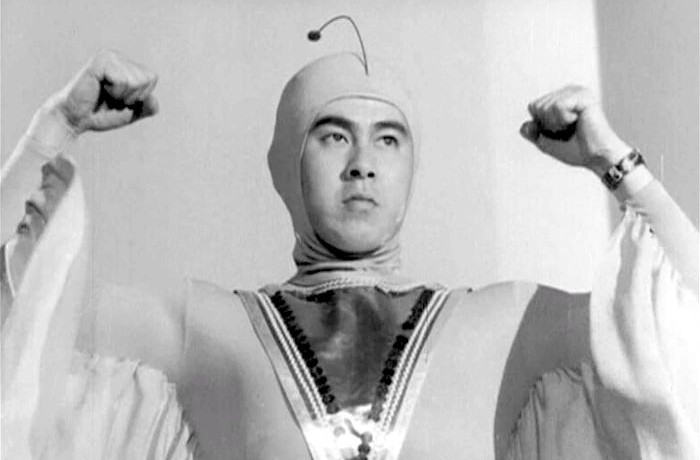
A superhero from a distant planet is sent to Japan to stop villains who plan to conquer the world with nuclear bombs. Shintoho’s Super Giant is cheap and silly, but introduced Japan’s first live-action superhero. 4/10

Super Giant. 1957, Japan. Directed by Teruo Ishii. Written by Ichirô Miyagawa. Starring: Ken Utsui, Junko Ikeuchi, Shôji Nakayama, Reiko Seto, Minoru Takada, Ryo Iwashita, Noriko Katsuma, Yukihiko Osawa, Jack Altenbay. Produced for Shintoho. IMDb: 6.1/10. Letterboxd: N/A. Rotten Tomatoes: N/A. Metacritic: N/A.
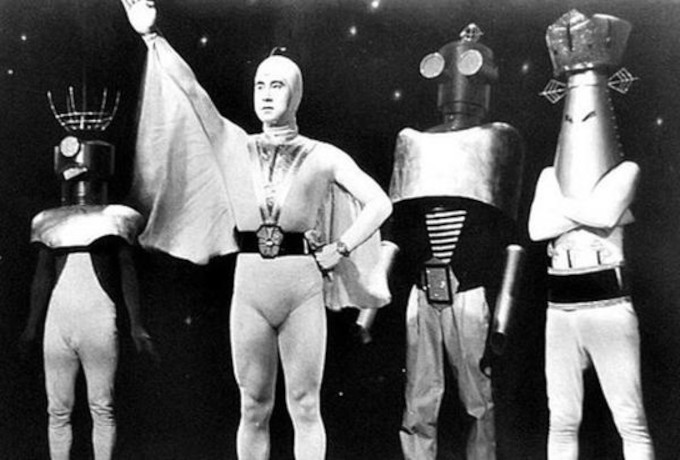
A meeting of alien races convene on the Emerald Planet to discuss the problem of nuclear bombs and test on the Earth (or rather, a narrator narrates their discussion, as it is all held in sign language). As the radiation also affects other worlds, they decide to send an emissary to Earth in order to stop nulcear proliferation. Their hero is a man built by the strongest steel — Super Giants, or スーパージャイアンツ, Sūpā Jaiantsu (Ken Utsui). Super Giants is equipped with a wrist watch, or rather a “Globe Meter” device, which allows him to fly, detect radiation and to understand and speak any language. He is dressed in a tights, a cape and a cowl with an antenna on top.
This is the beginning of Super Giant, a 1957–1959 Japanese theatrical serial in nine parts, produced by Toho’s non-union branch Shintoho, in order to cash in on the popularity of the American TV show The Adventures of Superman. I have watched two two first 50-minute episodes, on which I am basing my review.
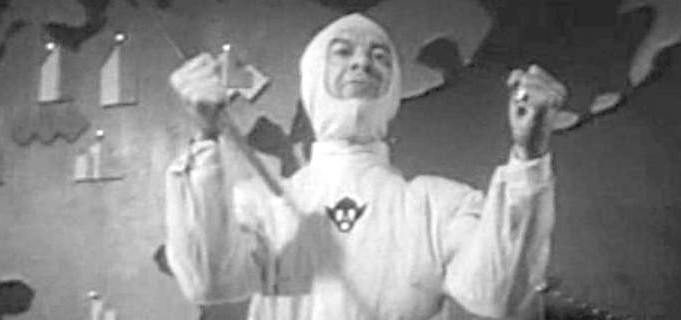
When Super Giants lands on Earth, his first job is to stop a group of foreign terrorists planning to take over Japan and the rest of the world with the help of an atom bomb. Much of the first two episodes in the series focus on a certain briefcase containg radioactive material, which changes hands several times. As Super Giants chases down the terrorists (which are portrayed much like gangsters in US crime movies), the baddies threaten his new friends, the kids going to school at a local Christian monastery, and two pretty girls: a nun/teacher (Junko Ikeuchi), and a high school girl called Reiko (Reiko Seto), who is the sister of a police detective (Shôji Nakayama). Over the course of the two first episodes, there are kidnappings galore, gun fights, fist fights and car chases, and finally Super Giants infiltrates the secret mountain lair of the bad guys (twice), saves the highs school girl from beheading in an evil contraption, and later uses his own body as a “human” shield in a bomb explosion, before capturing the villains and delivering them to the authorities. Aided, of course, by a group of clever and daring children.
Background & Analysis
I don’t usually review film serials, but I make an exception in this case, since Super Giant is of some historical importance, as it introduced the first Japanese live-action superhero to the screens in 1957.
Let’s start with the bewildering title of both the series and its hero: Super Giants, or in its “Japanese” form, Sūpā Jaiantsu. It is purely nonsensical, as the hero is neither a giant or several people. The first word, Super, is naturally derived from Superman, as is the entire serial. In 1956, the Tokyo Broadcasting Company soared as the most popular TV network in Japan, thanks to it airing such hugely popular American shows as Lassie and The Adventures of Superman. Much like King Kong (1933, review) and The Beast from 20,000 Fathoms (1953, review) inspired the kaiju genre, it was The Adventures of Superman that kicked off Japan’s superhero craze. Super Giants was produced by Shintoho, the daughter company of Toho, producer of the Godzilla films. So, therefore: “Super”. The second part, “Giants”, was most likely derived from the Japanese baseball team, the Yomiyuri Giants, which was just as popular as Superman at the time. This odd title reflects the fact that while American words and names had seeped into Japanese culture during the US occupation following WWII, many Japanese still had a feeble grasp of the English language, leading to the practice of slapping English names on products without actually considering what they meant.
The series was re-edited in the US into four movies, where the character was given the name “Starman”, and in Italy and France he was known as “Spaceman”.
Like The Adventures of Superman, Super Giant is aimed at a juvenile audience, as opposed to the early kaiju films, which were more clearly aimed at adults. With a few exceptions, the violence is largely bloodless and exaggerated, and no kids are ever hurt. The fight scenes are often whimsical and illogocal. Super Giants is invulnerable to bullets and after firing all their clips at him, the bad guys always seem to figure that since bullets can’t hurt him, taking him on in a fist fight is a better option. With predicatble results. In order to create some tension in these fights, the filmmakers portray his powers in a somewhat inconsistent manner. Super Giants is able to withstand bullets and bombs, right an airplane off course, stop a speeding car and bend the bars of a prison cell: but he seems to be struggling whenever he is attacked by two or more people in a fisticuff. Not that he is ever in any danger, but given his powers, he should be able to just shrug his attackers off.
Super Giant was directed by Teruo Ishii, who would later become one of the great cult directors of Japan. Super Giants was his second directorial assignment, one which he accepted solely because he was employed by Shintoho and needed experience. Ishii directed six of the nine episodes, but left the project after a young boy was seriously hurt after jumping out of a window while playing, pretending to be Super Giants. The incident created a discussion around superhero films and TV shows in Japan, that went on for decades, until superhero TV shows started adding warnings to their content that children should not attempt to imitate the characters in the series.

Another person who who wasn’t crazy about the production was actor Ken Utsui, who played the titular hero. For the rest of his career, he expressed a certain amount of embarrassment over having played the hero in body stockings, with a silly antenna on his head. He especially lamented the studio’s decision to pad out his crotch area, making it look as if he was really super giant in that department. Nevertheless, Utsui delivered a sincere performance in the films.
While fantastic, the plots of the Super Giant episodes often sprang from current affairs. The first three adventures were told over the course of two episodes, but after Ishii left the production, Shintoho started produced stand-alone episodes. The first two episodes spring from the ever-present discussion in Japan about nuclear weapons, as the country was still reeling from the devastation caused by the US bombings of Hiroshima and Nagasaki in WWII. The fifths and sixths episodes, released in 1958, take their cues from the 1957 launch of Sputnik, and sees Super Giants go up against nazis operating from a space station orbiting Earth. The final film deals with Arab terrorists. Common for seemingly all episodes is that the villains are always foreigners (or aliens) – it is surely no coincidence that the terrorists threatening the world with atom bombs in the first episodes are portrayed as being American (even if the film gives their origin as the fictional country of Merapolia), although they all seem to speak fluent Japanese.
However, the action, while simple enough to be coherent, is sprawling and mostly resembles that of several 20-minute serial episodes edited together. At least three people are kidnapped by the bad guys over the course of the two episodes, only so Super Giants can swoop in and save the day, and furthermore, the kids and the church people are held hostage at least twice (once it is the kids who subdue the baddie). The police detective does some heroics, but is largely a redundant character. One plot strand follows Super Giants, in his Clark Kent mode, being framed by the baddies for murder and imprisoned by the authorities. This is a rather pointless excerise, as we all know he can just bend the bars of his cell and fly to freedom — which he does. In short, there isn’t much plot here, but rather a string of incidents following each other.
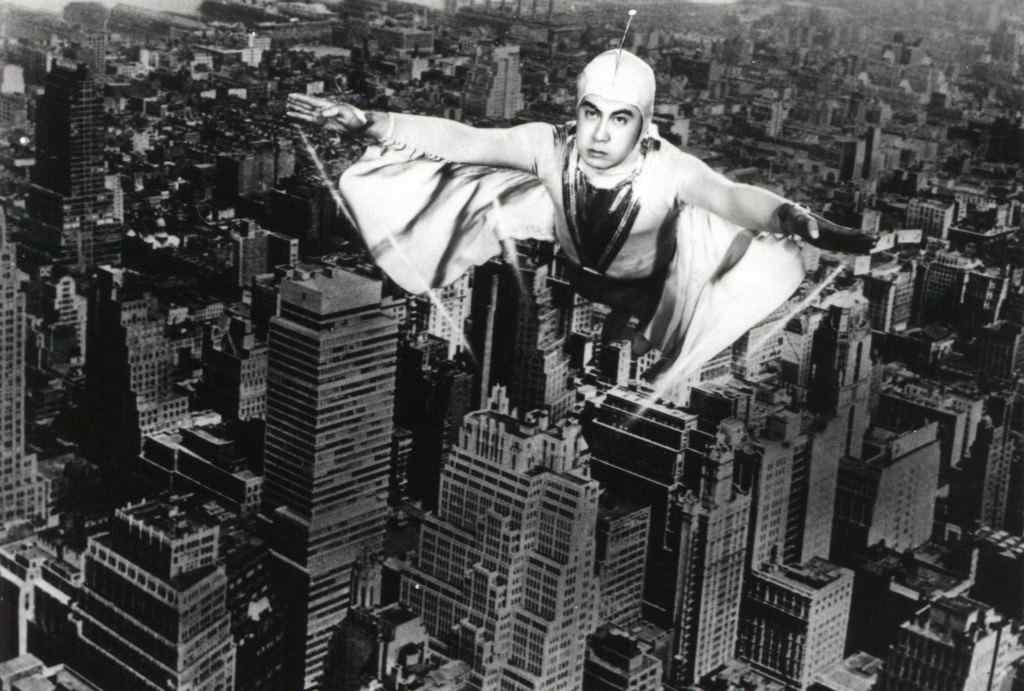
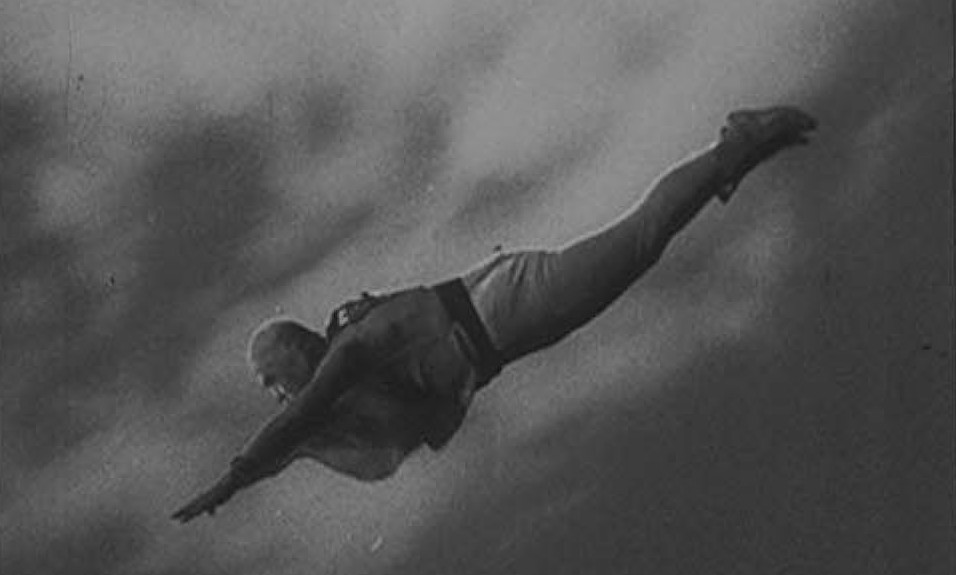
To the film’s merit, there is some respectable model work, and the bad guys’ lair isn’t of too shabby a design, considering this serial was most likely made on an ultra-low budget. Scenes of Super Giants flying through the air were accomplished through an in-camera “tri-pack” travelling matte technique, using a modified three-strip colour camera, which resulted in minimal matte lines and saved time, as no additional compositing was required in editing. For shorter “flights”, Ishii simply uses reversed shots of Utsui jumping from an elevated position onto the ground, resulting in the oddity that Super Giants mostly seems to fly in reverse rather than forward. Some wirework also seems to have been used. The fights scenes are quite goofy, with Super Giants repeatedly taking on dozens of henchmen at a time, seeming to wade through a sea of bad guys whom he simply takes out with judo throws and left hooks. These scenes become tedious as the episodes grind on. One of the drawbacks of the serial, at least as far as the two first episodes go, is that there is no real sense of danger, as we know Super Giants is invulnerable and super-strong, and the bad guys have no kryptonite. The fact that it takes him 100 minutes of run time to take out the terrorists with his superpowers is just as testament to his dim wit.

Nevertheless, Super Giant was super popular with Japanese kids, who could revel in their very own Japanese superhero. All in all, it is a mildly entertaining, light-hearted serial in the vein of the American superhero serials of the 40’s. It is comparable to the Mexican luchador movies made at the same period, although Super Giant has the edge inasmuch as its Mexican sister-movies were made on an even more impoverished budget, and could only dream of the special effects and model work contained in the Japanese films. It’s sprawling, repetitive and drags, but has enough silly fun to carry the viewer with it.
Reception & Legacy
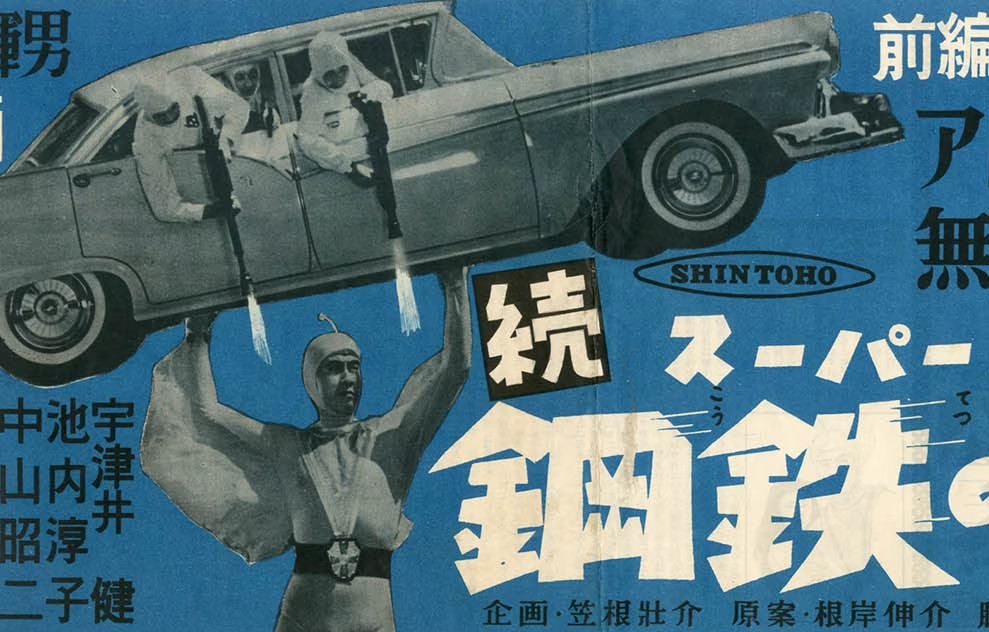
Unsurprisingly, I have found no Japanese reviews from the time of the films’ release. We do know that Super Giant was hugely popular, and served as a blueprint for the many Japanese superhero films and TV shows to come. And while hardly a marquee name today, it is important not to understate the impact Super Giant had on the genre, inspiring shows like Ultraman, Power Rangers and Kamen Rider, according to the site Scified.
In 1964 the serial was re-edited and re-packaged for US television by Walter Manley Productions and Medallion Films. Medallion turned the serial into four TV movies, Atomic Rulers of the World, Invaders from Space, Attack from Space, as well as Evil Brain from Outer Space. The first three films were basically two of the double episodes put together, however the fourth one has been described as bewildering, as it jams all the three last stand-alone episodes together. Just two years after the US release of Super Giant, the Tokyo Broadcasting Company premiered special effect legend Eiji Tsuburaya’s TV show Ultraman, which finally kicked off the superhero craze in Japan.

Super Giant doesn’t have enough votes on either IMDb or Letterboxd to really give a reliable consensus (it has a 6.1/10 rating on IMDb, but based only on 50 votes).
The original series doesn’t have many reviews, but I have been able to dig up a few. Oddly enough, these somewhat obscure non-American production often seem to be better covered by US online critics than those in their countries of origin. While there are several blog posts on the films in Japanese, most of them are simply short plot synopses and very few amount to anything resembling an actual review. I have found two, however, that at least come close. Amazakian writes: “it’s simple and straightforward, and you can enjoy the action in a refreshing manner”. Chikurinken is not swayed, however: “I don’t think even small children will take it seriously unless the story is a little more solid. Overall, it’s a very sloppy science fiction movie, and it makes me wonder if the creators were trying to skimp on these kinds of movies.”
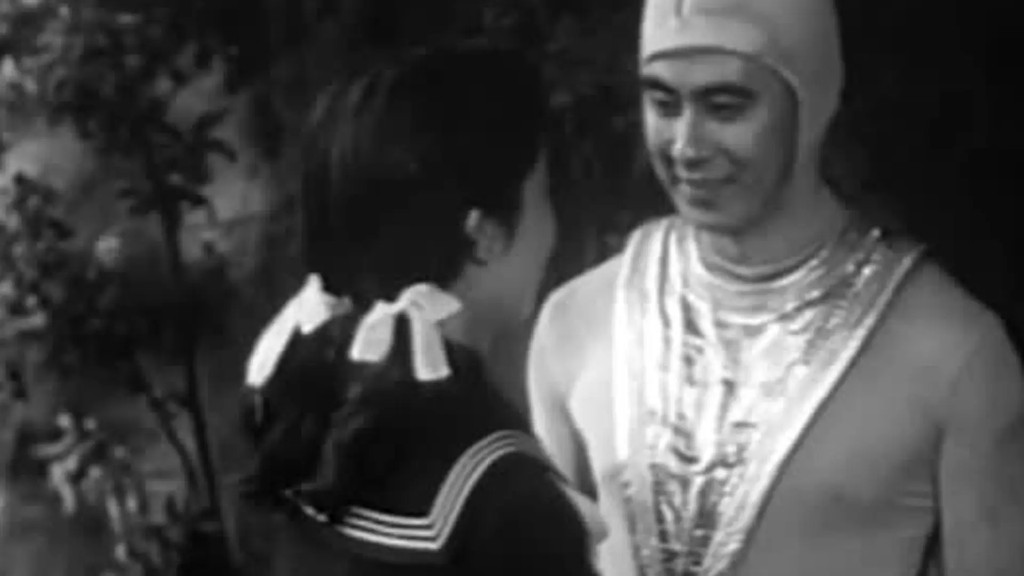
The only English-language review I can find for the original movies comes, of course, from the hugely prolific Dave Sindelar at Fantastic Movie Musings and Ramblings. Sindelar writes that although he watched the films without subtitles, “this version is easier to follow than the rather confusing English version”. He continues: “I can honestly say I enjoyed this one quite a bit, though the silliness is still there, especially during the outlandish fight sequences”.
There is more writing on the 1964 US release, from which 20 minutes of footage was cut, and the story somewhat re-written and dubbed. Richard Schieb at Moria gives the film, dubbed Atomic Rulers of the World, 1/5 stars. Scheib decries the aliens in the opening scene, which look like “ambulatory milk cans or clanking robots with large glowing lightbulbs for eyes”, “poorly choreographed fight scenes” and “absurdly ill-informed science”. He does allow that “Atomic Rulers had a ridiculous cheapness, although not unentertaingly so at times”. Mark David Welsh says the film is “undemanding, knockabout antics that often drag but provide some level of entertainment”. And Donald J Deeley at D-Contextualized writes: “There’s a lot of downtime and not much happens. It is, however, fun, campy, and possessed of many joys.”
Cast & Crew
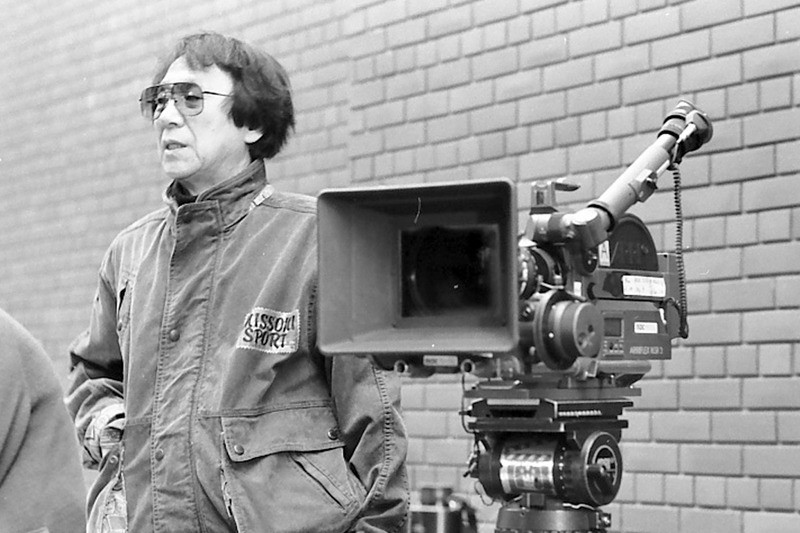
Director Teruo Ishii has been described as the “King of Cult” and the “Grandfather of J-sploitation”. He has been credited with popularising the yakuza movie with his 1965 hit Abashiri Prison, which made its lead actor Ken Takakura a major star. Takakura went on to star in 18 films in the series, of which Ishii directed 10. In 1968 Teruo Ishii instigated another hugely popular franchise, the so-called Torture series, with Shogun’s Joy of Torture, a so-called “pinky film”, featuring nudity and horror. The film turned into a series of eight movies, which explored the history of torture in Japan. In the 70’s Ishii continued exploring the seedy underbelly of Japan with erotic thrillers, Sonny Chiba kung-fu movies and biker films. His films have been called “a microcosm of popular cinematic trends in Japan during the second half of the twentieth century”. However, Super Giant was his only brush with SF.

Lead actor Ken Utsui also didn’t return to science fiction after his harrowing experience with Super Giants’ stuffed codpiece. Utsui was a serious actor, who appeared in over 60 movies, but is best remembered in Japan for his long career in television. He refused to talk about Super Giant in interviews. Lead actress Junko Ikeuchi also had a long and successful career both in film and especially in TV. She is best known internationally for appearing in the horror films The Ghost of Yotsuya (1959) and Illusion of Blood (1965).
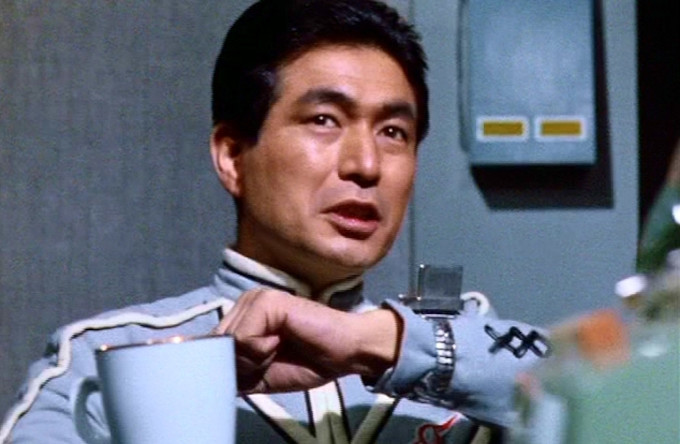
Shôji Nakayama, playing the detective, did return to the genre, however, and is probably best remembered for his recurring role as Captain Kiriyama in the original Ultraman TV show (1967-1968) and its ripoff show, Zone Fighter (1973). He also appeared in a supporting role in The War in Space (1977). The villain of Super Giant is played by Jack Altenbay, who was born in Japan to Turkish immigrant parents. He worked as a journalist in the 40’s, before being persuaded to appear in films in the mid-50’s. He appeared in around a dozen films in the 50’s. His son Enver Altenbay also appears in Super Giant. Enver appeared in over 40 movies or TV shows in minor roles between 1957 and 1984, including Ultraman and Kamen Rider.
Janne Wass
Super Giant. 1957, Japan. Directed by Teruo Ishii. Written by Ichirô Miyagawa. Starring: Ken Utsui, Junko Ikeuchi, Shôji Nakayama, Reiko Seto, Minoru Takada, Ryo Iwashita, Noriko Katsuma, Yukihiko Osawa, Jack Altenbay, Enver Altenbay. Music: Chumei Watanabe. Cinematography: Takashi Watanabe. Produced for Shintoho.


 Scifist.
Leave a comment