
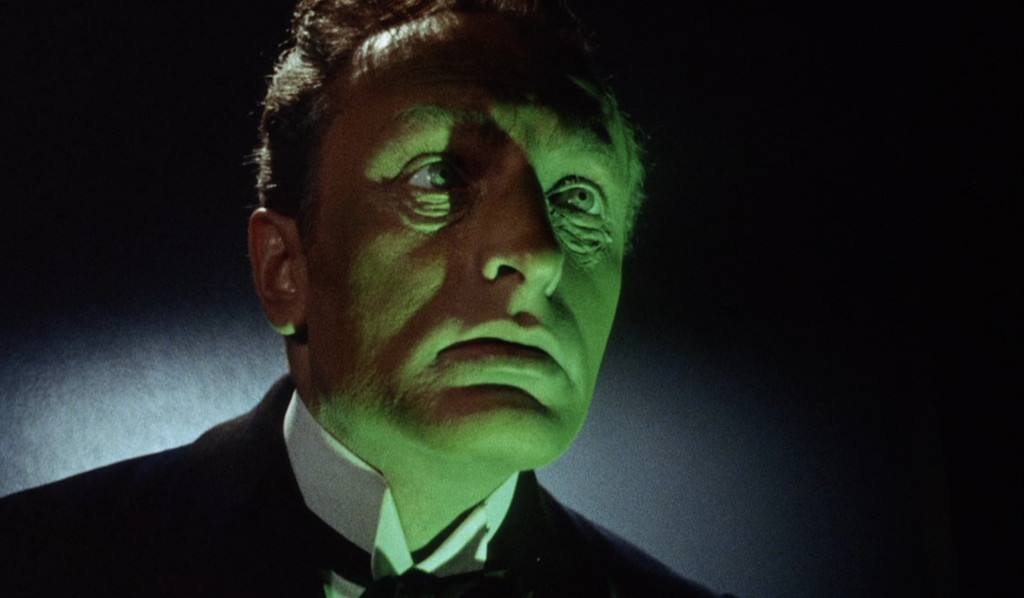
A scientist and socialite must kill every ten years in order to live forever. One of Hammer’s lesser films from 1959 is stylish, but never fires on all cylinders. Despite its talkiness, the script never delves into the themes at hand, and there’s too little horror and action to compensate. 5/10
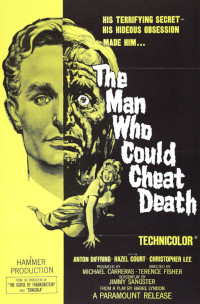
The Man Who Could Cheat Death. 1959, UK. Directed by Terence Fisher. Written by Jimmy Sangster. Based on the play “The Man in Halfmoon Street” by Barré Lyndon. Starring: Anton Diffring, Hazel Court, Christopher Lee, Arnold Marlé, Delphi Lawrence, Francis De Wolff. Produced by Michael Carreras. IMDb: 6.3/10. Letterboxd: 3.1/10. Rotten Tomatoes: 7.0/10. Metacritic: N/A.
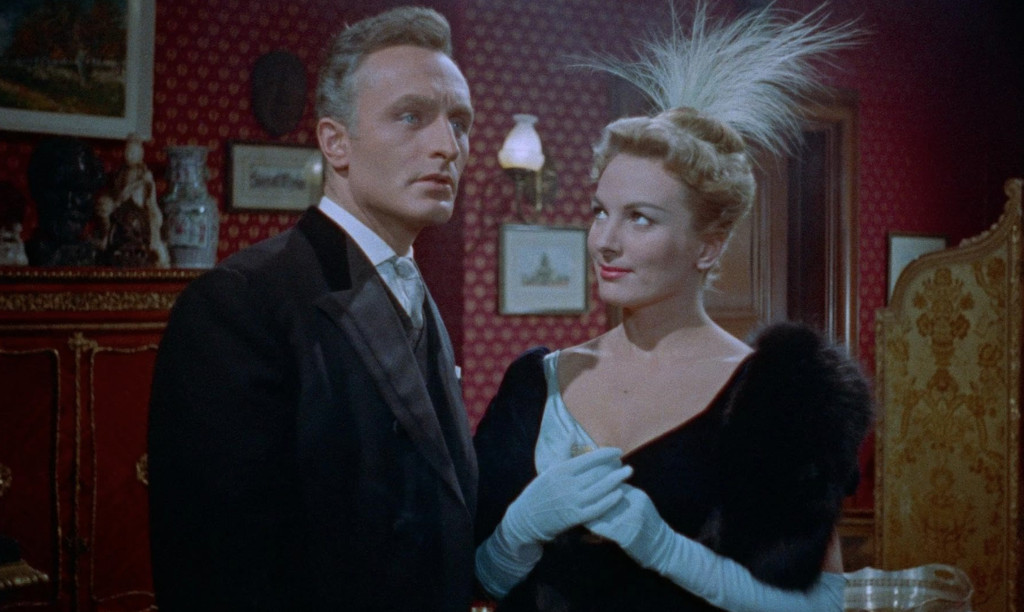
The film opens in the dark, as we see (barely) an old man murdered and someone tinkering with medical instruments. After the deed, we see said man enter a gate at “Rue Noire”. We continue proceedings the next afternoon at the same locale, which turns out to be the studio of one Goerges Bonnet (Anton Diffring), who is not only a brilliant surgeon to the upper class, but also a sculptor of some note. Tonight, on this fateful day in Paris in 1890, he is holding a small soirée in honour of the unvailing of his latest bust, modelled on his beautiful muse Margo (Delphi Lawrence). All is going swell until Bonnet is interrupted by a blast from the past. Appearing on his doorstep is his old flame from an adventure in Italy, Janine Du Bois (Hazel Court), and her suitor, fellow surgeon Pierre Gerrard (Christopher Lee).
The Man Who Could Cheat Death from 1959 is Hammer’s remake, of sorts, of Paramount’s 1945 movie The Man in Half Moon Street (review). That film, in turn, was an adaptation of British play- and screenwriter Barré Lyndon’s 1939 stage play The Man in Half Moon Street, a detective thriller with science fiction and horror overtones. Directed by Terence Fisher and heavily re-written by Jimmy Sangster, this is generally viewed as one of Hammer’s lesser early Gothic pictures.
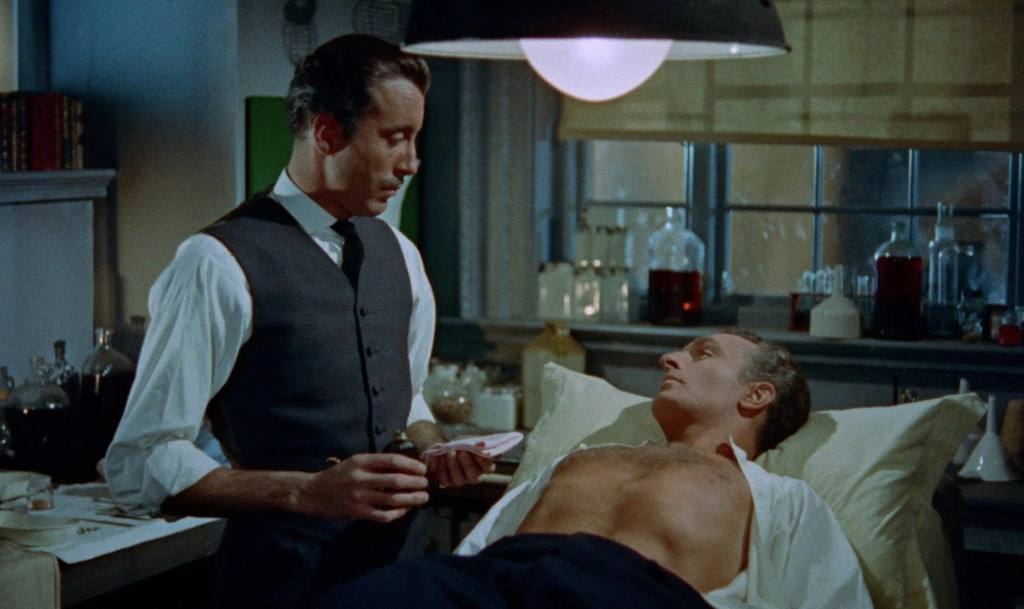
While the presentation is a bit convoluted, the main plot isn’t. Dr. Bonnet is a 104-year-old man who has been prolonging his life and youth through replacing his parathyroid gland every 10 years, with the help of his partner, Dr. Ludwig Weiss (Arnold Marlé). His 10 years are up again, and he needs another transplant. However, while Dr. Weiss has been part of Bonnet’s discovery and journey, Weiss has elected not to undergo the treatment, and is thus now his natural 89 years of age. Having suffered a stroke, he can no longer perform the operation on Bonnet. And time is running out: if Bonnet doesn’t get a new gland in the next week, he will age rapidly in a matter of minutes and die. In fact, he is already living on borrowed time and keeps his condition in check with the help of a potion he keeps locked in a safe, and which he must drink every six hours to stay alive. The downside is that the potion affects his mind. The main plot of The Man Who Could Cheat Death is simply that Dr. Bonnet needs to find another surgeon to perform the surgery before he dies.
But there are complications. Because of the moral and ethical questions involved in the secret to everlasting life, Bonnet and Weiss have kept their findings secret, and must find a surgeon who will engage in a secretive operation, without knowing exactly what the procedure is for – only that the rather simple operation is needed to save Bonnet’s life. The surgeon they approach is Christopher Lee’s character Pierre, who lets Weiss convince him to do the operation, as long as Weiss will oversee it. The problem, of course, is that Pierre is courting Bonnet’s old flame Janine, who still loves Bonnet and is immediately prepared to jump ship.
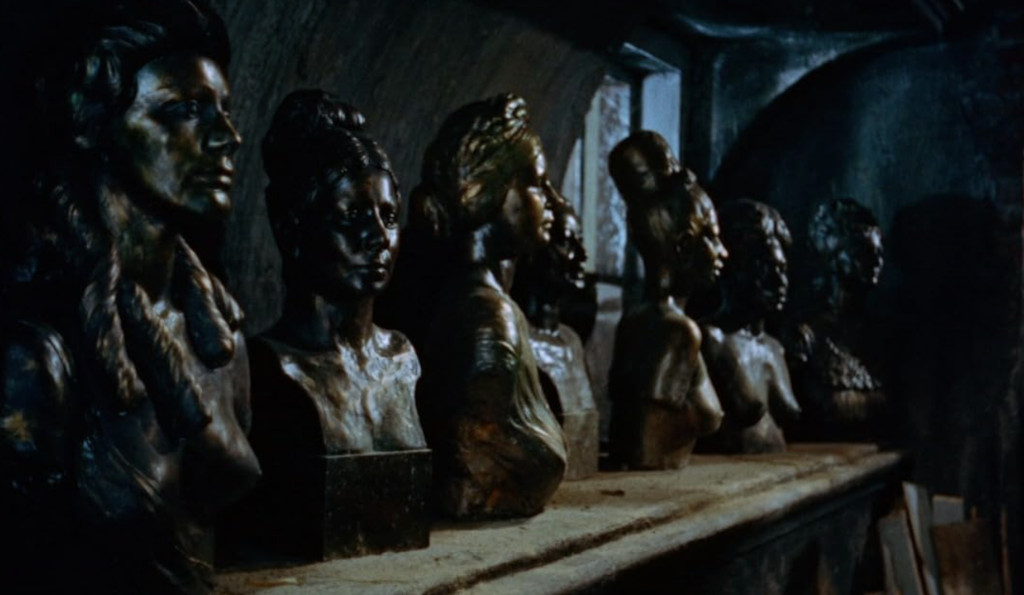
Furthermore, Bonnet’s model and muse Margo starts snooping around Bonnet when he is about to take his potion. When he starts to “turn”, he becomes wrinkled and his hands and face turn green. In a fit of manic rage, he grabs Margo and she collapses with burn marks on her neck and over her mouth, where Bonnet has touched her. We assume her dead, but it later turns out that she is alive and locked in a warehouse basement rented by Bonnet, along with the busts of muses past. When Margo goes missing, Inspector Legris (Francis De Wolff) starts investigating, and soon stumbles upon similar cases: Every ten years, in different parts of the world, a girl has gone missing after having modelled for a sculptor who was also a surgeon, and in each case the doctor has disappeared shortly afterward. Everything points at Bonnet – but the problem is that this would make Bonnet at least 60 years old – which he clearly isn’t.

Things get complicated further when Dr. Weiss finds out that his friend has been killing women along the way, influenced by the potion. Weiss confronts Bonnet and refuses to help him perform the operation, after which he smashes Bonnet’s potion bottle, condemning his friend to his long overdue demise. In a fit of rage, Bonnet kills Weiss, and is able to save two doses of his potion. To make matters worse, Pierre refuses to perform the operation without the help of Weiss, and with the help of the police inspector is able to unravel the mystery of the man who could cheat death. But Bonnet clings to life by kidnapping and locking away Janine in his basement of horrors, which is also filled with forebodingly flammable hay, anticipating the inevitable climax, and tries to blackmail Pierre into operating.
Background & Analysis
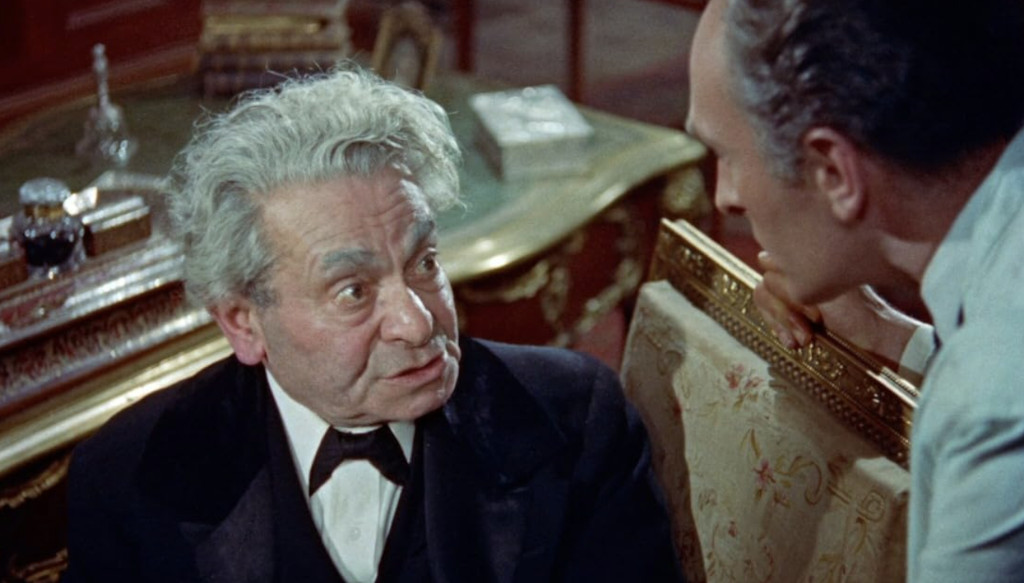
On paper, The Man Who Could Cheat Death has all the trappings of yet another Hammer classic. This was 1959, and Hammer was riding the crest of its horror explosion. The studio bursted onto the international scene in 1957 with its Eastmancolor Grand Guignol offering The Curse of Frankenstein (review), and followed it up with its reimaging of Dracula in 1958 – generally considered the best of the Hammer horrors. In July, 1959, the studio had released yet another adaptation of The Hound of the Baskervilles, still considered one of the best to this day, and in October, 1959, Hammer took on yet another Universal classic, The Mummy. Set for release in Novemer, 1959, The Man Who Could Cheat Death had high expectations. Not least since it was made by and with the cast and crew that had created all the past successes: director Terence Fisher, screenwriter Jimmy Sangster, cinematographer Jack Asher and production designer Bernard Robinson, as well as a cast sporting both Christopher Lee and Hazel Court. The only one missing was Peter Cushing – more on that later.
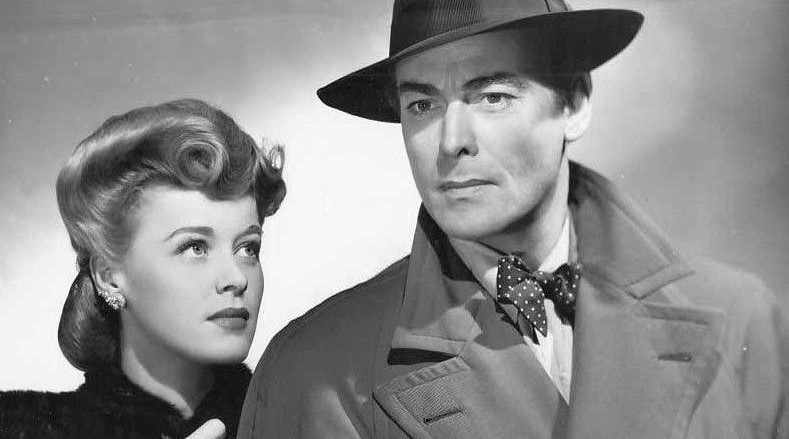
The origins of the film lies with British playwright and screenwriter Barré Lyndon’s 1939 mystery play The Man in Half Moon Street. Lyndon had a hit in 1936, both at West End and Broadway, with The Amazing Dr. Clitterhouse, a play in which a surgeon enters a life of crime in order to research the physical changes of a criminal when engaged in criminal acts. Apparently Lyndon had a pencheant for criminal surgeons, as he made one the protagonist of yet another one of his plays in 1939, The Man in Half Moon Street. Both plays got fair notices and did good business both in the US and the UK. In the UK the lead in The Man in Half Moon Street was played by Leslie Banks, perhaps best known for playing the memorable villain in the 1932 movie The Most Dangerous Game, and in the US he was played by horror movie staple Cedric Hardwicke. I haven’t been able to track down the script, but according to a few reviews I have found, the play differs to quite some degree from The Man Who Could Cheat Death. While the central premise is the same, the play is much more of a crime mystery, and a good deal of it seems to be preoccupied with the main character’s criminal capers. In the play, the main character, called Thackarey in Lyndon’s original, finances his life not through medicine, but through bank robberies. If I understand correctly, Thackarey enlists bank clercs to rob their own banks, then kills them, takes their adrenal glands and dissolves their bodies in a vat of acid. Apparently, a lot of time was spent on explaining the practice of forensic fingerprint identification – Scotland Yard is led onto the trail of Thackarey through fingerprints from his previous crime scenes. The play also features the protagonist’s old friend who lets him down when he hears about the murders, as well as a female love interest, which causes him some ponderous moral dilemmas. The London Illustrated News called the play “a study in the macabre that should appeal to all those who enjoy a somewhat different thriller”. I also found a rather fun little review submitted by a reader of the magazine The Chemist and Druggist who noted that “Pharmacists who are interested in the drama may find it amusing to see The Man in Half Moon Street, […] and to discover, if they can, the flaws in the science somewhat liberally incorporated in its texture”. Despite calling out the scientific inaccuracies, the amateur critic gave the play a very good review.
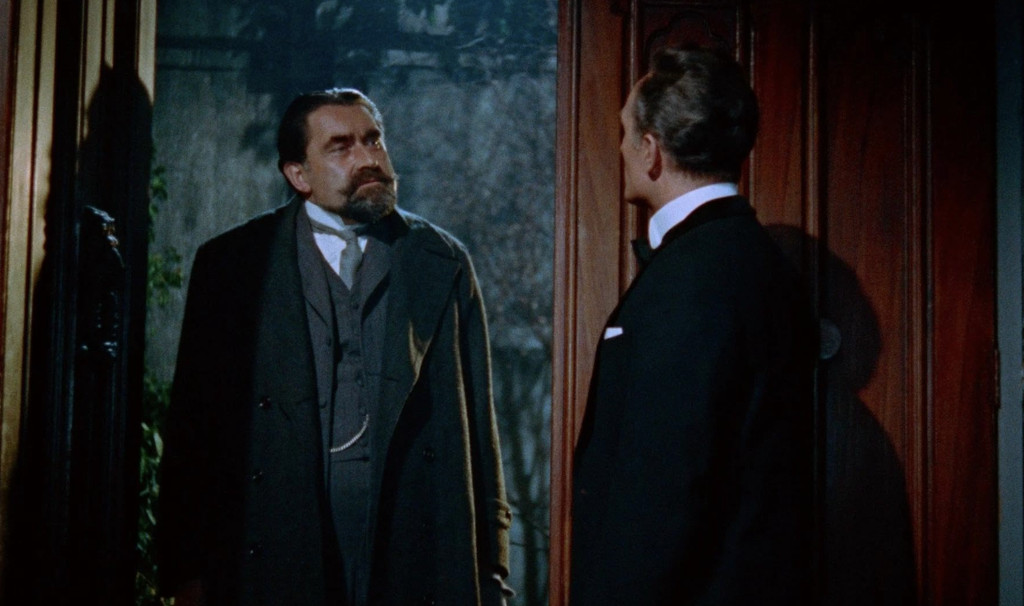
The play was turned into a Hollywood film called The Man in Half Moon Street by Paramount in 1945, which we have reviewed here on Scifist. I gave the film a 6/10 rating, praising the film’s intelligent script, its acting, atmosphere and set design. I especially singled out Swedish lead Nils Asther as captivating. However, also noted a convoluted story that leaned either too heavily or not heavily enough on the detective aspect, and for having too many subplots stealing the thunder from the main theme. Like in Hammer’s film, the subplot with the bank robberies has been omitted from the 1945 movie.
I haven’t found any information on exactly how Hammer’s film came about. Hammer had been distributing its films in the US for nearly a decade, through various contracts with US distributors. After the success of The Curse of Frankenstein in 1957, Hammer entered a limited partnership with Universal for the distribution of titles in connection with the old Universal horror catalogue, but also made one-off distrubition deals with other studios, including Columbia, United Artists, and in the case of The Man Who Could Cheat Death, Paramount. Hammer’s movies at this time were almost always adaptations or “continuations” of established material, be it stage plays, TV shows, novels or movies. It would be interesting to know, but I have found no information about it, if Hammer were first interested in adapting Lyndon’s play, which led the studio to Paramount, or if they first approached Paramount with a desire to remake The Man in Half Moon Street, which then led them to the play. More likely, perhaps, is the scenario that someone at Hammer saw the 1957 TV adaptation of Lyndon’s play, which aired on the programme Hour of Mystery on the commercial ABC-TV channel.
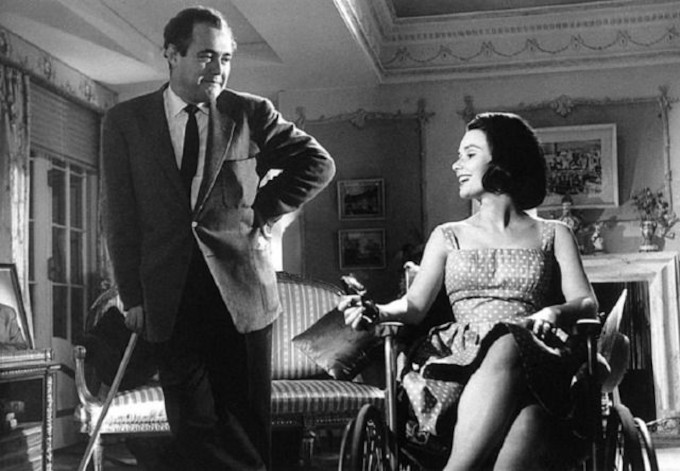
Whatever the case, producer Michael Carreras put his top man, Jimmy Sangster on the job of adapting Lyndon’s play. Sangster has later claimed he was not even aware of the 1945 movie, but on the other hand he also claimed to having not seen Universal’s Frankenstein before writing the script for The Curse of Frankenstein, which, as I wrote in my review of that film, seems highly unlikely.
As Sangster did with both Frankenstein and Dracula, he cuts away all characters not central to the main plot, and all plot that can’t be shot inside four rooms, leaving us with a straightforward, streamlined story that is as predictable as it is effective. So, gone are the bank robberies and almost all of the police procedural with its fingerprinting monologues, which were still present in the 1945 movie. No doubt taking a page from the 1953 Vincent Price vehicle Mystery of the Wax Museum, Sangster changes the protagonist from a painter to a sculptor, his first victim from a butler to a nude model and the female lead’s father to a rival suitor. These changes reflect Hammer’s budget and resources. Like almost all of Hammer’s films in the late 50s, it was shot at the old mansion dubbed Bray Studios and its surroundings. Hammer notoriously avoided shooting outside as much as possible, and in the case of The Man Who Could Cheat Death, there isn’t a single outdoors shot. The only scene taking place outside one of the few rooms featured in the movie is the opening scene, but it is actually shot inside the studio as well. The film has a main cast of six, limiting the number of actors needed, and the rest are bit-parts that probably didn’t require the extras to work for more than a day. One of the reasons Michael Carreras kept coming back to Sangster as a screenwriter was probably the fact that Sangster knew the studio, its resources and facilities, and was able to tailor his scripts to specific actors, rooms, facilities and to the budgetary requirements of Hammer.
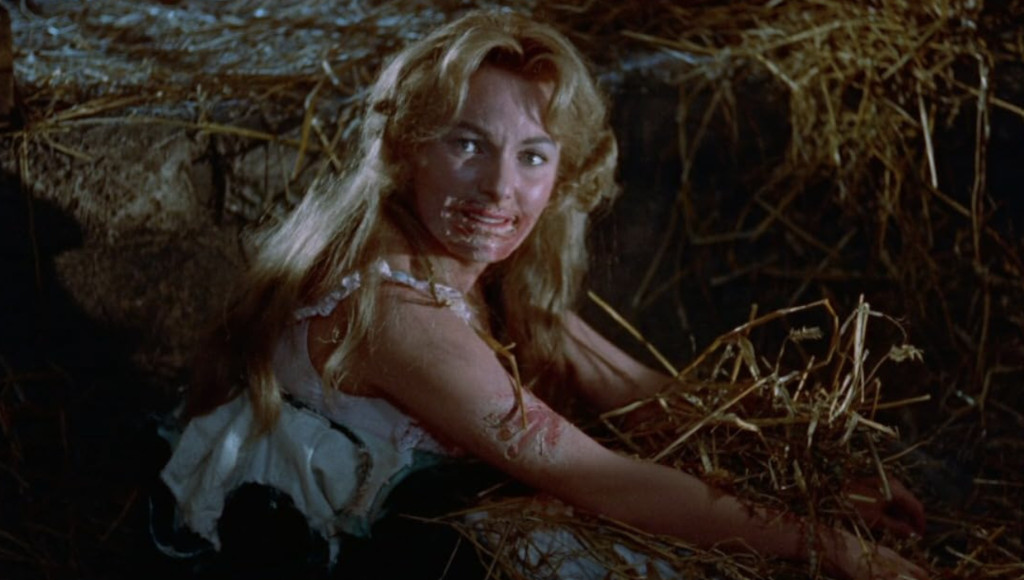
The script also bears many of the usual Sangster hallmarks: the mentor-apprentice relationship and metaphorical patricide, the gullible damsel in distress, the “second woman” who falls prey to the mad scientist and the police crashing through the door at the last minute, accomplishing very little. It also suffers from many of the usual Sangsterisms that marked even the best of his scripts. First and foremost is his perpetual inability to carry an interesting story between start and finish. The problem is that the kind of stories Hammer and told on screen were such that the audience usually knew from the very beginning how they would end, if they had any experience with classic horror movies. While Sangster would often throw a little something extra into the mix, the formula remained the same from film to film. While a formula may work well if the build-up from setup to conclusion takes us on an interesting journey, Sangster almost always struggled with keeping audiences engaged on that journey from familiar setup to inevitable conclusion. While he did like to throw in a secondary theme or subplot, they very rarely had any real bearing on the main plot. For example, in The Man Who Could Cheat Death, Sangster places a lot of emphasis on Bonnet’s sculpting of his victims, but is never quite able to justify this emphasis. The nude busts of his lovers and muses past have no practical function, nor are they really essential for the plot. Bonnet’s unwillingness to give up his busts to the police do raise Pierre’s and Legris’ suspicions about Bonnet, but they are not key to their investigation. Sangster sort of explains Bonnet’s fixation on his busts with him wanting to keep mementos of his past lovers, but this feels more like a justification for Sangster’s choice to give a call-back to various Wax Museum movies than a well-integrated character trait or motivation. So as an audience, we keep waiting for these busts to have any real plot significance, and come off the film feeling rather cheated. If one was cynical, one might suspect the busts were Sangster’s way of showing boobs in the film without actually showing boobs.
Where Sangster usually shines, though, is in the writing of his characters. For both The Curse of Frankenstein and The Revenge of Frankenstein, it was the dissection of the main character that was the real treat of the movies. In The Man Who Could Cheat Death, the character of Bonnet is simply not as interesting. From reviews I had found in archives, it seems this was a problem with the original play as well, with one reviewer stating that Lyndon hurries past the philosophical questions presented in the premise in favour of the crime thriller elements. The 1945 movie was likewise marred by the same problem. The Man Who Could Cheat Death is a very talky movie, so Sangster would have had ample opportunity to dig deeper, but despite the many lengthy conversations between Bonnet, Weiss and Pierre, it all remains surprisingly superficial. In the end, this is simply the old mad scientist trope of a man starting out with good intentions and losing sight of his objectives over time. It all seems as if Sangster wrote the film in a hurry with little interest. It lacks the usual wit and edge of his better scripts and despite the odd jab at the British upper class, fails to deliver any satirical punch. All in all, it is a by-the-numbers mad scientist script with few surprises and little thematic interest. Sangster seldom wrote a really poor script, and this one is also serviceable, but little more.
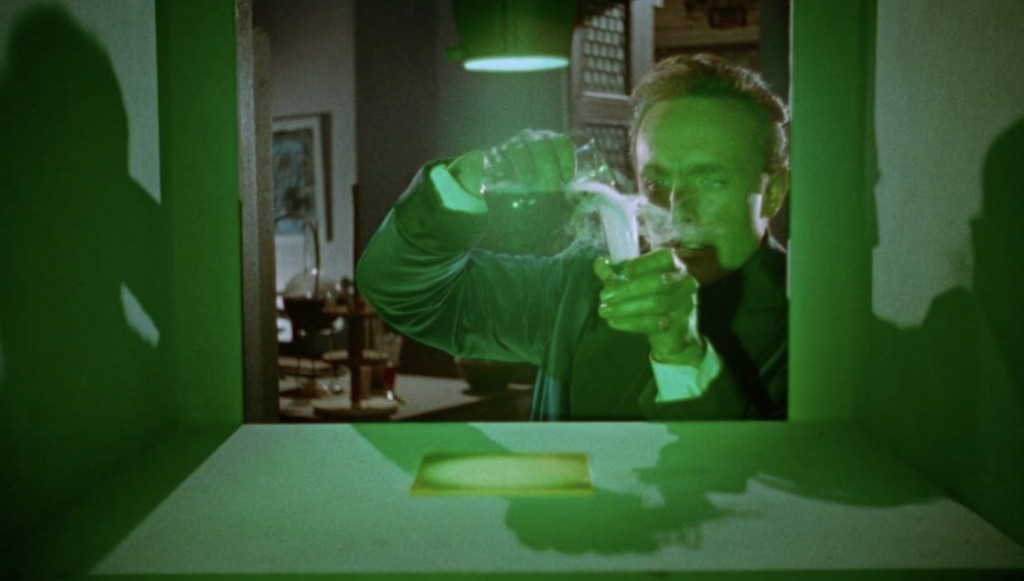
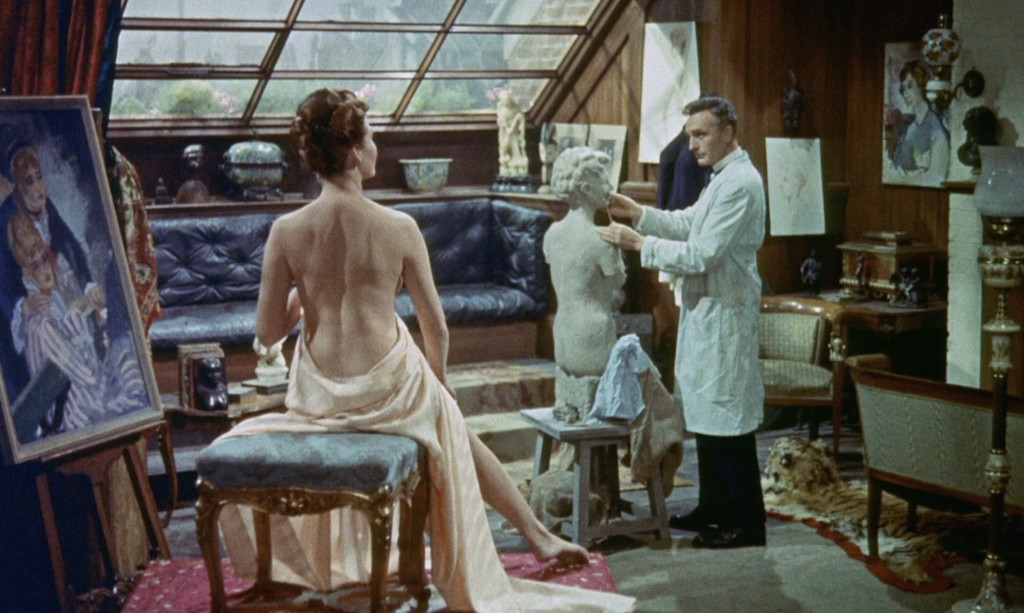
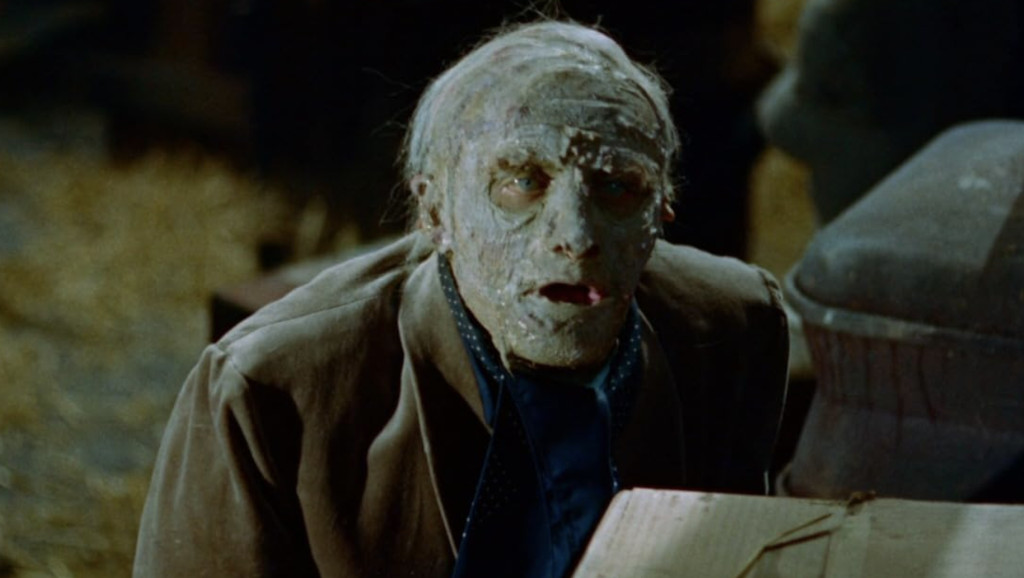
Terence Fisher also shows fairly little enthusiasm in his direction. With so little action on screen, and with so little physical space in which to move his camera, Fisher isn’t able to blow life into The Man Who Could Cheat Death. There’s a number of striking setups, in particular the scenes showing Bonnet at his safe where he keeps his drug and murders his friends, but apart from a few flashes of Fisher’s flair, the direction is on the whole rather workmanlike. As far as gore is concerned, Hammer’s early films have a gorier reputation than what is usually on screen, presumably because what little was shown became scandalised because of the films’ garish Eastmancolor. The sight of the bright, red blood and a few rubbery body parts were enough to send some of the British critics and commentators of the time into a frenzy, but in fact the gore in these films was more often suggested than shown. Even so, the gore factor in The Man Who Could Death is surprisingly low. Bonnet’s final transformation makeup is simply a caked facemask and not Roy Ashton’s best work. However, the burn marks on Margo’s face are genuinely upsetting. Since The Curse of Frankenstein, Hammer’s other selling point, apart from the horror and gore, had been sex. In 1959 they were still a few years away from replacing plot with nudity, but The man Who Could Cheat death probably marks the studio’s first topless shot. The European cut of the film does, that is. In an interview with Tom Weaver, published in 1991, Hazel Court revealed that she appeared topless in a scene where she is modelling for Bonnet, however it was cut from both the UK and US releases. Many Hammer fans over the coming years tried to track down a print containing the shot, but to no avail. However, it was restored in Vinegar Syndrome’s 2025 Blu-ray release, along with a few seconds from the fiery finale of the film that was also excised at the hands of the British censors. Now seen, it is a tastefully made shot and those hoping to get some full frontal nudity of Hazel Court will be disappointed. Court is shot from the back and reveals very little apart from a glimpse of the side of one of her breasts.
As mentioned above, the one thing missing from this film is Peter Cushing. In fact, Cushing was originally set to play Bonnet. However, shooting of The Man Who Could Cheat Death started only six days after the wrap of The Hound of the Baskervilles, and Cushing informed Hammer that he needed a rest. Hammer considered taking the matter to court, but since no definitive contract had been signed, they had to make do without Cushing. On short notice, Hammer called upon the services of German-born character actor Anton Diffring. That the choice fell on Diffring didn’t just have to do with his steely-eyed menace and aristocratic bearing, but mainly on the fact that he had played the role in a 1957 adaptation of Barré Lyndon’s play for the TV show Hour of Mystery. Diffring is highly effective as the 100-year old mystery man, conveying both an air of haughty otherworldliness, as well as a quiet menace. However, he is a much more blunt and direct actor than Cushing, and chooses to play Bonnet in a hammy over-acting style. Some commentators have suggested that the film had been better with Peter Cushing in the lead, but it is not Diffring’s acting which is at the root of the movie’s problems. Diffring does a very different mad doctor than Cushing would have, but he is charismatic and keeps the audience engaged, even if he has a tendency to go over the top repeatedly. Its doubtful Cushing could have elevated the film in a way that Diffring doesn’t, as the root of the problem lies in the script.
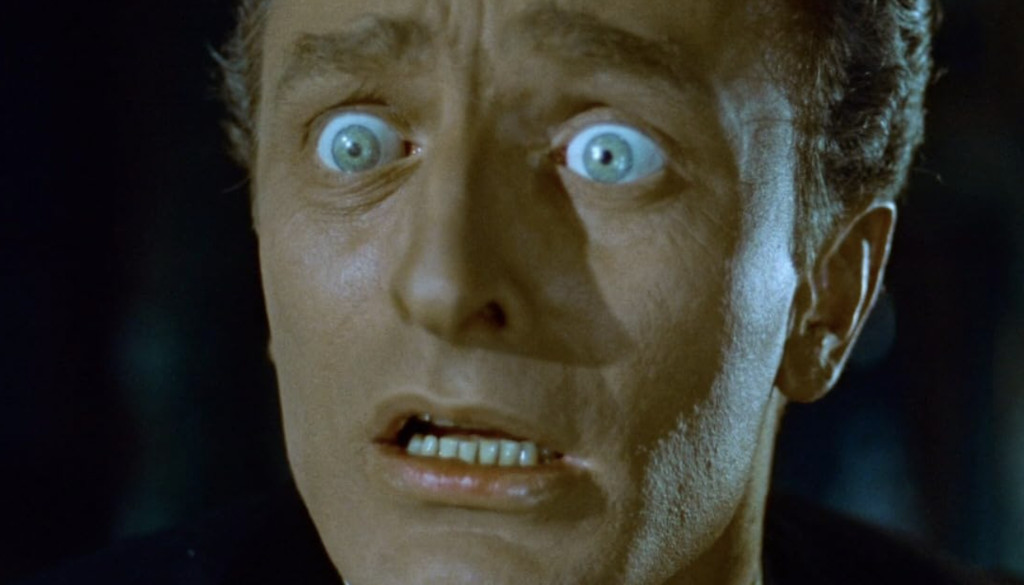
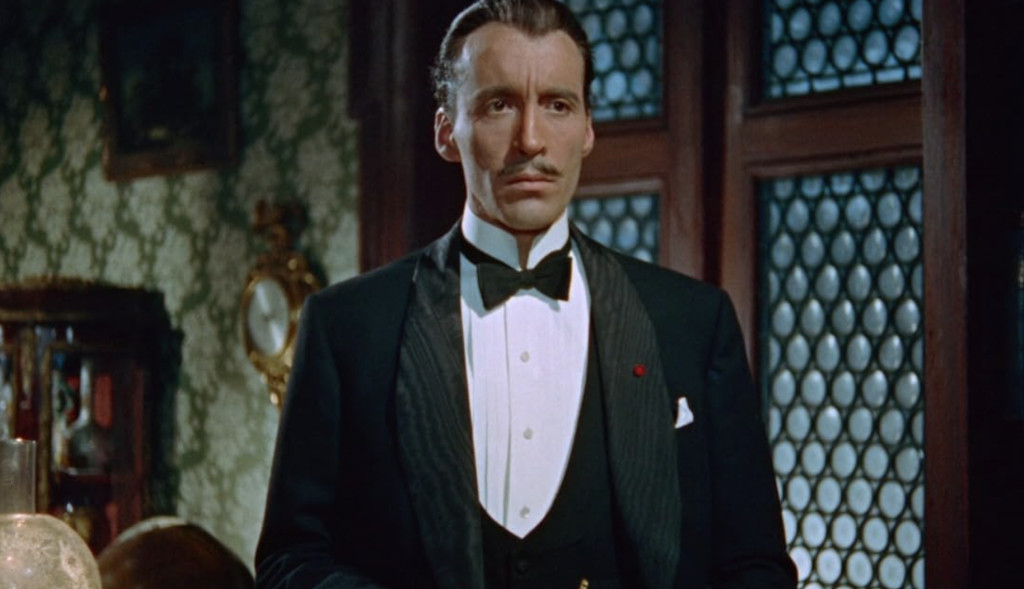
Aside from Bonnet, the most prominent character in The Man Who Could Cheat Death is Bonnet’s old partner, Dr. Weiss, played by Arnold Marlé. Like Diffring, Marlé was a German-born actor who moved to the UK with the rise of fascism in Germany. Mainly active on stage in his home country, he established himself as a bit-part and character player in Britain in the 30s. Marlé brings a sympathetic charm to his role as Weiss, a welcome contrast to the arrogance of Bonnet. However, Marlé occasionally seems to be struggling with the wealth of material his character is given, looking more like he is trying to remember his lines than giving them any real weight. Hazel Court is always magnetic on screen, but she is given precious little to do in this film. Christopher Lee’s character is utterly forgettable, but it is still refreshing to see Lee play not only a good guy but a comparatively ordinary person. Lee, still relatively fresh as an actor, had still not become set in his mannerisms, and gives a surprisingly non-Leeish performance. Delphi Lawrence, forgettable as Margo the muse in the beginning of the picture, gives a memorable performance as the crazed and imprisoned victim of Bonnet in the final scene.
The music in The Man Who Could Cheat Death is a departure from the more traditionally romantic scores that James Bernard wrote for the Dracula and Frankenstein series. This was the first of three collaborations between Hammer and Richard Rodney Bennett, who would go on to get two Oscar nods. Bennett’s score makes use of atonal and dissonant features, as well as percussive elements and brass swells. While it isn’t as traditionally romantic as Hammer’s usual fare, it is still highly reactive, swelling in emotional scenes and becoming frantic in action sequences, adding to the emotion and atmosphere created by the visuals and the dialogue.
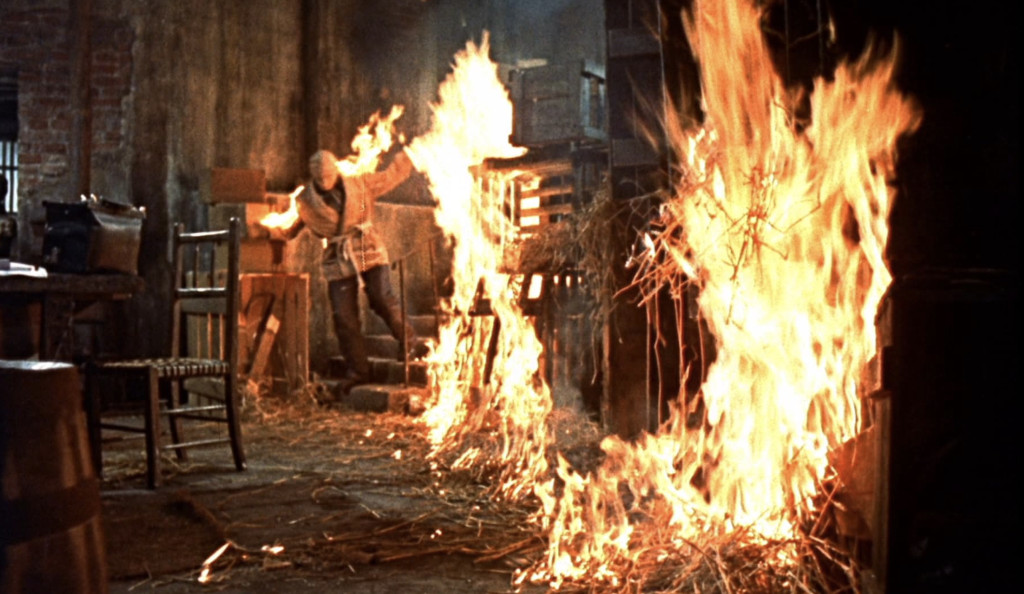
The Man Who Could Cheat Death is not a bad movie as such. It’s entertaining enough and well filmed and acted. Despite its cramped feel, production designer Bernard Robinson creates stylish backdrops for the lengthy discussions. It simply feels like a film that nobody was particularly interested in making. Despite its flaws, it is a standout in the science fiction year of 1959, that was dominated by super-cheap independent pictures with little thought, style och production value. I have given most of the films I have reviewed from this years a 3/10 rating, and this movie’s 5/10 is, in comparison, a highlight.
Reception & Legacy
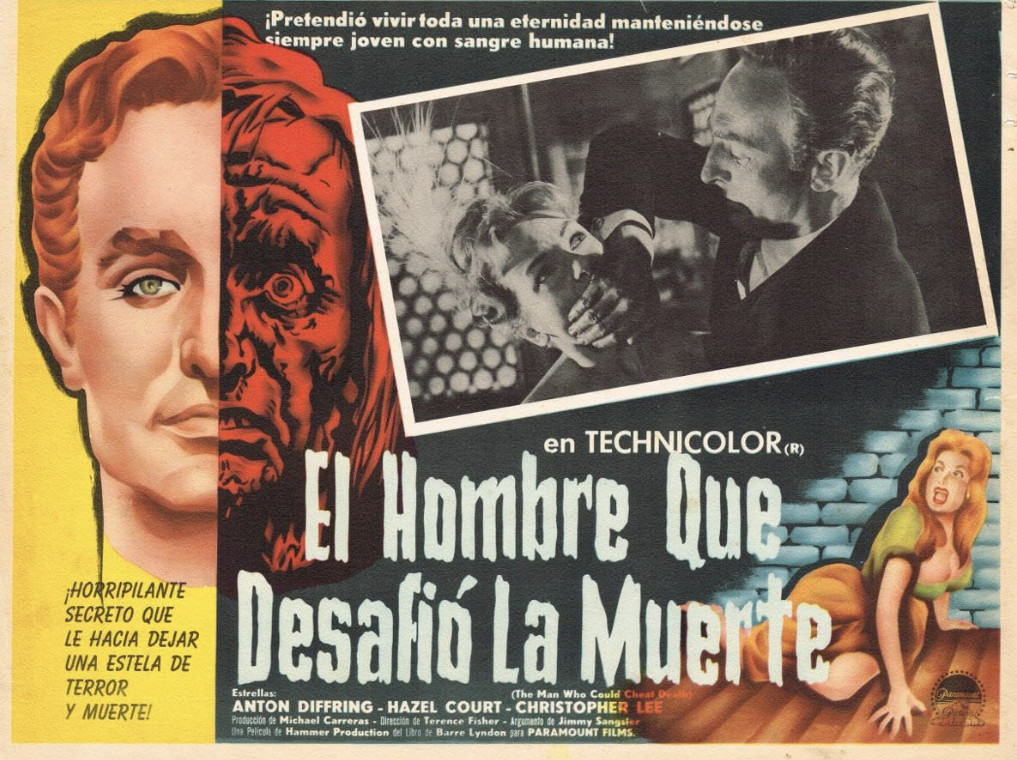
The Man Who Could Cheat Death was released in the US on August, 1959, and in the UK in November, 1959, distributed by Paramount in both countries. In the UK, the movie predictably got the infamous X rating, a rating that Hammer wore proudly in all their marketing. It did not fare particularly well in US theatres, neither did it reach the same popularity in the UK as Hammer’s previous horror movies, but all in all, it made a small profit for Hammer.
The film got mixed reviews in the British trade press. The Monthly Film Bulletin, famously antagonistic toward Hammer’s horror output, gave the picture its lowest III rating, and opined that it “crawls from one ingenious absurdity to the next until it reaches its inevitable and portentious close – the usual sadistic set-piece”. Kinematograph Weekly was altogether more positive, calling The Man Who Could Cheat Death “Very good”. The critic wrote: “The first half contains more words than action, but smooth interplay of skilfully drawn characters enables it to hold the interest until unadultered horrific, heightened by expert photography, takes the floor”.
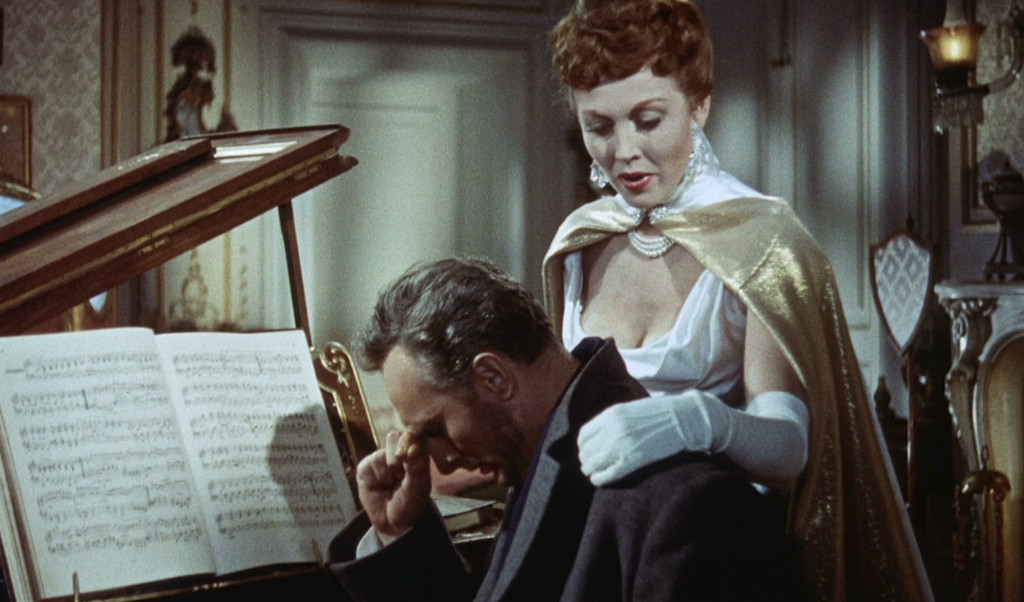
American critics on the whole leaned towards the lukewarm. In the trade press, it’s no surprise that the biggest praise came from the usually enthusiastic Motion Picture Daily, which called the production “an effective, even literate treatment” of the familiar subject-matter. Harrison’s Reports called it “a fairly good […] horror thriller”, although noted that “it does not rise above program fare”. The publication wrote that The Man Who Could Cheat Death did not match the qualities of Hammer’s best horror movies, mainly due to its talkiness. The Motion Picture Exhibitor wrote: “The careful production, color photography, and good acting that are trademarks of the Hammer horror subjects are present here as well, lifting this into the above average horror category. The film, however, lacks some of the action elements of other Hammer subjects, relying mainly on talk.”
On the strictly negative side were The Film Bulletin and Variety. Bulletin called The Man Who Could Cheat Death “a tepid entry for the horror market”. The critic noted it was “reasonably well acted and excellently photographed”, but was of the opinion that it did not “measure up to such earlier Hammer efforts as The Curse of Frankenstein and Dracula“. Signature Powe in Variety viewed the film’s failure to live up to its predecessors as a sign of the general decline of the horror movie genre: “The Paramount release is in good Technicolor, it is well-acted and intelligently conceived. But invention and imbellishment in this field appear to have been exhausted.” Powe continued: “Horror films are victims of their own past success. Lavish with monsters and laced with gore, what first popped the eye-balls later only droops the lids. As ever-greater horror is required, there is less and less that is horrible enough.” But he also went on to note that Hammer was the only studio at the time that focused on quality horror films, and wrote that there was “nothing foolish” about the movie. He praised both Sangster’s “intelligent” script, Fisher’s direction and the acting. “The trouble is that as a straight story it does not have enough about it to keep it consistently and intermittently interesting. And there is not enough horror to compensate.”
In Keep Watching the Skies! (2009), Bill Warren notes that simply on the strength of being a Sangster-scripted, Fisher-directed late 50s Hammer horror movie, The Man Who Could Cheat Death inherently has a lot of strong elements. Furthermore, he adds that to the film’s merit, it is a serious film intended for grown-ups. “But the labored script and Terence Fisher’s pedestrian direction make the film ponderous. […] While it still offers some virtues, today the film looks somewhat dead and dreary”.
Pretty much all of my go-to critics share the notion that The Man Who Could Cheat Death is a lesser Hammer entry due to its lethargic and lazy script. Jeffrey Kauffman at Blue-ray.com adds: “One of the problems with the film, aside from its narrative lethargy, is the fact that the audience knows virtually from the get-go that Bonnet is indeed cheating death, and that both the liquid and the unfortunate imprisonment of a hapless female have something to do with his evident eternal semi-youth.” In a review for Trailers from Hell, Glenn Erickson likewise faults the movie’s predictability: “It takes the assembled cast of The Man Who Could Cheat Death eighty minutes to discover what the audience knows going in, namely that The Man Who Could Cheat Death is indeed The Man Who Could Cheat Death.”
Alessandro Pedrazzi at Italian Exxagon writes in his 5/10 star review: “More horror than science fiction, but more drama than horror, [The Man Who Could Cheat Death] is a long, tedious film that completely ignores moral and ethical themes”. On a slightly more positive note, Jennie Kermode at Eye on Film gives the movie 3.5/5 stars, writing: “Complete with the detailed set dressing, elegant costumes and thundering score you’d expect from Hammer, The Man Who Could Cheat Death may not quite get its many fragments to gel, but it’s still an intriguing and entertaining film”.
The average audience seem to hold the film in a slightly higher regard than the critics. The movie has a 3.1/5 star rating on Letterboxd, and a 6.1/10 star rating on IMDb, both based on over 3000 votes.
As stated, the movie was released as a remastered Blue-ray and 4K UHD by Vinegar Syndrome in 2025, complete with the timid nude scene previously omitted from US and UK prints, and it can also be found on earlier, cheaper, DVD releases. In the US and UK it seems to be available for streaming (at the time of writing) on Amazon Prime, Apple TV and Fandango, but legal streaming options in the rest of the world are scarce.
Cast & Crew
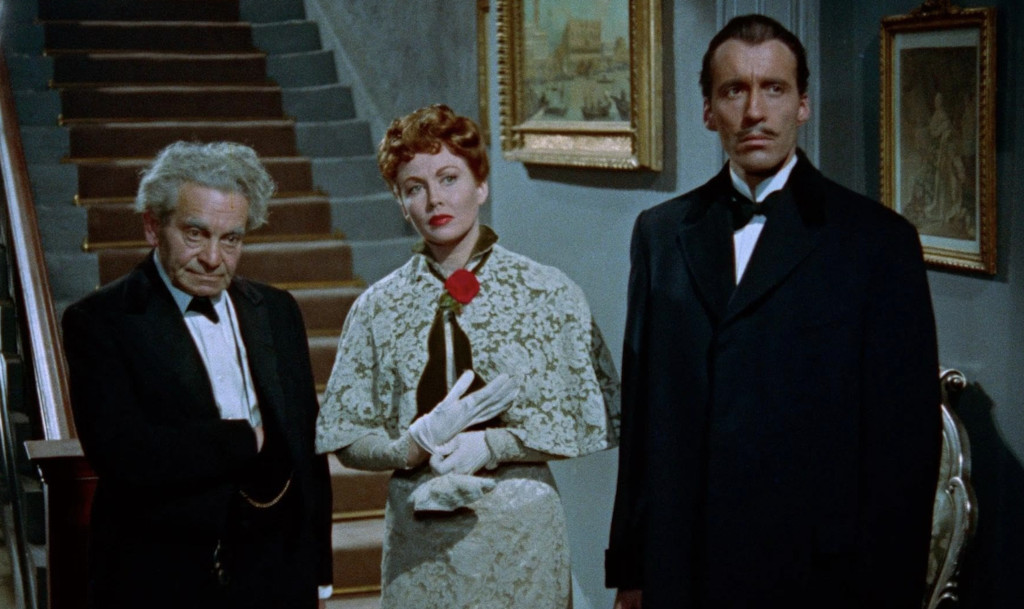
I have written extensively about the main crew and cast of of Hammer’s classic horror movies in previous posts, so I won’t go over them again here. For more on Terence Fisher, Christopher Lee and Hazel Court, please head over to my review of The Curse of Frankenstein and search for the “Cast & Crew” subheading. For more on Jimmy Sangster, look up my review of The Trollenberg Terror. You can also click on their names above to get a complete list of all the reviews I have written of films in which they appear.
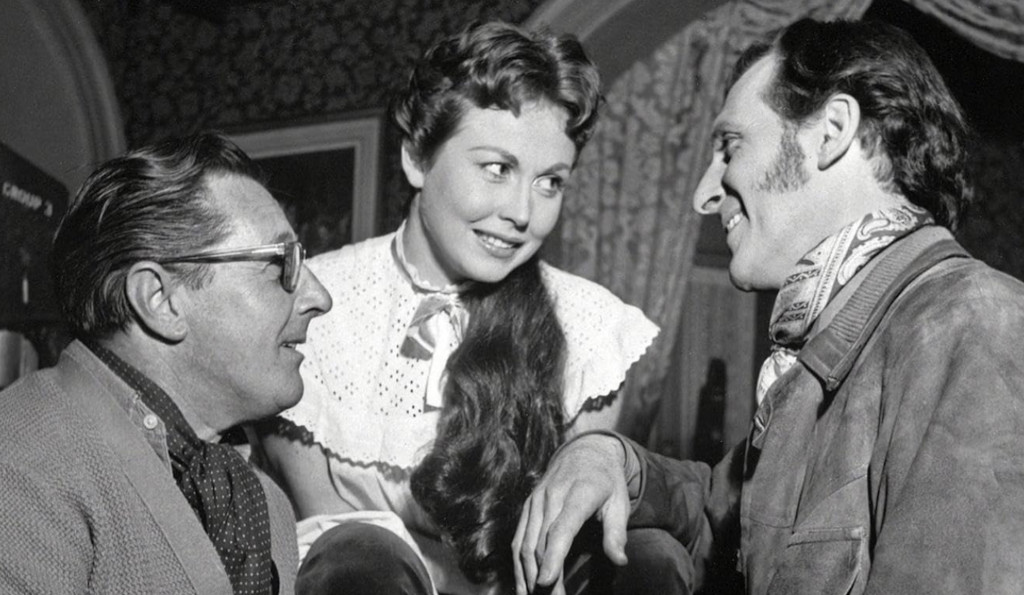
Suffice to say, screenwriter Sangster and director Fisher were primarily responsible for the creative work behind all of Hammer’s late 50s and early 60s horror classics (not forgetting the key role played by producers Anthony Hinds and Michael Carreras). Christopher Lee and Peter Cushing (absent in The Man Who Could Cheat Death) were the dynamic on-screen duo central to all of Hammer’s three main franchises: Frankenstein, Dracula and The Mummy. While Hazel Court is considered one of the foundational scream queens, she actually only appeared in two of Hammer’s horror movies, The Curse of Frankenstein and The Man Who Could Cheat Death. More important was her contribution to Roger Corman’s early 60s Edgar Allan Poe adaptations, in which she had far jucier roles.
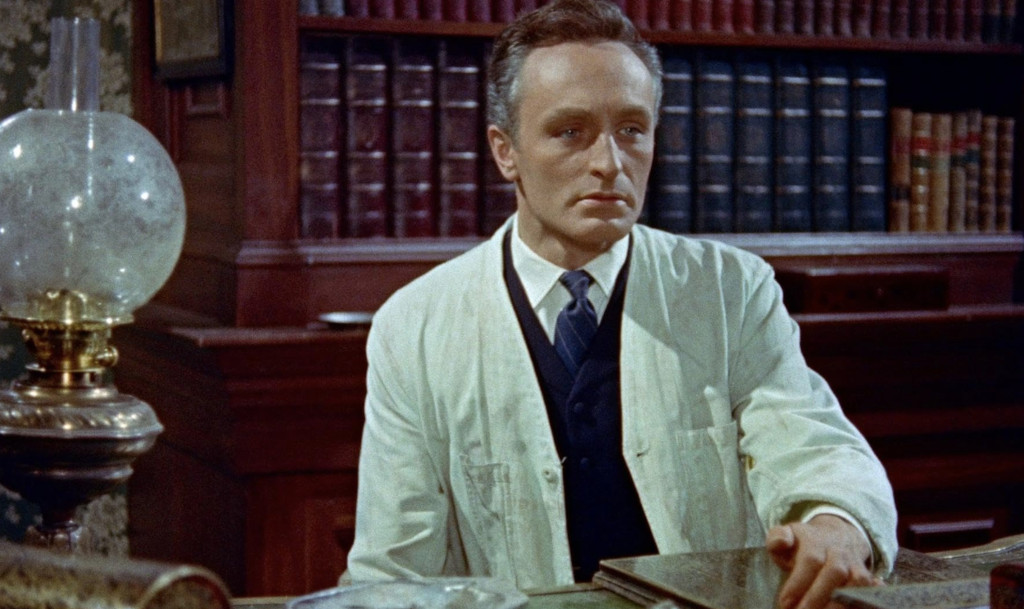
The sinister, mysterious title role in The Man Who Could Cheat Death (1959) was played by German character actor Anton Diffring. Born in 1916 in Koblenz, Germany, a gay man with a Jewish father and Christian mother, Diffring relocated to the UK sometime in the late 30s, when he was still probably studying to become an actor. Contradicting accounts claim he actually fled to Canada and was interned there in 1940, but today most scholars agree that this was a fabricated PR story concocted by agents and studios. Diffring quickly picked up English and started appearing on stage and in minor film roles in the UK in 1940, although his career as a film actor proper started in 1950. Ironically, with his piercing blue eyes, blonde hair and his chiselled face, Diffring ended up playing that which he had left Germany to escape – Nazis. From 1950 he was typecast as Nazi soldiers and officers, mostly in minor or uncredited roles.
As many actors, Diffring started working regularly in TV plays, which often offered better, bigger and more challenging dramatic roles for lesser-known actors than films. One role that became important to his career was the lead in The Man in Half Moon Street, which he played on Hour of Mystery in 1957, and helped secure him the same role in Hammer’s The Man Who Could Cheat Death in 1959, when Peter Cushing needed a break. Even more important was probably his brief turn as Baron Frankenstein in an unsold TV pilot for a proposed show called Tales of Frankenstein, co-produced by Hammer and Columbia. While the pilot wasn’t picked up, it gave Diffring a working relationship with Hammer, and probably smoothed out the last-minute call to star in The Man Who Could Cheat Death.
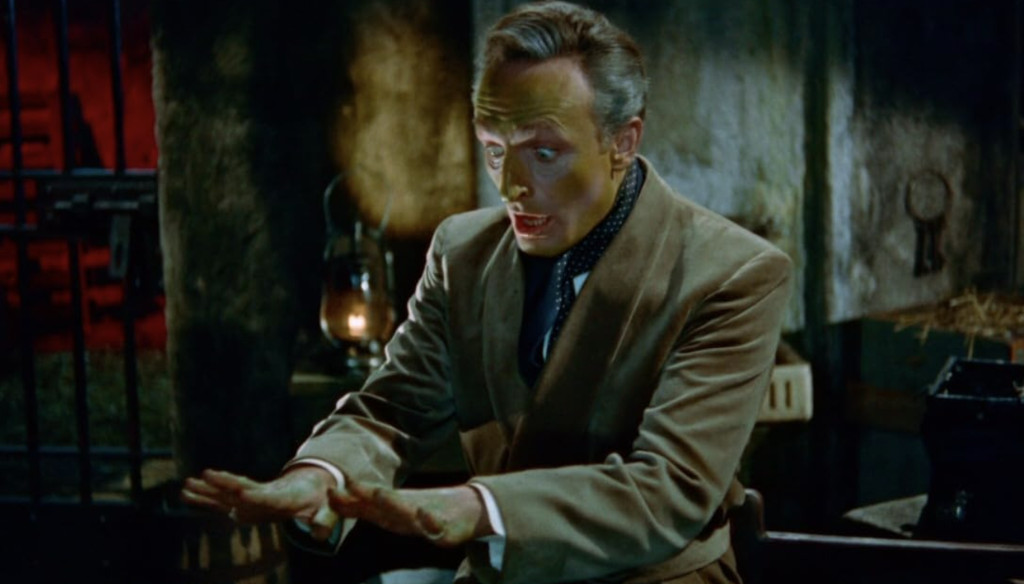
While The Man Who Could Cheat Death was not the hit that Hammer had hoped for, it gave Diffring some name recognition, and earned him another lead in a horror movie the next year, as a deranged and sadistic plastic surgeon in the rather well-regarded schlockfest Circus of Horrors (1960). However, he never got his big break into the A league, and was forced to fall back on his background of playing Nazi supporting roles for decades to come. Howver, the 60s gave him the chance to appear in decent roles in such successful war movies as The Heroes of Telemark (1965, with Kirk Douglas), The Blue Max (1966) and Where Eagles Dare (1968, with Richard Burton and Clint Eastwood). While not technically a Nazi, one of his most memorable roles came in 1966, when he played Guy Montag’s book-burning colleague in Francois Truffaut’s sci-fi classic Fahrenheit 451.
However, the 70s saw Diffring pushed down in the credit sheet to minor and sometimes even uncredited roles. The few top billings (or close to) came in Z-grade shlock like L’iguana dalla lingua di fuoco (1971), Mark of the Devil: Part II (1973) and Love Letters from a Portuguese Nun (1977), as well as a B-horrors like Antonio Margheriti’s Seven Deaths in the Cats Eyes (1973) and The Beast Must Die (1974). Apart from the above mentioned, Diffring also appeared in the sci-fi movie Operation Dead End (1986), and had a few run-ins with SF in television: he appeared in a German 1975 TV adaptation of H.P. Lovecraft’s The Shadow Out of Time, and his very last TV appearance was three episodes of Doctor Who in 1988, where he played, what else: a Nazi.
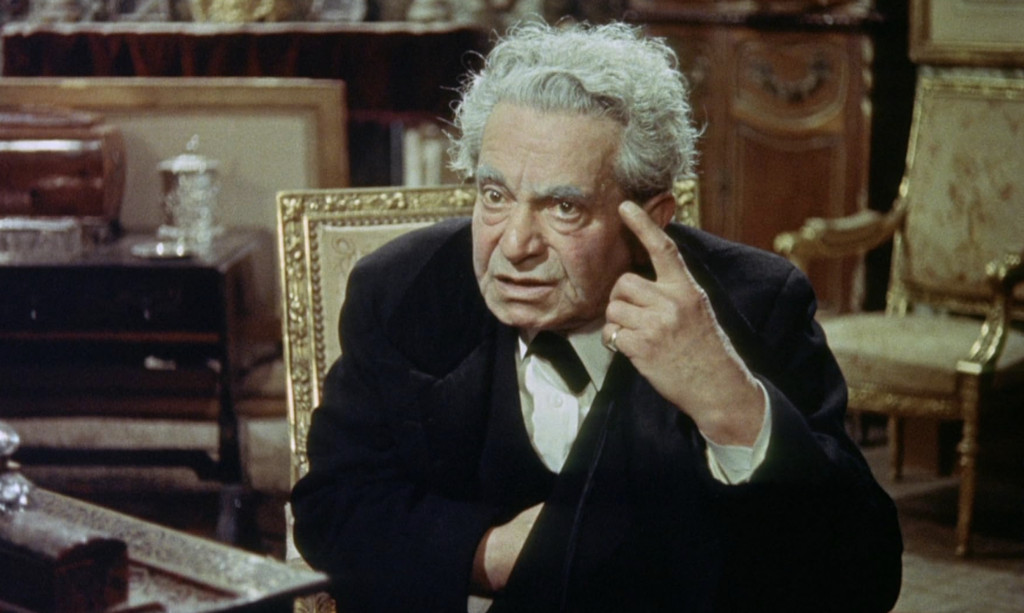
Arnold Marlé, who plays Bonnet’s old friend, we have seen before on this blog in another Hammer film. In 1957 he played the mysterious Himalayan lhama in The Abominable Snowman (review), opposite Peter Cushing. There’s not a ton of information on Marlé, but we know he was born in Prague in 1887, then part of the Austro-Hungarian Empire, and trained as an actor in Munich, and settled in Germany. As a Jew, he fled Germany with the rise of Hitler, to Czechoslovakia, where he worked at the German Theatre, then to Holland and finally London. While a fine actor with an innate charisma, his strong accent, present still in 1959 despite having lived 20 years in England, would have presented a problem. Nevertheless, he found steady work in theatre, both in London and in New York, where he was part of the ensemble on Paddy Chayevsky’s hugely popular horror-adjacent (deals with spirit possession) play The Tenth Man (1959-1960), which ran for a year and a half on Broadway and was nominated for three Tony Awards.
Between 1942 and 1962 Arnold Marlé appeared in 20 films and around 30 TV shows in the UK, in supporting roles, almost always as some form on foreign national. He passed away in 1970, at the age of 83. Marlé was married to Lilli Freud-Marlé, the niece of Sigmund Freud.
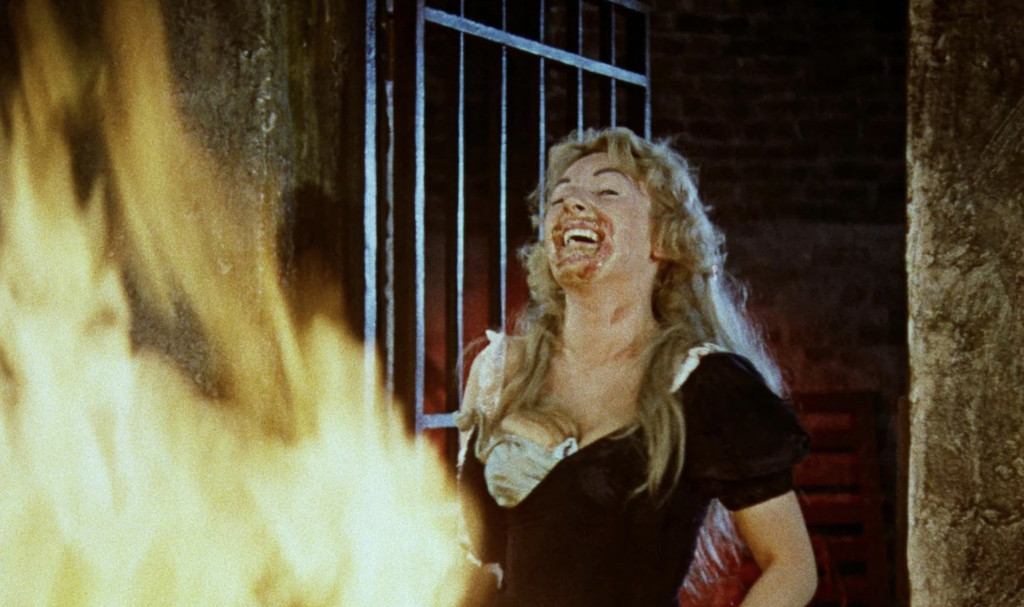
In The Man Who Could Cheat Death, Bonnet’s muse Margo, who falls victim to Bonnet’s wrath when she catches him with his potion, is played by RADA-trained actress Delphi Lawrence, born 1932 in Hampstead to British and Hungarian parents. Lawrence was a mainstay on the London stage, but also appeared frequently in films and TV between 1952 and 1968. Lawrence was leading lady in a good handful of British B-movies in the 50s and early 60s, mostly crime dramas, most of them quite obscure today. By the 60s, however, her film appearances became ever more infriquent, and her main body of work was done on stage or in TV. She moved to the US in 1966, where she wasn’t able to rekindle her movie career, but did appear as a guest star on a number of popular TV shows, including Voyage to the Bottom of the Sea, The Wild Wild West, Gunsmoke and The Man from U.N.C.L.E. She retired from the screens in 1968, but did continue to perform on stage. She specialised in the role of Vera Charles in the hit musical Mame, and played the character in several productions from 1968 to 1990. In 1974 she was nominated for a Jeff Award (Chicago’s theatre awards) for best leading actress for her work in a production of Separate Tables. Lawrence passed away in 2002.
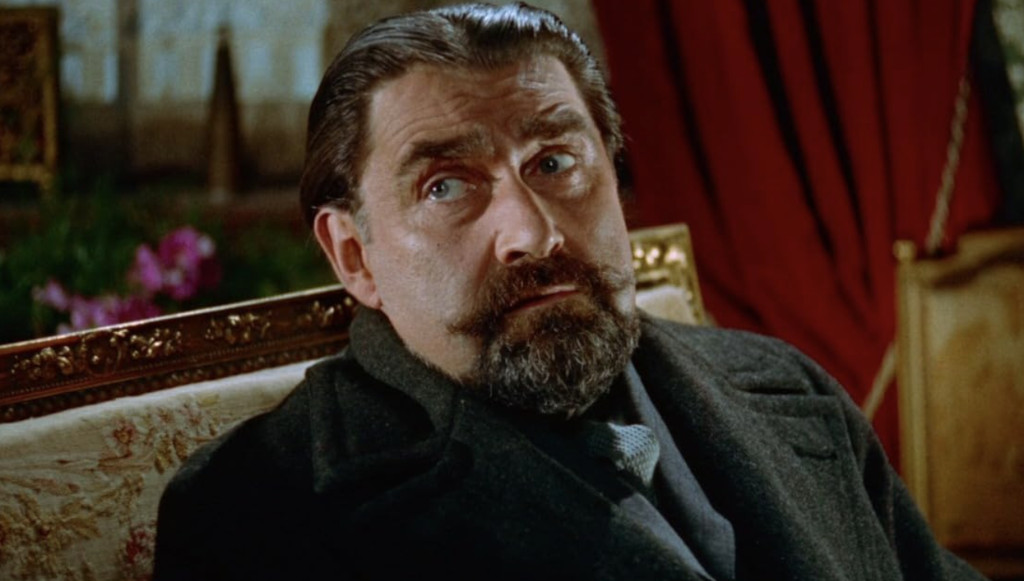
Police inspector Legris in The Man Who Could Cheat Death is played by busy character actor Francis De Wolff. With his bulky frame, bushy eyebrows, dark beard and expressive face, De Wolff was a popular supporting actor between 1935 and 1977, and his dark voice also earned him a lot of work in radio (he voiced the villain in the very first broadcast of the hugely popular Dick Barton radio serial). While none of his roles are particularly iconic, he is a face that, for example, friends of British mystery and horror movies will instantly recognise, from his work in films such as Corridors of Blood (1958), The Hound of the Baskervilles (1959), The Two Faces of Dr. Jekyll (1960) and Devil Doll (1964). He also played the Spirit of Christmas Present in the popular 1951 Dickens adaptation Scrooge and had small roles in John Huston’s Moby Dick (1956) and the Bond movie From Russia with Love (1963).
Hammer mainstay Michael Ripper has a small role as a morgue attendant, as did another of the studio’s stock actors, Charles Lloyd Pack.
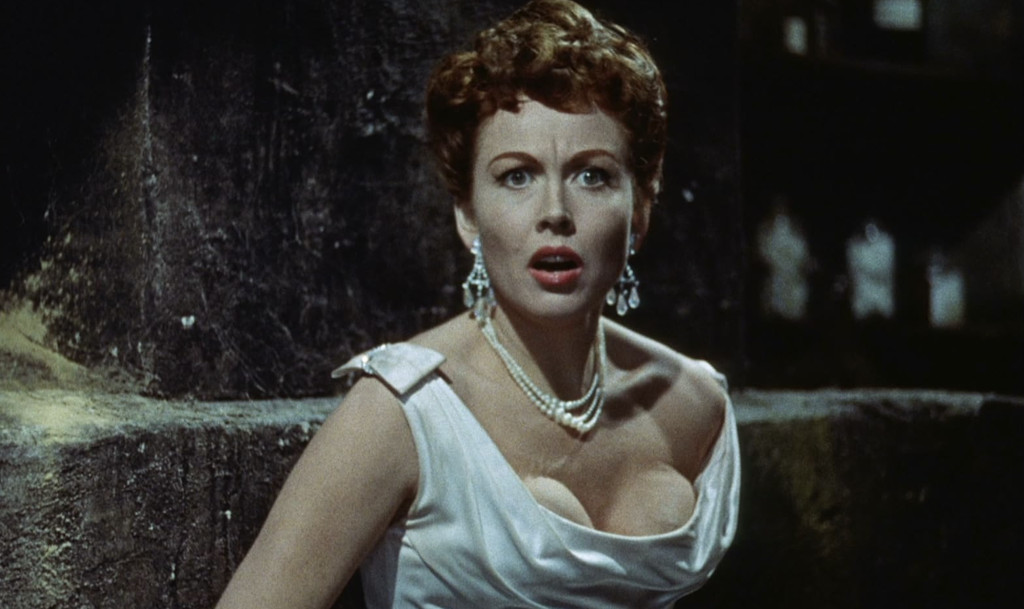
One of the key architects of Hammer’s horror fame was cinematographer Jack Asher, who worked on most of the studio’s seminal horror films between 1957 and 1960. His lighting and colour palette in The Curse of Frankenstein (1957) set the template for Hammer Horror. Ascher eschewed realism in favour of garish, almost surreal splashes of bright red, purple and green, as opposed to his successor Arthur Grant, who favoured a more realistic colour scheme. While Grant took over as the principal cinematographer for Hammer after 1960, Asher did still occasionally work for the studio, for example with The Scarlet Blade (1963), for which he was nominated for a BAFTA. Asher also worked extensively with his brother Robert Asher, who primarily made comedies, as well as later BAFTA and Cannes winner Lewis Gilbert.

While Anthony Hinds usually served as the hands-on producer during Hammer’s early horror years, executive producer Michael Carreras was in charge of the money side of things, under his father James, and was essential in expanding Hammer’s audience, brokering deals with other studios and distributors, as well as the marketing. However, Carreras also occasionally worked as primary producer and even director, especially when Hammer veered away from its most classic gothic horror output. Thus it is perhaps not surprising that it was Carreras who took over production on The Man Who Could Cheat Death (1959), a film that differed in tone and tale from previous Dracula and Frankenstein outputs. Over the years, Carreras took an increasingly larger role in shaping Hammer’s artistic profile, in particular when the studio’s momentum started failing and it was looking to renew itself. In 1971, Michael bought out his father and became the head of Hammer Films. During the 70s, Carreras desperately tried to reinvent the economically struggling Hammer amid changing audience tastes. While this period included a few commercial successes, lika Dracula A.D. 1972 (1972) and To the Devil a Daughter (1976), it was marred by flops like Creatures the World Forgot (1971), an attempt to make a low-budget follow-up to One Million Years B.C. (1966), but without the prehistoric creatures, Carreras two disastrous attempts at blending horror and kung-fu: Legend of the 7 Golden Vampires (1974) and Shatter (1974), the unmade money pit Vampirella (1975) and as the final nail in the coffin: The Lady Vanishes (1979), an ill-conceived attempt at a remake of the Hitchcock classic. When it bombed at the box office, Carreras resigned and Hammer closed down its film branch for three decades, and apart from a few TV anthologies, the studio lay dormant until 2007.
Janne Wass
The Man Who Could Cheat Death. 1959, UK. Directed by Terence Fisher. Written by Jimmy Sangster. Based on the play “The Man in Halfmoon Street” by Barré Lyndon. Starring: Anton Diffring, Hazel Court, Christopher Lee, Arnold Marlé, Delphi Lawrence, Francis De Wolff, Michael Ripper. Music: Richard Rodney Bennett. Cinematography: Jack Asher. Editing: John Dunsford, James Needs. Production design: Bernard Robinson. Makeup: Roy Ashton. Sound: Jock May. Wardrobe: Molly Arbuthnot. Produced by Michael Carreras for Hammer Films.


Leave a comment