
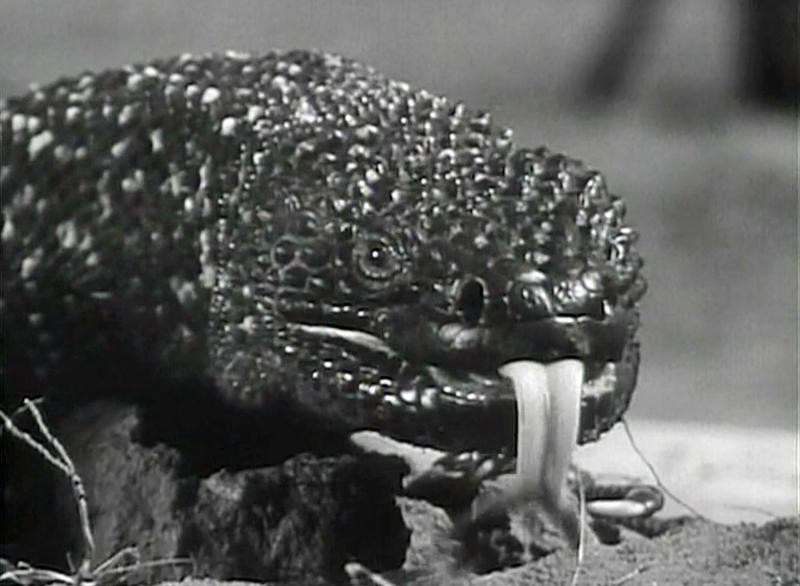
Good-mannered teens in a small Texas town fix up their hot rods and chase a giant lizard with the help of a friendly sheriff in this legendary 1959 howler. Despite its saccharine and meandering script and lazy special effects, it’s professionally made and has a certain charm. 3/10
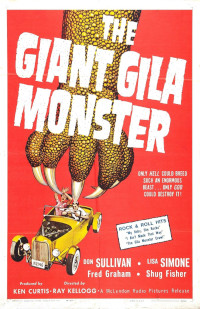
The Giant Gila Monster. 1959, USA. Directed by Ray Kellogg. Written by Jay Simms & Ray Kellogg. Starring: Don Sullivan, Lisa Simone, Fred Graham, Shug Fisher, Bob Thompson. Produced by Ken Curtis & Gordon McLendon.
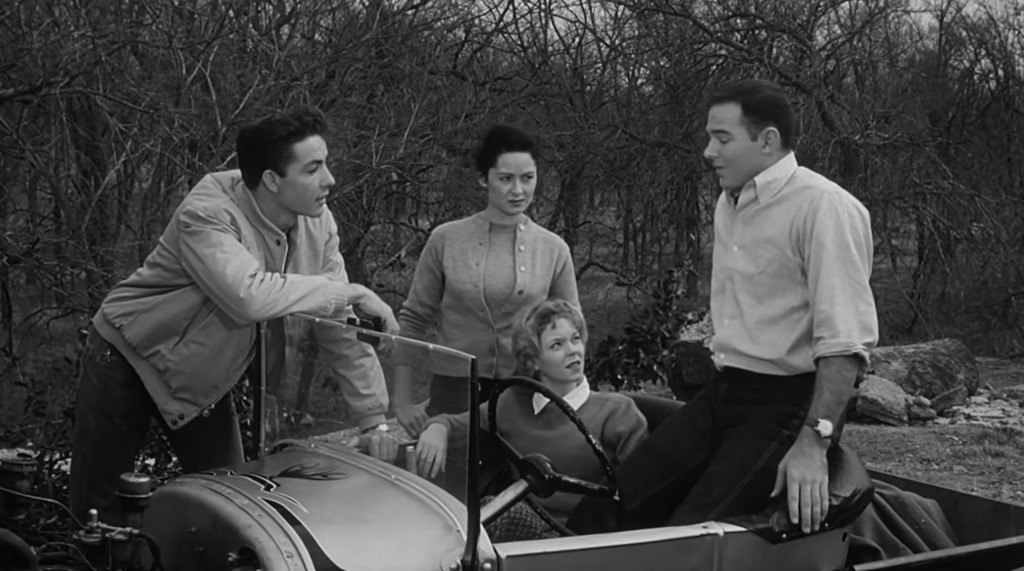
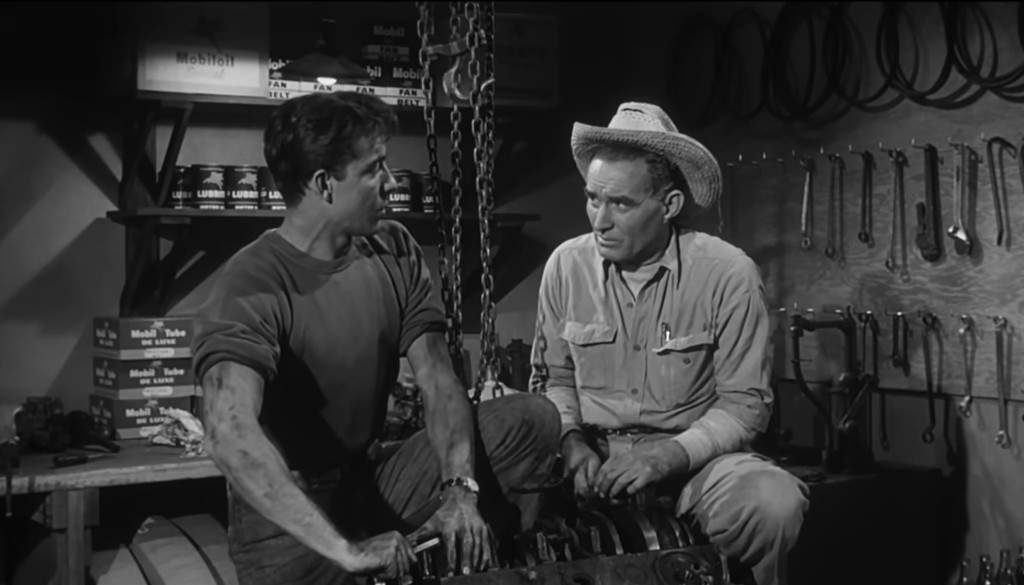
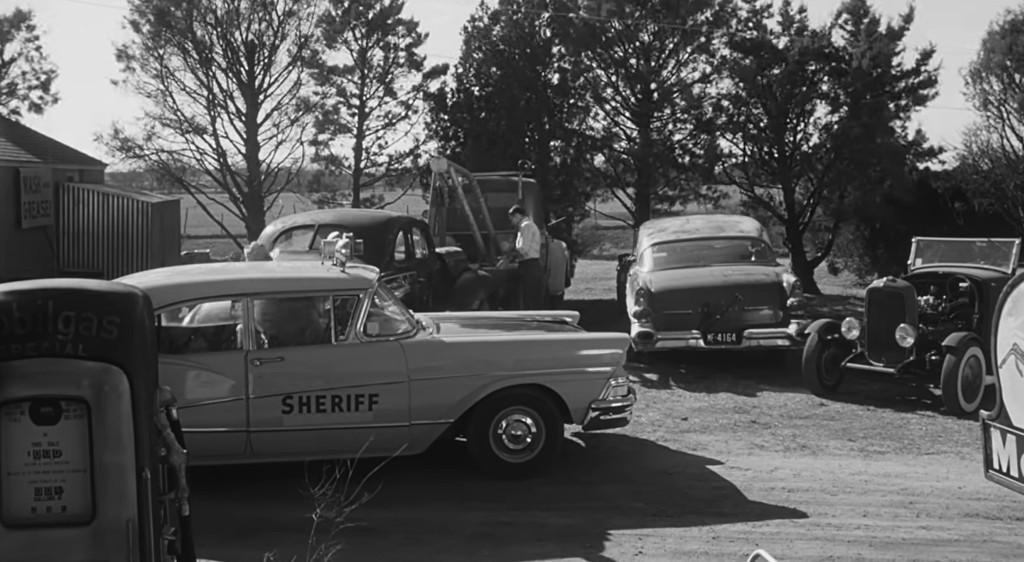
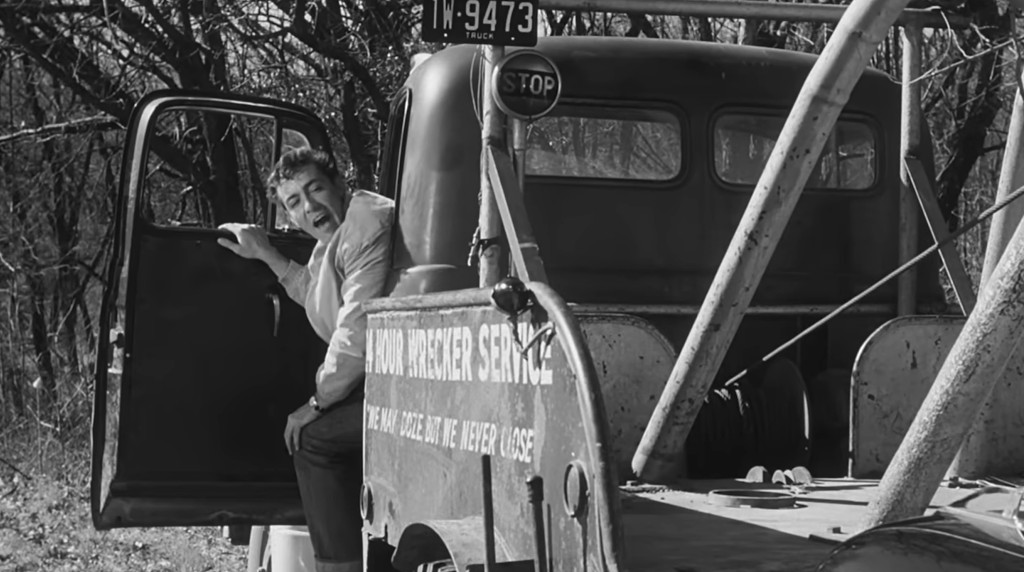
Strange disappearances occur on the roads of small town Texas. Cars are found battered and flung off the road, while their drivers and passengers are nowhere to be found. The incidents are investigated by good-natured sheriff Jeff (Fred Graham) and his protegé, teenage car mechanic and tow truck driver Chase (Don Sullivan), along with his French girlfriend Lisa (Miss France Lisa Simone). That is, when they can be pried away from under the hoods of their cars. Unbeknownst to them and Chase’s good-mannered gang of hot-rodders, a giant gila monster is prawling the countryside.
As we near the end of the 50s, we get to a double bill that many view as the definitive nail in the coffin for the Golden Age of science fiction movies, The Giant Gila Monster and The Killer Shrews, both produced by drive-in theatre owner Gordon McLendon and directed by Ray Kellogg. This double bill, filmed in 1959 in Texas on a combined budget of around $300 000 made a killing at the drive-in circuit, but the films are generally considered as two of the worst monster movies ever made – a reputation that is perhaps not entirely warranted.
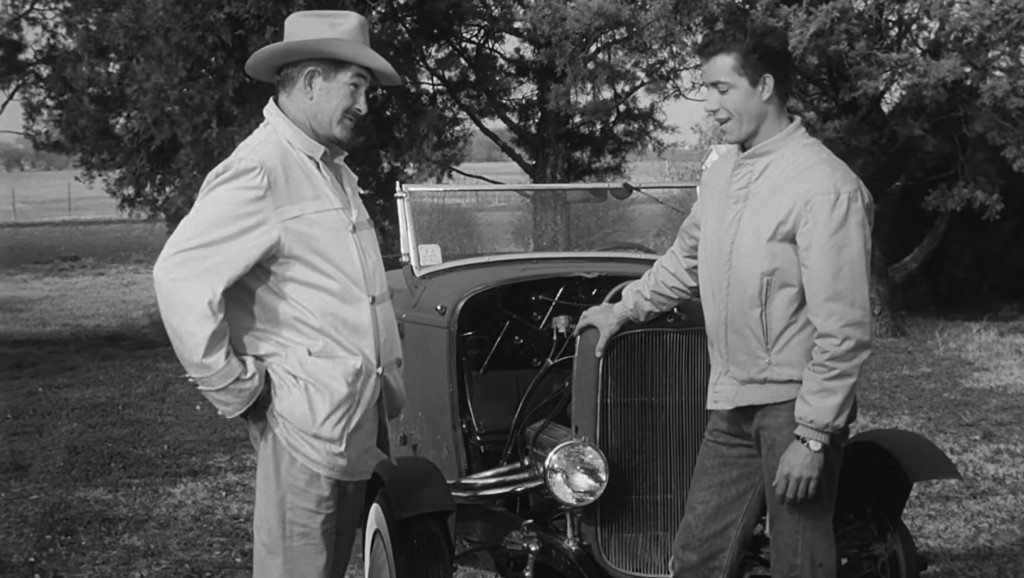
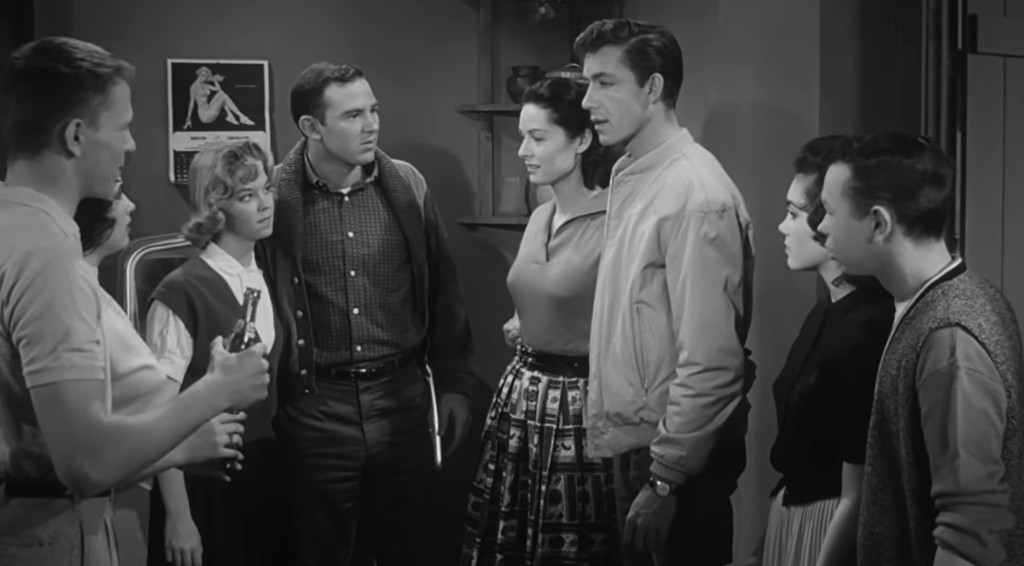
The somewhat disjointed story of The Giant Gila Monster follows all-round do-gooder and heart-throb Chase, as he, his girlfriend, his friends (a hot rod “gang”) and the sheriff drive around the countryside looking for their missing friends. Chase works hard in his repair shop trying to make ends meet and provide for Lisa, as well as saving money for his little polio-stricken sister Missy’s (Janice Stone) leg braces, all the while harbouring dreams of becoming a rock-and-roll singer. There’s also a subplot with sheriff Jeff being pressured by one of the missing kids’ father, wealthy industrialist Mr. Wheeler (Bob Thompson), and the sheriff turning a blind eye to Chase upgrading his own hot rod with parts from the demolished cars they find. Plus, there’s the small town drunk, Old Man Harris (Shug Fisher) and his harmless shenanigans, as well as Chase’s chance meeting with big time radio DJ Steamroller Smith (actual DJ Ken Knox), who overhears Chase singing to himself in the repair shop, leading to a possibility of a record deal.
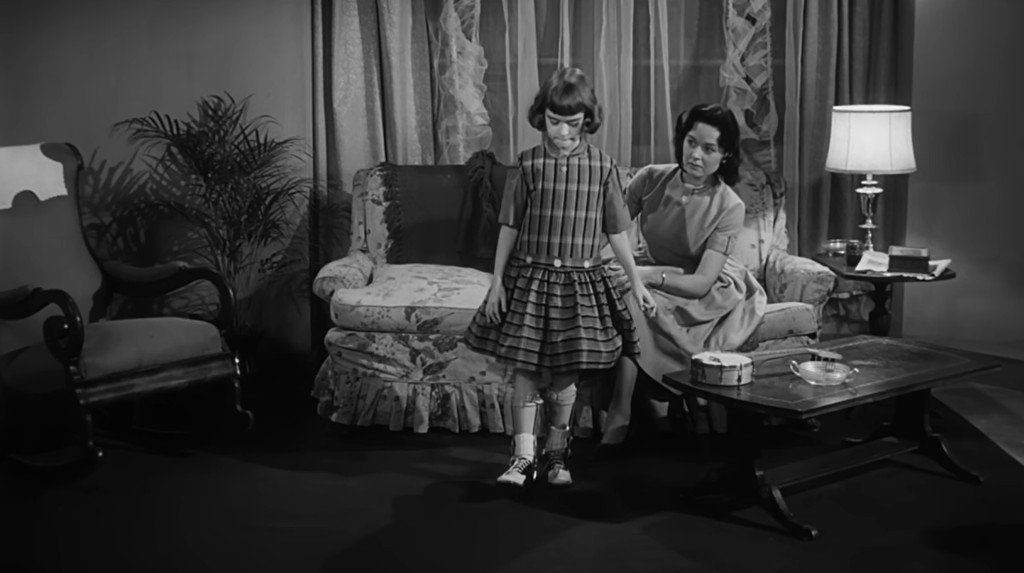
As for the main plot, it’s fairly thin. With so much of the film’s 75-minute runtime taken up by the various subplots, lengthy discussions about auto parts and the missing kids, and a couple of musical numbers courtesy of Don Sullivan, the monster angle almost takes a back seat in this movie. Basically what happens is that we see a giant lizard lounge around undergrowth meant too look like trees and some miniature landscapes, avoiding detection by anyone, until the unlucky bastard manages to derail a train. Still, the big lizard continues to elude its trackers until it it gets bored with the authorities’ ineptitude and announces itself by crashing the community hall where all the local kids are gathered to hear DJ Steamroller present his record company’s newest find, Chase. This leads up to a explosive finale in which Chase’s beloved hot rod emerges as the biggest hero and Chase snatches his cute Tiny Tim-adjacent sister from the jaws of death.
Background & Analysis
Gordon McLendon was a Texan millionaire, radio pioneer, oil profiteer, movie advertiser and conservative lobbyist who was also heavily involved in the movie theatre business – by 1959 he owned over 40 movie theatres across Texas and the American South, many of them drive-ins. There are several explanations as to why he chose to produce two shoestring-budget movies, but the most plausible reason seems to be that this was just another mountain for this ever restless entrepreneur to climb. But, ever the shrewd businessman, he also looked to make a buck out of it, so he decided to produce the kind of dirt-cheap B-movies that were the fodder of his drive-in chains. Numbers vary depending on the source, but the budget for The Giant Gila Monster seems to have been around $150 000 (give or take $20 000 in either direction). This was slightly more than B-movie studio AIP would use for their films, but one has to take into consideration that these movies were made on McLendon’s Cielo Ranch just outside Dallas, a city with no movie making infrastructure to fall back on.
The Giant Gila Monster and The Killer Shrews were supposed to be regional films, but ended up getting nationwide and even international distribution. Nevertheless, McLendon imported most of his creative and technical crew, as well as key acting talent, from Hollywood. Other positions he filled with employees from his radio stations and ad agency, family members, and in The Killer Shrews he even played one of the main characters himself. As director for both films he chose Ray Kellogg, primarily a visual effects man with a long and impressive track record, as well as occasional second unit director. Both films were penned by Jay Simms. They were his first movie screenplays, and film historians haven’t been able to dig up any information about his life prior to this, even if he later went on to become a semi-successful writer in film and TV. Most likely Simms came from McLendon’s own circle, either from his radio station or from his company that produced movie advertising for Hollywood. Seasoned Hollywood veteran Wilfrid Cline shot both pictures, and actor and singer Ken Curtis served as the hands-on producer on both as well. Special effects veteran Ralph Hammeras was brought in to create the miniature effects for The Giant Gila Monster.
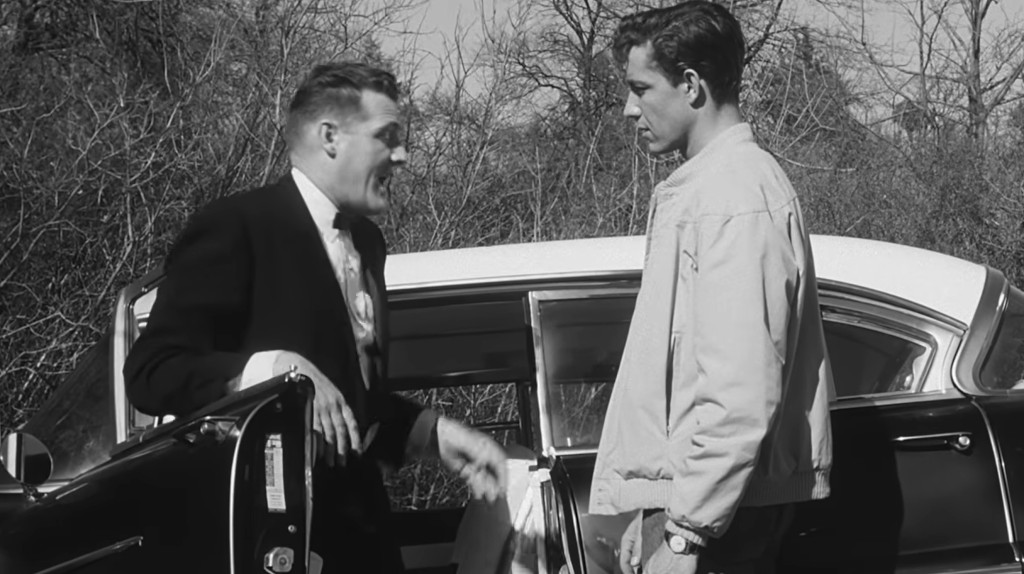
The four principal actors on The Giant Gila Monster were all flown in from Hollywood. The leading couple were fairly untested: Don Sullivan was an aspiring singer and actor, whose greatest claim to fame was a co-lead in the super-low budget ensemble film The Monster of Piedras Blancas (1959, review). Lisa Simone was Miss France 1957, and had only one small role under her belt. She was one of two Miss Universe contestants that McLendon hired for his movies: Miss Sweden Ingrid Goude starred in The Killer Shrews. The sheriff was played by legendary stuntman and seasoned bit-part actor Fred Graham and Old Man Harris by face-pulling comedian and singer Shug Fisher – both primarily at home in cheap westerns. The rest of the cast was made up of locals, employees and family members. DJ Steamroller Smith was played by Ken Knox, who worked as a DJ at McLendon’s radio station, and two other cast members have the surname McLendon – apart from Gordon, who delivered the film’s opening narration.
Both films deal with unnaturaly large critters, one terrorising the arid landscapes of the US south, the other an island. By 1959, the fad that started with The Beast from 20,000 Fathoms (1953, review) and was cemented with Them! (1954, review) had already started wearing itself out. Giant dinosaurs, serpents, apes, lizards, buzzards, spiders, squids, and all manner of insects and critters, not to mention men and women, of ever-diminishing quality had graced the screens for the past seven years. The template for the story was set by The Beast from 20,000 Fathoms, and the movies that came after almost universally followed the same pattern: mysterious death and destruction is caused by some unknown force, and authorities and scientists set out to investigate. The audience is made aware of the giant menace almost from the beginning, but the monster, despite its size, manages to elude its hunters for much of the film’s duration. Our protagonists are able to find enough proof and/or eye witnesses to work out the nature of the monster, but must spend considerable time convincing the powers that be of their discoveries. Once the monster makes a public appearance, guns and other conventional weapons prove insufficiant to stop the menace, and it escapes, moving swiftly towards some ultimate destruction. As doom nears, the protagonists must swiftly find some way to destroy the beast, leading to a climactic finale.
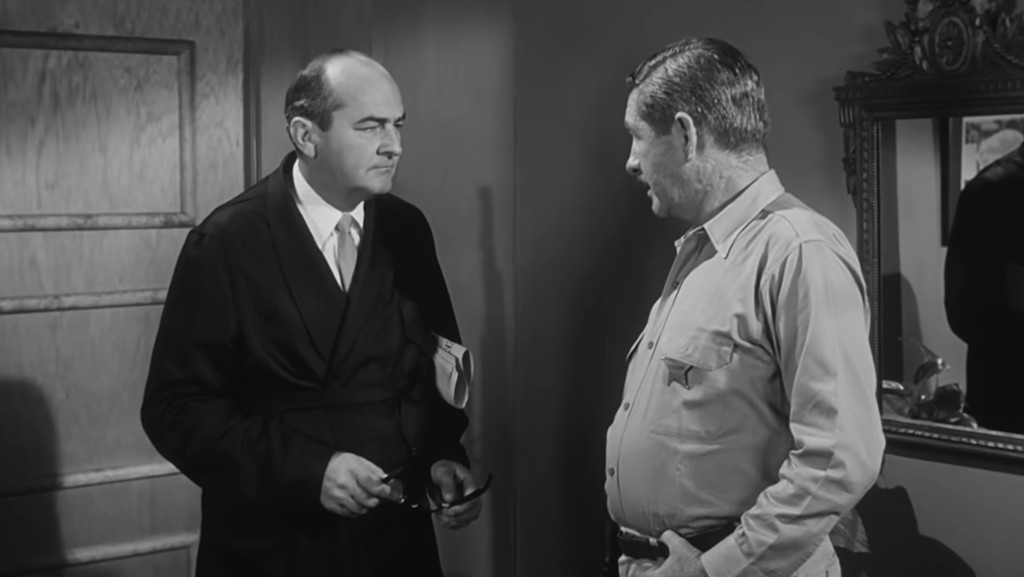
The Giant Gila Monster follows the formula almost to a tee, the only thing missing is the scientist – here, the protagonist’s kindly mentor figure is instead the sheriff. However, screenwriter Simms wasn’t content with simply adhering to one subgenre’s tropes, and decided to do a genre mashup with the then popular teen and hot rod subgenres. Films like The Wild One (1953), Rebel Without a Cause (1955) and Blackboard Jungle (1955) set the stage for movies exploring the generational tensions surrounding the new teenagers, particularly in the US. Much like the monster movie, the teenage movie also quickly became cash-grab fodder for the drive-in market. Where early films in the genre strove to comment on real societal issues and changing realities, many of the B-movies that followed simply threw in teenagers into almost any scenario in order to appeal to a young audience. The 50s was also the decade when cars became the ultimate symbol of teenage liberation, and fuelled by news stories and adult panic over teenage delinquency and hot rod culture, the sub-subgenre of the hot rod film came into being with titles like Hot Rod Girl (1956), Dragstrip Girls (1957) and Hot Rod Gang (1958).
The teenage monster movie trend, in turn, was established in 1957 by Herman Cohen at American International Pictures (AIP) with the smash hit I Was a Teenage Werewolf (review), and it became a go-to subgenre for low-budget producers who wanted to appeal to as broad a teenage audience as possible. Cohen’s original movie was by no means a sociological think-piece, but it did put at least some thought into portraying the lycanthropy of the main character as a parable for teen angst and confusion. Later iterations of teen monster movies seldom bothered with subtext of this kind, and simply inserted teens into an already stale monster scenario – see for example the 1958 titles Earth vs. the Spider (review), Frankenstein’s Daughter (review) and Monster on the Campus (review).
Interesteringly enough, the teenage sci-fi and horror movies often turned the morals of the teen delinquency movies on their heads. Where the usual teensploitation films often scandalised teens as delinquents without moral compasses, lost in society and down on hard times, sci-fi and horror films involving teenagers often went out of their way to invert this trope, portraying teenagers as intelligent, upstanding citizens with their hearts in the right place. In Invasion of the Saucer Men (1957, review) and The Blob (1958, review), it is the teens with their cars that save the day when the adults won’t believe their stories about alien monsters invading their small towns.
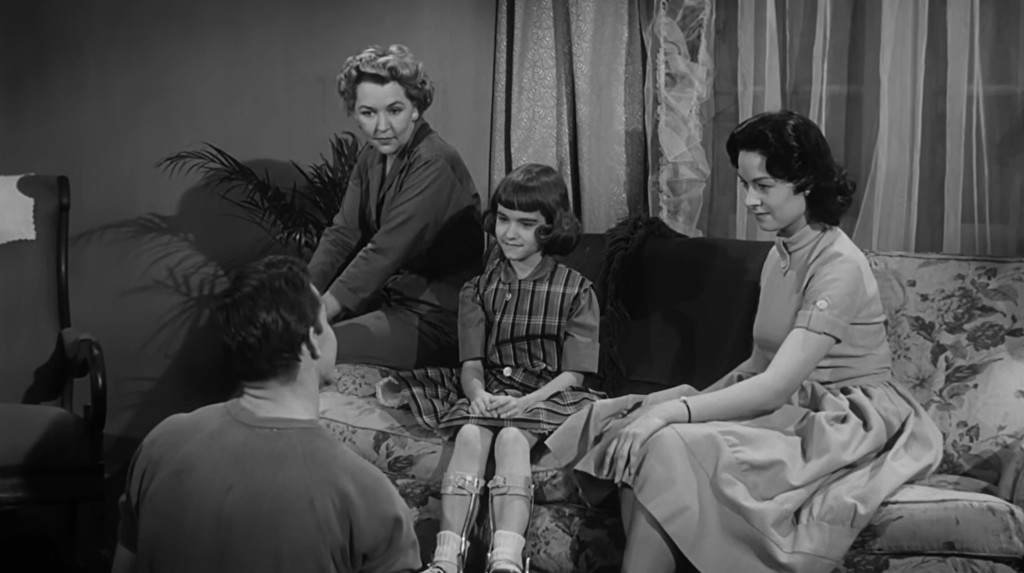
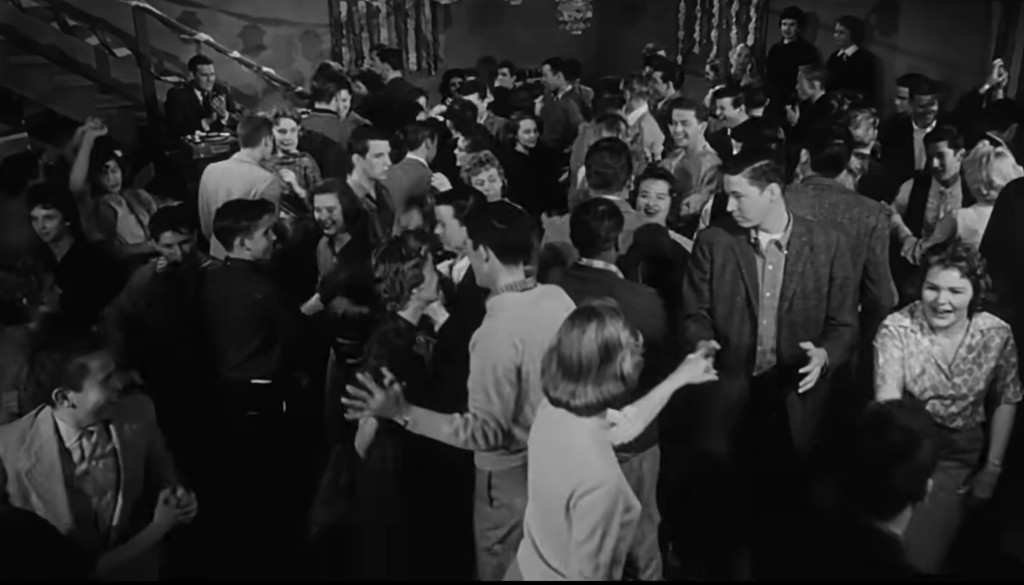
The Giant Gila Monster takes this reversal to absurd lengths. The only delinquency the hot rod gang of giant gila monster land get up to is driving just slightly over the speed limit (warranting a friendly comment from the sheriff) and timidly kissing in a car. In fact, the only crime committed in the movie is Chase pilfering parts from wrecked cars for his hot rod – but this happens with the full blessing of the local lawman. As the film’s resident James Dean character, Chase is annoyingly saint-like. He is the leader and moral compass of his gang, always keeping tabs on what his friends are doing and where they are, he is a caring and respectful boyfriend, always helpful to his fellow townspeople and even strangers who wreck their cars while drunk driving. He seems loath to charge for his work fixing people’s cars, and even his “rock’n’roll” songs are so naively saccharine that they are an insult to rock artists everywhere. To top it all off, screenwriter Simms also gives Chase a super-cute polio-stricken sister, who thinks he is the greatest hero on Earth, and presents us with a scene in which she attempts to walk into Chase’ embrace on her new leg braces, while he awaits her like Jesus calling the children to him. At the end of the scene, Chase pulls up a ukulele and sings one of the simultaneously bizarre and sugary-sweet songs ever heard from a movie screen, about how God created the Earth and all the children, and how he just wants the children to laugh. While it is generally known as “Laugh, Children Laugh” (because that’s half of the lyrics), its actual title is “The Mushroom Song”, because the first line is about God creating a mushroom. And while we can buy that his seven-or-so-year-old sister might be swayed by this song, all suspension of disbelief disappear when a whole community hall full of teenagers go absolutely bananas for it close to the film’s finale – when he sings it in its entirety a second time (clearly McLendon hoped for it to become a radio hit).
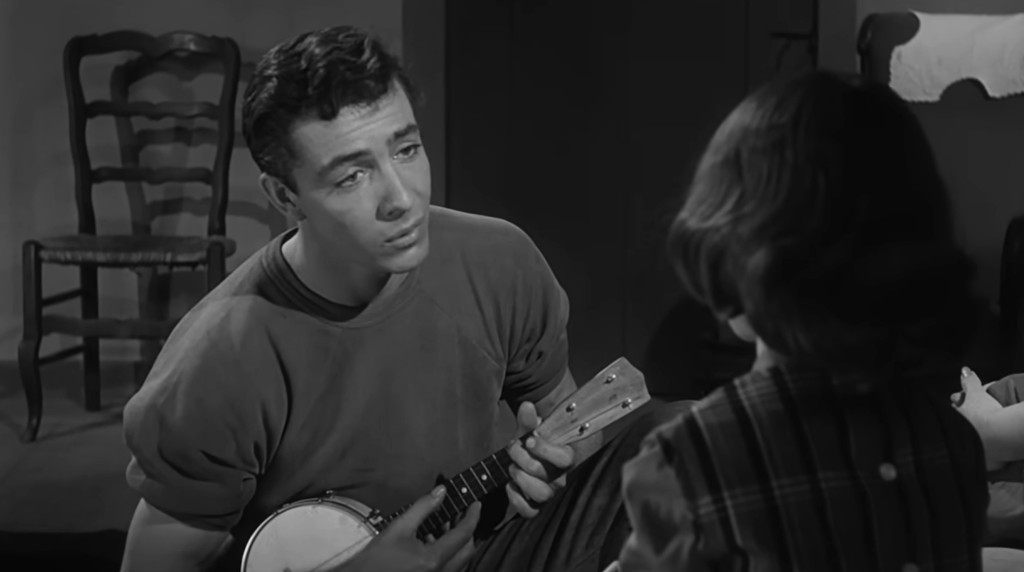
The songs were written by lead actor Don Sullivan himself, and while he has a nice, velvety voice and good charisma, it’s easy to see why his music never conquered the world. When he gets into more rocking territory, with a song presumably titled “My Baby She Rocks”, this is the lyrical genius he provides: “My baby she rocks / and rolls / and rocks whenever she walks / My baby she rocks / and rolls / and rocks whenever she talks / My baby’s a rock and roll and tippy-toe and never know and always glowing baby / My baby she swings / and sings / and swings whenever I bring her things … ” and so on.
The movie tries desperately to make a bad guy out of industrialist Mr. Wheeler. Chase’s dad died in one of Wheeler’s factories, and Chase’s girlfriend Lisa works as his maid, and Wheeler wants to put a stop to their affair. Furthermore, he threatens to make the good sheriff out of a job if he doesn’t arrest Chase on suspicion of having something to do with his son’s disappearance. But ultimately, even Mr. Wheeler gets a redemption arc and turns out to be a fine fellow after all.
On the one hand, it’s refreshing to see a a film in which the characters are actually working together and getting along, and isn’t filled with contrived conflicts and antagonism, which was very often the case in these movies. In this case, however, the opposite just becomes too overwhelming. In a write-up at Trailers from Hell, Glenn Erickson posits that the film’s squeaky-clean atmosphere was partly based in McLendon’s own conservative values, but also a fear of being censored: “many Southern communities were just beginning to relax their bans on rock ‘n’ roll and delinquency movies”. It all makes for a strangely sanitised version not only of teenage life and rock’n’roll, but the American South in general, which makes it difficult to take the film seriously.
It is hardly fruitful to try to find deliberate themes or messages in this film, other than that “the kids are alright”, as both McLendon’s films were made more or less on a dare, and as a quick cash grab. While the 50s giant monster genre had its roots in cold war paranoia and nuclear anxieties, the lizard of The Giant Gila Monster has lost all metaphorical power, and simply represents that which it is: a giant lizard. This is a very rare instance of a giant 50s monster which is neither summoned by nuclear testing nor science gone wrong. A few half-hearted theories are thrown around as to why there is a giant gila monster roaming the wild in Texas, but the film puts no effort into explaining where it comes from. It’s simply the MacGuffin driving the otherwise meandering and aimless story forward. As for character drama, most time and dialogue is spent on Chase getting his hot rod road-ready, not that he seems to have any specific reason for it, other than that it is cool to have a hot rod car. The only thing resembling a tragedy is the “villain”, Mr. Wheeler, losing his son, and this is something that just registers in the background of the movie. We don’t care much because we don’t care about Mr. Wheeler. Neither do we care about little Missy and her leg braces, since she only appears in two scenes in the entire movie – the first is when she gets her braces, letting Chase sing his mushroom song, and the second is when she inexplicably materialises in front of the monster during the finale, providing a tacked-on emotional handle. It just all feels like calculated box-checking rather than as a organic story.
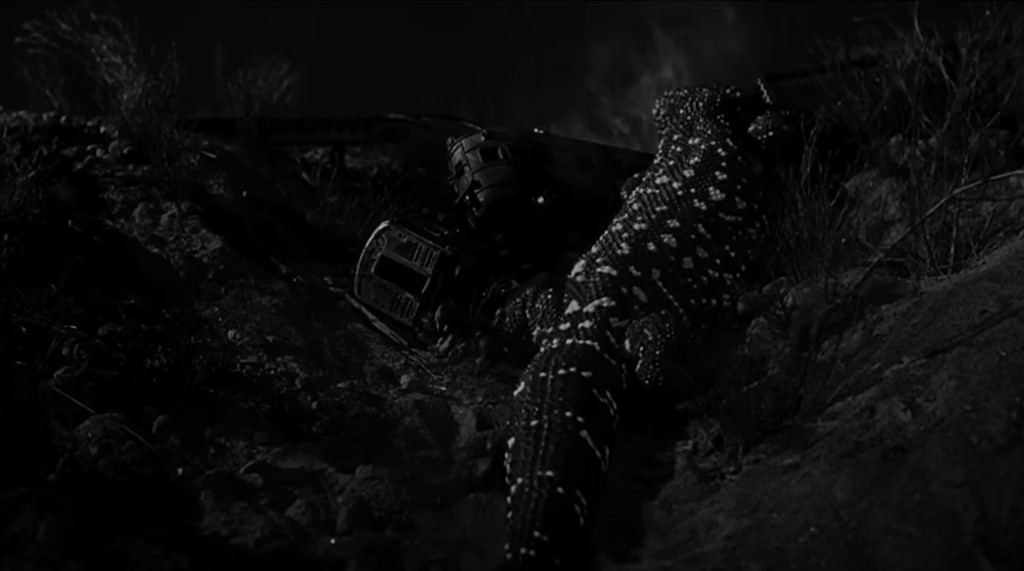
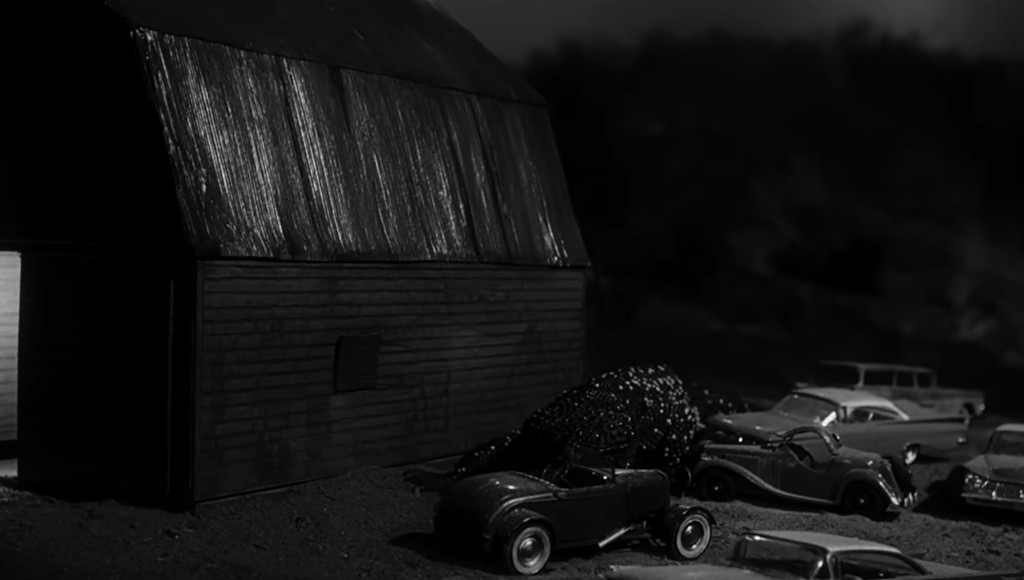
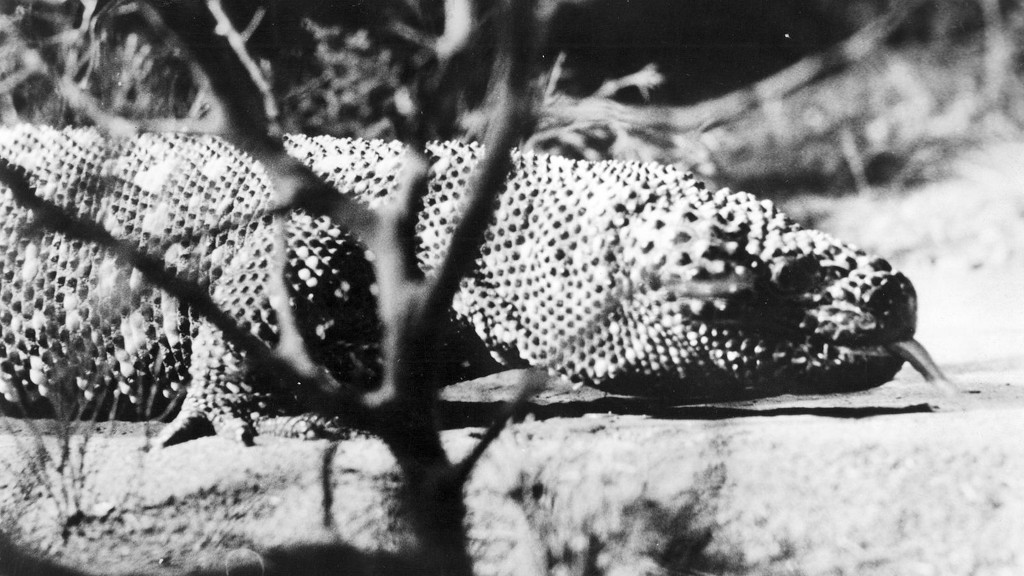
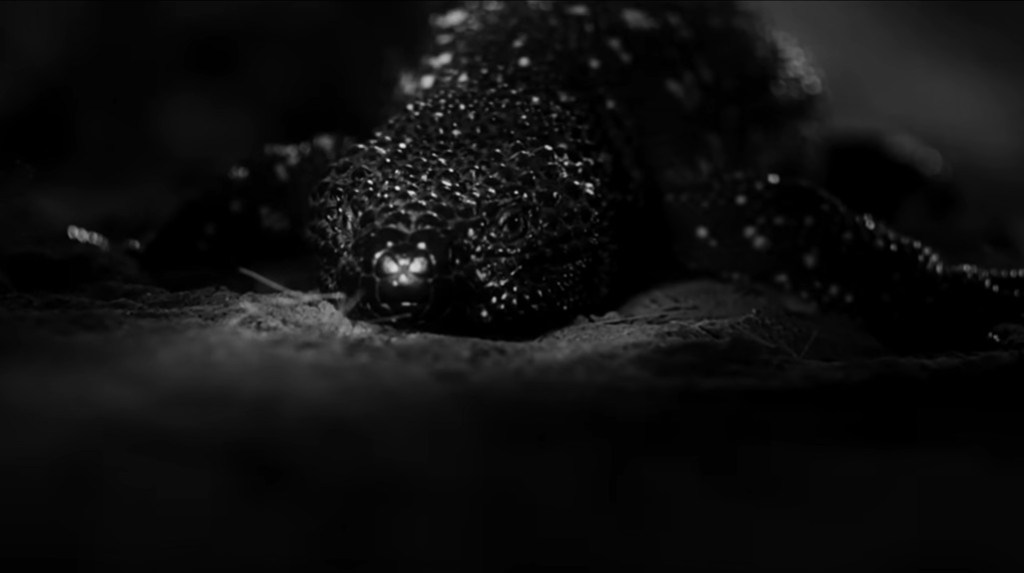
The special effects of The Giant Gila Monster have been the recepients of a great deal of ire and glee over the years, seeing as there’s not anything particularly special about them: it is simply an optically enhanced lizard crawling leasurly around hardly convincing miniature sets. The monster never seems particularly aggressive, and it is difficult to reconcile the docile reptile on display with the horrendous acts that we keep hearing about (and which are never displayed: the only aftermath we see are a couple of wrecked cars; this is a decidedly bloodless film). There are no travelling mattes, superimpositions, double exposures or even split-screen effects, meaning we never see the monster interacting with any of the humans on screen, further diminishing the supposed menace.
This said, I can appreciate that director Kellogg and miniature maker Ralph Hammeras haven’t tried to bite off more than they can chew with the resources, timeframe and facilities at hand. Having recently reviewed a film in which the monster is represented by an atrociously badly matted lobster, and having been forced to sit through half a dozen of Bert I. Gordon’s films where grasshoppers crawl on a photograph representing a city and a bald giant man in diapers appears in fluctuating states of transparency and over-exposure, a lizard crawling through a tangible miniature set, actually interacting with its surroundings, seems like a step up in realism. While the miniatures are hardly convincing, they don’t yank me out of the picture in the same way as terrible visual effects do. That the lizard on display is actually not a gila monster is a fun little goof, but hardly significant.
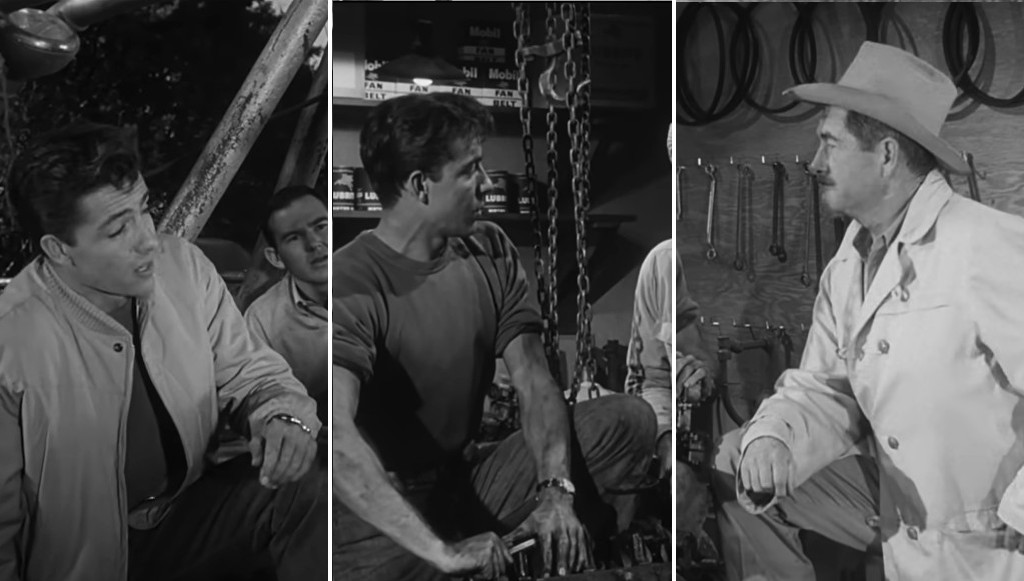
As usual with teen movies, the juveniles appear overage. Don Sullivan was 30 and Lisa Simone 25 during filming. Most of the other teens in the gang also look like they’re at least over 20.
Acting-wise, the standard is adequate enough for a film of this type. Don Sullivan was no thespian, but well able to carry the film on his shoulders with his natural and relaxed demeanor and innate charm. Lisa Simone’s acting talents are difficult to surmise beneath the thick accent and her nothing-role, but at least she is convincing enough as to not make a negative impression. Bit-part veterans Fred Graham and Shug Fisher know what is expected of them, and act accordingly. Hardly nuanced or naturalistic, but they’re there to play types. Bob Thompson, playing Mr. Wheeler, is bad, but he was also an amateur from Gordon McLendon’s circle. DJ Ken Knox seems to play himself, and does a fair job of it. The rest of the amateur cast have so little to do that it doesn’t really matter how well they act.
The Giant Gila Monster benefits from the talents of a seasoned Hollywood crew. Wilfrid Cline’s photography is workmanlike but professional. Lighting is consequent, if somewhat flat, and the image crisp. Cline’s day-for-night photography is unusually good for a film of this caliber. Ralph Hammeras and Ray Kellogg also do a good job of matching lighting and image quality in the miniature footage. Earl Snyder makes sure the sound is always clear and well-balanced. Foley and sound effects are good, although there is an over-reliance on bird song and crickets chirping, filling out the background of around half the movie. Editor Aaron Stell, who had just come off working for Orson Welles, makes the most out of the limited setups and shots provided, and his editing is one of the main reasons the film does move along at some sort of pace despite a meandering script and sluggish story.
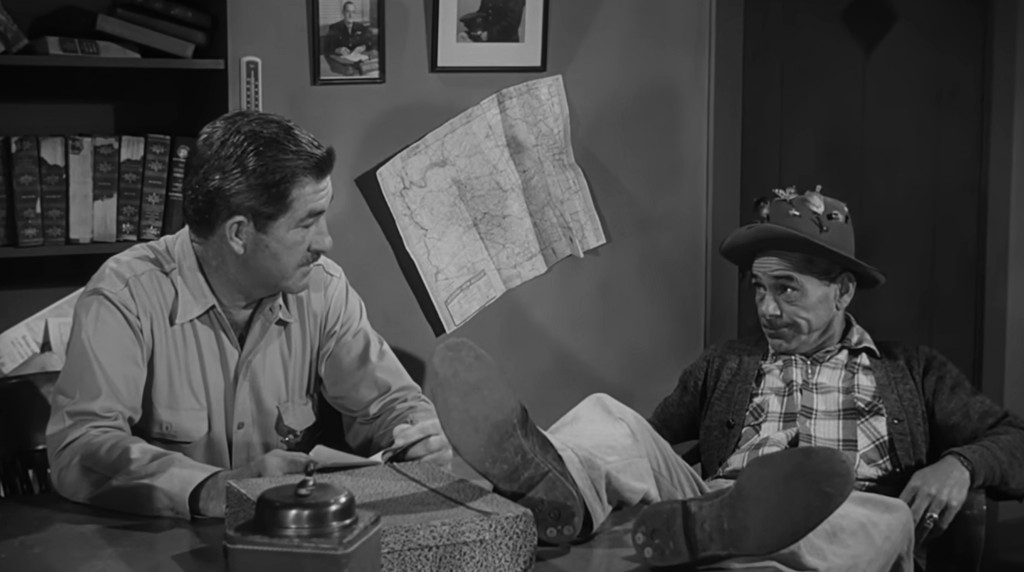
Ray Kellogg’s setups are for the most part dull, and even outdoor shots look cramped. Most scenes are filmed from no more than two angles, if that, but that probably has to be chalked up to the short shooting schedule rather that Kellogg’s talent. Principal photography took six days. Kellogg, whose expertise was in special effects, was no actor’s director. The only way he seems to be able to remedy the stiffness of having two actors standing around and engaging in a dialogue (and this is an extremely talky film), is to have them put one foot up on a chair, a workbench, a fender, or whatever else happens to be available. One gets the feeling that the actors spend half the film with one knee up in the air.
Apart from Don Sullivan’s “special songs”, and a couple of generic jukebox tunes, composer Jack Marshall composed only one single piece of music that’s been looped throughout the film whenever we’re supposed to feel a sense of threat or danger. It’s a doom-laden, bass heavy score with crashing drums and ominously resonating piano, pierced throughout with a rising and falling theremin melody. The end climax has the same melody, only sped up and with an inappropriate rock arrangement added. As there are few shots in the film that convey any sort of dread, terror or tension, the score is vital for letting the audience know when there’s something afoot, but the ever-present slow droning of the theremin and the almost atonal drum and piano crashes occasionaly make the movie feel even more sluggish that its script.
The Giant Gila Monster’s reputation as one of the worst monster movies ever made is primarily derived from its inclusion in the Mystery Science Theater 3000 TV show, a series that did wonders for renewing interest in old 50s horror and sci-fi films, but one that also gave a lot of halfway decent movies an undeservedly bad rap. The biggest flaw with The Giant Gila Monster is its bewildering script that keeps treading water for almost all of the movie, its profuse talkiness and overly sticky sugariness. Its special effects are certainly not very special, but in their simplicity they are far more convincing than many of the zipper-adorned rubber suits, cardboard robots and terrible matte monsters seen in a lot of other horror and sci-fi movies of the era. It is professionally filmed and fairly acted. Ít is certainly not a good film, but it has its own bizarre charm.
Reception & Legacy
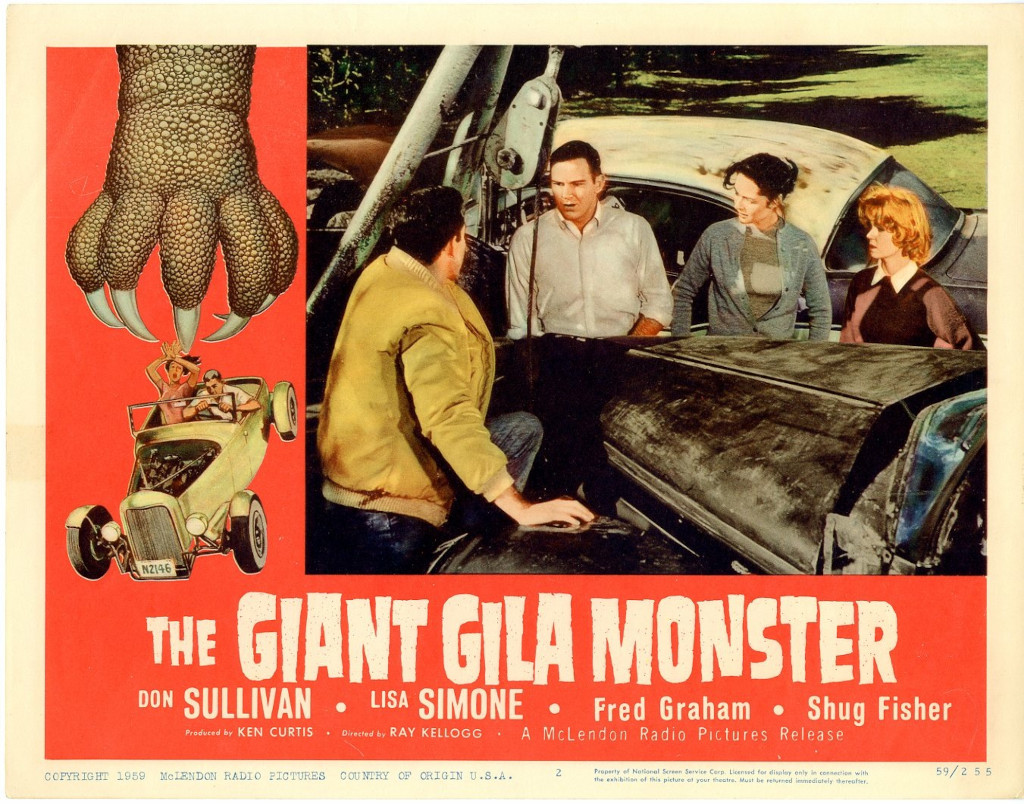
The Giant Gila Monster premiered on a double bill with The Killer Shrews in Dallas, Texas, in June, 1959, and got US-wide release. It was released in the UK as well in 1959, and at least in Argentina and Mexico in the early 60s. The film was a commercial success (in comparison to its budget) and brought McLendon a profit of nearly a million dollars. The film fell into public domain the the decades to come, and became a staple on US television.
The Giant Gila Monster actually got fairly encouraging reviews in the trade press. The Motion Picture Exhibitor gave the film a very positive review, calling it “well produced and exciting”, and noted that the “mechanical effects are particularly effective”. The magazine called Don Sullivan an “okay newcomer” and singled out Fred Graham’s performance as “outstanding”. Albert M. Weaver at the Motion Picture Daily wasn’t quite as enthusiastic, but nonetheless gave the picture a fair assessment: “It does not pretend to provide anything spectacular beyond what has gone before in this type of motion picture, and, going by past market reaction, there should be a degree of patronage awaiting its release”.
Variety’s critic “Bark”, or Sam Lessner, called the duo “a good double bill”, and singled out Gila Monster’s “slick” cinematography as the film’s main strength. He wasn’t too keen on the leading duo’s acting, but, like Motion Picture Exhibitor’s critic, gave praise to Fred Graham. Lessner concluded The Giant Gila Monster was a “worthwhile film”, continuing: “Story is mild, but as an ‘audience reaction’ feature, Gila Monster has appeal for science fiction situations”.
British Kinematograph Weekly said in a capsule review: “Tale far fetched, but cast versatile, heart angle and rock ‘n’ roll asides popular, and finale hectic”.
Bill Warren has dug up a review from the Los Angeles Times by Charles Stinton, who didn’t think the double bill was very much to write home about, but did single out the special effects as the best part of The Giant Gila Monster. He also noted that the movie had a tendency to turn “sappily sentimental”.
Phil Hardy’s Encyclopedia of Science Fiction Movies (1984) has an entry on The Giant Gila Monster, but as so often with more obscure films, one expects that he hasn’t seen this one either. The entry only regurgitates the talking points from Variety’s review, even down to the wording “slick photography”.
The Giant Gila Monster does somewhat divide modern critics. Everyone agrees that this is not a stellar picture, but there are those who feel the movie has some merit. All admit that for a special effects picture, the effects are not quite up to par: “the [scene with the] monster causing a train to derail and its subsequent very slow attack on the wreckage, accompanied by the disembodied screams of the people one assumes it’s eating, is particularly awful”, writes Kevin Lyons at EOFFTV Reviews. Richard Scheib at Moria gives Gila Monster 1/5 stars, noting the poor effects and opining that “the pace of the film is as slow as molasses”. He does, however, give the acting his approval.
On the other hand, Brian Skutle at Sonic Cinema has a bit of a soft spot for the movie. While he acknowledges all its many flaws, he states: “But Kellogg and his crew understood the assignment of what they were doing here, and deliver the goods. I enjoyed this, probably more than I should.” Andrew Wickliffe at The Stop Button is also on board: “Giant Gila Monster isn’t great (or really giant), but it’s engaging and successful as a ‘Giant’ monster picture, at least a close to no-budget one.”
The film is in the public domain, and you can find good versions of it on YouTube. It has also been released as a fancy remastered DVD/Blue-ray, along with double bill The Killer Shrews by Film Masters.
Cast & Crew
This format is too short to do justice to the phenomenon that was Gordon McLendon, and since his contribution to science fiction is minor, I’ll try to keep it as short as possible. By all accounts, a highly intelligent, driven and fearless businessman and media mogul, McLendon studied at Yale, won a nationwide political essay contest, was the editor of the Yale literary magazine, fought in WWII, became an intelligence office, learned Japanese and then started working in Air Force radio. He was the founder of the Liberty Radio Network, known for its baseball broadcasts, and was influential in bringing rock music to the Nordics through his pirate radio station Radio Nord, broadcasting from a ship in international waters in the Baltic Sea.
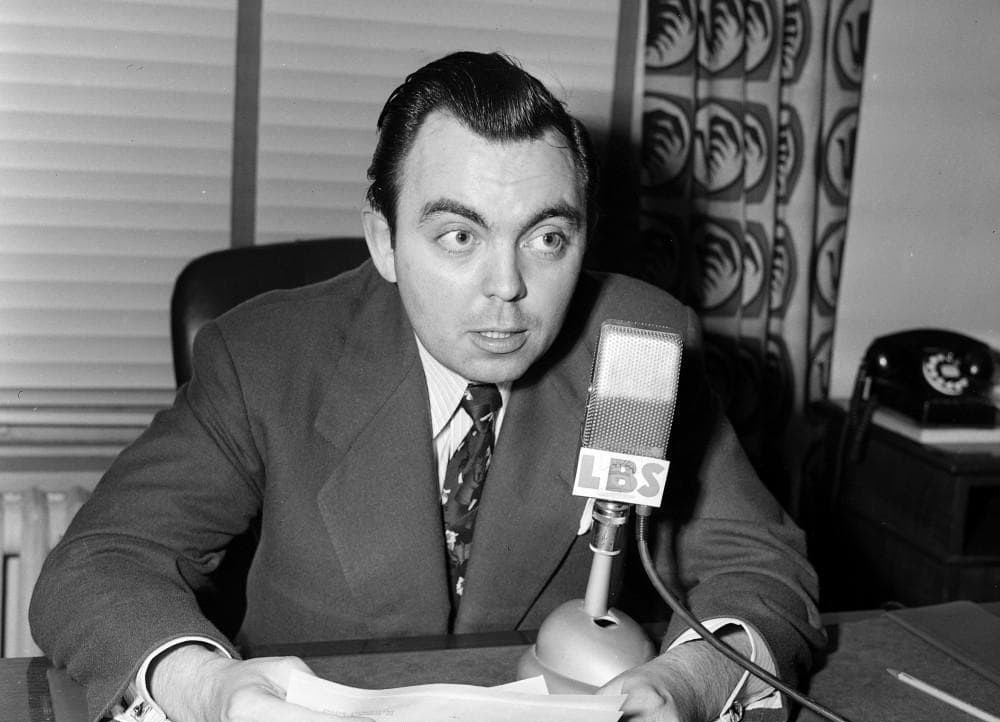
In 1947 McLendon founded the KLIF radio station in Dallas, Texas, and became one of the architects of Top 40 radio. As per Wikipedia: “He is credited by most broadcast historians with having established the first mobile news units in American radio, the first traffic reports, the first jingles, the first all-news radio station, and the first ‘easy-listening’ programming”. He was also heavily invested in the oil industry, a conservative democratic pundit with close ties all the way to the Oval Office. McLendon’s ownership of over 40 movie theatres in Texas is really only a footnote to his career, and even smaller is the fact that he produced three movies in 1959 and 1960, seemingly more on a dare than anything else. He was described by cast and crew as a jovial and pleasant man. About his role as one of the scientists in The Killer Shrews, he noted that he wasn’t a very good actor, but he just had so damn fun doing it. In the 60s, McLendon produced over 150 motion picture campaigns for United Artists, and was at one point the largest stakeholder in Columbia Pictures.
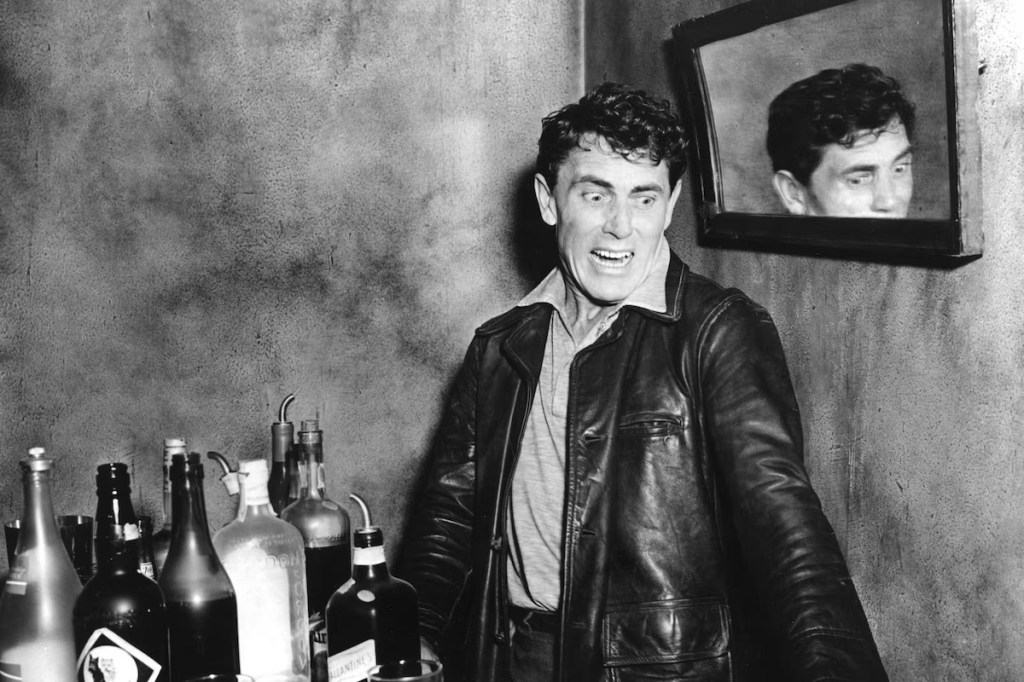
Director Ray Kellogg was primarily a special effects man, who started his career as a camera man in Hollywood legend John Ford’s secret film unit during WWII, and after the war started working with special effects in Hollywood, with John Ford, among others. A talented artist, he became a sought-after matte painter, worked with miniatures and visual effects. In 1947 he had worked his way up to the top of Fox’ special effects department, where he, among other things, pioneered the use of visual effects with CinemaScope and worked on many of Marilyn Monroe’s blockbusters, as well as historical pieces set in ancient Egypt. By 1957 the stress of being a department head became too daunting, and he resigned. He went freelance, and jumped on the chance to direct his own films when he was offered the oportunity to work with Gordon McLendon on his monster movies.
From 1960 to 1972 Kellogg worked as a second unit director on a number of high-profile pictures on a freelance basis, starting with him getting reeled back into Fox to work on Joe Mankiewicz’ bloated but iconic Cleopatra, starring Elizabeth Taylor and Richard Burton – by far the most expensive movie ever made at that time. Kellogg was assigned to work on the film’s massive crowd scenes. He worked again with John Ford on Cheyenne Autumn (1964) and on the effects-heavy Batman: The Movie (1966). He made three films with director Gordon Douglas, including the remake of Ford’s Stagecoach and the Jerry Lewis sci-fi comedy Way… Way Out, both 1966. His last directorial effort came in 1968 when he was called in as as co-director on John Wayne’s pro-Vietnam War propaganda movie The Green Berets, which Roger Ebert gave zero stars, and said that it “simply won’t do”, and about which the New York Times used the words “unspeakable”, “stupid”, “rotten”” false in every detail”, as well as “vile and insane”. Critically better received was 1970’s US-Japanese co-production Tora! Tora! Tora!, about the bombing of Pearl Harbor.
Screenwriter Jay Simms carved out a decent living as a TV writer in the 60s and early 70s, best known for his work in Have Gun – Will Travel and The Rifleman. Of the half dozen movies he wrote, almost all were sci-fis: The Giant Gila Monster (1959), The Killer Shrews (1959), The Creation of the Humanoids (1962), Panic in Year Zero! (1962) and The Resurrection of Zachary Wheeler (1971). Again there’s a John Ford connection, as Simms’ last screenplay was for Ford’s WWII documentary/biopic Chesty: A Tribute to a Legend (1976).
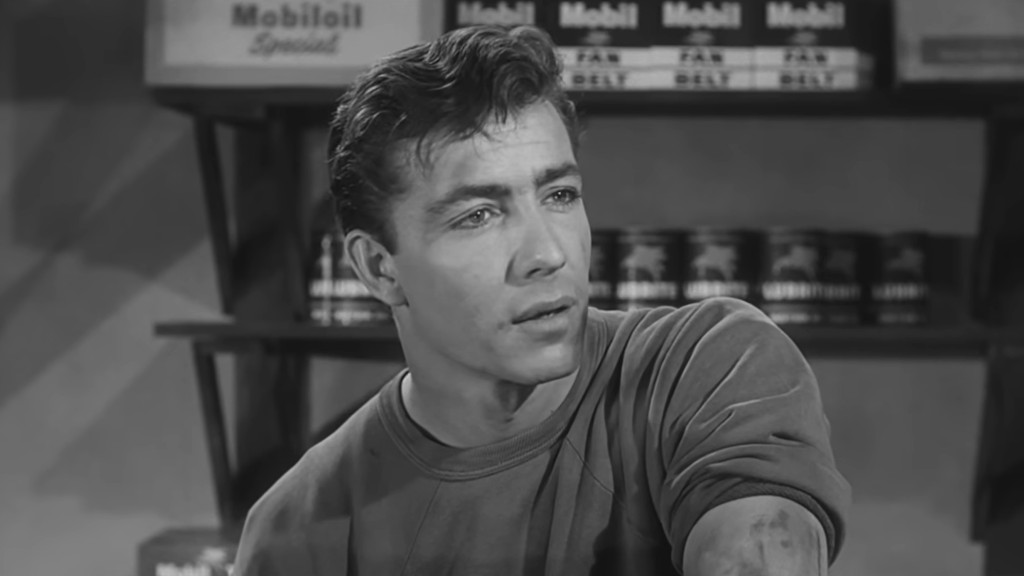
Lead actor Don Sullivan‘s film career was neither stellar nor long, but he actually played leads in five B-movies in 1959, three of them science fiction. Sullivan arrived in Hollywood in the mid-50s. With good looks and a raw, natural talent and charm, but little experience to speak of, and no training, he worked menial jobs while struggling to find roles. By 1959 he had a couple of TV appearances and a few minor roles in westerns under his belt. That’s when his sci-fi sejour began, when he was cast in a co-lead in The Monster of Piedras Blancas (1959, review), a no-budget labour of love filmed entirely in a small village on the coast of California. He was next cast as the definitive lead in Gordon McLendon’s infamous indie movie The Giant Gila Monster (1959). He then played leads in the teen crime caper The Rebel Set (1959), the horror western Curse of the Undead (1959) and Jerry Warren’s horror/SF outing Teenage Zombies (1959). Then offers dried up, and Sullivan starred in one last film in 1962 before moving on to other interests.
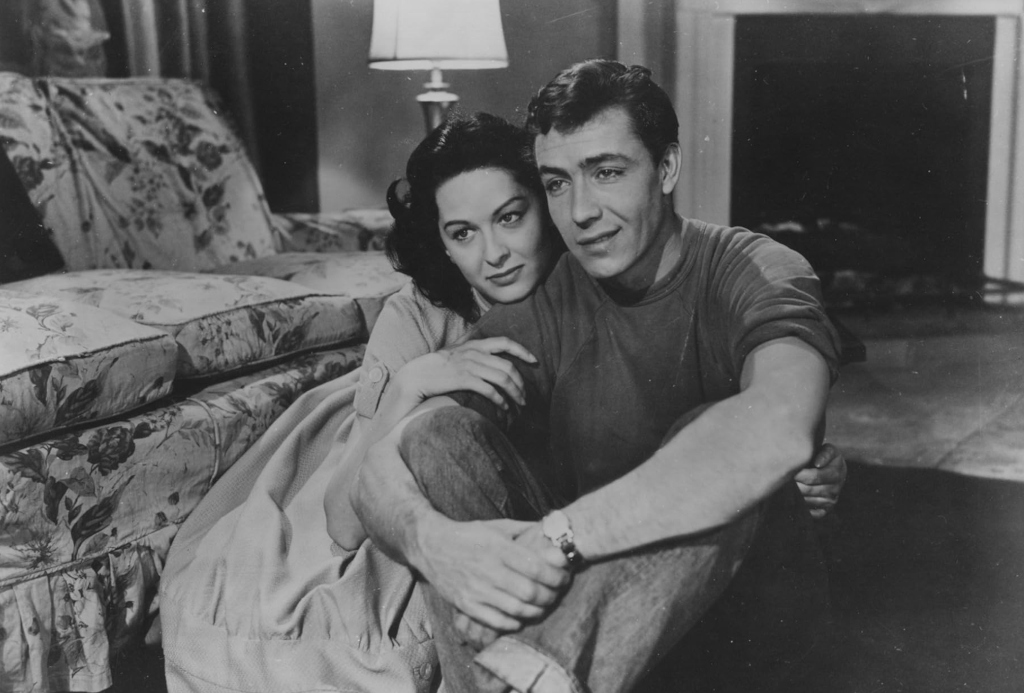
Sullivan has been something of a highlight of the two films I have seen him in, and as an untrained actor he wasn’t bad. His natural and likeable on-screen presence could have served him well had he had the patience to keep at it. However, as he has explained in later interviews, he was of the impression that if he didn’t get a breakthrough in a few years, it was never going to happen: “I thought I was awful […] I didn’t realize that even James Dean came out to Hollywood, did a couple of TV things, couldn’t make it. Went back to New York and studied, couldn’t make it, came back out to Hollywood and got the the East of Eden [role] and became a star. But that was an 10 or 11 year period. And during that period of time, he was studying, he was working his craft. And nobody ever explained this to me. I thought, you know, you’re either you’re either incredibly good first time out of the barrel or you don’t have it.”
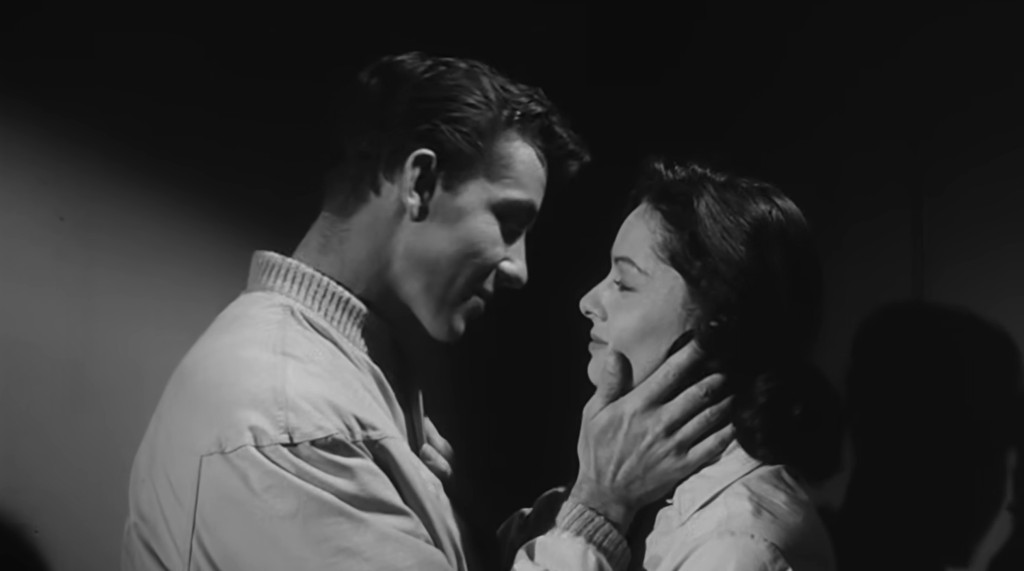
Lisa Simone, born Liliane Czajka to a French mother and Polish father, originally studied ballet and worked a while with the Bluebell Girls, a legendary precision dance group that performed at Lido de Paris. In 1957 she entered one of the many Miss France competitions, this one sponsored by movie magazine Cinémonde, and won. As a result, she was invited to represent her country at the Miss Universe pageant in California the same year. Hoping to make a career in Hollywood, she stayed, and worked as a dancer while trying to secure a foothold in the movie business. Her first movie role was as a moon girl in Missile to the Moon (1957, review), and her only substantial one was the female lead in The Giant Gila Monster. Obituaries mention that she worked “alongside” Tony Curtis, Glenn Ford and Marlon Brando during her career, but her roles in the half-dozen films she appeared in between 1957 and 1962 were generally so small that you could blink and miss her. Simone married actor Steve Barclay, and moved to Rome with him in the 60s, when he started getting work in Italian movies. They stayed there for the rest of their lives, and Simone passed away in 2020.
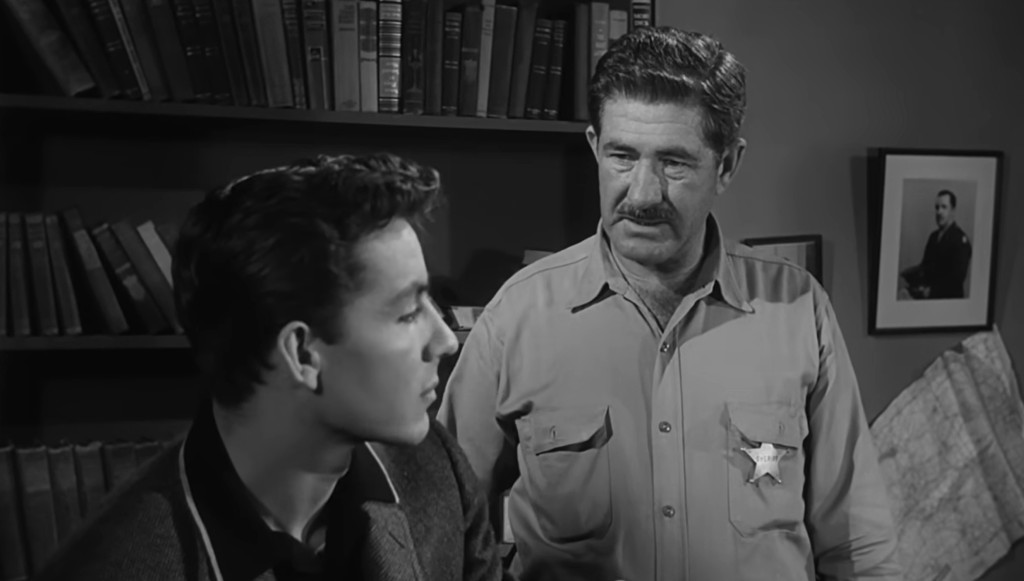
Fred Graham, playing the sheriff in The Giant Gila Monster (1959), was a legendary stuntman, screen brawler and fight coordinator in close to 300 films, and he appeared in minor roles in just as many. As a stuntman he doubled for actors like Cary Grant, Basil Rathbone and John Wayne. While most of his screen performances were brief, he occasionally got featured billing. The Giant Gila Monster was by far his biggest role, but he also had a major role in the 1952 western Colorado Sundown (1952), in which he played the main heavy. In Arizona Raiders (1965), about the Quantrill guerilla, he played John Quantrill himself. In Out California Way (1946), a film set in Hollywood, he had a substantial role playing a western stuntman. He also had brief but semi-memorable roles in Hitchcock’s Rear Window (1955) and Vertigo (1958).
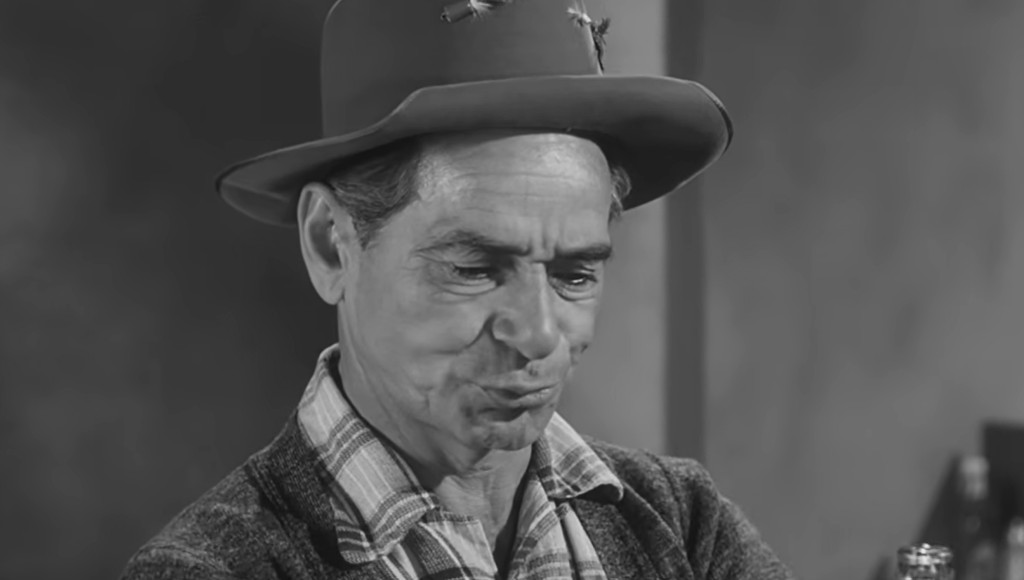
Multi-instrumentalist, singer, songwriter, comedian and actor George “Shug” Fisher was a mainstay in western films and TV from the 40s to the early 80s, often playing high-energy, comedic bit-parts. He started his career as a touring musician and comedian, and at one point played bass and sang in the renowned group Sons of the Pioneers (with The Giant Gila Monster’s producer Ken Curtis). In the 50s and 60s he was part of John Ford’s stock company, and appeared in small roles in a number of Ford’s movies. He may be best known to US audiences for his TV work. He had a recurring role Shorty Kellems in The Beverly Hillbillies (1969-1970), was part of the main cast of Ripcord (1962-1963) and appeared 22 times on Gunsmoke in various roles.
Ken Knox, the radio DJ who plays a radio DJ in The Giant Gila Monster, also appeared in Gordon McLendon’s By Dog Buddy (1960) and the SF movie Beyond the Time Barrier (1960).
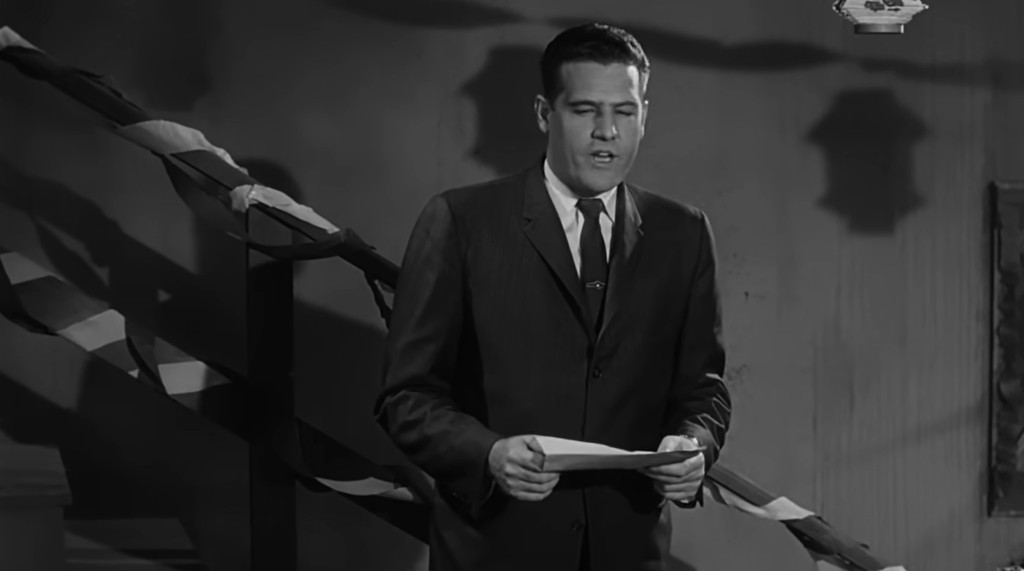
Ralph Hammeras was a special and visual effects creator, who worked on such productions as Chaplin’s The Great Dictator (1940) and Cleopatra (1963). He’s also a science fiction legend, having created effects films like The Lost World (1925, review), Just Imagine! (1930, review) Disney’s 20,000 Leagues Under the Sea (1954, review), as well as such low-budget cult classics as The Giant Claw (1957, review), The Black Scorpion (1957, review) and The Giant Gila Monster (1959). He was nominated for Oscars thrice.
Wilfrid Cline was never regarded as the most creative of Hollywood’s cinematographers, he was a respected and reliable director of photography, and was one of the pioneers of early Technicolor photography. He entered his career at the cusp of the talkies, and in the late 30s and early 40s became much sought-after as a specialist on Technicolor. While he wasn’t the primary cinematographer, he worked on Gone With the Wind as a Technicolor consultant in 1939. In 1941 he was DP on another Technicolor film, Aloma of the South Seas, for which he was nominated for an Oscar. Other notable projects were the Doris Day Technicolor musical Calamity Jane and William Castle’s horror/sci-fi movie The Tingler (1959), a gimmicky black-and-white movie which contains a memorable scene with a bathtub filled with bright red blood in an otherwise black-and-white shot. In the 60s and 70s Cline worked primarily in TV, and garnered an Emmy nomination for his work on My World and Welcome to It (1969). Cline also shot The Killer Shrews.
Guitar virtuoso Jack Marshall created music for around 30 films and TV shows. He is best known for creating the music for the TV series The Munsters.
We have encountered editor Aaron Stell before on this blog. Stell was a workhorse editor who churned out massive amounts of B-movies in the 40s and 40s, including Eddie Cahn’s Creature with the Atom Brain (1955, review), Bert I. Gordon’s grasshopper film Beginning of the End (1957, review) and Gordon McLendon’s 1959 double feature The Giant Gila Monster and The Killer Shrews. But among the over 100 B-movies he edited, he occasionally had the chance to work on some more prestige projects, such as Touch of Evil (1958), for which he was nominated for an Eddie award by American Cinema Editors, To Kill a Mockingbird (1962) and the intriguing eco science fiction film Silent Running (1972), directed by special effects master Douglas Trumbull.
Janne Wass
The Giant Gila Monster. 1959, USA. Directed by Ray Kellogg. Written by Jay Simms & Ray Kellogg. Starring: Don Sullivan, Lisa Simone, Fred Graham, Shug Fisher, Bob Thompson. Music: Jack Marshall. Cinematography: Wilfrid Cline. Editing: Aaron Stell. Set decoration: Louise Caldwell. Makeup: Corinne Daniel. Produced by Ken Curtis & Gordon McLendon for Hollywood Pictures Corporation.


Leave a comment