

Police and scientists turn invisible in order to catch a murderer who shrinks to the size of a fly. So-so special effects and a surprisingly tame script hamper this otherwise passable 1957 Japanese SF movie. 5/10

The Invisible Man vs. the Human Fly. 1957, Japan. Directed by Mitsuo Murayama. Written by Hajime Takaiwa. Starring: Yoshiro Kitahara, Ryuji Shinagawa, Junko Kano, Ikuki Mori, Ichiro Izawa, Shizuo Chujo. Produced by Hideo Nagata. IMDb: 5.5/10. Letterboxd: 3.1/5. Rotten Tomatoes: N/A. Metacritic: N/A.
Mysterious killings are taking place in Tokyo. An attacker appears to stab his victims, but despite many of the murders happening in broad daylight, nobody sees the assailant arrive or leave. Furthermore, many of the murders take place in locked rooms with no way in or out. The murders are accompanied by a buzzing sound, and one victim is seen swatting a fly before he is killed. Chief Inspector Wakabayashi (Yoshiro Kitahara) comes up with a crazy theory: the murders must be committed by a human fly.
Thus begins The Invisible Man vs. the Human Fly (透明人間と蝿男, Tōmei Ningen to Hae Otoko), Daiei’s 1957 SF/crime thriller, directed by Mitsuo Murayama and written by prolific pulp screenwriter Hajime Takaiwa. Despite the goofy name, the film plays it straight.
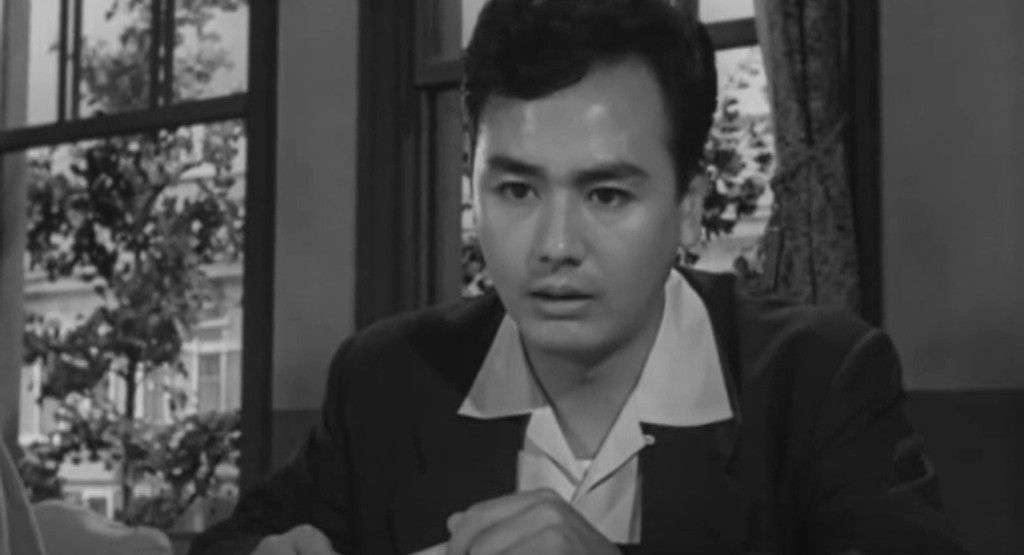
Chief Inspector Wakabayashi seeks the help of his friend Dr. Tsukioka (Ryuji Shinagawa), who explains that it is theoretically possible to shrink a human to the size of a fly. And if a human was the size of a fly, he would also be able to fly like a fly, explains Tsukioka.
Wakabayashi follows the bread crumbs to a seedy night club where he is acquainted with its star, erotic dancer Mieko (Ikuko Mori), sporting outfits that leave little to the imagination. However, the bar owner is a red herring, and the traces soon lead to shady businessman Kusunoki (Ichiro Izawa). But Wakabayashi is unable to get any evidence on Kusunoki, and soon all of Tokyo is in uproar as the mysterious killings continue.

Meanwhile, Dr. Tsukioka is hard at work perfecting a machine that turns objects invisible. The invisibility ray is all but ready for human testing, but Tsukioka has hit a snag: He isn’t able to turn his test bunnies visible again without killing them. However, when Tsukioka’s fiancé’s father is murdered, he decides to sacrifice himself — and turns the machine on his own body. Now, fight is on between the invisible man and the human fly. Using his invisibility to sneak into Kusunoki’s office, he learns that Kusunoki has been part of a secret team of scientists during WWII, working on a serum that turns humans into the size of a fly. When the war ended, his colleagues betrayed him, and made him the scapegoat, resulting in several years in prison. Now he is out to avenge himself, using his henchman Yamada (Shizuo Chujo) as his fly-size hitman. Yamada, on the other hand, has become addicted to the serum, which is slowly driving him insane.
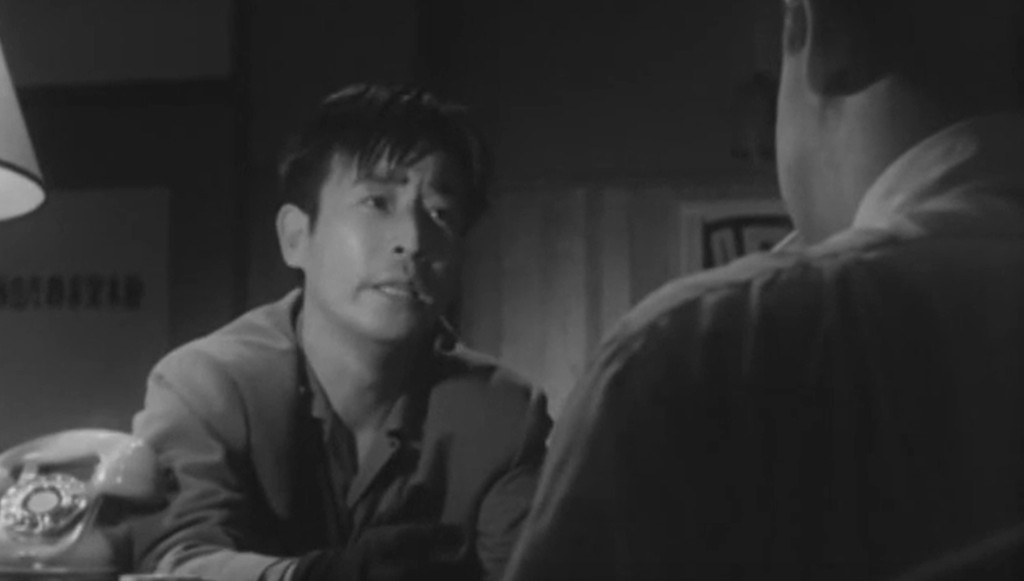
When the police confront Kusunoki, he uses the serum on himself and slips through their fingers. Now Kusunoki becomes a mite-size terror, killing at random and blowing up trains. After having learned that Tsukioka has perfected his invisibility machine, he blackmails the scientist and the Tokyo police into giving him the means to turn himself invisible. A highly risky exchange is proposed on a rooftop with a helicopter pad. But unbeknownst to everyone, Dr. Tsukioka’s fiancée (Junko Kano) has determined to take matters into her own hand, turning herself into the invisible woman…
Background & Analysis

American horror and monster movies have always been a great influence on Japanese science fiction films, starting with Frankenstein (1931, review) and King Kong (1933, review). One film that seems to have had a special impact on the Japanese is James Whale’s classic The Invisible Man (1932, review), based, of course, on H.G. Wells‘ book of the same name from 1897. If Godzilla was was the science fiction cash cow for Toho studios, then the Invisible Man was rivalling Daiei’s attempt at a loosely knit franchise. In 1949, Daiei released Japan’s first (preserved) science fiction movie Tomei ningen arawaru (“the invisible man appears”, review), a story more inspired by Wells’ novel than based on, about an invisible thief who steals a valuable necklace from an opera dancer, and holds the city in terror. In 1954, the studio followed up with The Invisible Avenger (review), which is the story of a former WWII soldier having been turned invisible by the army and are now trying to cope with life in Tokyo. Here, the invisible man is a vigilante crime fighter who has a day job as a living advertisment clown, with his white face paint hiding his invisibility.
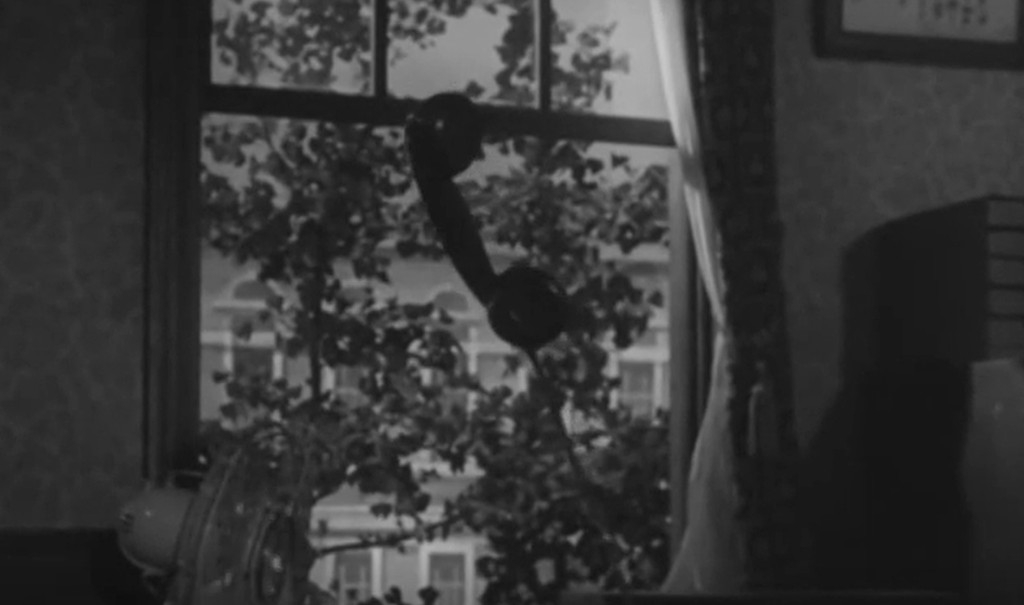
As so many other Japanese movies of the 50’s, The Invisible Man vs. the Human Fly from 1957 also takes its starting point in the national trauma from WWII. The film isn’t necessarily trying to say anything very meaningful about the subject, but its inclusion as a motivator for Kusunoki just goes to show how prevalent the theme still was in Japanese society. Like Warner in the US, Daiei was known for its crime and detective films, and it is no coincidence that all three of the studio’s early Invisible Man films are constructed as crime mysteries. The Invisible Man vs. the Human Fly is built like a police procedural with SF elements.
If the screenplay doesn’t appear to be as well thought out and polished as it could be, that could be explained by the fact that in 1957 alone, writer Hajime Takaiwa wrote 11 screenplays. Nevertheless, the plot for The Invisible Man vs. the Human Fly is pretty cleverly put toghether, as it begins with the police trying to solve a string of perplexing murders. Takaiwa also throws in a red herring, as we first suspect that it is an invisible man who is responsible for the killings.
When it comes to the science fiction elements, Takaiwa is unfortunately out of his depth. It’s a neat idea, a killer who is able to turn himself into a human fly in order to get in and out of rooms undetected. However, in order to commit the killings, he must return to normal size. Despite what is stated in the script, it is difficult believe that a person could materialze out of thin air on a busy street, kill a person, and then disappear, without anyone taking notice. Furthermore, the manner of his size changes are incosistent. At some points it seems that it’s the fumes from the serum that turns him small, but at other points it seems he is able to change size at will.
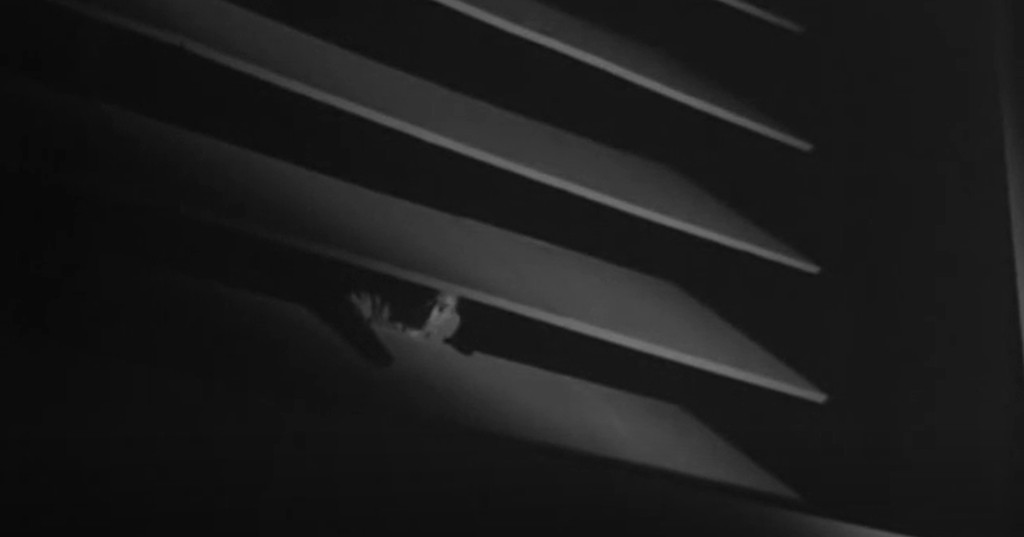
An even more troubling logical conundrum is how the human fly is able to fly. The film explains this away with a statement from a scientist, claiming that of a man was the size of a fly, he would be able to fly. Of course, this wouldn’t have fooled even the kids in the audience. A fly is able to fly because it has wings, and it’s the flappings of its wings that makes the buzzing sound. The serum doesn’t provide its user with wings, it just turns him small. As the film portrays it, the user seems to aqcuire some sort of Superman-like superpowers allowing him to defy gravity. But even this wouldn’t explain why he emits a buzzing sound.
The invisibility schtick is such an established SF concept, that it is easier for the audience to just buy it outright. There’s some hokum explanation about visible and invisible light wavelengths, just as in Wells’ novel, but this isn’t really necessary. We have a machine that makes you invisible, end of story.
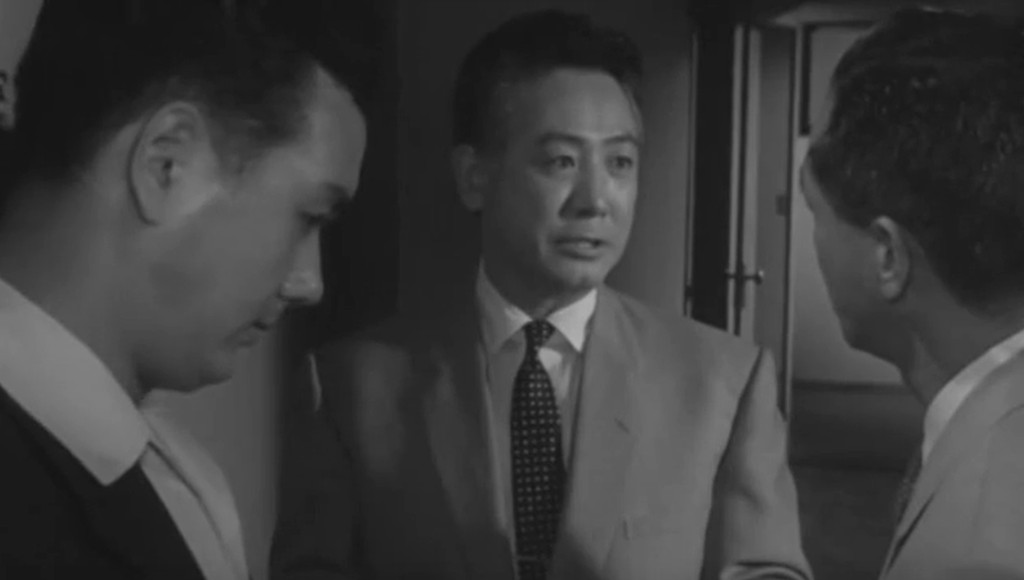
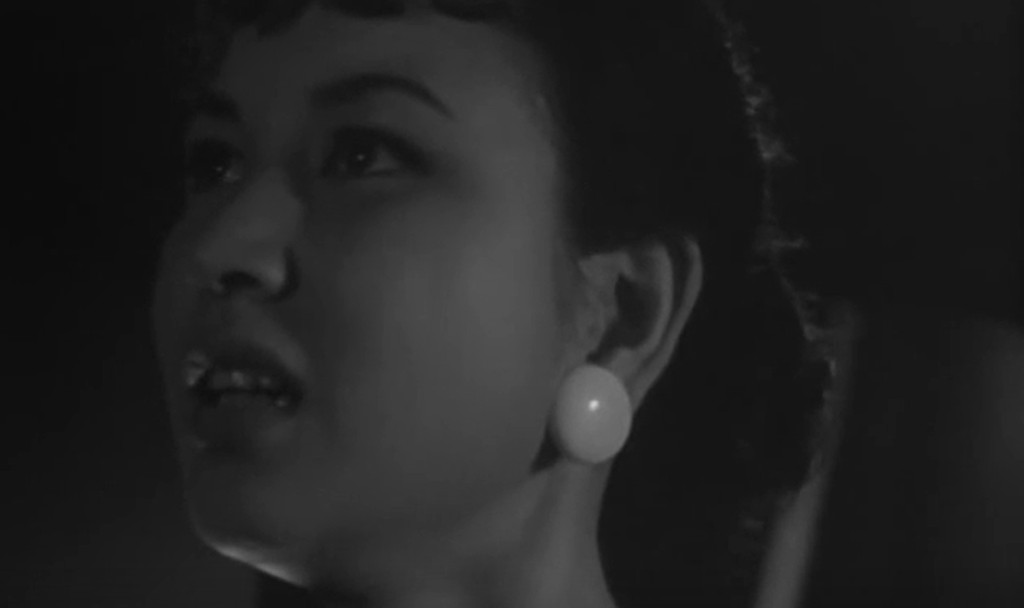
The dialogue is perfunctory, serving merely to give exposition and propel the story forward, and is at times rather inane. The story is also hampered by including too many characters whose subplots struggle for attention during the film’s 90-minute runtime – i have left several of them out of the plot description, as they don’t serve any real purpose for the plot. The plot is further complicated by the fact that Yamada, the hit man, goes off protocol for personal reasons, killing both the nightclub dancer Mieko, who he is in love with, and her lover. Nevertheless, this personal vendetta provides the film with perhaps its most famous sequence, as the fly man climbs across the sleeping Mieko, dressed in her skimpy outfit, and at one point explores her exposed cleavage. This may be the first time this particular male fantasy has been explicitly brought to the big screen.
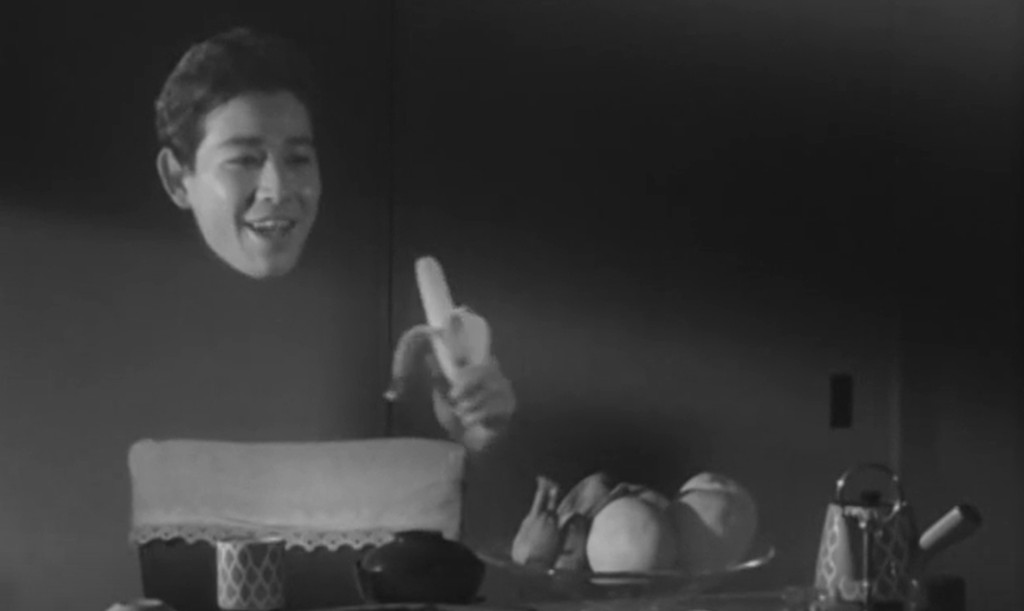
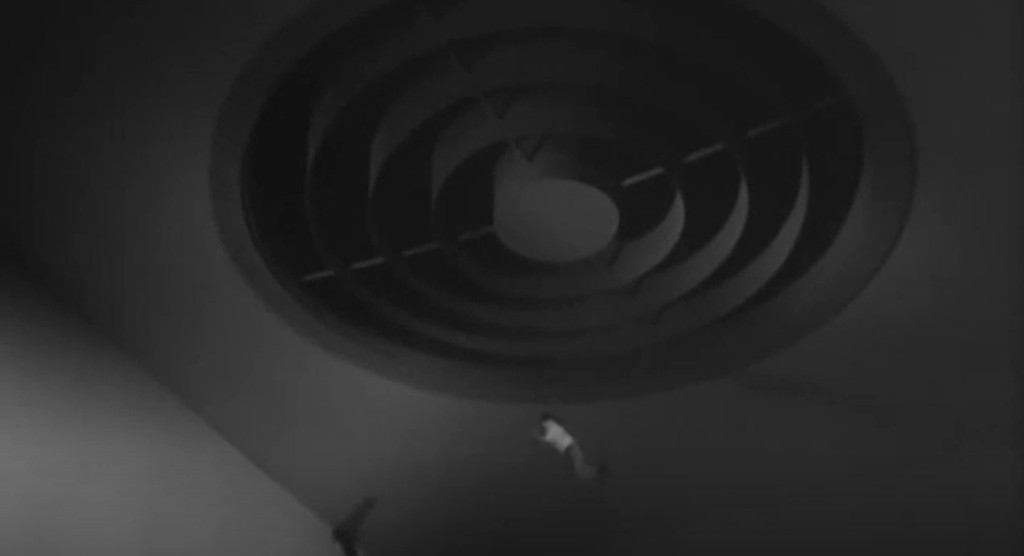
The special effects are so-so. Daiei didn’t have an Eiji Tsuburaya of their own, nor a special effects department of the kind that Toho had, modelled on Hollywood studios. The invisibility effects are OK, despite occasionally translucent characters and visible limbs that fade in and out where they should have sharp lines. The compositing work involving the human fly is rather clumsy, with the perpetrator often translucent and badly matted into the background footage. It doesn’t help that he looks rather ridiculous as he “floats” around rooms and people. Apparently, producer Hideo Nagata didn’t have the budget to create large sets, as in Universal’s The Incredible Shrinking Man (1957, review), which must have been an inspiration for The Invisible Man vs. the Human Fly.
The acting is decent across the board, with none of the actors getting much of a chance to shine, except the two villains, Ichiro Izawa and Shizuo Chujo, both hamming it up with gusto. Male lead Yoshiro Kitahara was a well-known face from Daiei crime movies, and Junko Kano would go on to become a highly respected actress.

Apart from the occasionally shabby special effects sequences, Mitsuo Murayama’s direction is stylish, with cinematographer Hiroshi Murai creating some nice atmospheric sequences with good lighting and effective use of both wide shots and close-ups in action and tension scenes. The way the light and camera caress Ikuko Mori’s body in the nightclub scenes borders on erotica.
Like Daiei’s previous Invisible Man films, The Invisible Man vs. the Human Fly suffers from a somewhat uninspired script and low budget. It dares to stray a little further off into SF territory than its predecessors, but still seems to struggle to find its tone between the SF content and its police procedural background. Better special effects might have helped the movie stand out. Nevertheless, I feel this is the best of Daiei’s Invisible Man movies, with good acting, atmospheric visuals and an engaging story.

As a sidenote – it is interesting that all of Daiei’s Invisible Man films feature dancers of varying degrees of undress – and the trope continued in similar films, such as Toho’s The H-Man (1958review). Another sidenote is that this film predates the American SF Classic The Fly (1958, (review)), but I doubt it served as an inspiration, as its US release was, for reasons unknown, cancelled.
Reception & Legacy
Finding reviews from the time of release for old Japanese movies, especially more obscure ones, is always challenging, and I have found none for The Invisible Man vs. the Human Fly. It has a 5.5/10 audience rating on IMDb, based on a little more than 200 votes, and a 3.1/5 rating on Letterboxd, based on 400 votes. Online reviews I can find are not overly enthusiastic. Film scholar Toshiako Sato writes on Note that the movie is a fusion of science fiction and mystery, and gives high praise to its miniature sets of Ginza, that are blown up in the film. Like most commentators, he also rejoices over Junko Kano’s presence in the movie. Yoshirinn at Miscallaneous Thoughts About Movies takes a crack at the film’s script, calling it illogical, confusing and fraught with plot holes. Girara at Deep Showa Belt is disappointed with the film’s special effects, saying it should not be called a tokusatsu movie at all: “It was a work with little to offer”.

Rob at Neatly Arranged Rubbish calls the film “a likeable SF murder mystery/police procedural”, citing “pleasant but unremarkable” characters, decent special effects, and says: “Mitsuo Murayama’s direction is rather workmanlike but with atmospheric lighting”. Like several critics, Rob also picks up on the unusual electronic-sounding score by Tokujiro Okubo, with “toots and whistles”, which according to Rob “makes a fine match for the bizarre goings on”. Charle Largent at Trailers from Hell writes: “while the plot line is a muddle, thanks to these technicians and a singular storyline, The Invisible Man vs. the Human Fly pays off with some memorably twisted fun”.
Hayley Scanlon at Windows on Worlds writes: “A fairly solid B-movie though one which is perhaps a little too po-faced for its genretastic title, The Invisible Man vs The Human Fly is an interesting mix of noir crime thriller with a little science fiction and even a few horror trappings thrown in. Thanks to its straightforward approach it may prove a little dull for genre enthusiasts but does offer its own kind of surreal iconography and it’s difficult to forget the sight of a tiny, angry looking besuited man flying around and committing random crimes while an invisible opponent stalks him from the shadows.” And Dave Sindelar at Fantastic Movie Musings and Ramblings opines that “In the end, the movie is somewhat entertaining, but not as wild or bizarre as the title made me feel it would be”.

This was the last of Daiei’s Invisible Man films, creating a loosely bound trilogy of films that don’t really have anything connecting them, other than the fact that they all take their cues from the studio’s crime movies, exploring the seedy underbelly of Tokyo, and, somewhat strangely, dancers. However, Toho took up the reins with larger budgets, better special effects, colour photography and much more outrageous plots. The H-Man (1958), The Secret of the Telegian (1960) and The Human Vapor (1960) weren’t explicitly about an invisible man, but undoubtedly took their cues from The Invisible Man vs. the Human Fly, featuring scientifically enhanced villains committing inexplicable murders, baffling the Tokyo police.
Cast & Crew
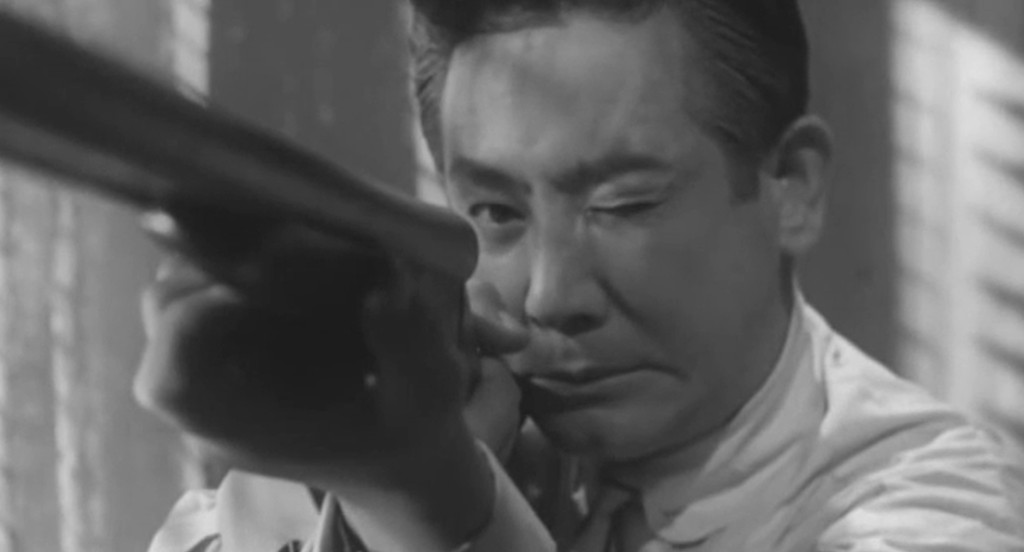
Director Mitsuo Murayama didn’t leave any greater footprint in film history, and internationally he is probably best known for The Invisible Man vs. the Human Fly (1957), his one and only SF movie. In Japan, he became know for directing a number of moderately successful crime and especially war movies, like Zero Fighters (1965) and Gateway to Glory (1970). He worked his entire career at Daiei, from 1956 to 1970, when the company started to go belly-up, and after that freelanced for various studios and TV channels until his death in 1978.
Hajime Takaiwa began writing pulp novels in his teens, and was quickly snatched up by the movie business in the late 30’s. He specialised in writing B-movies, in particular crime films and detective stories, but really hit his stride in the 60’s, as one of the primary contributors to Daiei’s ronin and ninja stories, in particular the Shinobi no mono-series. His internationally best known movie is perhaps Toei’s Street Fighter 2 (1974). Takaiwa was extremely prolific, and during his heyday seldom wrote less than half a dozen films a year.
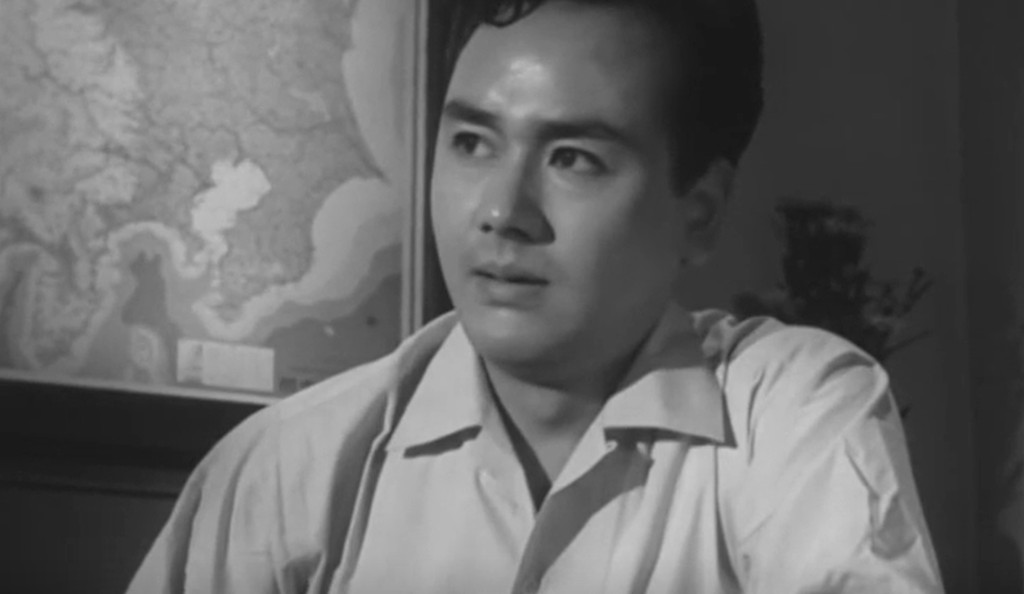
Lead actor Yoshiro Kitahara made his movie debut in 1953 at Daiei, and had a brief stint as a leading man in B-movies, before being relegated to supporting parts, often in crime films. In the 60’s he appeared in several of Daiei’s Gamera movies. After Daiei’s bankruptcy in 1971, Kitahara made the move to TV, where often played villains, scientists and authority figures. He is especially well remembered for his guest spots on the show Kamen Rider in the late 70’s. He also had a secondary career as a voice actor.

Junko Kano entered the movie business through a pageant contest, and The Invisible Man vs. the Human Fly was one of her very first roles. Billed as a rising star behind Daiei’s top female actors like Machiko Kyo and Fujiko Yamamoto, Kano had her breakthrough in 1959, playing co-lead alongside Kyo in films like Sasameyuki and the Golden Globe-nominated Odd Obsession. Despite being on the crest of her career, Kano retired from acting in 1963, due to eye problems caused by the bright studio lights.

Ikuko Mori, the seductive dancer, is an interesting character. Like Kano, she made her way into Daiei through a beauty contest, and was part of the same “10th generation of new faces” at the studio as Kano. Mori quickly established herself as a glamour girl, playing small roles in often scant clothing. However, by the 60’s, she had graduated to performing with clothes on, in particluar in period dramas. She was a mainstay in small roles in the hugely successful Zatoishi series. To genre fans, she may be best remembered as the Ronin’s wife/the long-necked ghost in 1968’s Yokai Monsters: 100 Monsters and Yokai Monsters: Spook Warfare. Mori’s career was cut short when in 1969 she murdered her lover when she found out he had a wife and children. She spent five years in prison, released early on good behaviour. By the time she got out, Daiei had folded, and no other studio would hire her.

Shozo Nanbu, in the small role as Kano’s father, appeared in Tomei ningen arawaru (1951), Warning from Space (1956, review) and The Invisible Man vs. the Human Fly (1957). Most of the cast consists of stock Daiei supporting players.
Janne Wass
The Invisible Man vs. the Human Fly. 1957, Japan. Directed by Mitsuo Murayama. Written by Hajime Takaiwa. Starring: Yoshiro Kitahara, Ryuji Shinagawa, Junko Kano, Ikuki Mori, Ichiro Izawa, Shizuo Chujo, Joji Tsurumi, Yoshihiro Hamaguchi, Shozo Nanbu, Bontaro Miake, Fujio Haramute. Music: Tokujiro Okubu. Cinematography: Hiroshi Murai. Sound: Kimio Tobita. Produced by Hideo Nagata for Daiei.
 Scifist.
Leave a comment