

The crew of a small observation station are besieged by an alien monster while trying to care for a seemingly undead astronaut that has been impregnated with alien babies. Gene Corman’s first SF movie has a novel idea and competent direction, but is done in by its low budget and talky, confused script. 3/10
Night of the Blood Beast. 1958, USA. Directed by Bernard Kowalski. Written by Martin Varno. Starring: Ed Nelson, Michael Emmet, Angela Greene, John Baer, Tyler McVey, Georgianna Carter, Ross Sturlin. Produced by Gene Corman & Roger Corman. IMDb: 3.5/10. Letterboxd: 2.2/5. Rotten Tomatoes: N/A. Metacritic: N/A.
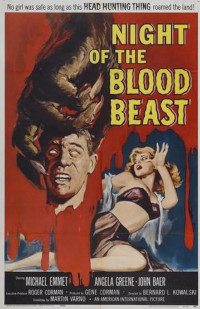
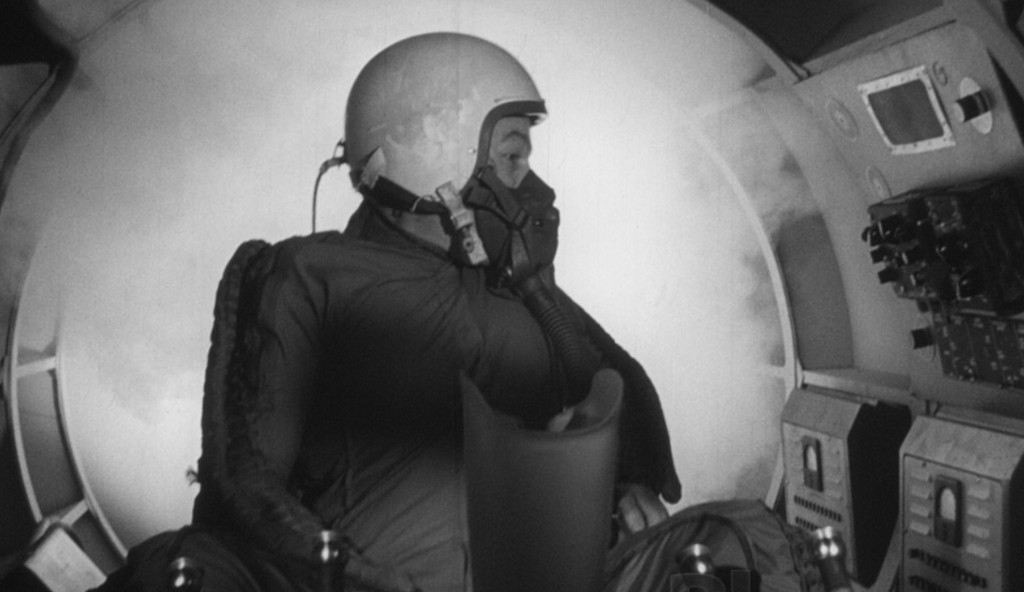
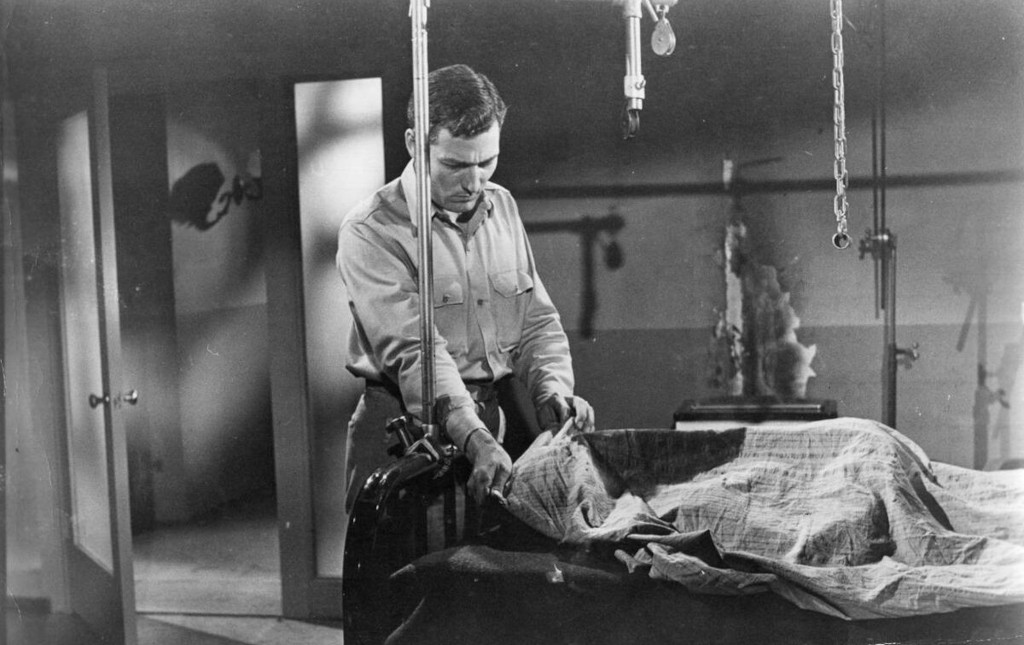
Upon reentry from space, astronaut John Corcoran (Michael Emmet) loses control of his rocket and crashes near a remote observation post in the US. When the small rescue team arrives, they find him “undead”: while his heart has ceased functioning, he retains his body temperature and blood pressure. And: his blood has been invaded by some foreign organism.
Thus begins Night of the Blood Beast, a 1958 low-budget science fiction movie produced by Gene and Roger Corman for American International Pictures, and directed by Bernard Kowalski.
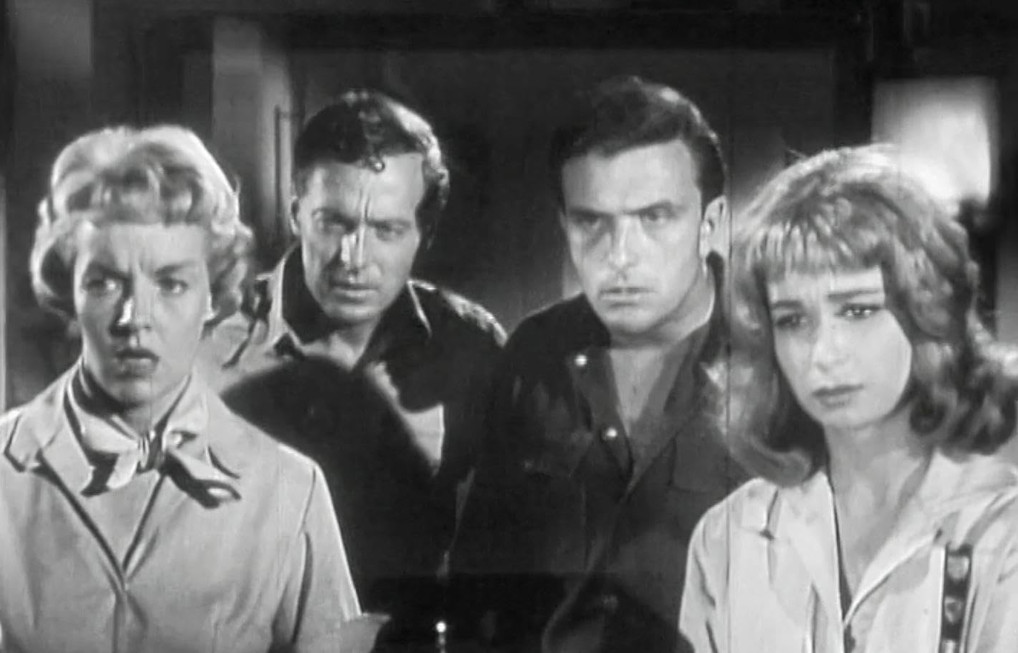
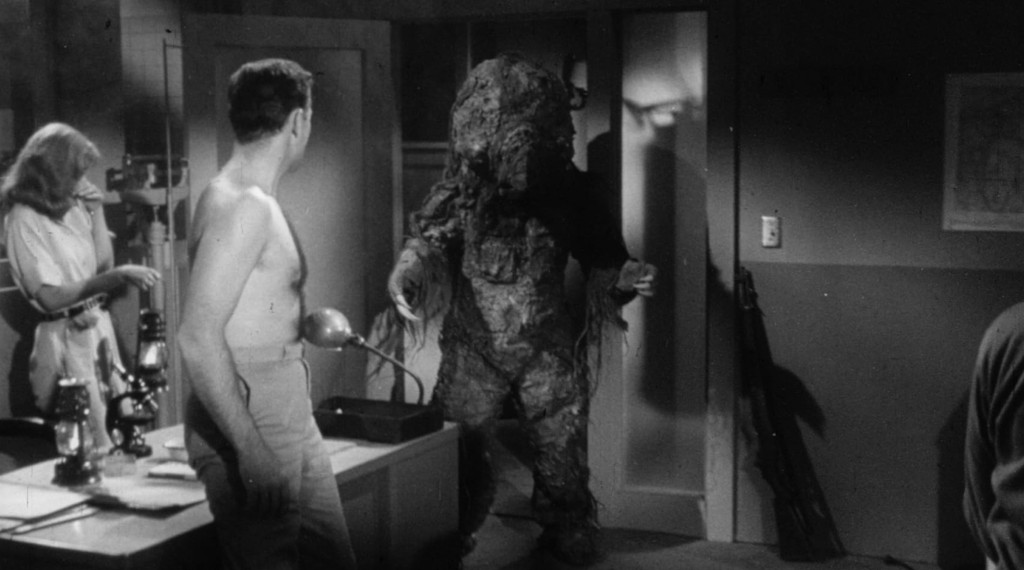
John is taken to the research station where his colleagues are working: Dave (Ed Nelson), Steve (Jonn Baer), team leader Dr. Wyman (Tyler McVey), as well as John’s fiancée Julie (Angela Greene) and photographer Donna (Georgianna Carter). The team is unable to communicate with the outside world, as there are no telephone lines, and radio communications are seemingly blocked. Dr. Wyman and Julie discover strange lesions on John’s body and are perplexed at how he is still seemingly alive while still dead. Dave bumps into some large creature (Ross Sturlin) outside the research station.
Soon all electricity breaks down, and cars stop working – the team deduce it is because of some magnetic field emitted by the creature. Holed up in the night in their dark station, they can only wait for help to arrive. But during the night, the creature breaks in and kills Dr. Wyman. Also, John comes back to life. A flouroscope show that the foreign substance in his blood has now evolved into alien embryos that are developing in John’s body. But John is adamant that the creature is not malevolent, and defend its actions. Later it breaks in again, and the team attack it with rifles and fire – and while guns don’t seem to hurt it, fire does, and it flees back into the hills.
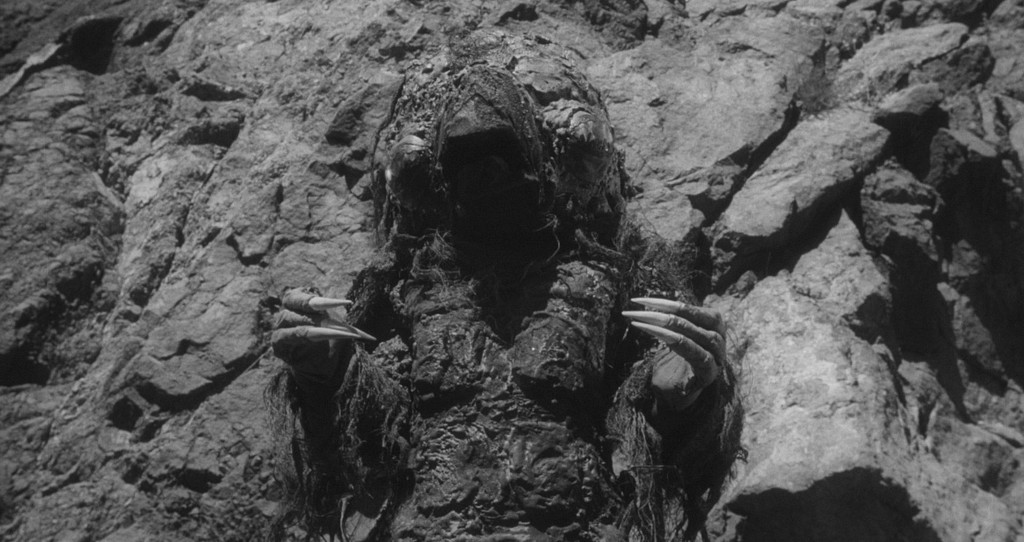
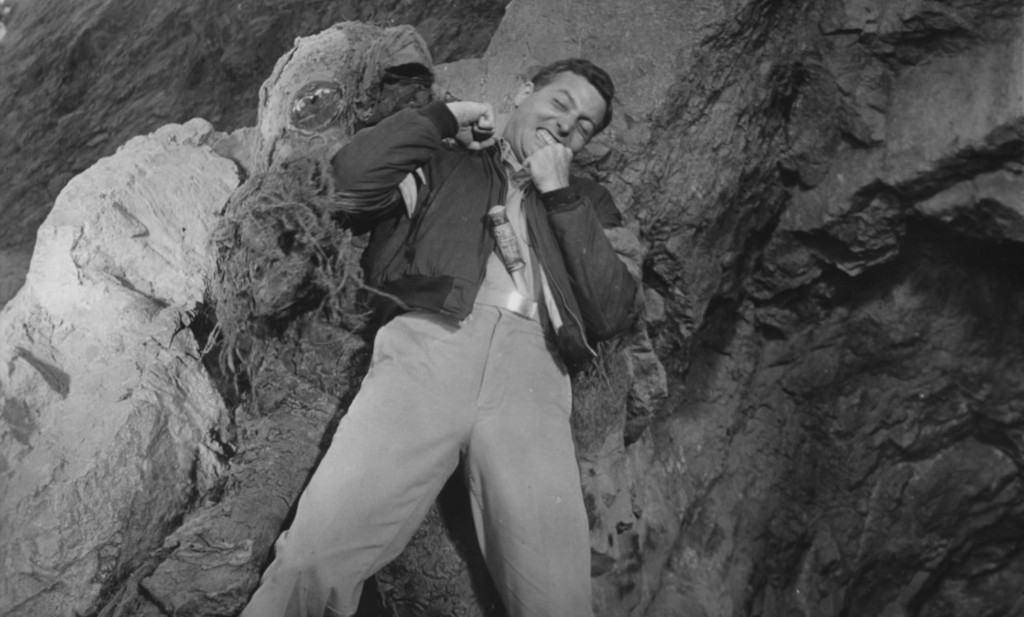
John argues that they should try to communicate with the thing. But Dave and Steve instead prepare Molotov cocktails which they plan to ignite with flare guns. The next day, John volunteers as bait and they set out to the cave to which Steve has chased it. When John realises that Dave and Steve are going to kill it, he runs into the cave and gives himself to the creature as hostage. The creature now speaks, explaining that he has assimilated part of Dr. Wyman’s consciousness. The creature says that it and its race have come to Earth to save humanity from itself. They have once developed “the ultimate power” that humanity is soon to discover themselves. The aliens are here to prevent humanity from making the same mistake as they did, turning the power into weapons. By assimilating humans, it explains, they will learn us to put the power to constructive use, and provide us with a new civilisation. John realises that it is all a ruse: the aliens are not here to help humanity, but to assimilate it. He pleads with Dave and Steve to put fire to both the creature and himself, killing the embryos inside him, or “it will mean the end of humanity as we know it”. Realising that the humans will hesitate to kill their friend, the alien grabs John and uses him as a shield. But John grabs a knife and commits suicide, leaving the creature free for Dave and Steve to incinerate.
Background & Analysis
Night of the Blood Beast was written with the title “Creature from Galaxy 27” by 22-year-old Martin Varno, the son of Dutch-American character actor Roland Varno. However, producers Gene and Roger Corman tested the title among highschool kids, who preferred “Night of the Blood Beast”. The movie was probably filmed sometime in the spring of 1958, and was one of the many low-budget science fiction monster movies that Roger Corman churned out for American International Pictures at an incredible speed. This time, he used as his director 28-year-old Bernard Kowalski, whom he and Gene had previously worked with on Hot Car Girl (1958).
Apparently, the film got started very much like any other AIP film got started: Gene and Roger sat down and decided they needed a script for a new film, and threw around a few ideas, which they thought they’d present to a screenwriter. They tried science fiction writer Jerome Bixby, but he was busy writing It! The Terror from Beyond Space (1958, review). However, Bixby suggested Martin Varno. Who actually came up with the story for the film is a matter of debate. Gene Corman got a story credit for the movie, however, this was contested by Varno, who claimed that all that Gene provided were some “rambling ideas”, which Varno took and wrote the screenplay around. Apparently the writing process was arduous, as the Cormans demanded rewrites, which they refused to pay for. It didn’t help that Varno was already paid less than union minimum, as he wasn’t a member of the Screenwriters Guild – something that the Cormans weren’t slow to take advantage of. Matters of credits and salary resulted in two arbitrations. Apparently, Varno also took great umbrage at the fact that the Cormans and Kowalski rewrote the script. In an interview with Tom Weaver, he said he wanted to strangle Gene Corman when he saw a screening. However, Bill Warren who has read Varno’s original script doesn’t understand what all the fuss was about, as the original script is essentially what ended up on screen, according to Warren.
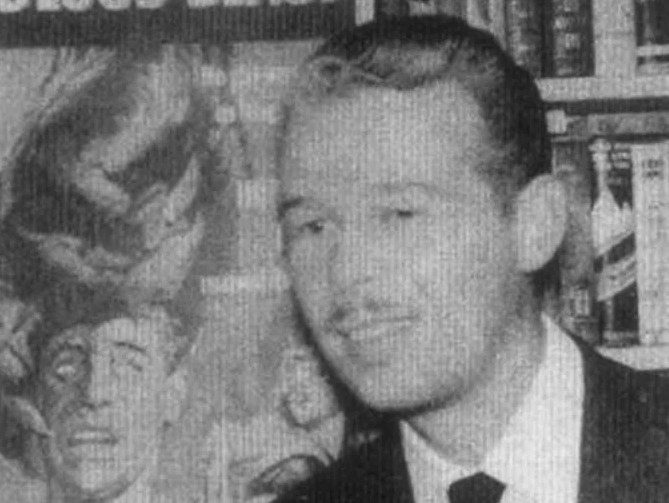
The story, on the one hand, has a few interesting ideas, as tended most of Roger Corman’s movies, but on the other hand it is highly derivative of other, better, works. The two major inspirations are The Thing from Another World (1951, review) and The Quatermass Xperiment (1956, review), released in the US as The Creeping Unknown. The latter provides Night of the Blood Beast with the idea of an astronaut returning from space infected with an alien parasite. The former gives the film its blueprint of a small, isolated group of people fighting off a nigh-invulnerable monster (some of the shots are almost carbon copies of scenes in The Thing). Another clear influence is The Day the Earth Stood Still (1951, review). Not only do both films feature a seemingly benign alien coming to Earth to warn humanity about its own path to destruction – they also both feature an alien who can turn off all electricity. A fourth inspiration seems to be Roger Corman’s own Attack of the Crab Monsters (1957, review), in which the monsters assimilate their victims’ thoughts and voices by eating them (here, the monster eats Dr. Wyman’s brain).
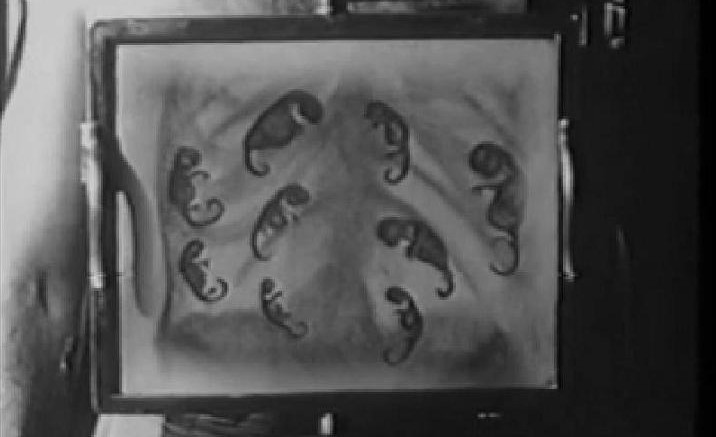
One problem with the script is that there are just too many ideas here competing for time and focus. In the 60-minute treatment, none of them get enough room to be developed properly, and in some cases they also clash thematically. The script tries to set up a situation in which we are supposed to consider that the alien is actually benign. The problem is that at this point it has already eaten half the head of the lead scientist and infected one of the main characters with alien parasites. No-one in the audience thinks this is going to turn out in favour of the alien monster. The idea of a (male) character being impregnated with alien babies is a novel one on screen – I don’t think it had been done before. (The idea, however, is lifted from A.E. van Vogt’s fixup novel The Voyage of the Space Beagle, which we discuss here). But there’s so much else going on in this rather short film, that the theme is never really explored and doesn’t lead to anything. The same thing is true of the alien’s capacity for “assimilating” the identities and intellects of its victims. It’s an interesting idea, explored rather well in Attack of the Crab Monsters, but here it just feels like another trope thrown in the mix for the sake of it (it doesn’t serve any real plot purpose, other than the alien learning English). However, the movie works reasonably well as a The Thing ripoff, and would have been stronger had Varno focused on that. With less tinkering about with other tropes, Varno would have had the opportunity to deepen the characters and explore their relationships with zombie-John and the alien babies inside of him.
Another question altogether is if Martin Varno would have actually posessed the chops to write such a script – there is little in the finished film that suggests that he would. The characters have little if any personality – not even enough that they would fill out the usual stereotypes for these kind of movies. Varno has attempted an ensemble piece, but for an ensemble piece to work, we need interesting characters.
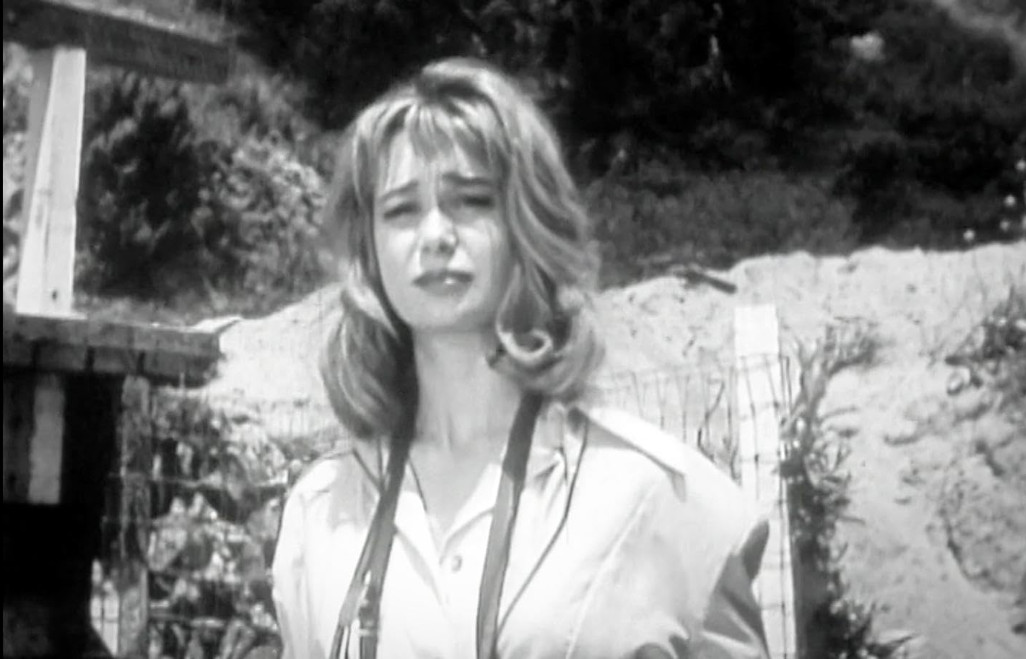
John Baer is billed above Ed Nelson, but actually plays second fiddle as “hero” to Nelson’s Dave, and his and Nelson’s characters are virtually interchangeable as the manly “shoot first, investigate later” scientists. Baer was probably billed and Nelson not, as Nelson was part of Corman’s regular troupe. Tyler McVey’s doctor is set up as a stern authority figure, but after the first ten minutes of the movie gets demoted to resident physician, before he is killed. Angela Greene’s character as the dead-alive astronaut’s wife is bewilderingly uneven, with no personality other than what the plot calls for at the moment. Georgianna Carter is in the movie only to provide a pretty face and get killed, and that is essentially all that she does. Michael Emmet’s John Corcoran, the “pregnant” astronaut, is the only character of any real interest, but as we are introduced to him half-way into the movie, it’s too late for the audience to build any sort of relationship with him. Up until now he has only been a piece of meat on the slab. However, his struggle with what is inside him seems way too easy, as he seems to have no qualms over being infested with a host of alien embryos. Yes, one can argue that this is some sort of mind control by the alien, but in terms of drama, it is just too dull. A stronger actor might have done something interesting with it, but Emmet is cornered by the script.
Corcoran’s struggle at the end when he realises that the alien isn’t offering a brand new world for humanity, but enslavement, is indicative of a particular brand of late 50s science fiction movies that borrowed their trope from the red scare films of the first half of the decade. We have reviewed a number of them here, the latest I recall was Ed Nelson’s and Roger Corman’s The Brain Eaters (1958, review), where Leonard Nimoy turns up at the end as the king of parasitic brain eaters that want to turn all humans into communists. In Night of the Blood Beast, it is John Corcoran who is fooled into believing the alien’s talk of peace and co-operation, when it in fact just wants to brainwash all good God-fearing ‘Muricans into becoming socialists. Whatever you feel ideologically about this, the problem here is that Varno sets it up so badly that it doesn’t pack any punch when delivered during the film’s final few minutes, in fact it is easy to miss unless you’re geared up for it.
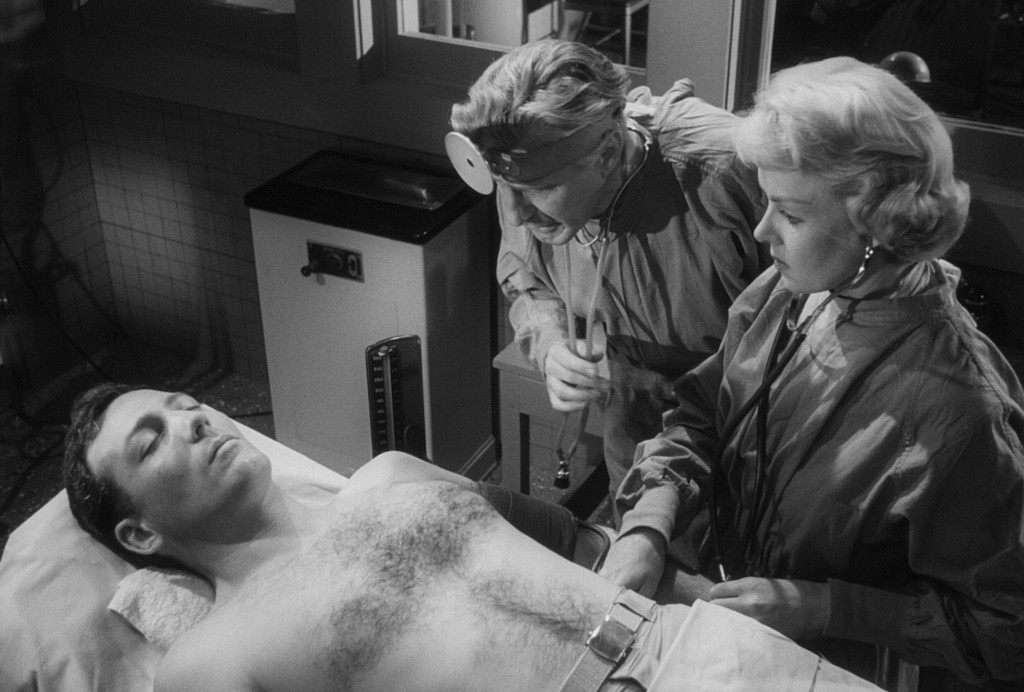
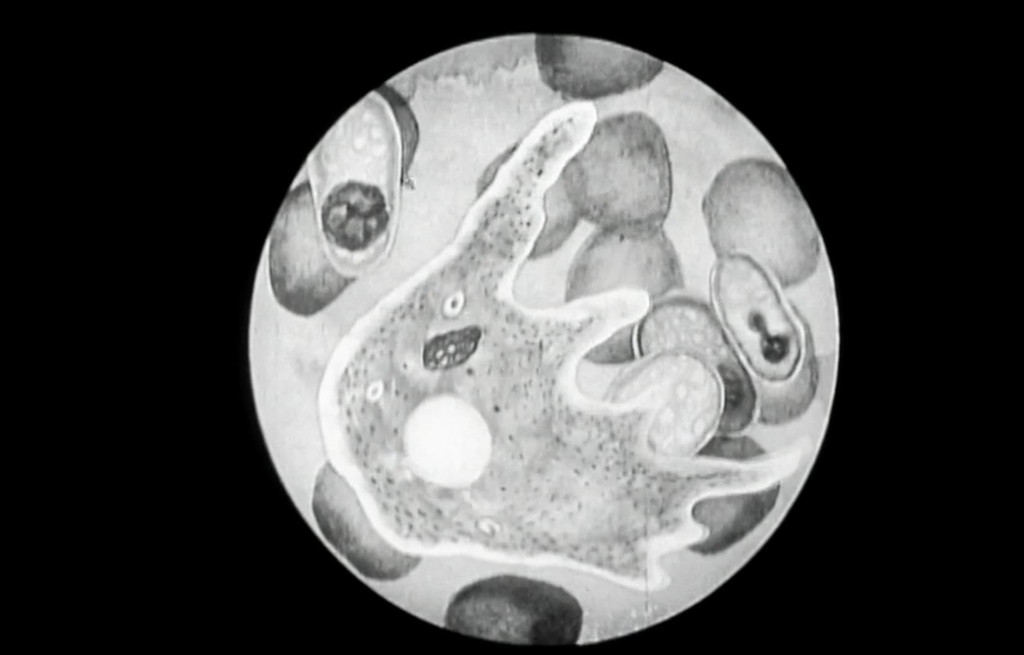
The movie featured the same threadbare production design as many of the Cormen’s films. Interiors were filmed at a small soundstage at what is today known as Chaplin Studios, then known as Kling Studios, on a budget of $68,000, lower than usual even for a Corman AIP production. Art director Daniel Haller had such a tight schedule that he lived in a trailer in the studio. Haller did much of the construction himself, including the rocket, which was made out of plywood with a plastic sheeting and spraypaint. The rocket is so childishly small, it is inconceivable that it would have been able to hold an astrounaut and all technology required for a space flight, and just generally looks flimsy. Haller also created the film’s two visual effects – these are crude cel animations, one showing the alien parasite invading Steve’s blood cells under a microscope, the other showing pulsating seahorse-like creatures representing the alien embryos inside Steve’s body under the floruroscope. They won’t win any visual effects awards, but they work.
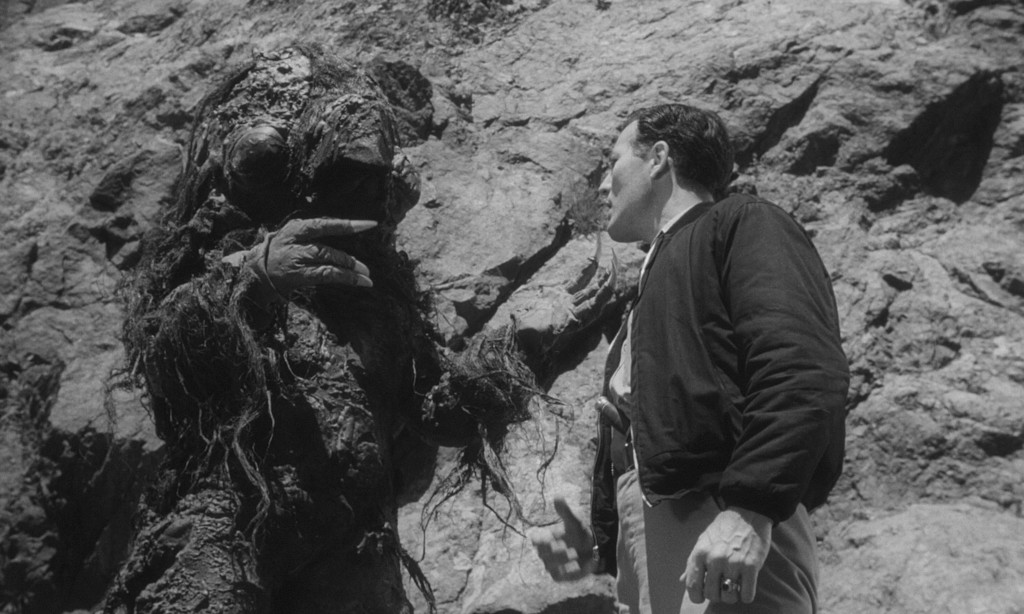
The outdoor locations, including the one with the downed rocket, are all filmed in Griffith Park, Los Angeles, or in Bronson Canyon, utilizing one of the oft-used entrances to the Bronson Caverns. This was familiar stomping ground to all involved. The scenes outside the research station was filmed outside an old TV station close to the Hollywood sign, where Martin Varno’s father had worked. The only interior is the science station, including two rooms. The film was so impoverished that we are supposed to believe that the first American space flight would be greeted by a guy with a flame extinguisher and girl with a camera, and that the only backup arriving would be three people crammed in a pickup, onto which the body of the astronaut is unceremoniously thrown for transportation back to the station – a station lacking even a telephone line. For budgetary reasons, the Cormans reused the monster from Teenage Caveman (1958, review) – the monster shots for both movies were shot within two weeks of each other. Granted, the suit makes more sense in Night of the Blood Beast than in the earlier film, where it was supposed to be a radiation suit. Ross Sturlin played the “monster” in both movies.
Bernard Kowalski made his directorial debut with Hot Car Girl, and then immediately launched into Night of the Blood Beast. The direction is one of the strongest aspects of this film, considering the budget and tight schedule. Kowalsky gets some mileage out of a number dramatic camera angles, a mobile camera, a couple of gruesome shock moments and dark, moody lighting, compliments of DP John Nickolaus, Jr. The day-for-night shots are fairly well accomplished. Gene Corman tells Tom Weaver that most of the day-for-night shooting took place outside the TV station, and the crew constantly had to chase the shadows around the building.
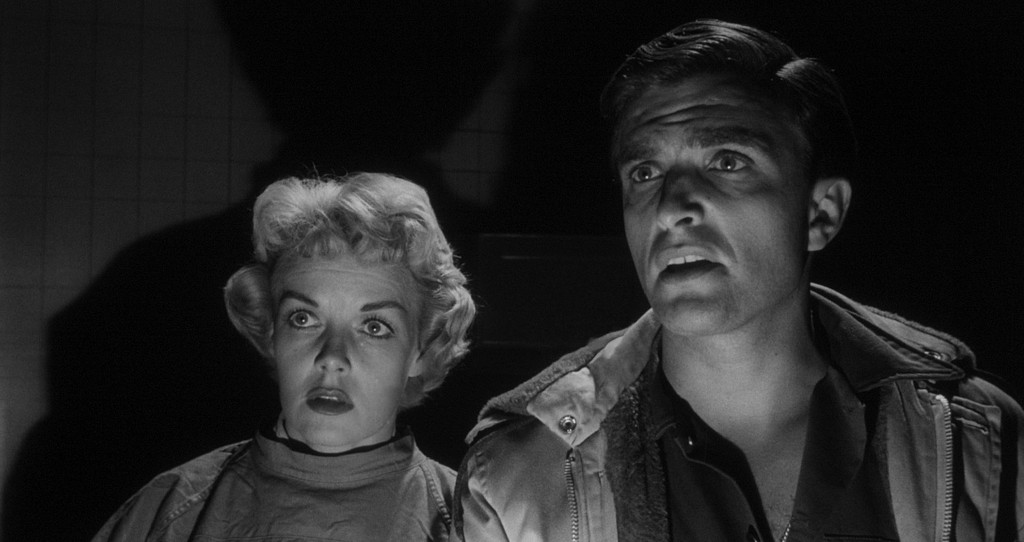
The acting is what it is – few actors could have made this script look good. Once again, Ed Nelson delivers a solid performance in what is essentially the male lead. Michael Emmet is not bad, but a slightly stronger performer could have brought more nuance to the role as the infected astronaut. Character actor veteran Tyler McVey could do this role in his sleep and John Baer provides decent backup. Angela Greene never convinces as the “dead” astronaut’s wife, but then again, she has nothing to hold on to in the script. Georgianna Carter might have been a great actress, but here she gets little to do except stand around looking pretty – which she does with aplomb.
To be fair, Night of the Blood Beast has an idea that was novel for 1958. Unfortunately, Martin Varno isn’t able to do very much with the idea of a man pregnant with alien babies, and instead turns the movie into a rather tedious monster prowl film. With a good screenwriter and himself behind the camera, a low budget never stopped Roger Corman from making a good movie. With practical producing duties left to brother Gene and with a young and inexperienced director like Bernard Kowalski at the helm of a weak script, there is no Corman magic in Night of the Blood Beast. None of this is Kowalski’s fault – he does what he can with the material and budget he has to work with, and does a pretty good job with creating both suspense and action. This simply never had a chance to take off. It’s not a terrible movie, it’s just a bottom rung monster programmer – and it can be a fun watch if you’re in the right mood. It’s too bad, as Kowalski clearly did his best to elevate the material.
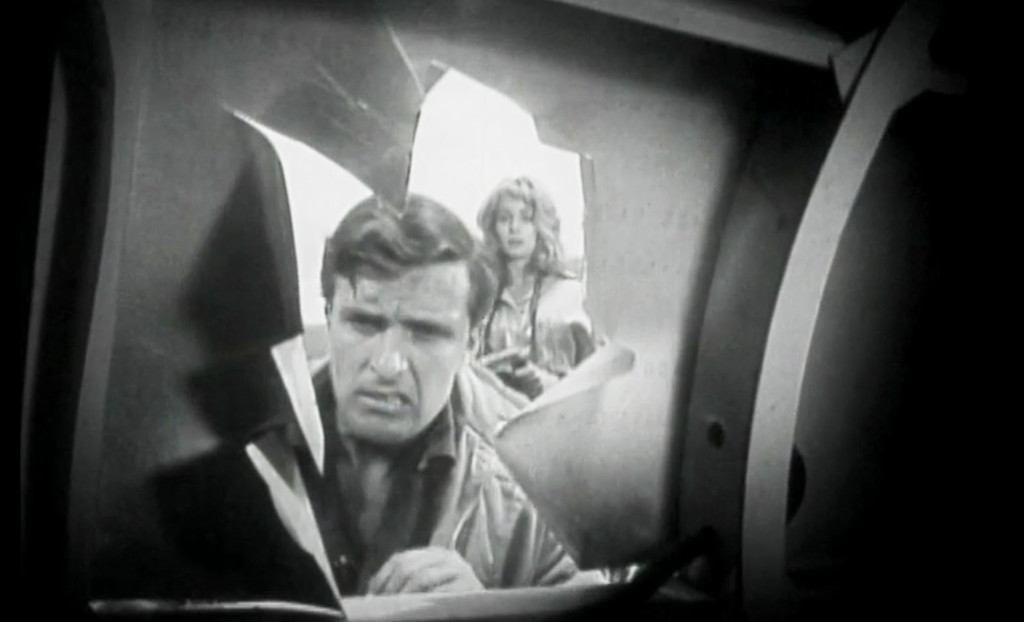
Upon completion of filming Martin Varno took the Cormans to arbitration over being payed too little. Although not a member of the Screenwriters Guild, he learned he was entitled to SWG payment, which he did not receive. Roger Corman was famous for underpaying cast and crew, but most were happy to be working at all, and never demanded union pay. Varno was one of the few who took the Corman to arbitration. He won, but Corman refused to pay him, which led to Corman being banned from using SGW writers for years, until he finally caughed up the dough. Varno also arbitrated against Gene Corman receiving a writing credit, which he also won. However, he agreed to leaving Corman’s screen credits in the existing prints.
Reception & Legacy
Night of the Blood Beast premiered in August, 1958 on a double bill with the Roger Corman-directed She Gods of Shark Reef. It got politely mild reviews in the US trade press. Harrison’s Reports wrote: “If science-fiction-horror melodramas still attract your patrons, this one […] should satisfy them”, signalling an onsetting fatigue with pictures of this kind. The magazine continued: “Those who accept the story for what it is should find it fairly entertaining, for the action is fairly suspenseful on occasion”. On a humorous note, Variety exclaimed: “It finally happened – someone wrote a story about a pregnant man!” Variety called it a “respectfully suspenseful picture” and deemed it the better of the two movies on the double bill. Not a particularly high praise, as She Gods of Shark Reef has a notoriously bad reputation (I haven’t seen it myself). In the UK, Monthly Film Bulletin gave Night of the Blood Beast its lowest, 1/3, rating, although it noted “one or two original ideas”. However, the magazine called the monster “a modest thing” and the staging “commonplace”.
The movie was featured on the rifftrax show MST3K in the show’s seventh season in 1996, solidifying its reputation as a “bad movie”, and in this case, quite justifiably. As of writing, it has a 3.5/10 audience rating on IMDb and a 2.2/5 rating on Letterboxd.
In his book Keep Watching the Skies!, Bill Warren notes that the film shows promise, calling it “well acted, tightly edited and efficiently directed”, and also gives praise to its novel idea. However, he laments that the “talky, derivative script and pathetic monster” as well as “the very low budget and the muddled premise” make Night of the Blood Beast “just another minor horror-SF movie”.
DVD Savant Glenn Erickson notes “an awful script”, “unconvincing characters” and “awful speeches”, and concludes his 2002 review: “It’s unusual that a naive 50s sci-fi monster romp is as completely charmless as this”. However, in a later review for Trailers from Hell, Erickson seems to have mellowed somewhat, mentioning some good visuals and decent performances, however, he still thinks the film “barely makes the grade as matinee fodder, something suitable for monster addicts only”. Mark Cole at Rivets on the Poster in mildly positive: “despite the very threadbare nature of this production, like most of the Cormans’ work of the era it is a brisk but reasonably entertaining film. It isn’t one of their better efforts, but then, it isn’t as bad as many of the other films AIP was churning out at the time.” Dave Sindelar at Fantastic Movie Musings and Ramblings bemoans a lost opportunity: “this movie suffers from poor exposition, lackluster direction, and uninspired performances, all of which contribute to making the movie a lot duller than it should have been. […] It’s a little sad; with a little more work on the script, more care and a better cast, this one could have been a winner rather than a disappointment. This was not AIP’s finest hour.”
If this film has any positive legacy, it is for its novel theme of an alien using a human being as an incubator for its offspring. Night of the Blood Beast is one of the numerous films that are sometimes cited as inspirations for Alien (1979). There is no evidence, however, that screenwriter Dan O’Bannon would have been inspired by the 1958 film. Rather, it is a well-known fact that much of the script of Alien was inspired by A.E. van Vogt’s fixup novel The Voyage of the Space Beagle (1950), which contains a segment in which an alien lays eggs in the bodies of the crew members of a research spaceship. It is most likely that Martin Varno used the same novel as inspiration for the script of Night of the Blood Beast.
Cast & Crew

We have covered the low-budget genius of Roger Corman in many posts on this blog, for more on him, please read my obituary wedged into the review for War of the Satellites (1958, review). We have not written about his brother Gene, who actually worked in the movie business as an agent before Roger had written his first script. Gene has remained in the shadow of his big brother’s success, perhaps unfairly, since he had a very successfull career of his own in the movie business. Gene worked his way up to the post as vice president for the major talent agency MCA, and represented such stars as Joan Crawford, Harry Belafonte and Richard Conte. But after a few years, he felt he wanted to do something more creative, he tells Tom Weaver in an interview, and besides, he says, as an agent he often worked almost as a producer as well. He thus felt that it was a rather small step to become a full-time producer, and realised his plans in 1958 along with brother Roger on Hot Car Girl, which was quickly followed up by Night of the Blood Beast. He produced over a dozen low-budget films with or without (often with) Roger for various companies – often via the Corman brothers’ Filmgroup Productions, during the late 50s and the 60s. These included horror/SF schlock like Night of the Blood Beast (1958), Beast from Haunted Cave (1959) and Attack of the Giant Leeches (1959), but also some of Roger Corman’s more accomplished directorial efforts, like I, Mobster (1959), The Intruder (1962), the Edgar Allan Poe film The Premature Burial (1962), as well as the dark, witty historical thriller Tower of London (1962). Oftentimes when Gene produced, Roger directed.
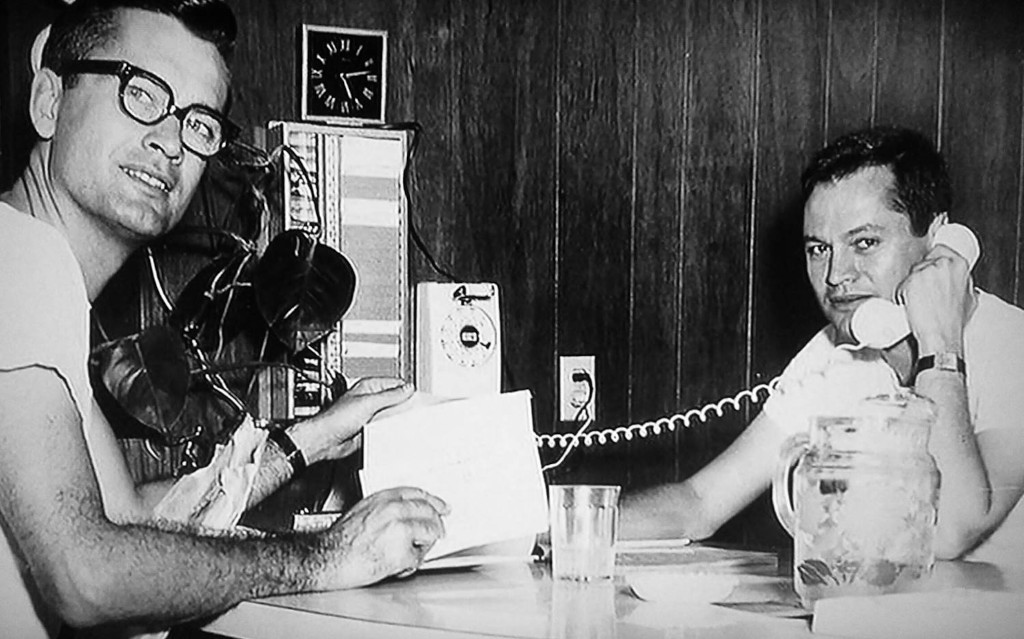
Gene Corman briefly flirted with mainstream movies in the late 60s and early 70s, with such efforts as the war movie Tobruk (1967), starring Rock Hudson, and the adventure film You Can’t Win ‘Em All (1970), with Tony Curtis and Charles Bronson. In 1970 he and Roger co-founded the hugely successful production/distribution company New World Pictures, through which they not only released their own and other Hollywood pictures, but also introduced Americans to such directors as Federico Fellini, Ingmar Bergman, Akira Kurosawa and Werner Herzog. In the early 70s Gene Corman got his own B-movie production unit at MGM, where he produced a handful of blaxploitation films, including Hit Man (1972), starring Pam Grier. For United Artists, he made the action movie Vigilante Force (1976) with Kris Kristofferson and the union drama F.I.S.T. (1978), starring Sylvester Stallone, hot off his success with Rocky (1976), as well as Samuel Fuller’s war movie The Big Red One (1980) – his biggest commercial success. He later became the vice-president of 20th Century Fox Television.
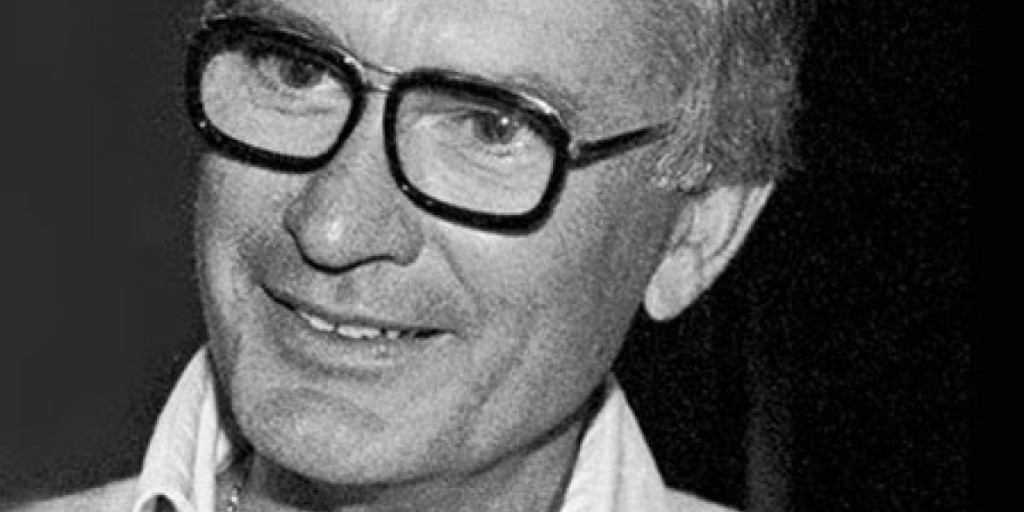
During his early producing career, the director Gene Corman most often worked with, apart from his brother, was Bernard Kowalski, a young, talented filmmaker who earned his movie director chops with the Corman crew. He had started his career as a child actor and worked his way up from clerk and assistant, to TV director in 1955, and movie director in 1958. His films with the Cormans included Hot Car Girl (1958), Night of the Blood Beast (1958), Attack of the Giant Leeches (1959) and Blood and Steel (1959). However, it was TV which would remain Kowalski’s main medium, and he had a successful TV career, directing episodes of several top shows, including Mission: Impossible, Gunsmoke, Banacek, Columbo, Baretta, CHiPs, Knight Rider, Magnum, P.I., Airwolf and Baywatch Nights. In between he also directed a handful of B-movies, best known is probably the SF/horroe movie Sssssss (1973), and a good amount of TV movies. In TV he also moved into the production side, producing such shows as Baretta, Rawhide, Airwolf and Jake and the Fatman. He was nominated for an Emmy for best drama series twice with Baretta.

For all his huffing and puffing about the screenplay, Night of the Blood Beast remained Martin Varno’s only produced script. Instead he went into sound editing, which earned him an Emmy nomination.
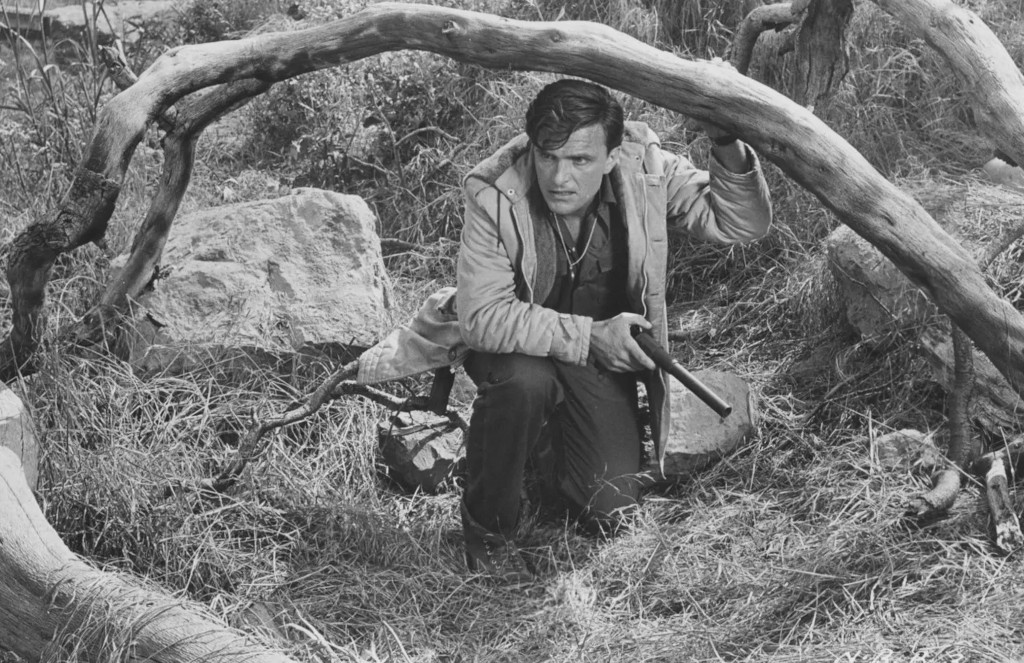
Ed Nelson was born in New Orleans in 1928 and studied radio and TV direction and production in New York, before returning to his hometown to work at a local TV station as assistant director, actor and writer. In 1957, Roger Corman arrived in New Orleans to film Swamp Women, and hired Nelson as an all-round handyman, from acting and location scouting to wrestling an alligator. Corman was impressed with Nelson, and convinced him to relocate to Los Angeles, where he became part of Corman’s inner circle of actors/crew who pitched in with a little bit of everything on Corman’s movies. For example, on Attack of the Crab Monsters (1957, review), Nelson played the giant crab and on The Brain Eaters (1958, review), he was the producer. However, unlike most of the other Corman entourage, like Beach Dickerson and Dick Miller, Nelson was also steadily employed as an actor outside of AIP, both in films and TV. He often had bit-parts in Corman’s movies, but his turn as lead hero in The Brain Eaters showed that he had the chops to pull off larger roles if given the chance.
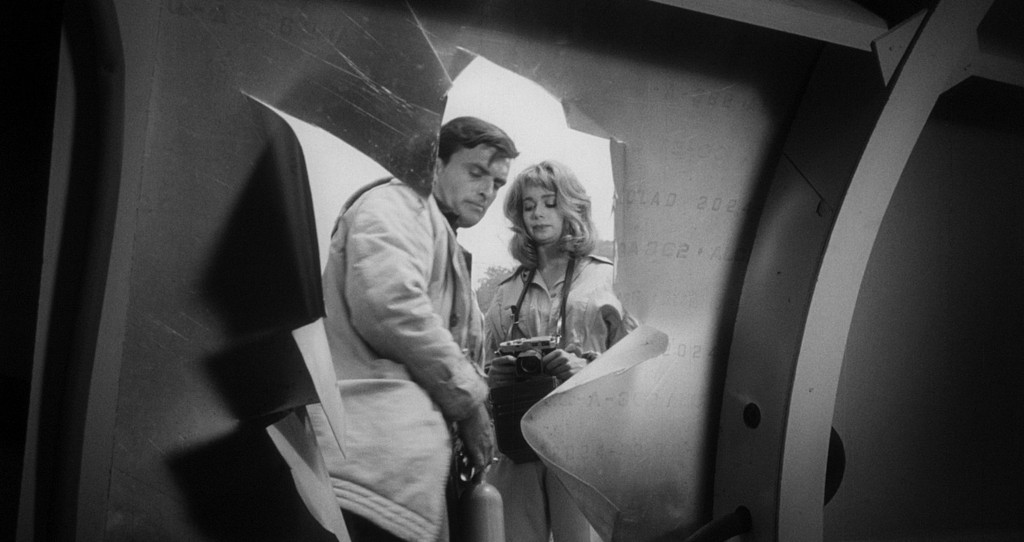
In 1959, Nelson started getting a steady income from appearing as a guest actor on TV shows, and by the early 60s he was doing dozens of shows each year. He struck gold in 1964 he struck gold as he was cast as one of the principle cast on the soap opera Peyton Place (1964-1969). Over five years, he appeared in over 500 episodes of the incredibly successful show. Along with Barbara Parkins, he was the only actor to appear in both the first and the last episode, and to be credited in every episode. Nelson also appeared in Invasion of the Saucer Men (1957, review), The Brain Eaters (1958), Teenage Caveman (review), Night of the Blood Beast (1958), Deadly Weapon (1989) and Jackie Chan’s Who Am I? (1998).

Irish-born model-cum-actress Angela Greene had longer and more prolific career than many of the beauty pageants that were chewed up ans spit out by Hollywood, or decided/were forced to give up the business when they got married and had children. Unfortunately, that career was cut short in 1978, when she died of a stroke at only 57 years old. She has some SF pedigree, having appeared in Jungle Jim in the Forbidden Land , Greene played the female lead in two other science fiction movies, most notably the infamous Roger Corman production Night of the Blood Beast (1958), but also the John Carradine vehicle The Cosmic Man (1959, review). In 1976 she had a substantial supporting role as Mrs. Reed, one of the ill-fated guests at Futureworld, the sequel to the classic Westworld (1973). At one time, she dated John F. Kennedy.
Michael Emmet, who plays the infected astronaut in Night of the Blood Beast, was first-billed, despite having no marquee draw. Emmet was a working TV actor who popped up as a guest actor on many popular TV shows, and his movie work was consigned to uncredited bit-parts. He abandoned acting in 1962, and his legacy rests exclusively on his featured roles in Night of the Blood Beast (1958) and Attack of the Giant Leeches (1959).
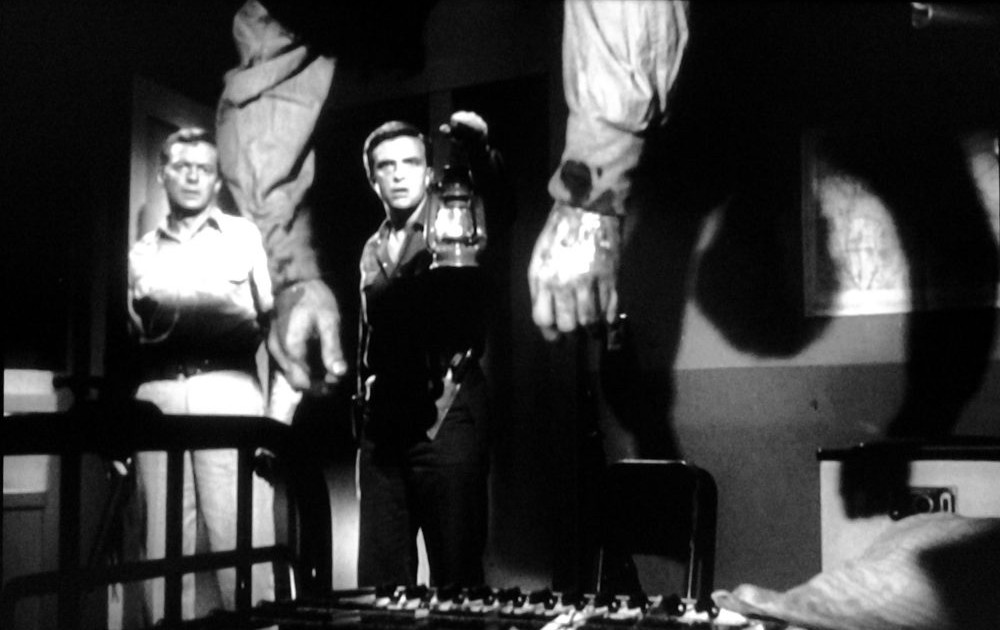
Boyish John Baer started his movie career as a busy bit-part actor, often uncredited, in 1950 and slowly worked himself up to co-leads in B-movies. He starred in the kiddie adventure TV show Terry and the Pirates in 1956-1957, and spent the rest of his career alternating between movies and TV guest spots. He played co-leads or large supporting parts in minor films, and had a few small roles in marginally bigger movies – most noteably a decent supporting role in Michael Curtiz‘ We’re No Angels (1955), starring Humphrey Bogart. By the 70s, Baer was demoted to uncredited parts in drive-in movies, and decided to call it quits.
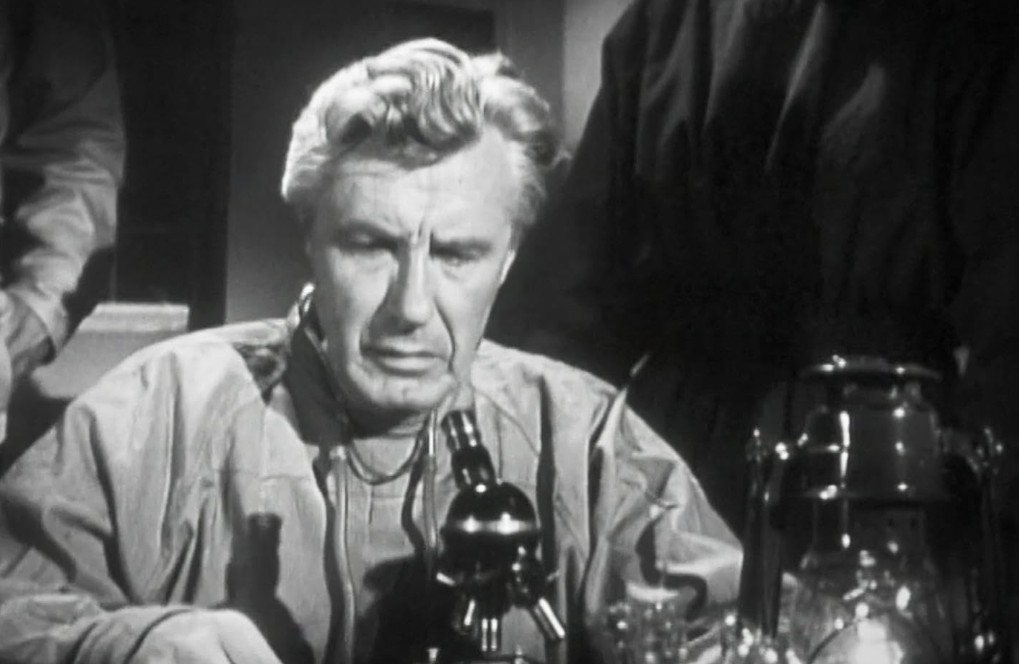
Character actor Tyler McVey transitioned from a modest stage career into a more lucrative film and TV business at the age of 38 in 1950. His first screen appearance was a bit-part in The Day the Earth Stood Still (1951). By 1958, when he played Dr. Wyman in Night of the Blood Beast (1958) he was only 46 years of age, but looked significantly older. His bearing and stern demeanor typecast him as sheriffs, military officers and other authority figures in over 200 films and TV shows up untils retirement in 1986. McVey had an unremarkable but steady career as a working actor. He appeared in sex science fiction movies and as many SF TV shows. His only featured SF roles were in Gene Corman’s and Bernard Kowalski’s Night of the Blood Beast and Attack of the Giant Leeches (1959). He had a tiny bit-part in Disney’s The Strongest Man in the World (1975) starring Kurt Russell.

Pretty Georgianna Carter’s only other film role was the female lead opposite a still unknown Jack Nicholson in Roger Corman’s and Harvey Berman’s teen dragracing movie The Wild Ride (1960).
Art director Daniel Haller is interesting for horror and science fiction fans as a director and producer of several H.P. Lovecraft movies. Haller became a Roger Corman staple as an art director in 1958, thanks to his ingenious low-budget work with War of the Satellites (1958), and one of the few crewmembers that followed Corman into his Edgar Allan Poe years. He also worked as co-procucer (with Corman in the wings) on AIP’s Jules Verne adaptation Master of the World (1961) and H.P. Lovecraft adaptation War-Gods of the Deep (1965). In 1965 he also transitioned into direction, and directed a good handful of B-movies for AIP, including another Lovecraft movie, Die, Monster, Die! (1965), Corman’s biker movies Devils Angels (1967) and The Wild Racers (1968), as well as the quite successful Lovecraft apaptation The Dunwhich Horror (1970). Haller switched exclusively to TV direction in 1970, and did so with some success. Among others, he directed episodes of Charlie’s Angels, Battlestar Galactica, Buck Rogers in the 25th Century, Knight Rider and Airwolf. He also directed the feature film Buck Rogers in the 25th Century (1979). He retired in 1988, and as of writing in January, 2025, is still in the books of the living.
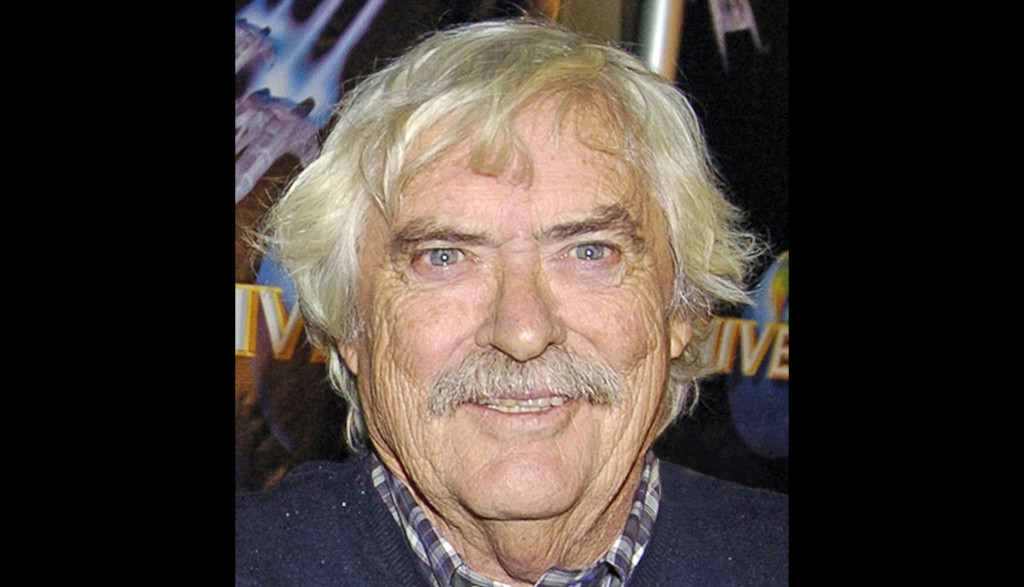
On the crew of Night of the Blood Beast was also Gene Corman staples, composer Alexander Laszlo, cinematographer John Nickolaus, Jr. and regular AIP makeup artist Harry Thomas.
Janne Wass
Night of the Blood Beast. 1958, USA. Directed by Bernard Kowalski. Written by Martin Varno. Starring: Ed Nelson, Michael Emmet, Angela Greene, John Baer, Tyler McVey, Georgianna Carter, Ross Sturlin. Music: Alexander Laszlo. Cinematography: John Nickolaus, Jr. Editing: Jodie Copelan. Art direction: Daniel Haller. Makeup: Harry Thomas. Produced by Gene Corman & Roger Corman for Roger Corman Productions & American International Pictures.
 Scifist.
Leave a comment