
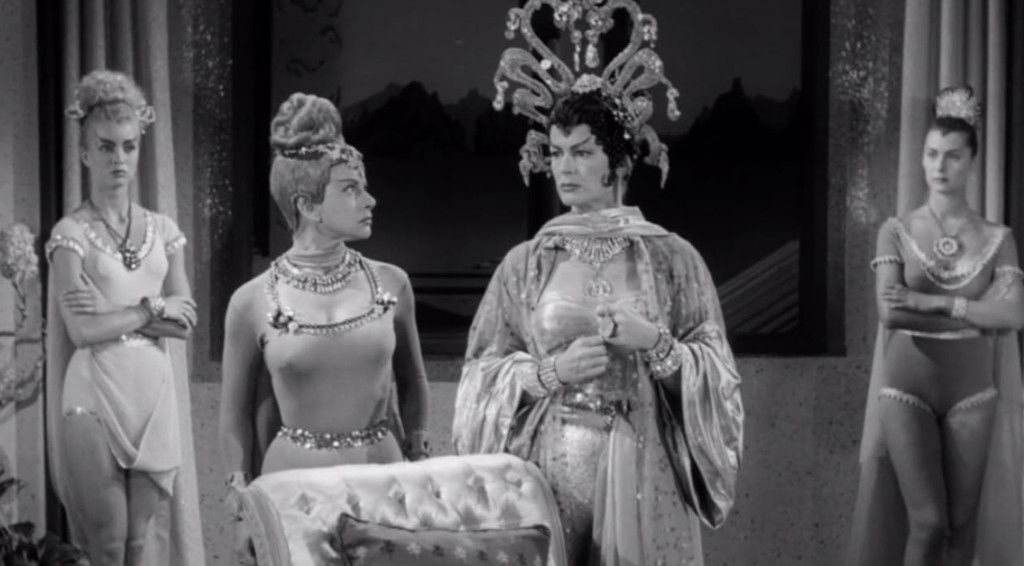
A scatterbrained 1958 retread of Cat Women of the Moon, Richard Cunha’s cardboard rocket takes us to yet another civilisation inhabited by perky beauty pageant winners and their evil queen. A so-bad-it’s-good classic. 3/10
Missile to the Moon. 1958, USA. Directed by Richard Cunha. Written ny H.E. Barrie, Vincent Fotre. Starring: Richard Travis, Cathy Downs, K.T. Stevens, Michael Whalen, Nina Bara, Tommy Cook, Gary Clarke. Produced by Marc Frederic. IMDb: 4.1/10. Letterboxd: 2.7/5. Rotten Tomatoes: N/A. Metacritic: N/A.
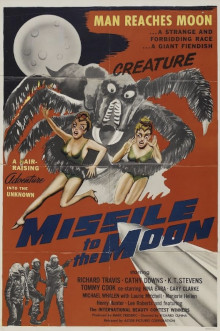
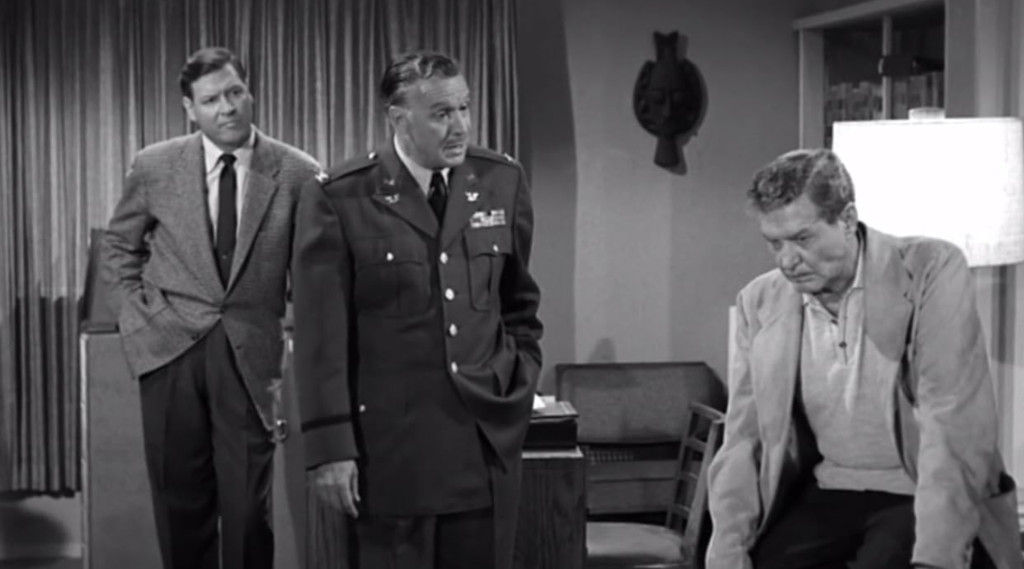
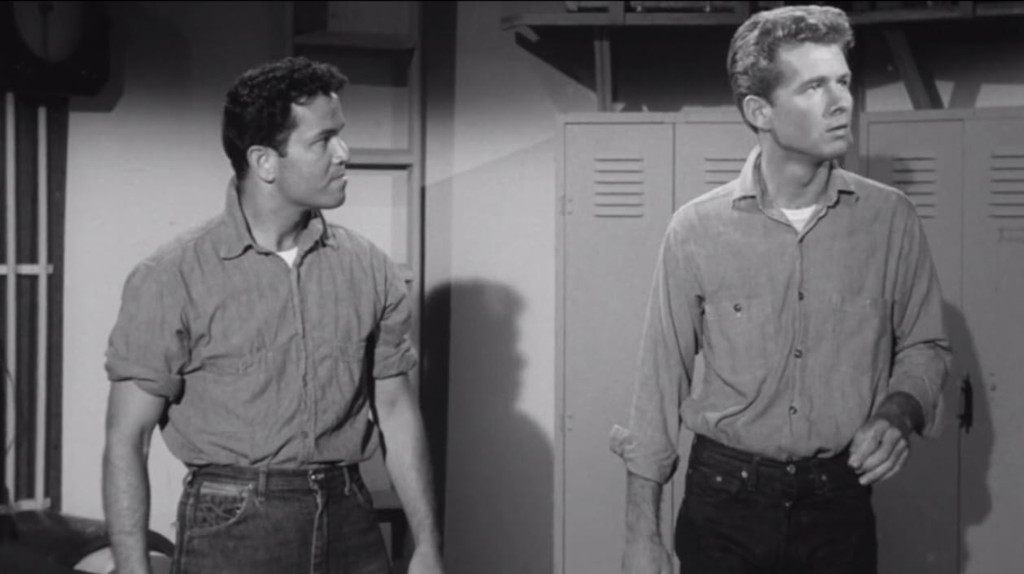
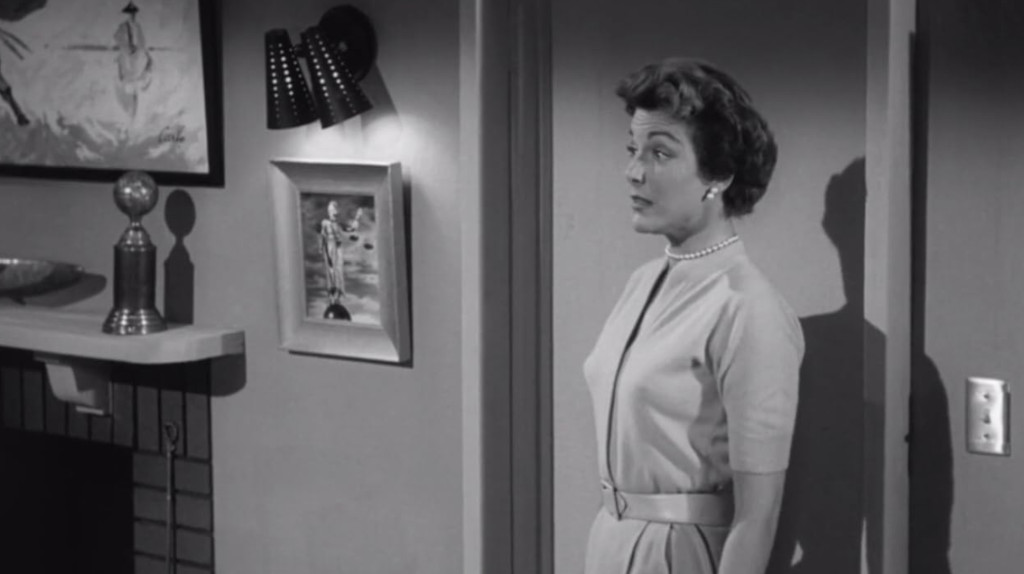
When the government tries to take over his moon project, lead scientist Dirk Green (Michael Whalen) secretly blast up the thrusters on his rocket, forcing two escaped convicts, Gary (Tommy Cook) and Lon (Gary Clarke) to act as his crew by gun point. But when his colleague Steve (Richard Travis) and his fiancée June (Cathy Downs) realise someone is trying to take off in the rocket, they run to investigate. Just in time for all the five of them to take off in humankind’s first mission to the moon.
This somewhat intriguing start to Richard Cunha’s 1958 low-budget film Missile to the Moon is the most novel thing about it. Once in space this essentially become a retread of the cult classic Cat-Women of the Moon (1958, review). This was one of several movies released in the late 50s that dealt with deadly female civilisations in space, none of them particularly good.
While en route to the moon, the rocket is hit by the obligatory asteroid shower, killing lead scientist Dirk when a battery falls on his head. However, the navigation is on automatic, and Steve knows how to drive the bucket, with help from greedy career criminal Gary and Lon, a nice kid who has taken a wrong turn in life. After some incidents presenting the two escapees (Gary forces himself on June and gets into a fight, while softy Lon eagerly helps out where it is needed), they set down the rocket at the spot indicated by Dirk and don their space cuits and “gravity boots”.
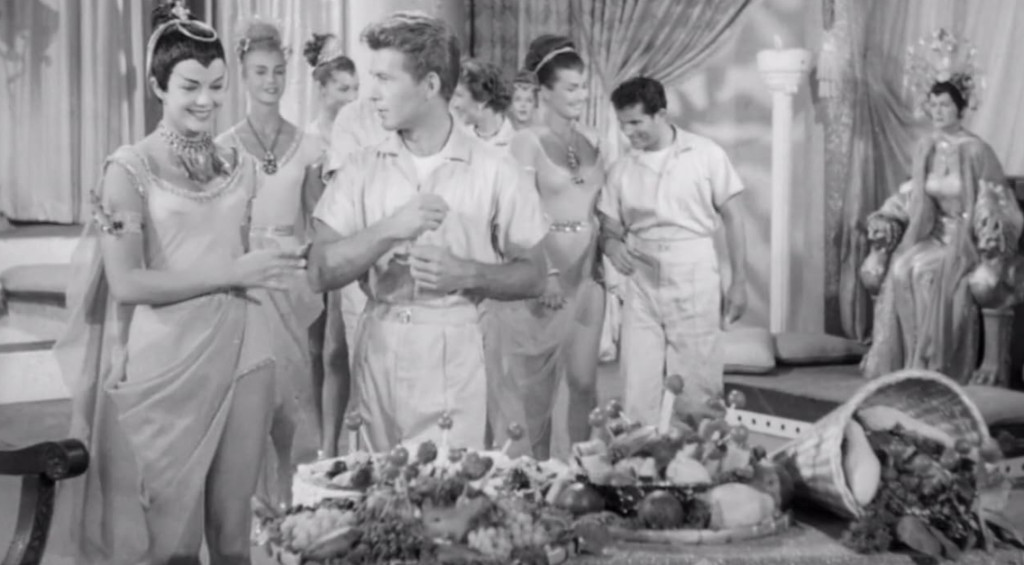
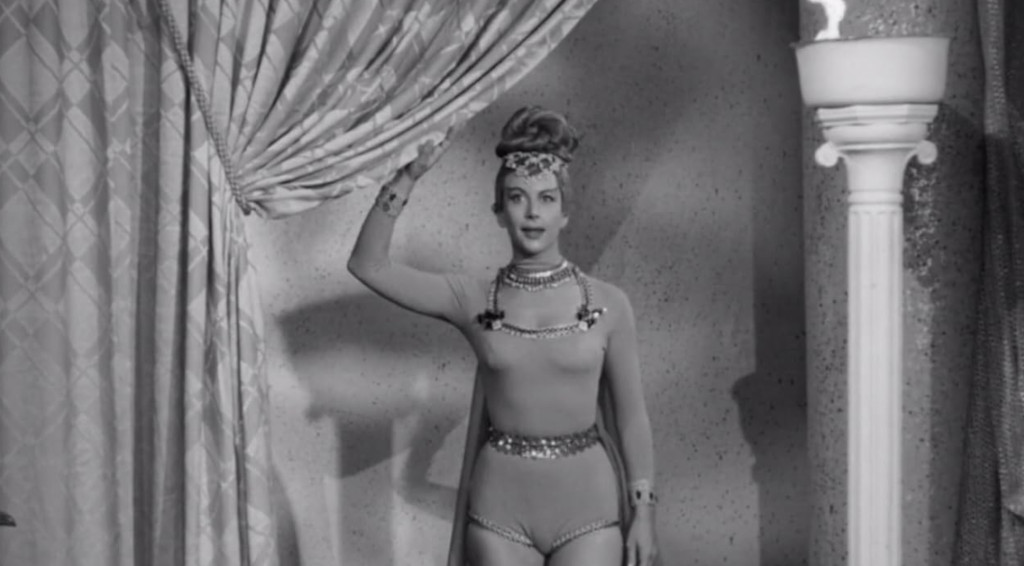
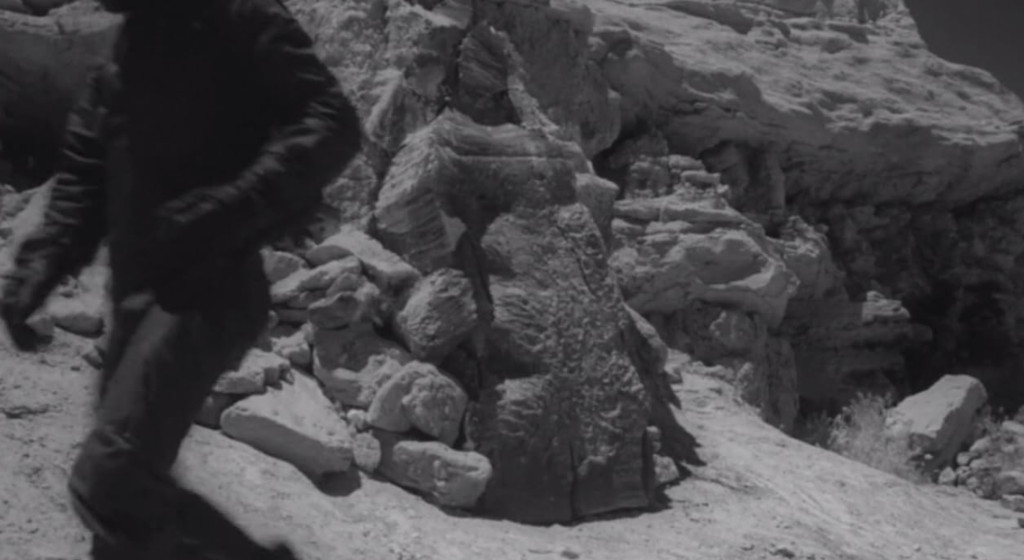
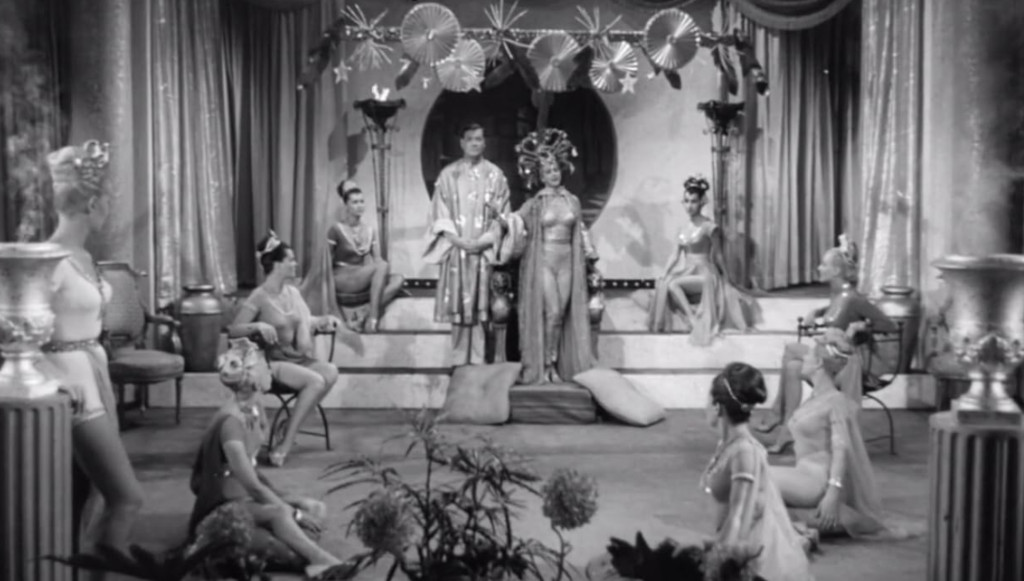
Despite the sun shining bright in the desert landscape, we learn that it is night, as the sunlight would burn the Earth people to a crisp. On their trek, they are attacked by rock monsters, and despite them wobbling along at a snail’s pace, they manage to trap our heroes in a cave, where they discover breathable air and a civilisation of women, led by the Lido (K.T. Stevens). It’s the usual rap. The women live in a pseudo-ancient-Greek society, and the women, who all look to be around 21, except the older Lido, have lost their men in some way that is never quite explained. The guests are wined and dined, and Gary jumps straight to seducing one of the girls.
The Lido believes that Steven is in fact Dirk, who seems to have been close to her. The two look nothing alike, but the Lido’s confusion is explained by the fact that she has gone blind. In a not so subtle interrogation, Steven learns that many years ago, the last men of the society were sent to Earth on a rocket in order to discover whether the planet was suitable for the Lunarians needs. See, not only have they run out of men, but they are also running out of oxygen. But the rocket was presumably damaged upon landing, and never returned. This, of course, explains why Dirk was so capable at designing a rocket ship – because he had done it before. Also explains his unwillingness to let the government take over his project.

However, as it turns out, the Lido knows exactly who Steven is, and is only playing the Earth people long enough to get them to pilot the rocket to another planet. Not to Earth, as Steven’s description of the planet has led the Lido to conclude that Earth is not suited for the Lunarians’ needs (why is not explained). However, like in Cat-Women of the Moon, the Earthlings have a friend in one of the girls, Zema (Leslie Parrish), who falls in love with Lon, and explains to the Earthlings their perilous situation.
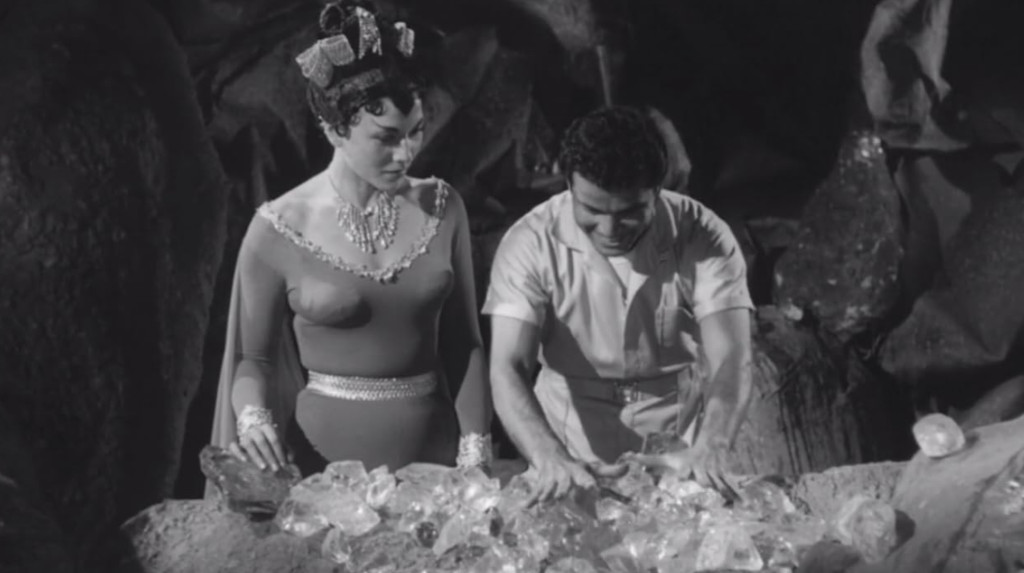
There’s some rather pointless to and fro with Gary and Lon both courting their girls, and Gary setting off to find diamonds that he is told is to be found in abundance in the caves. And June is attacked by a giant spider. Meanwhile, a power struggle shakes the Lunarian society, as the power-hungry “second lady”, Alpha (Nina Bara) challenges the Lido’s powers. Apparently, the women of the moon have mind control powers, and the strongest mind becomes the Lido by defeating the incumbent ruler in a staring contest. However, Alpha is not strong enough, so instead she reverts to the more traditional rite of succession: a dagger in the back. As new Lido, Alpha’s first action is to hypnotise Steven into marrying her.
However, Zema has now warned the men that Alpha is going to kill them all, and sent them out in the tunnels. She challenges Alpha and wins, releasing Steve from his spell. An ensuing mental battle between Alpha and Zema ends in Zema lobbing a grenade at the cave wall, releasing the last of the oxygen into the wind, destroying the Lunarian civilisation for good. Meanwhile, Steven, June and Lon escape the caves, followed by Gary, who is carrying two heavy sacks of diamonds he found in the cave. Attacked by rock monsters, he has to choose between retreating into the killer sunlight or let go of his precious loot and escape. And we all know what happens to the greedy ones in these films. Back at the rocket, having destroyed an entire civilisation on the moon, watched her friend get burnt to a crisp while chased by rock monsters, and just about to set off on a perilous journey back to Earth, the most important issue on June’s mind is: “Steve, do you think I’m prettier than that girl, the one called Alpha?”.
Background & Analysis
Roger Corman andEd Wood are names that are synonymous with 50s low-budget horror and science fiction movies. But there were a host of other directors and producers in the decade that made much of the bulk of the drive-in fodder of the era, some perhaps more worthy than others of some recognition. Richard Cunha was a name that emerged in the late 50s, attached to a number of no-budget productions of questionable quality. Along with producer Marc Frederic, he made the clunkersGiant from the Unknown and She Demons (review) in 1958, with Arthur Jacobs as co-producer under the moniker Screencraft Pictures. The duo then founded Layton Film Productions and announced they were going to produce 10 films over the 24 following months. In actuality, they only made three: Missile to the Moon (1958), its double bill companion Frankenstein’s Daughter (1958, review) and Girl in Room 13 (1960).
Cunha and Frederic had a deal with distributor Astor Pictures, who would buy their movies for $80,000 apiece, which meant they had to keep their pictures under this figure to make a profit. Thus, their movies were generally shot in six days for around $65,000 – a low figure even for a low-budget movie at the time. In an interview with Tom Weaver, Cunha says that the idea for Missile to the Moon actually came from Astor: “They thought, well, shucks, it’d be a good idea to redo [Cat-Women of the Moon], they could get a little bit of sex in and have some pretty girls wandering through the scenes. And it was patterned after their movie.”

In the Weaver interview, Cunha reveals that he himself didn’t think particularly highly of the pictures he made. His day job, so to speak, was running a small studio where he and Jacobs made commercials and post-production work, and making feature films was a kind of side-job for a quick buck and for fun. With six-day shooting schedules and a $65,000 budget, the crew simply had to make do. For Missile to the Moon, Cunha was disappointed that they didn’t have the time and money to create the proper atmosphere for a space flight, although he thought the spaceship interior worked fairly well, taking into consideration the circumstances.
H.E. Barrie must have been a friend of Cunha’s, as he wrote almost all of Cunha’s films, and almost no other movies. Cunha wrote the script for She-Demons himself, and if nothing else, this proved that Barrie was a marginally better writer than Cunha, but that’s not saying much.
Of course, with Missile to the Moon his hands were tied, as Astor wanted a remake of Cat-Women of the Moon. In general, the film follows along the lines of the original: a crew of predominantly male “astronauts”, and one female, travel to the moon, where they encounter a few obstacles, as a moon spider, and discover a society consisting primarily of young female beauty pageants, who wine, dine and seduce them. Only later do they realise that the moon ladies plan to steal their rocket in order to save their race, which is, for obvious reasons, on the cusp of extinction. However, the “heroes” are aided by a moon lass who falls in love with one of the astronauts and manage to escape back to Earth.
But where Cat-Women of the Moon only had a bare-bones plot outline and contained an excruciating amount of padding in the form of interpretive dancing, endless scenes of the male astronauts being seduced with wine and grapes, as well as several scenes of dialogue completely empty of meaning, Missile to the Moon at least throws a little more subplot into the mix. Here we get the whole preamble to the moon flight involving Dr. Green, the government and the escaped convicts, the power struggle between Green, Gary and Steve, rock monsters, a power struggle in the lunar society, Gary’s hunt for diamonds, Alpha’s murder of the Lido and her subsequent marriage to Steve, Zema’s revolt and finally Gary’s greed-driven death. At least the film never gets boring.
This, however, isn’t necessarily a huge improvement on the original. Instead of tristesse, Missile to the Moon offers up confusion, unclear character motivations, half-baked subplots and bizarre logic. For example, the whole subplot with Dr. Green actually being a Lunarian is utterly confusing. It’s never made clear why the Lido goes through with the whole charade of pretending to be blind and mistaking Steve for Green, as it doesn’t give her any information or leverage that she wouldn’t have gotten without the subterfuge. Furthermore, the fact that Green is a Lunarian doesn’t serve any clear plot point and has no impact on the resolution of the movie. Another open question is why Alpha suddenly decides it is imperative that she hypnotise Steve into becoming her husband. This does nothing to consolidate her power or give her any benefits, and Steve has seemingly done absolutely nothing that would have caused Alpha to become flash-enamoured with him.
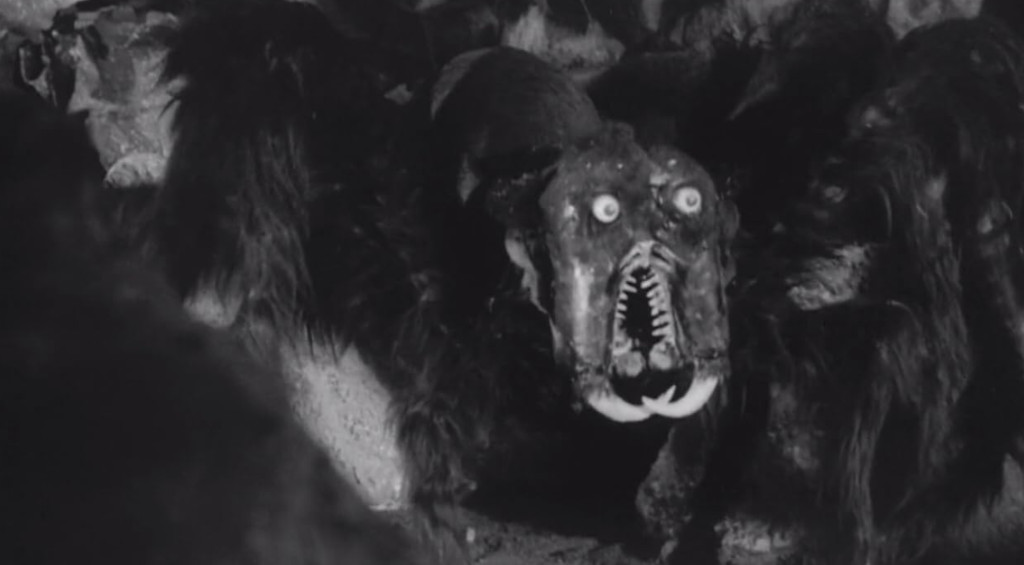
The questions keep heaping. What fugitive in his right mind would choose to hide from the authorities in the world’s first moon rocket? What moon rocket pilot in his right mind would place his life in the hands of two escaped criminals in the vague hope that they would not blow the whole spaceship to smithereens? Why did the moon maidens send all their remaining males on a Hail Mary trip to the Earth? Why are there torches made out of tree branches in the cave when there are no trees on the Moon? Where and how do the moon maidens grow their food? What do the rock monsters do when they are not chasing astronauts, and why are they chasing astronauts? Even taking into consideration that this is a film that was written up on the back of a napkin in order to make a quick buck, all the glaring logic inconsistencies, narrative cul-de-sacs and downright idiocies make it extremely hard to suspend one’s disbelief, or even follow the basic plot. Some scenes seem to be simply thrown in there for the sake of padding and plot convenience. The moon spider was never in the script – it was simply wedged in when Cunha discovered an old marionette spider is disrepair in Universal’s storage, that had been used for marketing Tarantula (1955, review).

I’m not even going to comment on the “science” of the movie. Case in point is when the two fugitives, about to blast off into space, ask if they need pressure suits, and Green replies that the rocket is “sealed, not pressurized”.
Of course, it would be too much to ask that a film like this offer up any sort of character arcs or personal journeys. But it is still remarkable how Missile to the Moon fails to present even a single, simple character arc. Nobody goes on any sort of journey, nobody learns anything, has any sort of personal growth or even changes his or her mind about anything. The good guys are good guys throughout the film, and all survive to tell the tale, and the bad guys (and gals) all get their just desserts, packed up neat and square. Poor Gary doesn’t even get the chance learn a lesson from his greed and womanizing, but is promptly killed by his own stupidity in the end. It is telling that the takeaway of the film is that June is jealous of a whole race of people she has just been part in the obliteration of, worrying that her hubby thinks they were prettier than her.
It would be tempting to put Missile to the Moon into the context of the war of the sexes raging in the 50s, the push for “traditional family values” and the often misogynistic attitude promoted by Hollywood. But there really is no point, as the movie doesn’t even succeed in laying out any coherent critique of feminism, women’s liberation or women in power. Even in its misogyny, it never rises to anything more than slapdash and contradiction, succeeding at the most at being casually misogynistic. In fact, the most obnoxious character – wilfully written so – is Gary, who keeps forcing himself on June and is an all-round asshole. In Cat-Women of the Moon, the guy who forced himself on women was the hero, and having American machos grabbing and forcibly kissing women was in fact the key to Earth’s salvation.
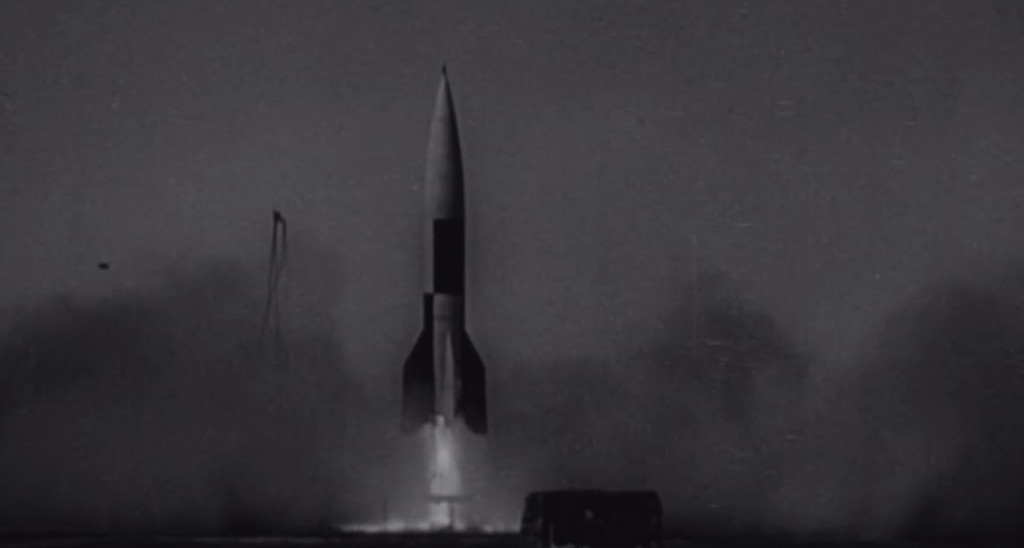
Technically the film is pretty much what you’d expect from a haphazard $65,000 production. The moon rocket is represented by two-dimensional, painted cardboard or plywood cutouts, and in one scene the duck tape seams are even visible. When it takes off it is transformed into a V2 rocket, and when it lands on the moon, it is simply a V2 takeoff in reverse, and you can clearly see the buildings of the launch site in the background. The marionette spider is naturally laughable. The “space suits” look like fighter pilot outfits with no chance for pressurisation.

There are some positives. One is the location shooting at Red Rock Canyon, which gives the movie some sense of realism, despite these sequences being over-exposed. However, our sense of “quality” only lasts until Steve says that they better find shelter before daybreak, because the sun would fry them all instantly – even though they are all walking in bright sunlight. The rock monsters actually look quite good, even though they are made out of foam mattresses. That is, until they start moving. The rock monsters suffer from the Tabanga syndrome: they are too slow and cumbersome to present any sort of realistic threat, as a 100-year-old on a stroller could easily outrun them. As Cunha rightly states, the rocket interior looks OK for the budget. Another positive is that there is only one brief dance scene, involving a single girl, and it wouldn’t be surprising if it was improvised on set. (As usual, the viewer wonders where the music is coming from.) The idea of the lunarian society being based on a sort of alpha-female hierarchy determined by mental powers is kind of novel, even if it is somewhat amusing that whoever wins in a staring contest gets to be ruler. And like in Cat-Women of the Moon, it’s interesting how much prestige is put into getting to be the high queen of ten girls stranded on the moon, awaiting their own extinction.
If the actors don’t all come off to their advantage, you really can’t blame them. The main cast is made up of capable enough actors, like former leading men Michael Whalen and Richard Travis, veteran K.T. Stevens and hard-working B lead Cathy Downs. But with the confusing script, probably no rehearsals and turgid dialogue, they all struggle. Hamming deliciously, Nina Bara as Alpha is the highlight of the film. Among the moon girls one can spot Laurie Mitchell, a sci-fi staple who played the titular role in the very similar film Queen of Outer Space (1958, review), which premiered just weeks before Missile to the Moon, as well as her co-actress in that movie, Tania Velia. The role of Zema is played by an actress named Marjorie Hellen. Hellen later changed her name to Leslie Parrish, and rose to fame as a capable actress and a passionate social and environmental activist, resisting the Vietnam war and helping to get the first black mayor of Los Angeles elected.
The film’s credit sequence introduces the moon girls as “The International Beauty Contest Winners”. This was no ploy made up by the producers, the film actually featured a Miss Yugoslavia, a Miss Germany, a Miss France and a handful of Misses Illinois and Florida. Whether Cunha and Jacobs went out of their way to cast a bunch of beauty queens or whether they just happened to do so is unclear, but it was practically impossible to walk out a door in Hollywood in the 50s without stumbling over a beauty pageant winner.

From any objective perspecive, Missile to the Moon is a risible movie. The script barely holds together, the dialogue is painful, the sets range from threadbare to elementary school play quality, the cinematography is flat and the sets over-lit, the direction consists of “stand there and say your lines” and the actors are just as confused as the audience. But what saves this movie from being an absolute dud is that in all its bewildering incompetence, it is actually quite fun to watch. It’s not as obnoxiously misogynistic as Cat-Women of the Moon as to make it painful to watch and some of the main characters verge on sympathetic. Enough stuff happens to keep the viewer at least halfway entertained, even if it’s sometimes difficult to suss out exactly what is happening. I’m not recommending it to anyone, but completists will at least have a mildly good time watching it.
Reception & Legacy
Missile to the Moon premiered in the US in November, 1958, on a double bill with Richard Cunha’s and Astor’s Frankenstein’s Daughter, a slightly better film. It does not seem to have had a particularly wide international distribution, with IMDb listing premieres in Mexico in 1960 and West Germany in 1962. Box office numbers are hard to come by, but presumably Astor made a minor profit at the drive-in circuit.
So obscure does the film seem to have been that I have found no reviews of it in my usual trade press sources. However, Bill Warren cites Paul V. Beckley at the New York Herald-Tribune, who wrote: “None of Missile is very rewarding and is so clumsily and unimaginatively done that the lack of conviction is staggering”. The Los Angeles Herald Examiner called Missile to the Moon “torpid twaddle”.
Missile to the Moon is yet another example of a film that Phil Hardy, the author of The Encyclopedia of Science Fiction Movies, has clearly not seen, which does not prevent him from being snarky about it. However, he is right in stating that the film is “best remembered for its extraordinarily inept plot, sets and props”. In Keep Watching the Skies!, Bill Warren calls the picture “one of the most woebegone, uncaring science fiction movies of all time”, claiming that it “effortlessly manages to be even worse” than Cat-Women of the Moon.
You don’t find much love for the movie among modern-day critics. Glenn Erickson at DVD Savant calls it “a leadfooted recycling of Cat-Women of the Moon by way of Queen of Outer Space“. Richard Scheib at Moria does give it a halfway-respectable 2/5 stars. He notes that “film suffers from some extremely cheap effects” but that “To be fair though, it is marginally a better film in terms of production than Cat-Women was. However, the introduction of the Moon women turns everything into something cheesily ridiculous.”
Cast & Crew
Richard Cunha is best, and really only, known for his four cheap horror/SF movies produced for Astor in 1958 started his career as a aerial photographer for the US Air Force during WWII, and then was involved in making newsreels, documentaries and military training films at Hal Roach Studios. After this he started working in television, eventually becoming director of photography. When a small studio in Hollywood was closing down, he and editor friend Arthur Jacobs took it over and formed Screencraft, and used the studios to do commercials and industrial films, as an editing facility and rented it out. A friend pushed them to get into filmmaking proper, seeing as they already had a studio and a company, and that is how their first collaboration, Giant from the Unknown (1958), came about. After making its co-feature, She Demons (1958, review), Jacobs got the opportunity to work for TV procuder Jack Wrather in production and distribution, and wound up working for different TV companies until 1975, when he set up an independent distribution company. He also produced a small handful of sexploitation films.
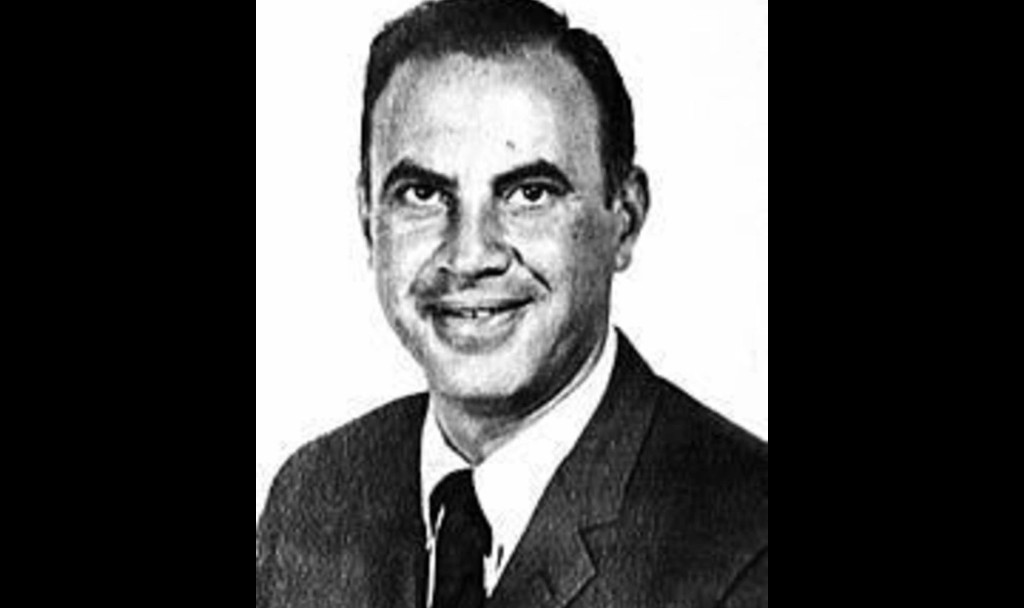
After Jacobs’ departure, Screenart was dissolved and Cunha founded Layton Film Productions with investor Marc Frederic, and went on to direct three more films with him, the SF/horror films Frankenstein’s Daughter (1958), Missile to the Moon (1958) and Girl in Room 13 (1960), all distributed by Astor, like his first two movies. After completing these movies, Cunha returned to his work as a director of photography on TV and a small number of films, as well as making commercials, which he continued to do until the early 80s. After this, he opened a video rental shop.
H.E. Barrie, of whom there is little information available, wrote or co-wrote all Richard Cunha’s films, except Giant from the Unknown. Co-writer Vincent Fotre is best known for co-writing Mario Bava’s Baron Blood (1972).

Lead actor Richard Travis was born in 1913 as William Justice, and did early work as a sportscaster, radio announcer and bit-parts in cliffhanger serials before being unexpectedly cast in a starring role in Warner’s screwball comedy The Man Who Came to Dinner, starring Bette Davis, in 1941. During the early 40s he was a respected second or third lead in a handful of A-pictures, including Michael Curtiz’ Mission to Moscow (1943), but he was never able to establish himself as an A-list leading man, and after WWII he career started to decline, as he found himself primarily cast in supporting roles in A-films and leading roles in B-noirs, including the infamour Jewels of Brandenburg (1943).
In the 50s Travis got his bread and butter from TV. He played the lead as a sheriff in the crime series Code 3 (1957) and had a recurring role in Grand Jury (1959), but mostly did guest appearances in other series, interspersed with minor, often uncredited roles in B-movies, such as the Michael Rennie vehicle Cyborg 2087 (1966), which remained his last film. As so many other actors whose careers teetered out, he found a second career in real estate.

Cathy Downs was a former model picked up by a major studio in the 40s – in this case 20th Century-Fox. Fox did even groom her as a star at one point, and the highlight of her career was playing the title role in John Ford’s My Darling Clementine (1946), but from there her career went downhill. However, she is something of a darling among friends of 50s science fiction, as she went on to play the leads in The Phantom from 10,000 Leagues (1955, review) The Amazing Colossal Man (1957, review) and Missile to the Moon (1958).
K.T. Stevens, playing the Lido in Missile to the Moon, was born as Gloria Wood, daughter of legendary movie director Sam Wood, but tried to distance hersfelf from her father’s influence by adopting the stage name Katherine aka Katie aka K.T. Stevens, both on stage and on screen.

Stevens appeared briefly in a couple of her father’s movies as a toddler, before studying acting and beginning her career on stage, which eventually took her to Broadway, where her highlight was playing the titular character in Laura in 1947. However, her movie career never quite took flight, and she primarily appeared in second leads or occasional leads in B-movies, mostly noirs and dramas. She may be best known for her recurring roles in a number of daytime soap operas on TV, including the original cast of General Hospital, as well as Days of Our Lives and The Young and the Restless. Stevens appeared in two Z-grade science fiction movies, the Sabu vehicle Jungle Hell (1956, review) and Missile to the Moon (1958).
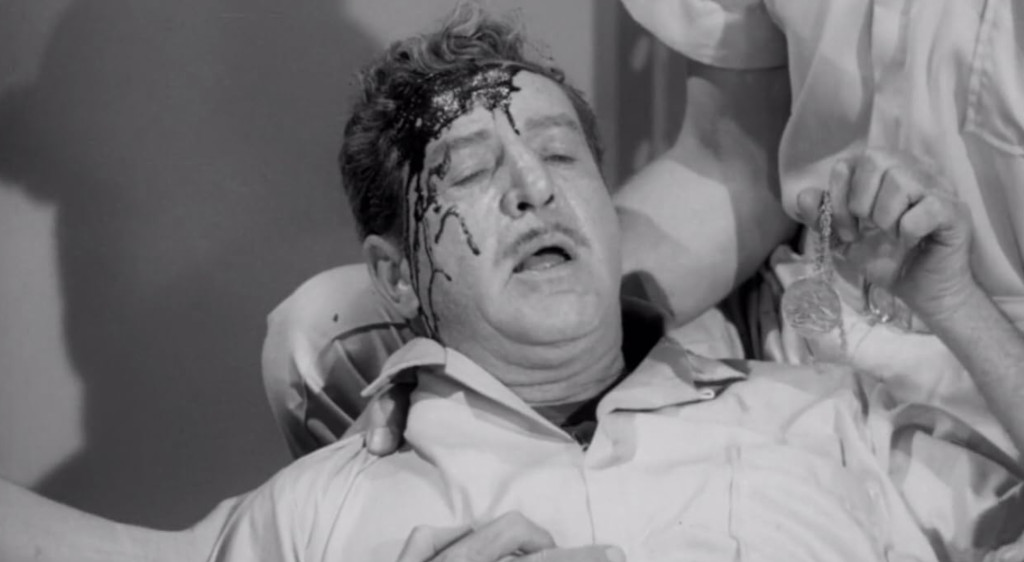
Michael Whalen was a dashing leading-man type in the 30s and 40s, and is perhaps best known for playing supporting parts in a couple of Shirley Temple movies. He played the lead in the mystery drama The Dawn Express in 1942, and also appeared as the villain in The Phantom from 10,000 Leagues (1955, review) and as the lead scientist/alien in Missile to the Moon (1958).

Gary Clarke, who plays the “good criminal” in Missile to the Moon (1958) is probably best known for taking over the role as the teenage werewolf from Michael Landon in AIP’s sequel How to Make a Monster (1958, review). Born Clarke Frederic Lamoreux in Los Angeles, he was set on becoming an actor from an early age and started out i stock theatre, and did a few TV guest spots before landing his first lead role in film in AIP’s Dragstrip Riot in 1958, and went on to appear in the studio’s How to Make a Monster (1958) and Missile to the Moon (1958). He then worked mainly in TV, most notably in a recurring role in The Virginian (1962-1964). He worked semi-steadily in TV and film throughout the 60s, 70s and 80s, and appeared in the big screen as recently as 2020. At the time of writing, Clarke is still in the books of the living.

Clarke’s villainous co-escapee in Missile to the Moon (1958) is played by Tommy Cook, a former minor juvenile star, who rose to some fame in the serials Adventure of Red Ryder (1940) and Jungle Girl (1941). His dark features typecast him in “ethnic” juvenile roles in the 40s, often in minor parts or uncredited. His best known feature film appearance of the decade is probably as Kimba the jungle boy in the Johnny Weissmuller movie Tarzan and the Leopard Woman (1946), also featuring sci-fi regular Acquanetta. The 1950s began with a promise of better roles with a supporting turn in Fritz Lang’s American Guerilla in the Philippines (1950), as a Filipino resistance fighter during WWII. But his roles in A-movies, such as Elia Kazan’s Panic in the Streets (1950) and Billy Wilder’s Stalag 17 (1953), remained minor. His was fairly well employed during the decade, but had few leads even in B-movies, a rare exception being Columbia’s juvenile delinquency film Teen-Age Crime Wave (1955), in which he played the delinquent lead despite being closer to 30 than his teens.
However, Cook soldiered on in minor roles, B-movies and to a growing degree in TV, and in the 60s he found a new career as a voice actor for Hanna-Barbera. He also began writing, and provided the stories for a couple of major studio pictures. From the late late 70s onward he appeared only sporadically on the small screen. He had a small role as a priest in the 1972 sci-fi comedy The Thing With Two Heads.

The wondefully hammy villain Alpha in Missile to the Moon is played by Italian-American Nina Bara. Born in Buenos Aires, she was cast in minor roles as Latinas during her early Hollywood career in the second half of the 40s in films such as The Mummy’s Curse (1944), Yolanda and the Thief (1945), Gilda (1946) and A Lady Without a Passport (1947). Most of her around a dozen roles where minor or uncredited. However, she became a fixture on TV as part of the heroic space-faring crew, as Miss Tonga, on the hugely popular children’s show Space Patrol, which ran between 1950 and 1955. Her role as Alpha in Missile to the Moon (1958) was her only feature film after the show went off air. After her acting career, Bara became a librarian.
Laurie Mitchell, who plays the moon girl who falls in love with Tommy Cook’s character in Missile to the Moon (1958) is something of a fan favourite among friends of 50s science fiction B-movies. Born Mickey Koren, Mitchell was a juvenile model before entering acting under the moniker Barbara White, both in Playhouse theatre and in small roles in film and TV in the mid-50s. Her first movie role was as one of the pleasure girls accompanying Kirk Douglas in the beginning of Disney’s 20,000 Leagues Under the Sea (1954, review).

In 1957, after minor roles as barmaids and “girls” she dyed her hair blonde and took a new moniker, Laurie Mitchell. She was then cast in a co-starring role in Allied Artists’ teen musical comedy Calypso Joe (1957), which evidently caught the eye of AIP, casting her as one of the principle lilliputian cast in Bert I. Gordon’s Attack of the Puppet People (1958. review). Later the same year, Allied Artists again took advantage of her talents, casting her as the titular evil Venusian queen in Queen of Outer Space (review), although Zsa Zsa Gabor stole her thunder in the marketing of the movie. Mitchell played most of the role behind a mask, or in heavy makeup as the facially scarred Queen Yllana. Almost back-to-back, she filmed Richard E. Cunha’s Missile to the Moon. Both films were basically remakes of Cat-Women of the Moon (1953, review). This was the “high point” of Mitchell’s movie career, although she carved out a decent career as a TV guest performer in the 60s and 70s.
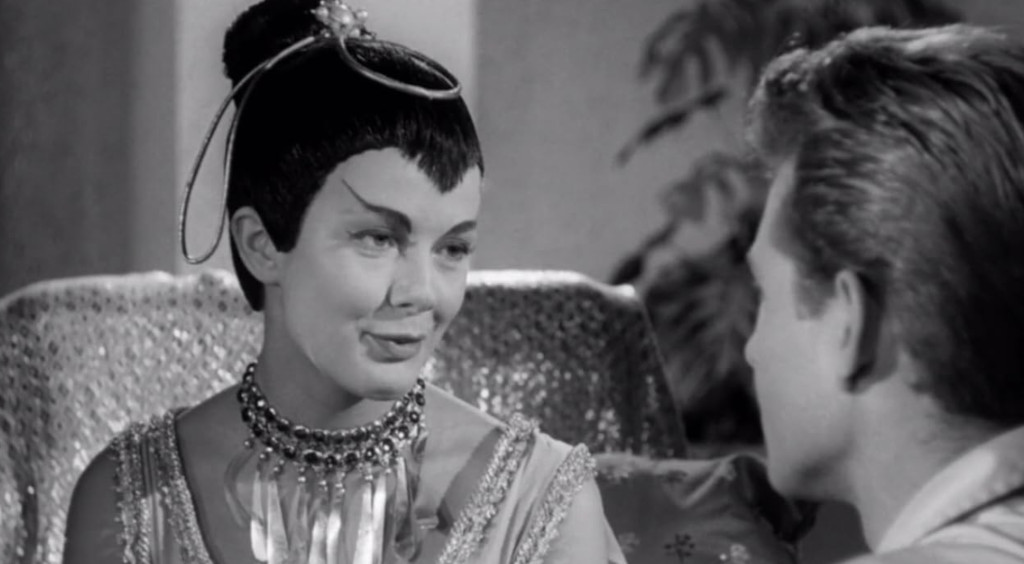
Zema, the moon girl who revolts against the evil Alpha and saves the day in Missile to the Moon (1958), appeared under her birth name Marjorie Hellen. The next year she would change her stage name to Leslie Parrish, at the request of Paramount, when she played the female lead in the studio’s successful musical comedy Li’l Abner. The role opened doors for Parrish, who was nominated for a Laurel Award for most promising newcomer in 1960. She became a popular guest star on TV, and during the 60s had prominent roles in several well-regarded and/or successful major studio pictures, and played leads in a handful of B-movies. She is probably best known for her pivotal role as Jocelyn Jordan, the former flame who inadvertedly triggers lead character Raymond Shaw’s programming in John Frankenheimer’s speculative cold war classic The Manchurian Candidate (1962). She also had a substantial role in the star-studded Warner romcom Sex and the Single Girl (1964) and Jerry Lewis’ Three on a Couch (1966). Friends of bad sci-fi/horror films will remember Parrish as one of the co-leads in the cult classic The Giant Spider Invasion (1975), as one of the several scantily clad women attacked by giant spiders from outer space. She also had lesser, but highly billed, roles in the possessed car movie Crash! (1976) and the supernatural/sci-fi clunker The Astral Factor (1976).

However, in the late 70s Parrish dropped out of acting in order to focus solely on community work and activism. In the 60s, Parrish became involved in the anti-war movement, the civil rights movement and the environmental movement, as well as the Democratic party. She co-founded a number of organisations, such STOP in opposition of the Vietnam war, the TELAV enviromentalist organisation, as well as the viewer-funded activist TV station KVST-TV. In 1979, she and husband, author Richard Bach, built an experimental home in Los Angeles powered solely by solar panels, and in 1999 they created a wildlife sanctuary on the Orcas Island in Washington state. Leslie Parrish was a longtime supporter and campaigner for Tom Bradley, who in 1973 was elected as Los Angeles’ first black mayor and first liberal mayor, and became the longest-serving mayor in the history of Los Angeles.
And then for the “international beauty pageant winners”.

The troupe of nameless moon maidens in Missile to the Moon are made up of a collection of beauty pageant winners, of whom most have rather short movie credits. The most prominent, in terms of acting pedigree, is probably Marianne Gaba. Her door to Hollywood was opened in 1957, when she was named Miss Illinois. She appeared in around a dozen films and as many TV shows. On the big screen, she was inevitably relegated to minor, often uncredited parts where her task was to look pretty. As a publicity stunt to raise her marquee value, she was also featured as a Playmate of the Month in Playboy in 1959. Gaba carved out a little piece of cinema history as one of the fembots in Dr. Goldfoot and the Bikini Machine (1965), her last movie role.
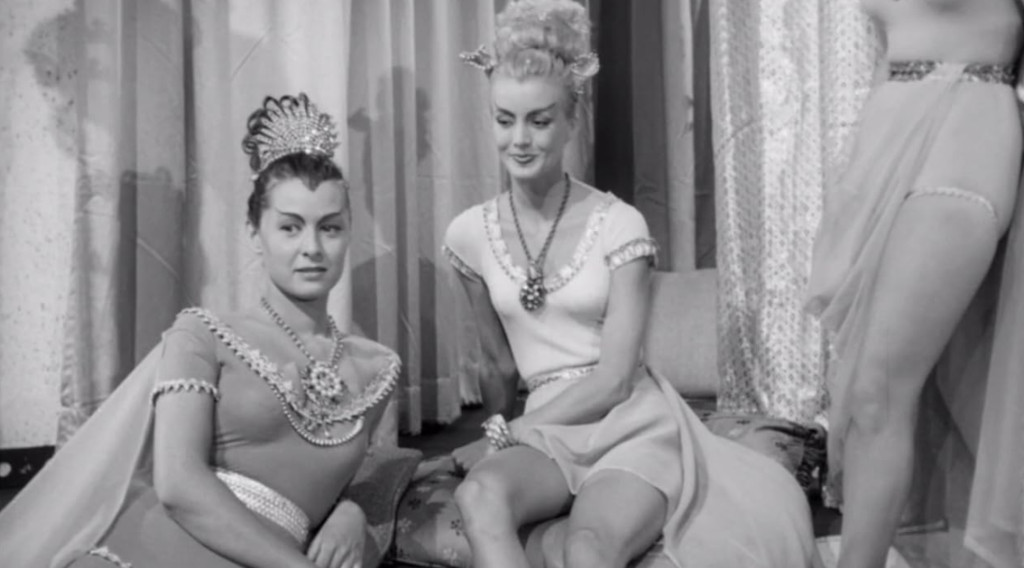
“The Yugoslavian Bombshell” Tania Velia was a former olympic swimmer and Miss Yugoslavia before moving to the US in 1955 along with her mother as a political refugee. She only appeared in three movies, including Queen of Outer Space (1958) and Missile to the Moon (1958), both times as a “cat-woman of the moon”.
Renate Hoy was crowned Miss Germany in 1952, and competed in the Miss Universe contest the same year in California. She lost to Finland’s Armi Kuusela, but was awarded a one-year contract with Universal as a consolation prize. She appeared in bit-parts in a dozen films between 1953 and 1959. Miss France Lisa Simone also came to Hollywood through the Miss Universe contest, in 1957, and appeared in bit-parts in a handful of movies before moving to Rome with her husband. Miss Florida of 1955, Sandy Wirth, appeared in five movies in 1957 and 1958, and after that appeared sporadically on TV in the following two decades. She worked for nearly three decades as an animal trainer and agent in Hollywod. Former Miss New Hampshire, Pat Mowry, appeared in five movies in the late 50s before changing her name to Patricia Winters, and appearing sporadically in fim and TV in the 60s and 70s. Miss New York State Sanita Pelkey and Miss Minnesota Mary Ford had rather limited movie careers. Ford’s only two appearances were in Queen of Outer Space and Missile to the Moon.

Cinematographer Meredith Nicholson became a very successful TV operative, working as director of photography on such shows as The Fugitive, Get Smart, Batman and Mork and Mindy, earning an Emmy nomination in the process.
Harry Reif, Marjorie Corso and Harry Thomas were workhorses of the 50s and 60s low-budget movies, often working with independent producers on movies in every conceivable genre. Set decorator Reif got his first credit in 1936, and primarily worked in low-budget westerns. In the mid-50s he got caught up in the frenzied industry of no-budget science fiction, horror and teen movies, working with such “luminaries” Ed Wood, Alex Gordon and Roger Corman. His greatest claim to infamy is his involvement in Plan 9 from Outer Space (1958, review), but on the other hand he also worked on Stanley Kubrick’s The Killing (1956). Reif worked on nearly 300 movies.

It was Roger Corman who gave costume designer and wardrobe lady Marjorie Corso her start in the film business with his directorial debut Five Guns West in 1955, and after that she was AIP’s go-to costume designer, working on both the good and the bad movies of the studio, occasionally taking offers from other independent producers as well. Harry Thomas worked in movie makeup from the 30s onward, and in the 50s became the preferred choice for many independent producers making no-budget films for the matinée and drive-in markets. Thomas was as skilled as anyone with conventional makeup, but also had no qualms designing aliens and monsters on a budget of $5 plus glue. Among his credits are Glen or Glenda (1953), Cat Women of the Moon (1953), Killers from Space (1954, review – he created the infamous egg tray eyes), Plan 9 from Outer Space (1958), The Little Shop of Horrors (1960), Space Probe Taurus (1965) and The Navy vs. the Night Monsters (1966), and numerous other cult classics.
Janne Wass
Missile to the Moon. 1958, USA. Directed by Richard Cunha. Written ny H.E. Barrie, Vincent Fotre. Starring: Richard Travis, Cathy Downs, K.T. Stevens, Michael Whalen, Nina Bara, Tommy Cook, Gary Clarke, Laurie Mitchell, Leslie Parrish. Music: Nicholas Carras. Cinematography: Meredith Nicholson. Editing: Everett Dodd. Set decoration: Harry Reif. Costume design: Marjorie Corso. Makeup: Harry Thomas. Produced by Marc Frederic for Layton Film Productions & Astor Pictures Corporation.


 Scifist.
Leave a comment