
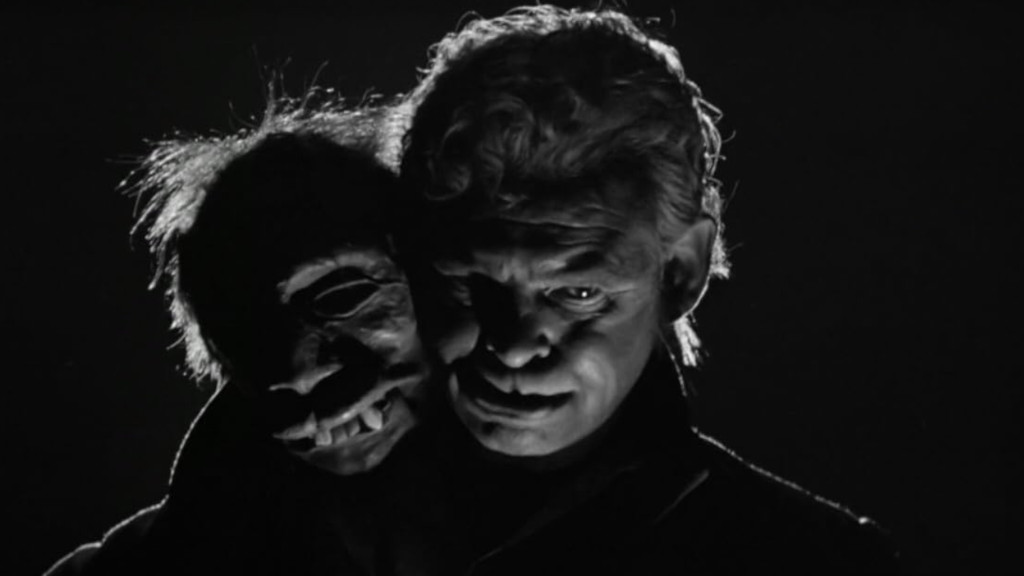
An American reporter in Japan is injected with a serum that turns him into a two-headed monster. This US 1959 cult classic filmed in Japan is the first movie featuring a man with two heads. Atmospherically filmed and with fun special effects, it fails to deliver on its social subtext. 5/10
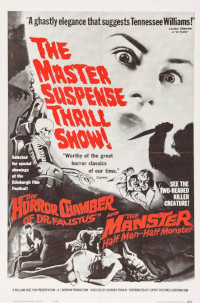
The Manster. 1959, Japan/USA. Directed by George Breakston & Kenneth G. Crane. Written by Walt Sheldon & George Breakston. Starring: Peter Dyneley, Tetsu Nakamura, Terri Zimmern, Jane Hylton. Produced by George Breakston. IMDb: 5.3/10. Letterboxd: 2.7/5. Rotten Tomatoes: N/A. Metacritic: N/A.
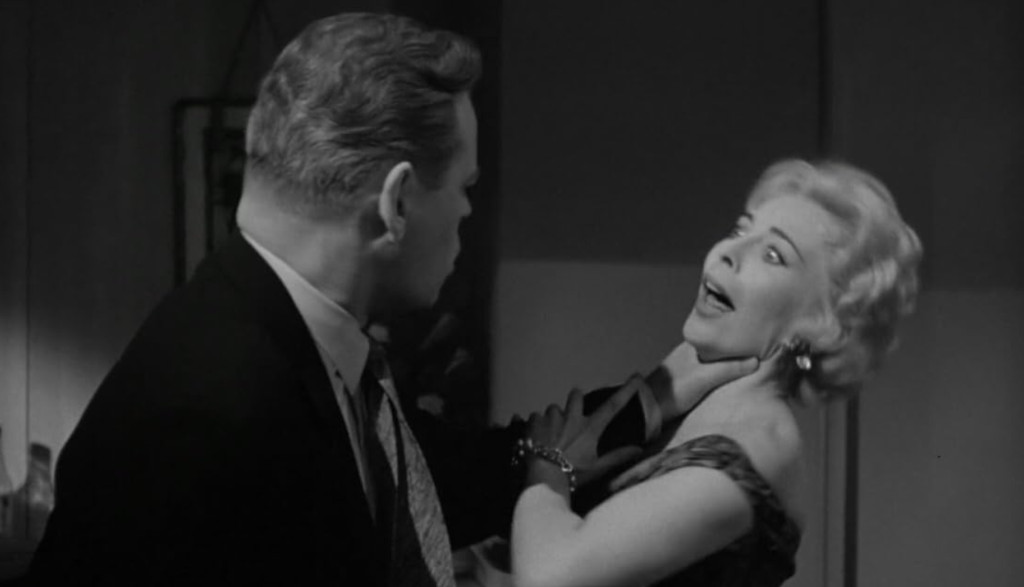
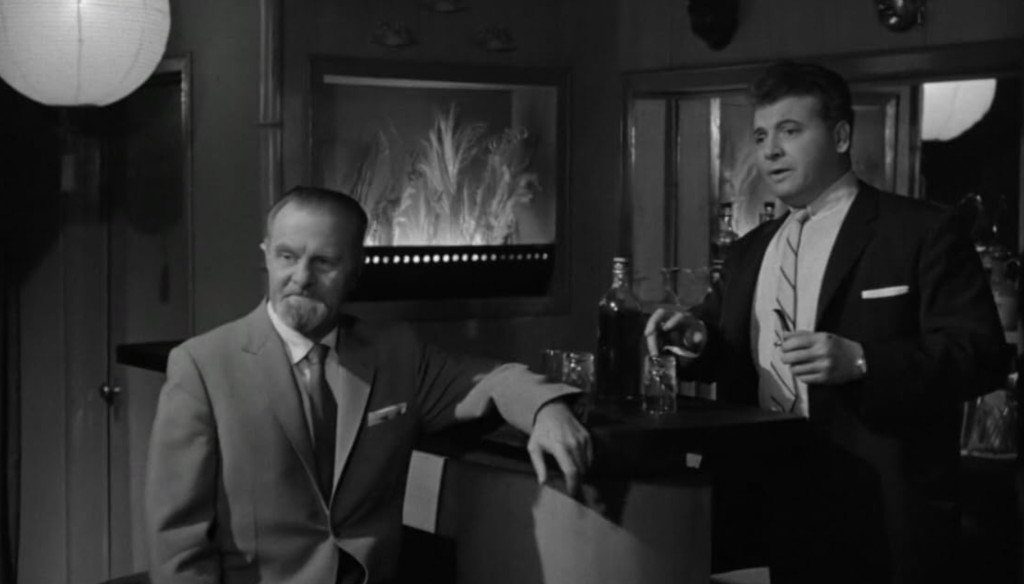
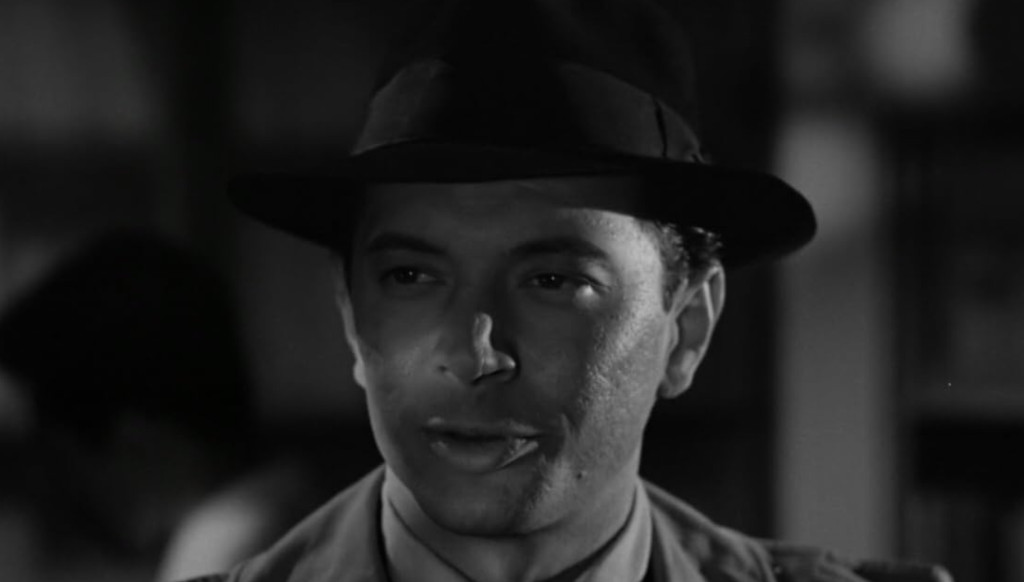
American news correspondent in Tokyo, Larry Stanford (Peter Dyneley) interviews scientist Dr. Robert Suzuki (Tetsu Nakamura), who is doing research on evolution, and is on the brink of figuring out how to trigger mutations in humans. Secretly, Suzuki gives Larry a serum, and soon his personality begins to change. Ignoring calls from his wife in New York, he lets Suzuki take him out and wine and dine him and spend his nights with geishas. His personality changes, making him irritable, careless and brutish. In order to keep him under tabs, Suzuki has his beautiful assistant Tara (Terri Zimmern) seduce him, and Larry falls right into the trap. But soon Larry also starts to notice physical changes – and one night his right arm transforms into that of an ape man.
While the title The Manster (1959) sounds like a send-up of a monster movie, this US/Japanese production takes its proceedings dead seriously, no matter how bizarre they are. After all, this is a movie about a man growing a second head out of his shoulder. It has also been released as Split in the UK and in Japan as Sōtō no Satsujinki (双頭の殺人鬼).
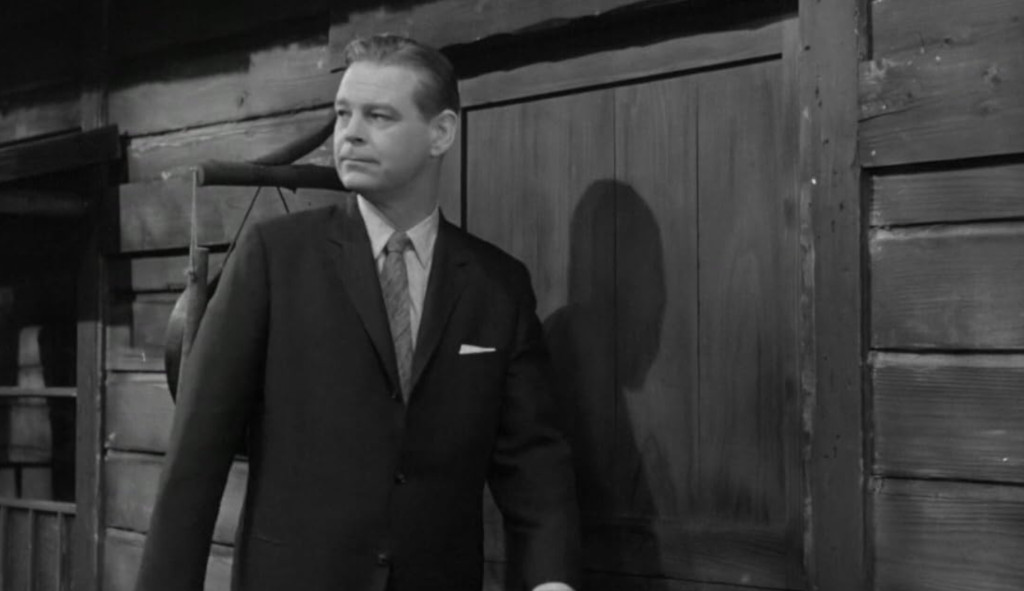
As Larry misses his deadline to return home to New York and ignores his wife Linda’s (Jane Hylton) phone calls, Linda takes the plane to Tokyo, and confronts him, along with his friend and boss Ian (Norman Van Hawley). His personality now changed completely, Larry leaves Linda and chooses to stay with Tara. But soon Tara abandons him as well, returning to Dr. Suzuki’s lab in the mountains. This is when strange deaths start occurring in Larry’s wake, starting with a buddhist monk he visits.
While Linda and Ian try to talk sense into Larry, the police, led by superintendent Aida (Jerry Ito) chase a brutal serial killer around Tokyo, and soon they realise that Larry is the monster they seek. Meanwhile, Larry’s mutation progresses. A lump on his shoulder develops into an extra eye, and soon he has grown a grotesque extra head on his shoulder. He himself regresses into a caveman state, now more animal than human.
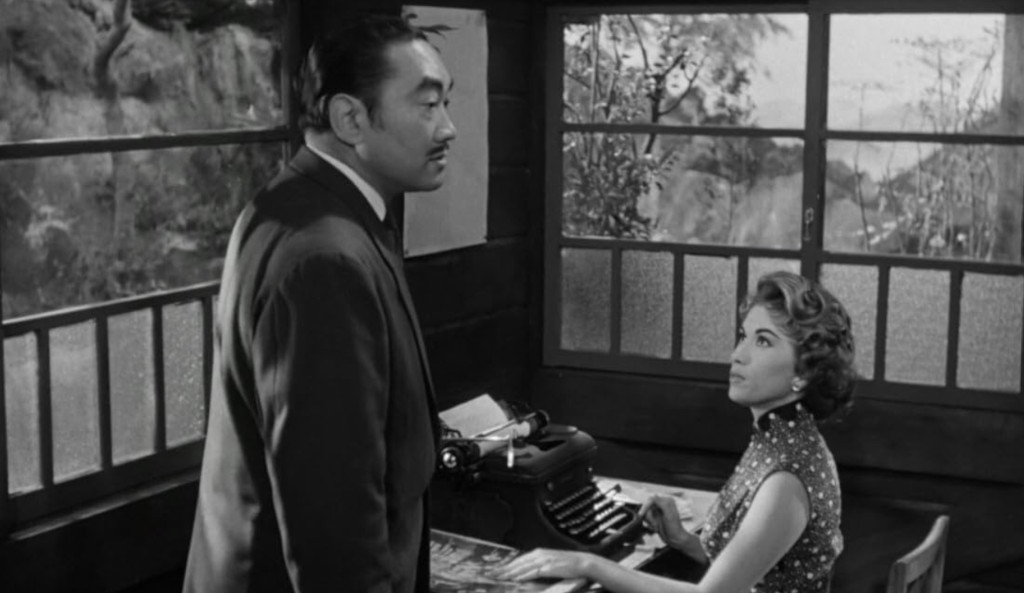
Led by instinct, Larry finds his way back to the mountain lab, where Tara has convinced Suzuki to attempt to cure Larry with an antidote, that will split Larry in two people – the new apeman species that has depeloped from Larry’s shoulder (George Wyman), and the original Larry. All this leads up to a dramatic showdown in the mountains. But even if the antidote works, there is still the romantic problem: will Larry choose Tara or Linda. The film wraps this conundrum up in a gruesome way that leaves Larry with only one option. In the end, it is Ian who neatly sums up The Manster’s homage to monster movies of old, by suggesting that there are some things that Man is not supposed to meddle with.
Background & Analysis
There is a very small horror/sci-fi subgenre featuring men with two heads. The Manster from 1959 is the very first film of the bunch, and, according to IMDb users, the best. The Manster was the brainchild of George P. Breakston, a former child and youth actor who worked as a photographer in the Pacific during WWII, and was stationed for a while in US-occupied Japan after the war. In the 50s, he divided his time between Japan and Kenya, and wrote, produced and directed a number of films and TV series in both countries. The Manster was his third and last film made in Japan, and his only foray into horror and science fiction territory (apart from an acting role in Universal’s bizarre Life Returns [1939, review]). Nominally, the film was an American production, which gave Breakston the advantage of producing the movie on very advantageous currency exchange rates, allowing him to shoot a film on mere pennies in US currency that looked and felt a cut above normal Hollywood B-movie fair.
And cheap the film had to be, since Breakston didn’t have much of a budget to work with. No estimates of the film’s costs exist, but the fact that Breakston primarily used a Japanese cast and crew is a sign that he couldn’t afford to bring over more Hollywood talent than the absolute minimum. The most important of these were probably editor and director Kenneth G. Crane, who also co-directed the film with Breakston. Since Breakston had no film education or technical background, he often brought in co-directors on his movies that were better versed in technical aspects of movie making. As an editor (and occasional director), Crane would also have been well versed in how to block scenes and what kind of setups where needed to make a film flow well. As both editor and director, he could also essentially edit the film while shooting, minimising the time required in the editing room. The other key players were not brought in from Hollywood at all, but from Britain: leading couple Peter Dyneley and Jane Hylton, who were married in real life. As Dyneley had grown up in Canada, he mastered a North American accent well, and passed as US American for US audiences. For Dyneley, this was a first lead, and Hylton was past the prime of her career. By hiring both, Breakston was probably able to get them for at a fairly cheap rate, as they would have the chance to spend a week or two in Tokyo together.
The rest of the cast was locally sourced. Breakston looked for Japanese actors who were fluent in English, and found Tetsu Nakamura for the role of Dr. Suzuki and Jerry Ito for the police superintendent. Nakamura was born to Japanese parents in Canada, and Ito was the son of a Japanese father and American mother, and was born in New York. Nakamura also worked as dialogue coach on the film. Terri Zimmern was cast as the second female lead, Tara, when the producers of the movie had a casting call in Hong Kong, and despite having no acting experience, she was hired. Zimmern was born in Macao, with mixed European-Asian heritage, and spoke fluent English. During filming, she and co-director Kenneth Crane became a couple and later married.
For the role of Larry’s boss Ian, Breakston found Norman Van Hawley, an American ex-marine and Broadway actor, who lived in Tokyo and worked for the US propaganda department. Alan Tarlton, who has a small role as a psychologist, hailed from South Africa, and was part of Breakston’s creative team in Africa. Other actors in the movie have very few lines in English, and were locally hired.
Cinematographer David Mason was British, and Breakston had probably met him in Africa, when he worked on the 1956 movie Zanzabuku. Having an English-speaking cinematographer was crucial, but most of the rest of the crew was made up of Japanese people. Of special note is Shinpei Takagi, the former action movie star who became a special effects guy, and designed the monster makeup for Peter Dyneley. Another one is composer Hirooki Ogawa, who is best known for composing the music for the original Kamen Rider film series in 1958 and 1959.
The Manster is based on a screen story by Breakston and sthe script was written by Walt Sheldon, a long-time resident of Japan and a prolific author of both non-fiction and fiction, including a good deal of detective, horror and science fiction pulp. It’s clear from the get-go that neither Breakston nor Sheldon are up to the latest cinematic trends. The tone and plot of the script harken back to 40s monster movies, and feel about 20 years out of date. This is not necessarily a criticism, only a reflection. As such, the film is an amalgam of The Wolf Man (1941) and The Strange Case of Dr. Jekyll and Mr. Hyde (1941, review). We have the tragic victim of a curse/experiment gone wrong, battling the light and the dark within him, as his dark side slowly takes hold over his personality. It is the Jekyll/Hyde theme that is especially prominent here, as not only does Larry begin to change physically, but he gives in to his lust and violent tendencies.
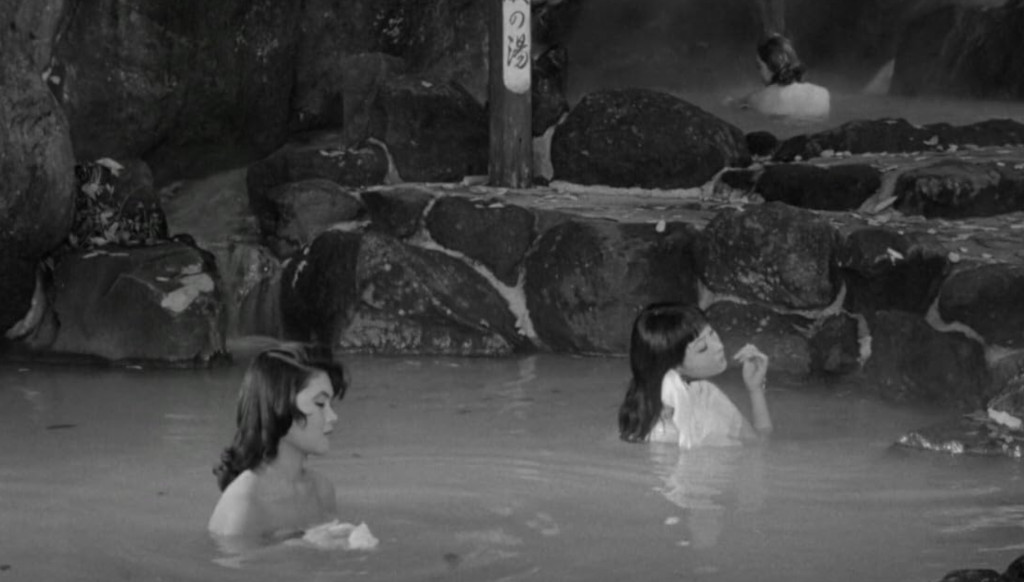
The thing that does put an interesting spin on the theme is the fact that it involves an American man in Japan, not yet 10 years past the end of the American occupation. In some of his non-fiction writing, Walt Sheldon wrote about the promiscuity and wild lifestyle of Americans stationed in Japan during the occupation. One can interpret Larry’s transformation as a parable about this issue, and the way in which American expats allowed themselves to misbehave far away from home, where transgressions had little consequence for their lives, as they knew they would return to America in a few years. This interpretation indicates the film is exploring the dark side of the American occupier in Japan.
However, seen from another angle, and one which is perhaps better supported by the screenplay, is that the film portrays Japanese culture as having a corrupting influence on the Americans stationed there. After all, it is a Japanese scientist that injects him and takes him to the geisha parties, and it is a Japanese woman who seduces him. If taken this way, the film immediately gains a slightly racist slant, viewing Japanese culture through the lens of Orientalism, showing it as rife with sin and promiscuity. This has caused some later critics to label the film as racist in its portrayal.
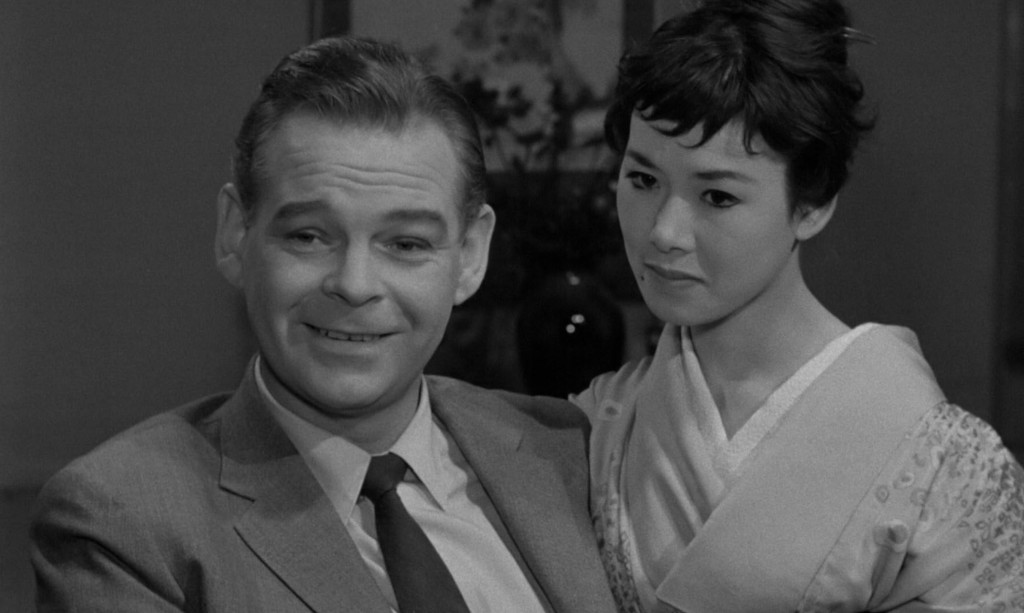
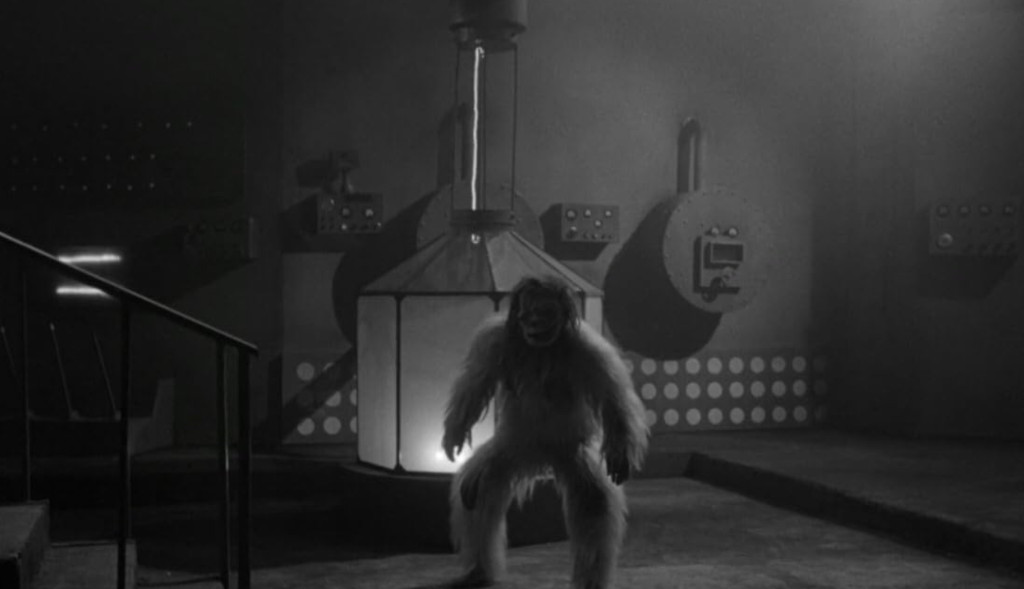
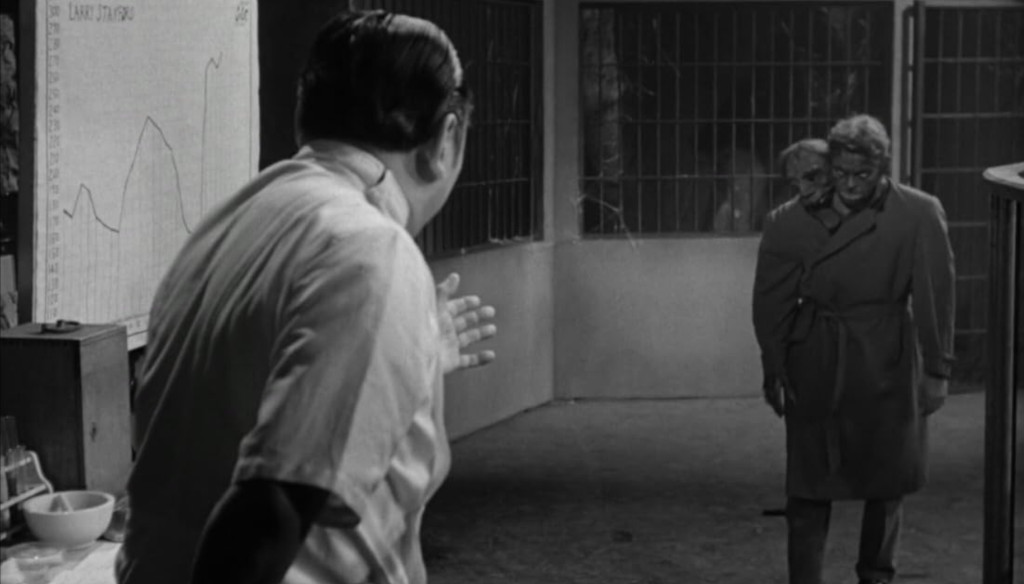
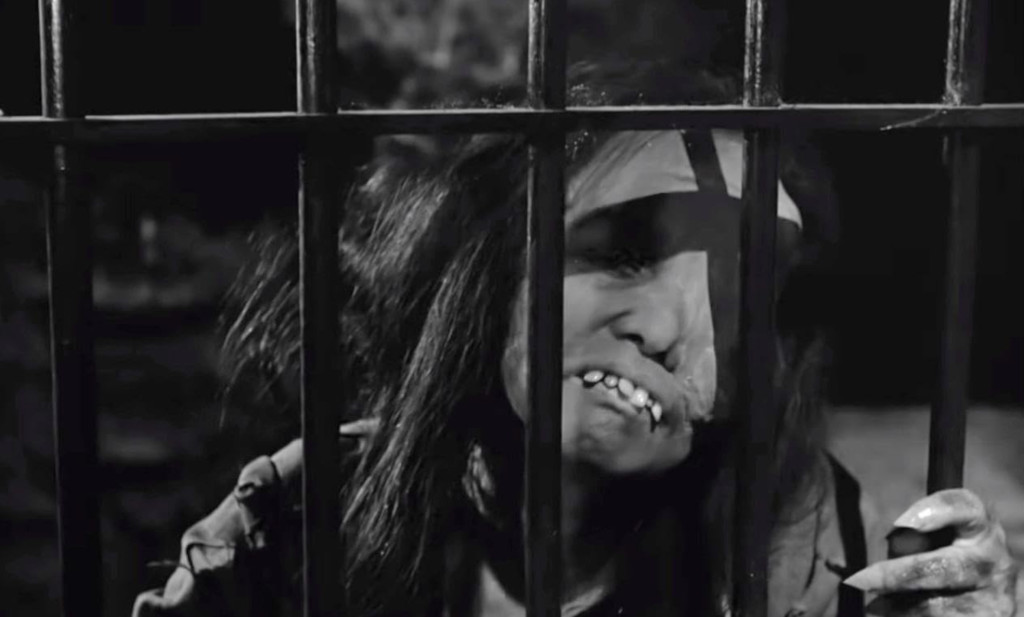
The cultural backdrop aside, The Manster feels dated in its approach. It’s not that the late 50s was devoid of mad scientists injecting their victims with monster-making serums; in fact they teemed all over low-budget Hollywood. But these days, the scientists usually worked in modern office buildings and tried to solve overpopulation, create cheap energy or make rejuvenation cosmetics. Mad scientists working in remote mountains with monster-filled dungeons in their basements were a thing of the past. Yes, I left that out from my plot synopsis: the movie opens with a scene where we meet the previous (willing!) guinea pigs of Dr. Suzuki’s experiments: his brother, turned into an ape man, and his wife, turned into the elephant woman. Both are dispatched through “mercy killings” during the film.
The main problem with The Manster is that it’s difficult to get a grip on Dr. Suzuki and his science. He has spent his whole career trying to push through the next stage in human evolution. It’s not clear why, or what this next stage would look like. We know his brother and wife were failures, but Larry, apparently, is a success. This would mean that the next stage of human evolution is a murderous ape man. How this is scientifically logical or in any way desireable remains a mystery. It is also unclear why Larry first seems to undergo a personal mutation, then starts growing a second head, and finally splits in two. I though this was about mutation an not about cloning? I suppose there’s not much sense trying to figure out the science here, as it just give you a headache. But what makes all this so difficult to swallow is that there is no logic to Suzuki’s actions and motivations. The film goes out of its way to try to depict Suzuki as an ultimately decent and empathical human being – it makes clear that both his brother and his wife more or less threw themselves on his syringe, despite his protestations, that he saved Tara from some sort of brothel and that he ultimately wishes the best for Larry. Why this person would secretly inject a total stranger with a potentially lethal and devastating serum makes no sense.
The subplot with the estranged couple is a classic dating back to the early stage and films versions of Dr. Jekyll and Mr. Hyde. One can see the story as a parable of the struggle between the good and evil in all of of us, the animal instincts and civilised culture, the id and the superego. This is supported by a final line spoken by Ian, which combines it with ye olde “things man should not dabble in” trope – again a hark-back to the monster movies of the 30s and 40s. But at the same time, it can be seen as a more concrete metaphor for the strains that many relationships went through in the 40s and 50s as American men were stationed in Japan, leaving loved ones behind in the USA. And again, we’re back at the theme of Americans living their Mr. Hyde lives far away from their Dr. Jekyll realities back home. And like in Robert Louis Stevenson’s novella, the more Larry’s Hyde begins to dominate his life, the harder it is to revert to Jekyll.
All this subtext does make The Manster a more interesting film than its title and immediate plot synopsis would indicate. It’s a curious blend of dated schlock and an underlying idea that reveals some thought and intelligence, and does make the viewer ruminate serious social and psychological issues. In a sense it is a character drama disguised as a monster movie. Unfortunately it is partly undone by the flatly written characters, especially Larry’s wife Linda is not given much thought by screenwriter Sheldon. Neither is the character helped by Jane Hylton’s melodramatic and one-sided performance.
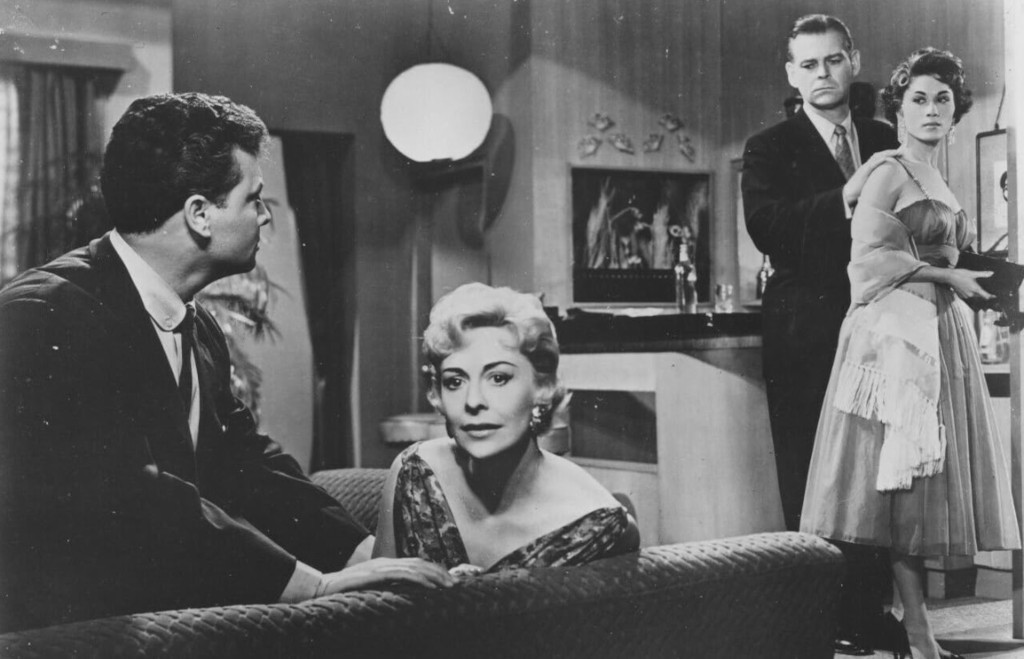
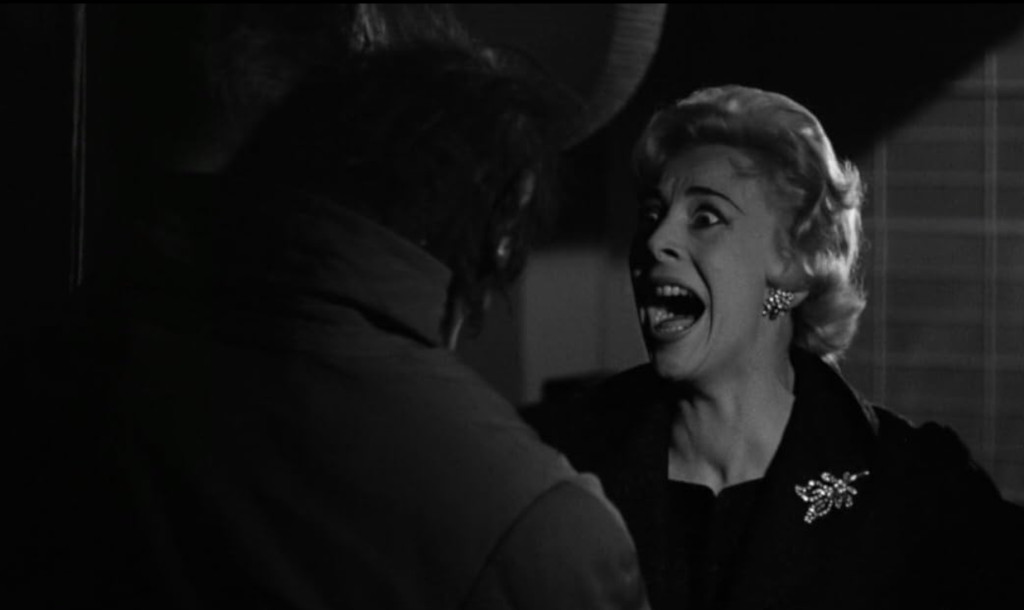
Acting-wise, there is generally not much to write home about in The Manster. Peter Dyneley’s performance improves the further down he goes into madness and rage, and he is at best when he’s allowed to ham his heart out. In the early stages he doesn’t feel particularly convincing, or indeed like a suitable lead. He’s not particularly handsome or charismatic, nor an engaging enough actor to carry the whole movie on his shoulders. Tetsu Nakamura is okay as the mad doctor, but doesn’t leave much of an impression. Considering she had no acting experience, Terri Zimmern is surprisingly engaging, but wins no acting awards for her only film appearance. The rest of the cast are forgettable.
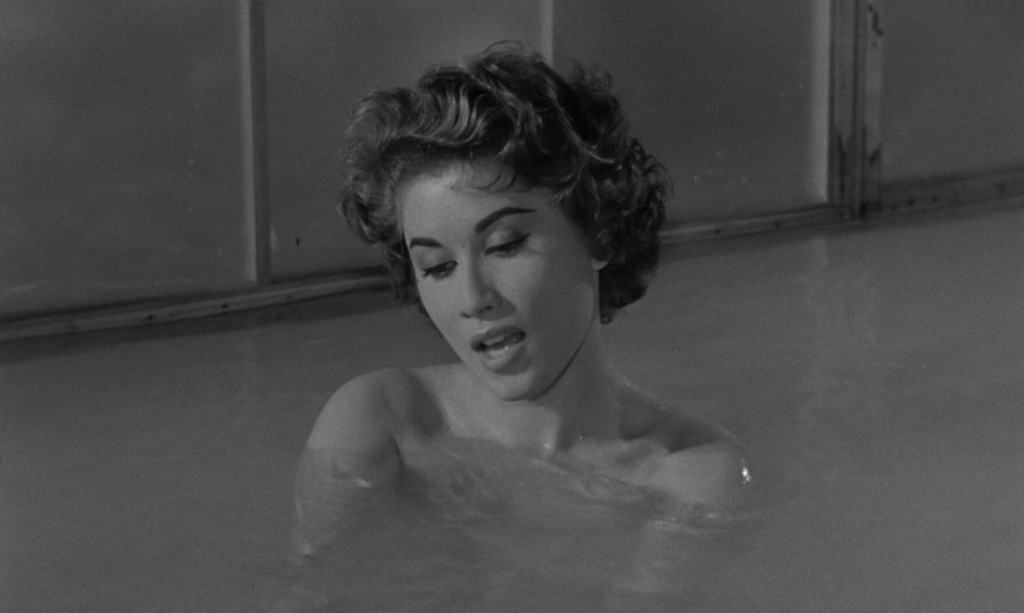
The picture is helped by its striking, atmospheric noir cinematography, which is a bit surprising, since cinematographer David Mason only has short of a dozen IMDb credits as a cinematographer or camera operator, one of which is for an instructional short about how to use a fire extinguisher. Mason drowns the film in shadows and highlights and is able give Tokyo a mysterious, exotic feel. Art director Noboru Miyakuni helps with this, even if there’s not a lot of production value on display. Kenneth G. Crane’s direction is workmanlike, but functional.
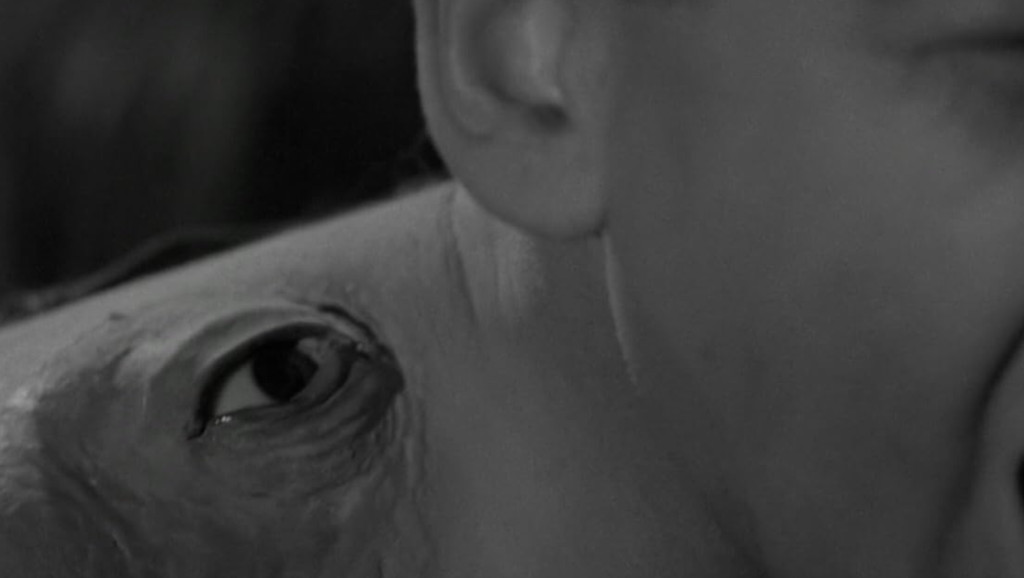
What most viewers take away from the film are the special effects. They are on the one hand crude and silly, but on the other hand rather impressive for a low-budget film of this kind. The scene in which the eye appears on Larry’s shoulder is the most memorable one, and the way it is filmed and realised really leaves an impression. Even for a modern viewer, the eerie moment is rather shocking. Larry’s second goblin-like head is quite silly, and mostly just bobs up and down, but it is gorteque enough to kind of work, and it is even somewhat articulated, at least with moving eyebrows and mouth. The makeup for the monster woman in Dr. Suzukis basement is also quite grotesque, while the ape man is just a guy in a hairy suit – and I suspect the same suit was used for Larry’s double in the final scene.
The special effects are credited to Shinpei Takagi, but because of the way in which Japanese credits and non-credits worked, I suspect he was mainly the supervisor and the creator of the actual practical, technical effects, like the mechanics behind the moving eye and the animated head. Takagi was primarily a fight, stunt and suit actor who over the years became proficient in techical and practical effects, but he was no sculptor, latex worker or makeup artist. Much of the eye effect was probably created by makeup artist Fumiko Yamamoto, and the artistic design and creation of the head would have been outsourced to local indie contractors. In Japanese cinema, the special effects creators often went uncredited, but since US credit conventions required a special effects creator, Takagi was probably listed, as he probably supervised the work. Takagi also shows up on screen as a buddhist monk who is the first of Larry’s victims. There’s also a few lap dissolves showing Larry’s transformation into a hairy ape-like man, but they are rather poorly handled.
One of the most talked-about aspects of the movie is the final split between the real Larry and the mutated Larry. The effect is so blatant in its cheapness that you have to admire it. The split happens disguised by a tree, foregoing all needs for any actual special effects. It’s simply two actors standing next to each other behind a tree, and then separating. Brilliant!
If nothing else, The Manster is a fascinating film, thanks to its blend of two different cinematic cultures and the fact that it draws many of its themes from this very cultural clash. While it is on the surface an old-fashioned, even outdated, monster movie with all of the familiar clichés, it it has a deeper and more substantial subtext that gives the movie an odd magnetism. That these themes are not necessarily handled particularly aptly is another matter. It’s a very flawed film, but its peculiarities and its well-realised atmosphere makes it stand out. It stands head and shoulders over Kenneth Crane’s previous science fiction direction, Monster from Green Hell (1957, review).
Reception & Legacy
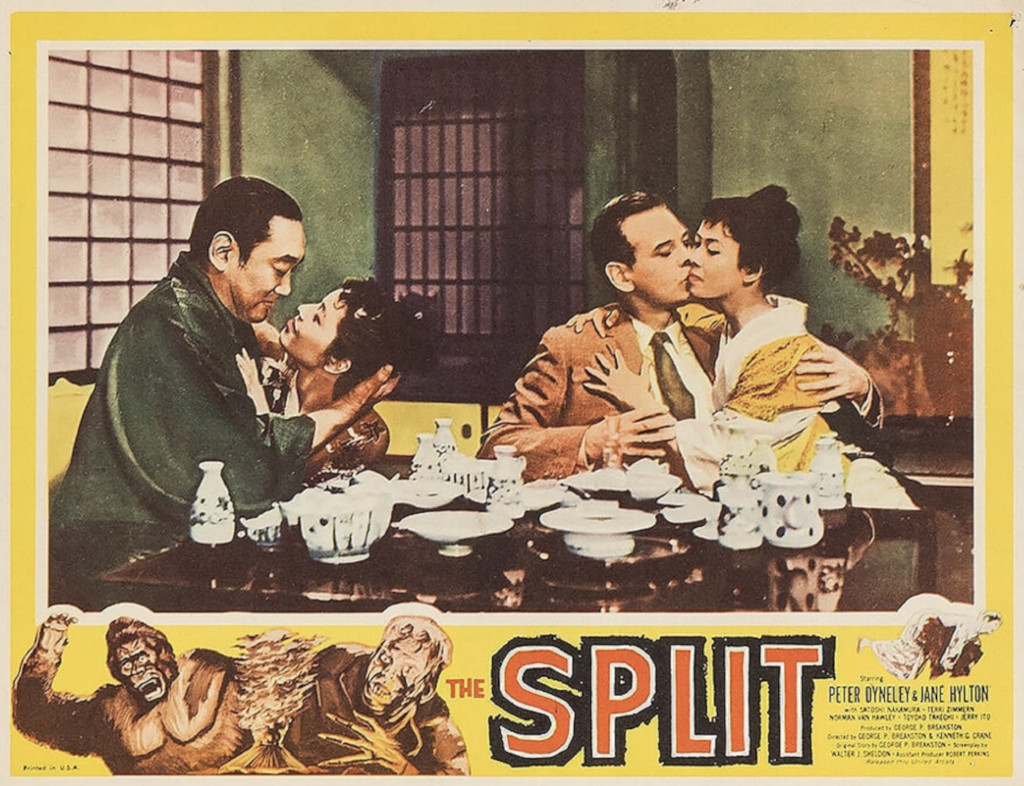
The Manster was released in Japan in July, 1959, as Sōtō no Satsujinki (双頭の殺人鬼) or “The Two-Headed Killer”. In the UK, it opened in 1961, but there it was retitled Split. It wasn’t until 1962 that The Manster got its US premiere. In the US, distributor Lopert Pictures paired the film with Georges Franju’s arthouse horror film Eyes Without a Face (retitled as The Horror Chamber of Dr. Faustus), and it is often cited as one of the most mismatched double bills in Hollywood history (film historian Bill Warren writes that he was probably the only one in the audience that preferred Eyes Without a Face to The Manster when he caught the double bill in 1962).
In Japan the film didn’t make much of a splash. Japanese audiences were too captivated with the Golden Age of Japanese cinema to register this odd little American-made B-movie, and it was ignored by major newspaper and magazine critics. It fared little better in the US, as I can’t find a single review in the Hollywood trade press, nor any mentions of one in mainstream newspapers.
The Manster, or Split, did, however, get reviewed in British Monthly Film Bulletin in 1961, not to its benefit. According to the critic, it was a “pathetic potboiler” which was “never frightening”. The review continued: “The incredible far-fetched rehash of all the ingredients of the conventional SF-horror film is in every way a thorough waste of effort. The idea of a two-headed man may have seemed ambitious but it has turned out abysmally silly.”
Apparently, The Manster wasn’t seen in Japan either on television or as a home video release before 2008, when it was finally released on DVD. It didn’t create much of a buzz then either, but it was marketed toward the Toho tokusatsu crowd as a rare opportunity to see Tetsu Nakamura and Jerry Ito in the same film two years before the shared a screen in Mothra (1961).
I can’t find a single proper review in Japanese for the movie, although it does seem to have generated some degree of interest with monster and science fiction fans, as there are several user-generated reviews on sites like Filmarks and from the review platform JTNews. Overall, users seem to be slightly baffled and a little bit offended by the way in which the film portrays Japan and Japanese culture and people, and most comment on the cheapness and shoddiness of the film. However, the general consensus seems to be that The Manster is a fairly entertaining and quite harmless curiosity. User Naniwa-kun at JTNews writes: “The story is old-fashioned and not fresh at all, but as a mad scientist horror movie, I think it’s thoroughly immersive. Actually, the story is quite simple and straightforward, without any unnecessary complications, which gives it a believable sense of realism.”
Few outlets that can even ever so generously be considered mainstream have noted The Manster outside of Japan either. The only mainstream website that has carried a review of the film is the now practically defunct AllMovie, where Hal Erickson wrote: “Manster is a favorite among campy horror aficionados and for good reason as it is both unintentionally funny and genuinely creepy […] Wait till you see the climax, with the hero battling himself on the edge of a live volcano”.
As Erickson notes, though, the movie has long been a genre cult favourites, largely because of its frequent airings on US American TV from the 60s onwards. As it quickly fell into the public domain, it has been frequently featured on VHS and bargain-bin DVD releases. Accordingly, IMDb lists over 50 critic reviews. On the whole, modern critics have a bit of a soft spot for The Manster.
Dave Sindelar at Fantastic Movie Musings and Ramblings writes: “As silly-sounding as the premise is, I think this is a highly effective horror movie; it certainly is the best two-headed man movie I’ve seen. I think the exotic oriental atmosphere helps immensely […]. Sure, the two-headed effects look fake, but they put some work into them. […] some of the imagery in this film is unforgettable; if you remember nothing else about this movie, you will remember the eye on the shoulder sequence”.
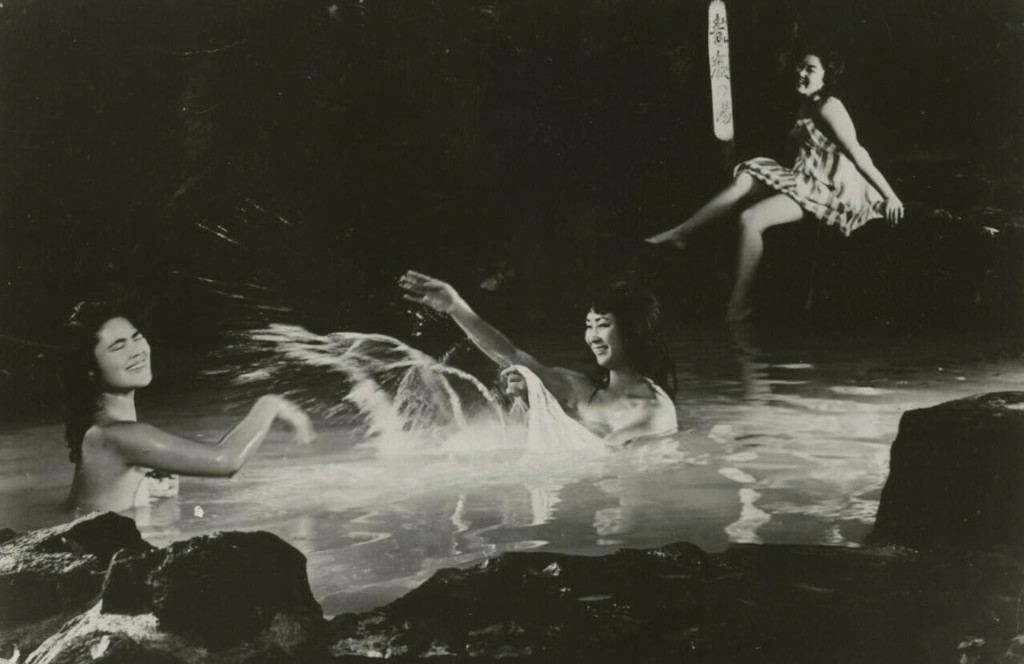
Richard Scheib at Moria gives the movie a surprisingly good 3/5 star review: “The Manster comes with a luridly entertaining torridness. […] What makes The Manster entertaining is its unquestionably racist subtext. There is another whole level the film operates on where it could almost have worked without any mad scientist or two-headed monster elements about a man being tempted by another culture and straying from the path of marital fidelity. In reality, The Manster is a Jekyll and Hyde film […]. This is a Dr Jekyll variant where the decent ordinary man is not just struggling with his dark side but one that is also polarised into a struggle between Japanese and American cultures. Here American culture is seen as the norm and Japanese culture as carnal and corrupting. What is interesting is that the monster does not emerge until some way into the film and the interim is filled with a number of scenes with Peter Dyneley languishing in bathhouses with geishas, who are shown with as much eroticism as the period would allow, and drinking heavily, while abandoning his decent wife for the mad scientist’s vixen of a lab assistant. The fear of cultural pollution and the belief that Japanese culture represents a wantonness is fascinatingly laughable.”
However, as Sam Bett writes at Not Coming to a Theater Near You: “The Manster lacks the finesse of an intentional mystery, and while it aspires to thrill us and cinch our breath, these puzzling questions are not primary outlets for suspense but unfortunate side-effects—the dizziness induced by an repeated doses of the wrong medicine.”
As stated, this was the first of a small number of movies featuring men with two heads, however, there’s little to suggest that the later iterations were inspired by The Manster – with one exception. There were two movies in the 70s with two-headed protagonists, The Incredible 2-Headed Transplant (1971), starring Bruce Dern, and the blaxploitation comedy The Thing With Two Heads (1972). Another obvious relative is Zaphod Beeblebrox from The Hitchhiker’s Guide to the Galaxy, but Douglas Adams has stated entirely different inspirations for the character. The only stated, and obvious, inspiration comes from Sam Raimi’s Army of Darkness (1992), in the form of “Evil Ash”. The movie includes as scene in which protagonist Ash discovers an eye growing from his shoulder, which develops into a fully grown head of his evil twin, and the scene ends with Evil Ash splitting from Good Ash into a separate individual. Like The Manster, the scene ends with Ash killing his evil twin. Johnny Knoxville’s two-headed character in Men in Black II (2002) seems like a clear descendant, but this hasn’t been verified.
The Manster is in the public domain and freely available on YouTube and other platforms. The DVD alternatives available are all murky TV rips, bit it has been released in pristine blu-ray restorations, by Shout! Factory in 2017, and in 2026 as part of Film Masters’ Monser Mayhem Collection.
Cast & Crew
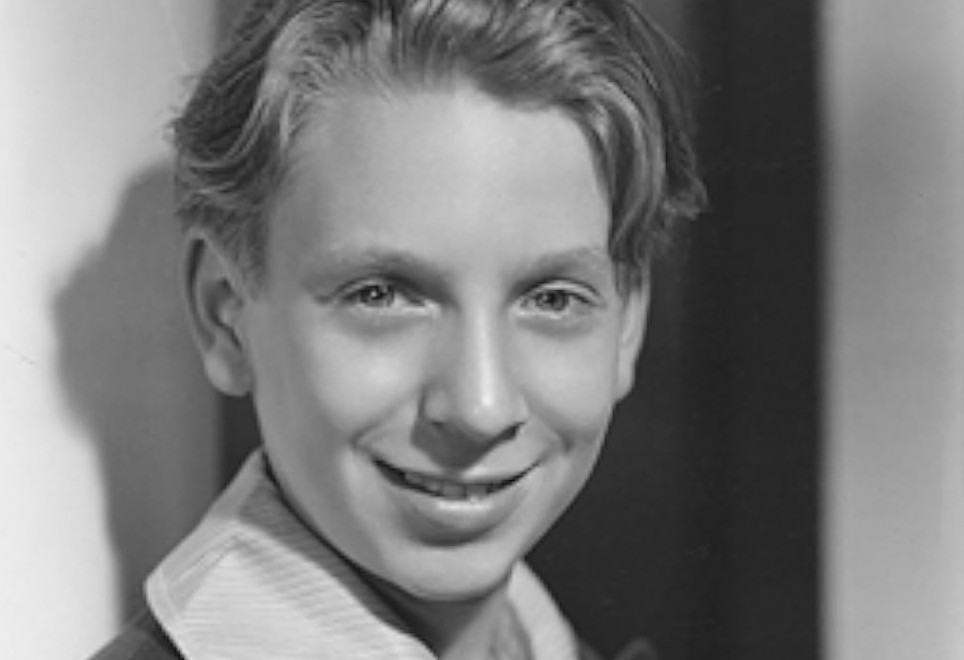
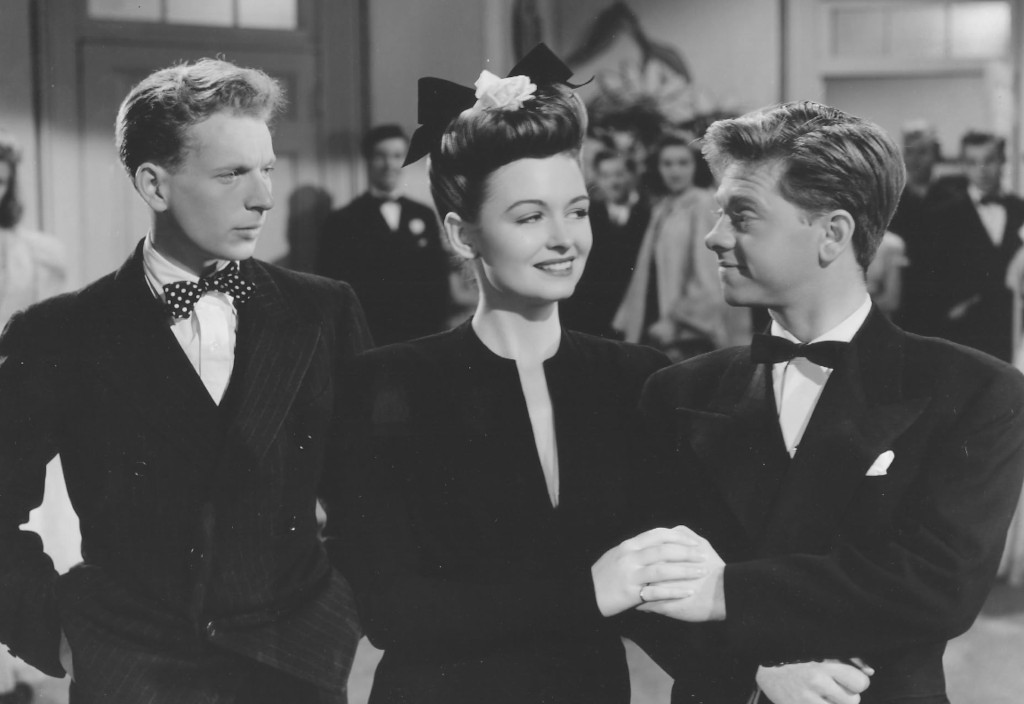
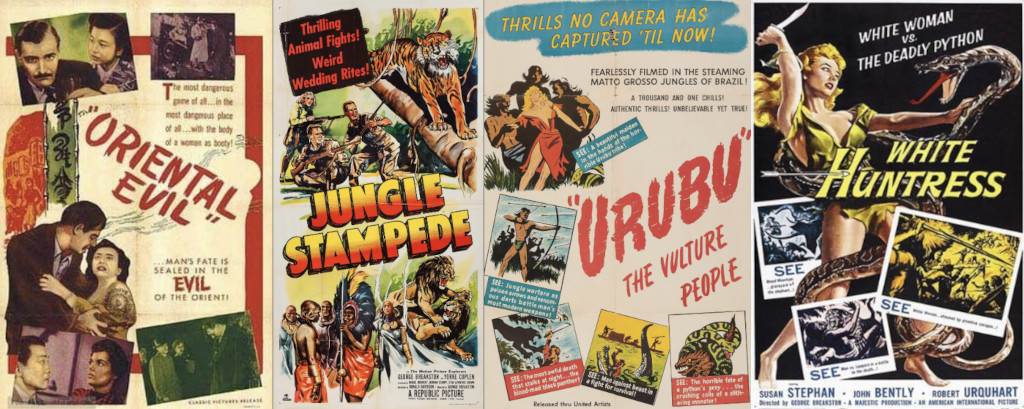
George Breakston seems like an interesting character from the information available online. French-American Breakston was a busy child and teen actor from the mid-30s to the early 40s, and had small roles in such prestige films as It Happened One Night (1934) and The Grapes of Wrath (1940). However, he is best remembered as Beezy, one of the kids appearing in the Andy Hardy films starring Mickey Rooney. In 1942, Breakston was drafted into WWII, where he served as a photographer in the Pacific War. After the war ended, he was stationed in US-occupied Japan.
When he returned to civilian life, he became something of a globetrotter, and decided on a career in film. In 1948 he produced and directed an independent movie in Brazil, and in 1950 he produced and directed a wildlife/safari documentary in Belgian Congo and Kenya. He the returned to Japan, where he produced and directed three movies between 1950 and 1951, none of which have left any greater mark in film history. After this he settled down in Kenya, where he continued to produce and direct films and TV series with British backing. Neither of these productions recieved much attention when they were first released, and even less so in the years to come. As a producer/director, Breakston’s only real claim to fame is his 1959 monster movie The Manster, filmed in Tokyo with primarily a Japanese and British cast and crew.
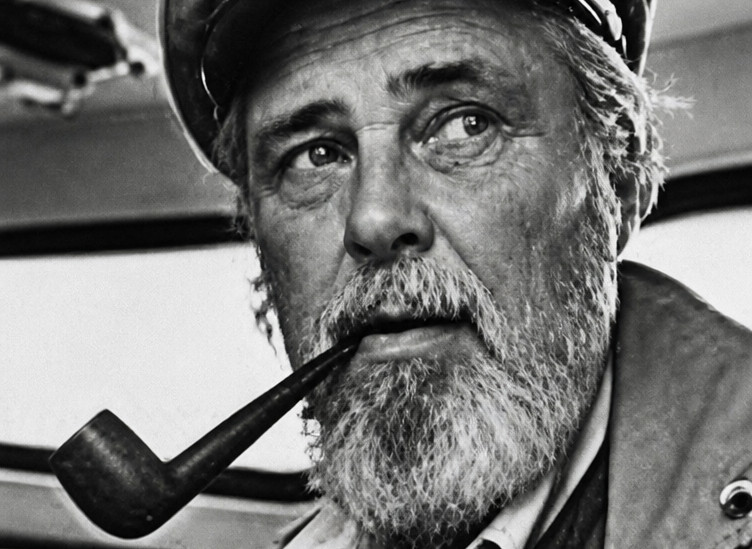
Kenneth G. Crane was a workhorse editor who apparently harboured directorial ambitions, and got his chance when approached by the producers of Monster from Green Hell (1957, review) to direct two films built around other movies. Crane also directed the new scenes for Half Human (1957), based on the Japanese snowman film Ju jin yuki otoko (1955, review). That was an even less ambitious project, and Crane’s job was simply one day of shooting with John Carradine creating a frame and narration for Ishiro Honda’s film. Both Monster from Green Hell and Half Human are generally regarded as being situated at the very bottom rung of the 50s monster movies. Crane also directed the war film When Hell Broke Loose (1958) and the monster movie The Manster (1959), both productions on which he proved he was capable of better work. Naturally, Crane also worked as editor on his films.
The screenplay for The Manster was penned by Walt Sheldon, sometimes credited as William J. Sheldon, an US citizen who worked as a writer for the US armed forces’ radio and TV service in Japan at the end of WWII. After the was ended, Sheldon stayed on in the US propaganda department in Japan. Sheldon started writing fiction pretty much at the same time that he was stationed in Japan, and during the 40s and 50s he wrote several dozen short stories of speculative fiction, plus a number of military and crime stories. During his stay in Japan he also wrote two novels, published in 1952 and 1955.
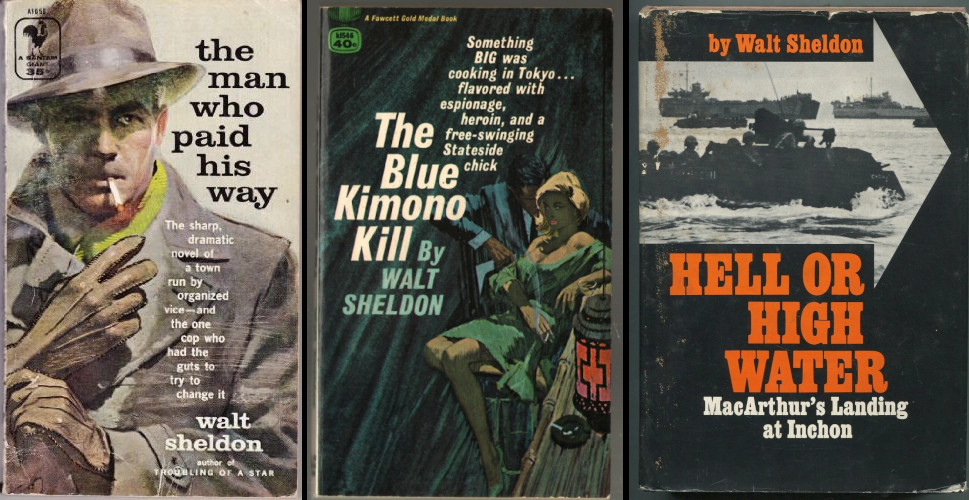
Upon return the US in the mid-50s, Sheldon continued to support himself as a writer. His bread and butter came from writing detective, mystery, horror, crime and science fiction stories. At one time he worked as the ghost writer for the famous moniker Ellery Queen, but his stories were also published in magazines like Startling Stories, Fantastic Adventures and IF Worlds of Science Fiction. His best known story is The Hunter (1952), about a couple escaping a highly technological, ruthless alien race killing off all people on the planet. In a twist ending it is revealed that the aliens are humans from Earth, and the story becomes a comment on colonialism and imperialism. It was published in Startling Stories, and gained wider recognition when selected by Isaac Asimov for one of his collections. Sheldon wrote two more novels, including The Blue Kimono Kill (1965), set in Japan, and a number of non-fiction books, about the Pacific War, the occupation of Japan, and a tourist guide to Japan, Enjoy Japan. He only dipped his toe in film and TV writing.
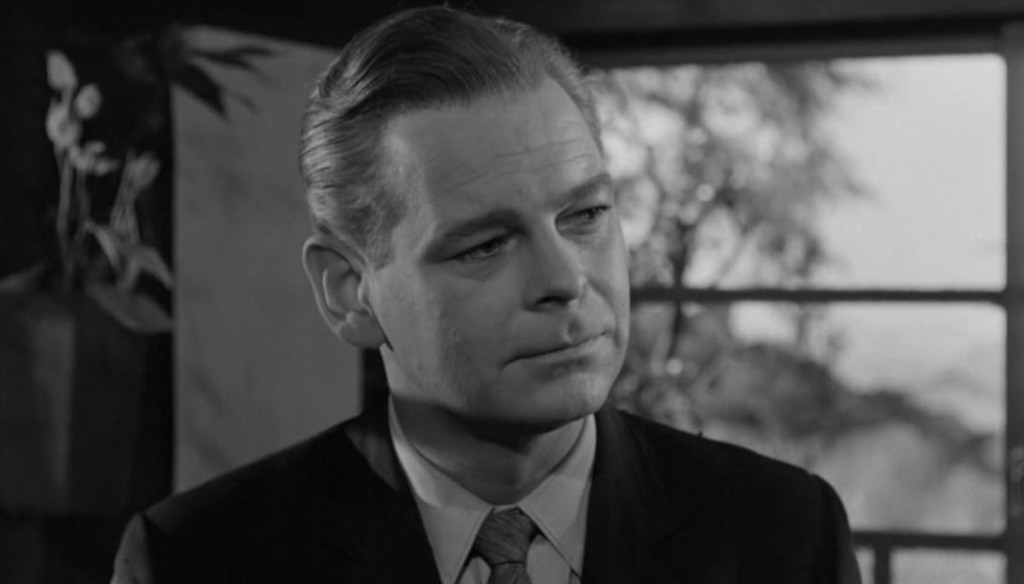
The cast of The Manster is mainly made up of lesser known actors. British Peter Dyneley is best known for voicing the role of Jeff Tracy in the Thunderbirds franchise, and is the one who delivers the iconic intro: “5, 4, 3, 2, 1 – Thunderbirds Are Go!”. Apart from this, he had a rather anonymous career spent mostly in TV and on stage between 1947 and 1978. He can be heard as the narrator of and the French radio operator in The Day of the Triffids (1963) and had a small role as a German officer in It Happened Here (1964). While he was born in Britain, he grew up in Canada, which meant he could do a convincing American accent. Dyneley also spoke French, German and Spanish, which meant that much of his time in film and TV was spent either playing an American or a number of other nationalities.
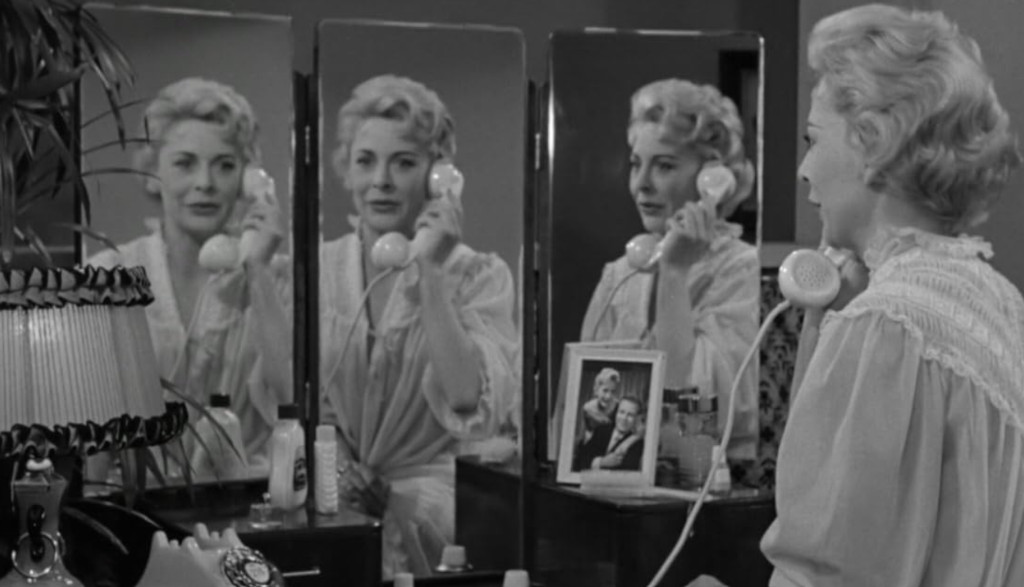
RADA-trained Londoner Jane Hylton (born Audrey Gwendolene Clark) came up through the Arthur Rank “charm school” and made her film debut in 1947. She is best remembered for her work in the late 40s, in particular her supporting role in the Ealing comedy Passport to Pimlico (1949), but also her roles in crime dramas like It Always Rains on a Sunday (1947) and My Brother’s Keeper (1948). In the 50s, Hylton would more often appear in starring roles in dramas aimed at a female audience, such as Dance Hall (1950) and The Weak and the Wicked (1954). When entering her 30s in the late 1950s, she found it harder and harder to get good movie roles and was relegated to B-films. One such was The Manster (1959), which had the added bonus of letting her spend some time together with her husband, co-star Peter Dyneley, in Japan during the shooting. Another one was the lurid and well-crafted Circus of Horrors (1960), which has since become something of a low-budget classic, and remains one of Hylton’s best remembered appearances. While her movie career waned in the 60s, she made a decent living for herself in TV in the next two decades, while combining her small screen career with select appearances in film and on stage.
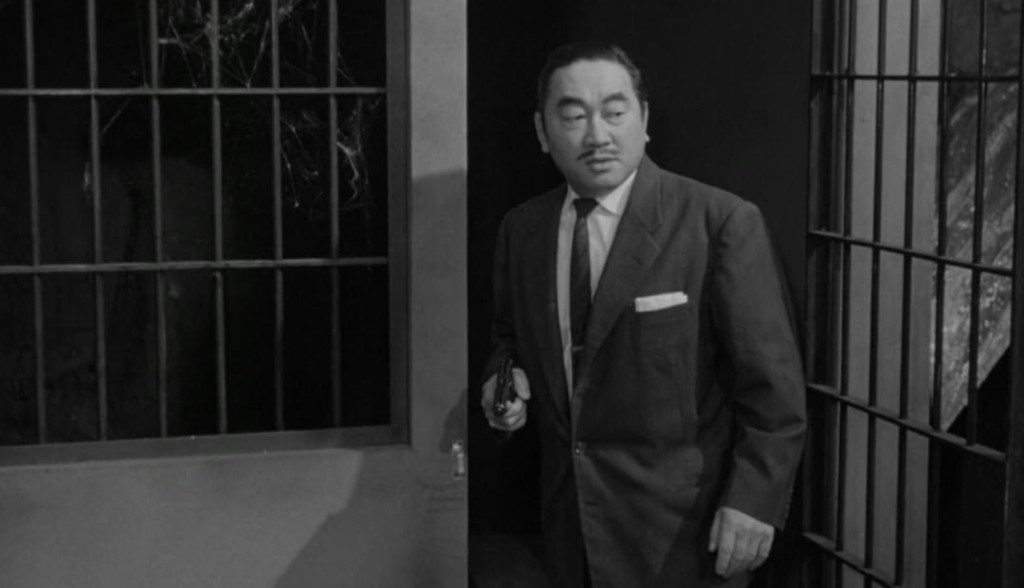
Tetsu Nakamura, playing Dr. Suzuki, was born in Canada to Japanese parents in 1908, and trained and worked as a singer, with recitals and in radio before moving to Japan in 1940, where he also trained as an actor. Here, he worked as an opera singer, but was also signed on as an actor at Toho studio in 1942. Most of the film roles he did between 1944 and 1977 were minor or supporting roles, but because of his fluency in English he was often used in international co-productions and movies aimed at an international audience. His two largest roles in terms of screentime were both in films produced by George Breakston – Tokyo File 212 (1951) and The Manster (1959), both primarily English-language movies filmed in Japan, intended for the US market. Nakamura played a villain in both pictures. In terms of mainstream movies, his biggest moment was probably when he was shipped to Spain long with Toshiro Mifune to appear in Terence Young’s spaghetti western Red Sun (1971), co-starring Charles Bronson, Ursula Andress and Alain Delon. Nakamura has a small role as a Japanese ambassador, but was primarily brought along as Mifune’s dialogue coach and interpreter.
While his roles were seldom large, Tetsu Nakamura has some proper science fiction pedigree, as around a dozen of his close to 50 movie roles were in sfi-fi movies. These include: The Mysterians (1957, review), The H-Man (1958, review), The Manster (1959), The Human Vapor (1960), Mothra (1961), Atragon (1963), Latitude Zero (1969), Yog: Monster from Space (1970) and The Last Dinosaur (1977). Nakamura also oversaw the translation and dubbing of several Disney films into Japanese, and can be heard in the Japanese dubs of many classic 40s and 50s animations.
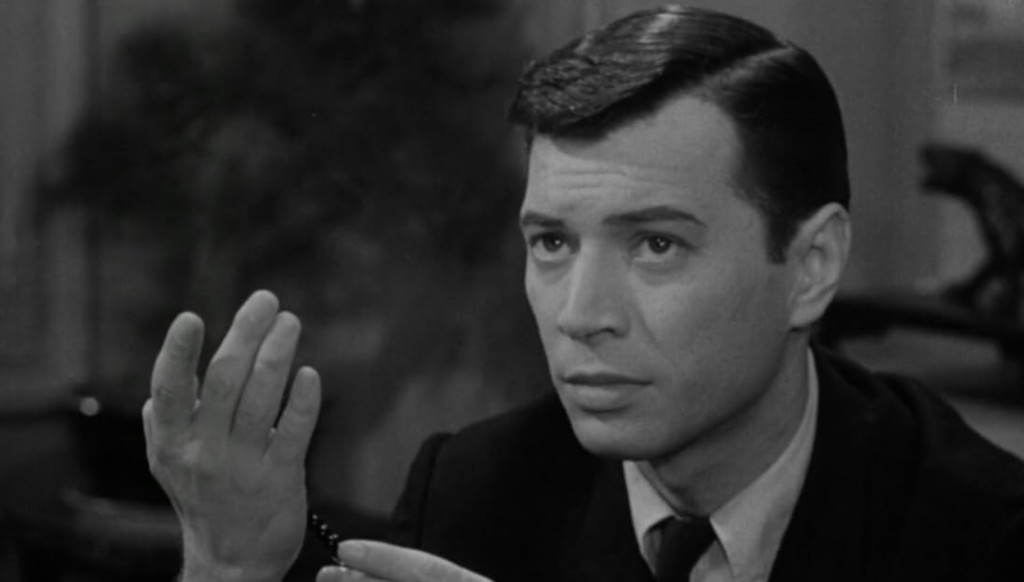
Jerry Ito, here in the role as the police superintendent, is best known the world over for playing the evil main villain Clark Nelson in Mothra (1961). An US American citizen, Ito was born into a showbiz family in New York: his Japanese father and American mother were both dancers. Ito served in the American Theatre Wing in the US Navy in Japan during WWII, and was drafted to army intelligence in the Korean War. In between he studied acting in the States.
Ito made the permanent move to Japan in the mid-50s, and despite speaking only rudimentary Japanese, decided to pursue acting. He was primarily attached to Toho’s theatre division, but was frequently loaned out to the company’s film and TV studios, as well as to other studios as Toho had a hard time casting him because of his initial struggle with the language. While blackface and whitewashing is often seen as a primarily Western sin, the opposite must logically exist in countries where there’s a lack of caucasian actors. In Japan, the number of white actors who spoke Japanese must have been extremely limited, even after the US occupation, so Japanese actors would frequently step in whenever the studios needed someone to play a Western character with a substantial amount of lines. Since Jerry Ito was of mixed race and looked more caucasian than most of his colleagues, he was a perfect fit. And since he was supposed to play a Westerner, the fact that he had an accent just sold the illusion even better. Ito’s film career was limited, however, and he didn’t appear in more than around 20 movies. Nevertheless, Ito had a diverse career as a jazz vocalist and successful recording artist, with stage musicals and not least as a spokesmodel and advertising face for several huge corporations, including cosmetics manufacturer Shiseido and beverage company Suntory. In the 90s he was a cast member of the popular edutainment show Let’s Play English.
Jerry Ito appeared in four science fiction movies: The Manster (1959), Mothra (1961), Sekai daisenso (1961) and Message from Space (1967).
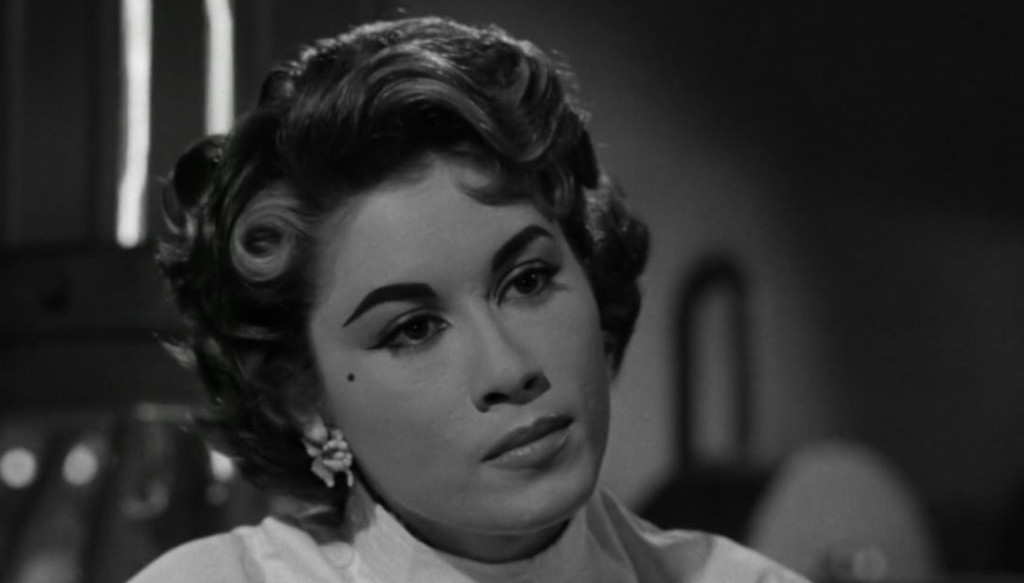
Born in Macau, Terri Zimmern was of Portuguese, Chinese, Scottish and German heritage, and shared her time between Macau and Hong Kong, until she met Kenneth G. Crane, the co-director of The Manster, moved to the US and married him. She never appeared in another film. You can read a rare interview with her here.
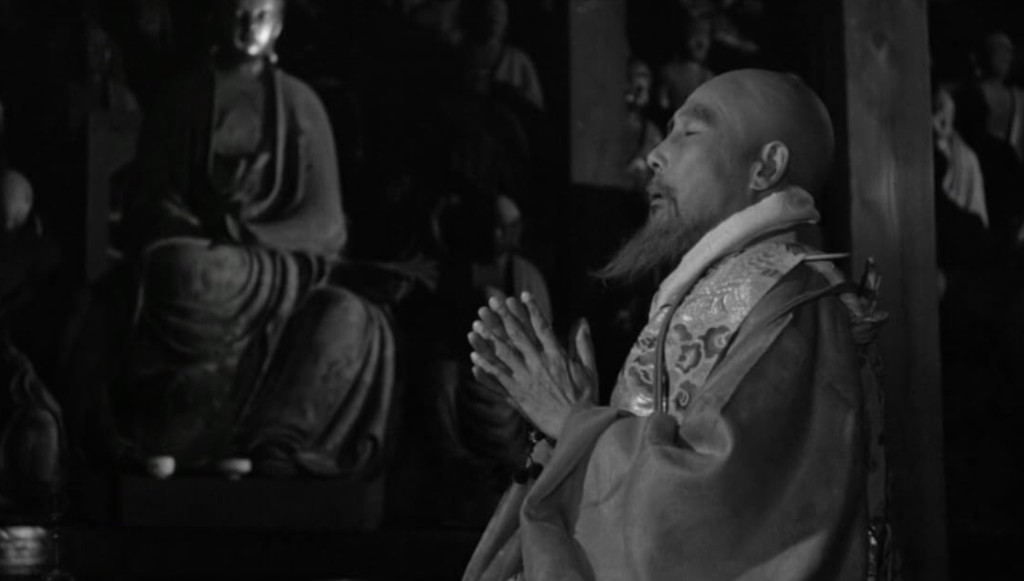
Above, we have already covered Shinpei Takagi, the special effects creator. Takagi was in fact a silent action and samurai movie star in the silent era. He starred as Robin Hood in one movie, but because of his physicality drifted towards stunt suit performances. In an industry with no actual special effects units in the 30s, he soon left acting behind and started working as a special effects supervisor and creator, but this part of his career has not left much of a paper trail, as special effects creators were generally not credited in Japanese films until the rise of the tokusatsu movies in the mid-50s. He returned to acting in the 50s and gained international fame for his role as the main antagonist of Akira Kurosawa’s Seven Samurai (1954). He had a bit-part in Yojimbo. In The Manster, Takagi has a minor but memorable role as the priest who gets murdered.
While not particularly well known to western audiences, Japanese online reviewers tend to note the presence Toyoko Takechi under heavy prosthetic makeup as Dr. Suzuki’s wife and failed experiment in The Manster. Takechi was a comedic and character actress with a distinct raspy voice and fierce delivery, who became a household name in Japan in the late 50s and 60s thanks to her recurring role in the hugely popular comedy series Owarai Sannin Gumi, which ran for many years on both radio and TV. In films she mainly had bit-parts, but was one of those character actors who were instantly recogniseable on screen – except for The Manster, that is.
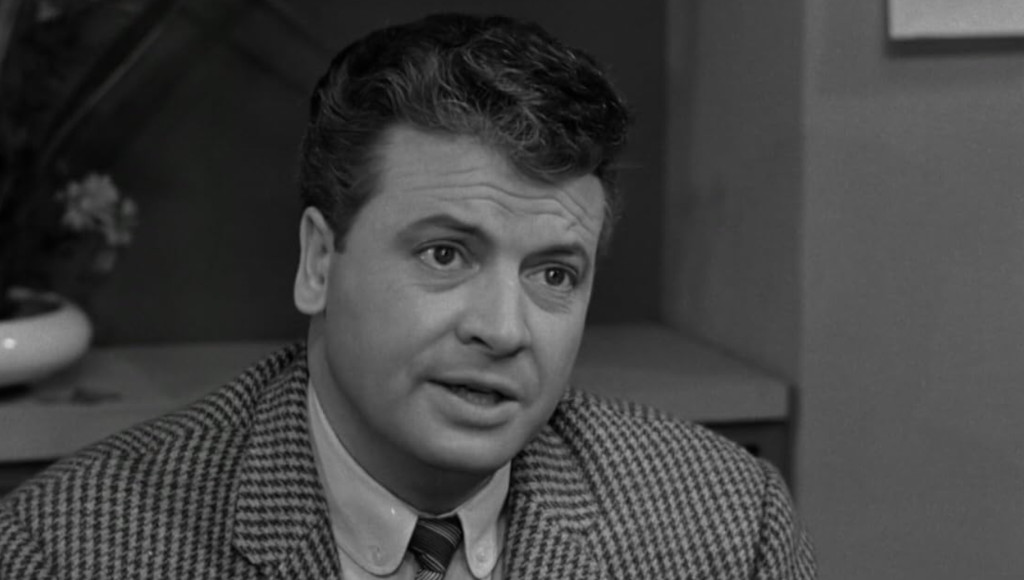
Norman Van Hawley (as Larry’s boss) and George Wyman (as both ape monsters) were part of the tight-knit Western expat community in Japan after WWII. Westerners were often called in to fill foreign roles in Japanese movies, regardless of whether they had any acting experience or not. Van Hawley actually had a background as a stage actor, but only appeared in one movie. Wyman appeared in four.
Composer Hirooki Ogawa is known as the creator of the theme melody for the Gekko Kamen franchise. Much of the crew of The Manster had little or no filmmaking experience, and consisted partly of Brits that George Breakston had worked with on his TV show African Patrol in Kenya.
Janne Wass
The Manster. 1959, Japan/USA. Directed by George Breakston & Kenneth G. Crane. Written by Walt Sheldon & George Breakston. Starring: Peter Dyneley, Tetsu Nakamura, Terri Zimmern, Jane Hylton, Norman Van Hawley, Jerry Ito, Tokoyo Takechi, Shinpei Takagi, George Wyman. Music: Hirooki Oghawa. Cinematography: David Mason. Editing: Kenneth G. Crane. Art direction: Norubu Miyakuni. Makup: Fumiko Yamamoto. Sound: Chisato Ota. Special effects: Shinpei Takagi. Wardrobe: Kazuko Suzuki. Produced by George Breakston for Shaw-Breakston Enterprises & United Artists.


Leave a Reply