
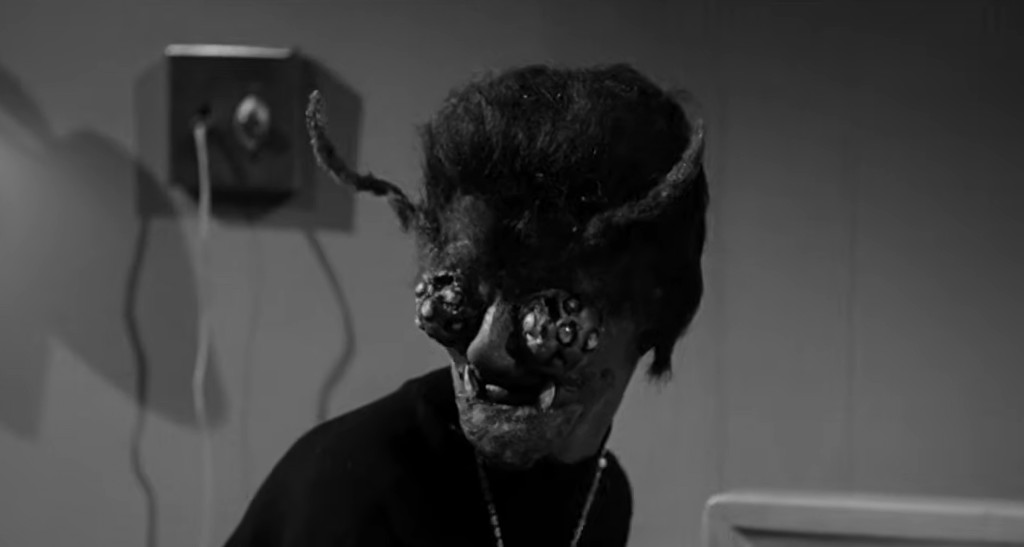
The ageing CEO of a cosmetics company uses an untested wasp serum to rejuvenate herself. Although lauded for its feminist subtext and Susan Cabot’s performance, this 1959 effort suffers from a flat script and is not one of Roger Corman’s best. 4/10
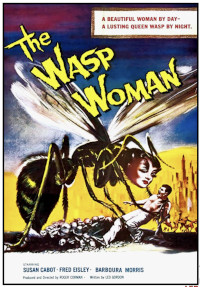
The Wasp Woman. 1959, USA. Produced & directed by Roger Corman. Written by Leo Gordon & Kinta Zertuche. Starring: Susan Cabot, Barboura Morris, Anthony Eisley, Michael Mark. IMDb: 4.8/10. Letterboxd: 2.6/10. Rotten Tomatoes: 4.2/10. Metacritic: N/A.
Things are looking bleak for Janice Starlin’s (Susan Cabot) cosmetics company. Sales have plummeted since Starlin, founder and CEO of the company, removed herself as the face of the outfit’s advertising campaigns. After 16 years, age is finally catching up with her – or at least with her face. The company now faces an unsolvable conundrum: it needs Janice’s face to survive, but Janice’s face is getting too old to sell rejuvenating face cream with. But then: a miracle. On Starlin’s doorstep appears a man, Dr. Eric Zinthrop (Michael Mark) with bombshell: a rejuvenating serum that actually works.
The Wasp Woman is a cult B-movie from 1959, produced and directed by Roger Corman in order to cash in on the success of Fox’ The Fly (1958, review). It had a budget of $50,000, which was low even for Corman, and it was the first movie he did for his newly founded production and distribution company, The Filmgroup.
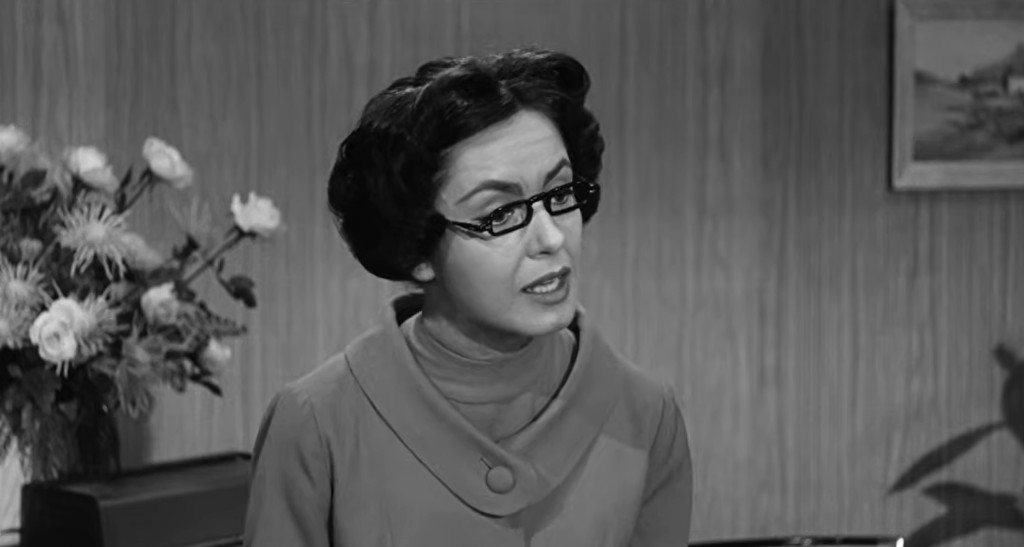
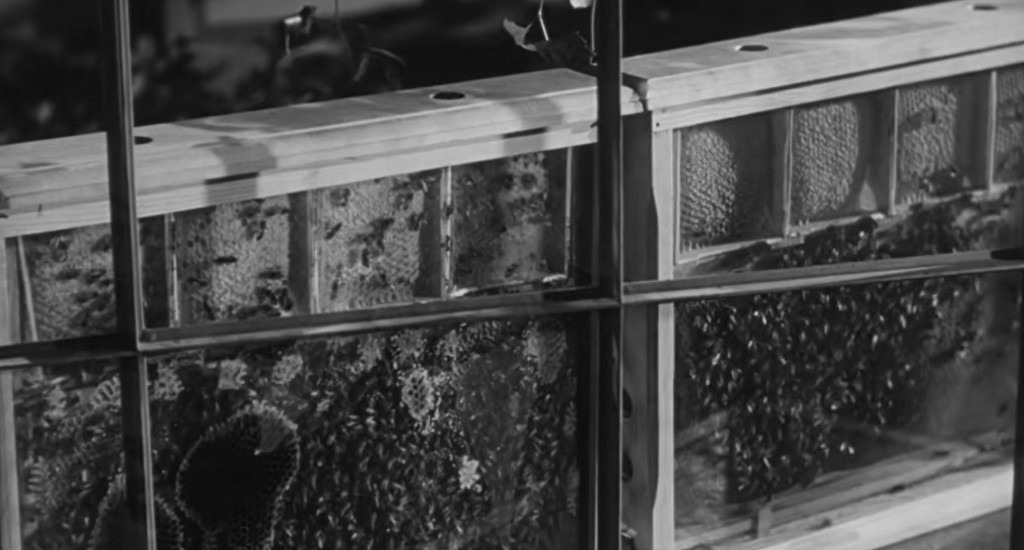
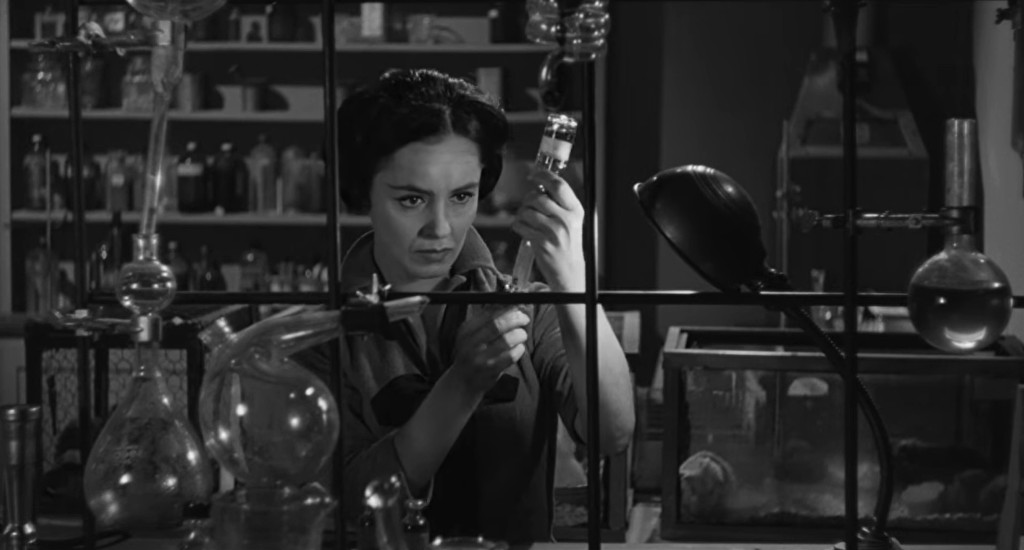
Dr. Zinthrop has developed a serum derived from royal jelly from wasp queens, and demonstrates it for Starlin on both guinea pigs and a cat, who grow visibly younger in just a few minutes. Zinthrop is hired on the spot, and gets a private lab, and all Starlin’s employees are kept out of the loop in fear of leaks.
Janice Starlin realises that she must get some of Zinthrops treatment, and get it fast, to avoid her company’s bankruptcy. Zinthrop reluctantly agrees to let her be the first human guinea pig. Even so, progress is too slow for Starlin, and she starts sneaking into the lab to give herself a boost with a specially concentrated version of the wasp serum. And, well, given the title of the film, you can probably work the rest out for yourselves.
Background & Analysis
Roger Corman entered the movie business in 1953–54 as a screenwriter, producer and director with the idea that you didn’t need a $200,000 budget to make a B-movie: $20,000 would be enough if you cut all “unnecessary” overhead costs, wrote an economical script and planned your shooting schedule and locations to be as cheap and easily accessible as possible. Corman also though union rules were just a load of unnecessary red tape, and regularly broke them whenever he could so without getting into trouble (which he frequently got into). Very quickly, the maverick studio ARC, which switfly chaned its name to AIP, or American International Pictures, picked up Corman to lead the charge in their intent at making cheap exploitation pictures for the growing teen market. Corman had numerous successes with AIP between 1956 and 1959, but since he was working for a studio, his control over the pictures he made wasn’t as big as he wanted, and of course, he wasn’t allowed to keep all the profits. So in 1959 he founded The Filmgroup, his own production and distribution company, which gave him full freedom as a producer and a director, and, naturally, to enjoy all the fruits of his labour. The Wasp Woman was the company’s first film, and it actually only had time to release four films before new union laws regarding residuals for actors and writers were implemented in January, 1960. But that is a story for a later film.
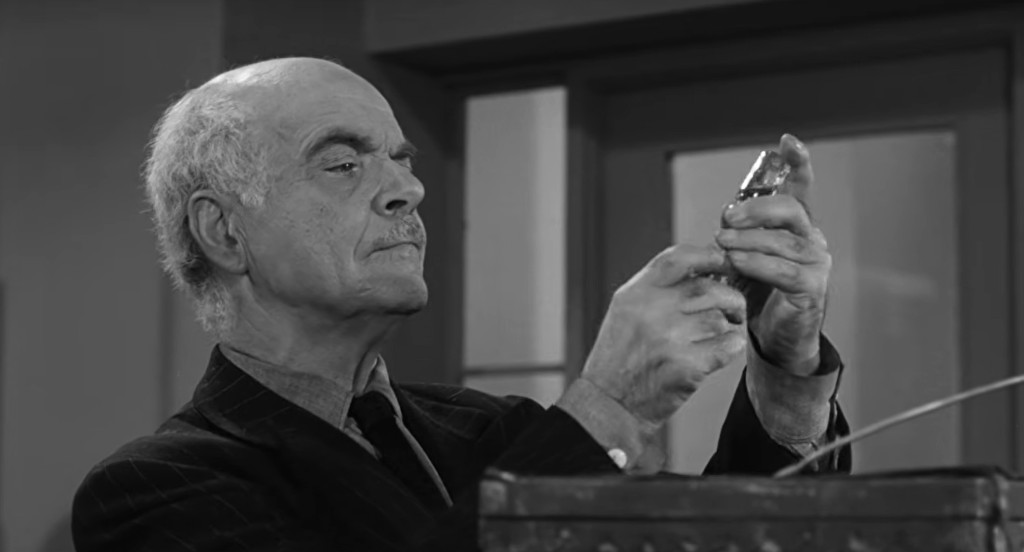
With his newfound freedom, Corman went back to his roots and decided to shoot a film on a mere $50 000, half of the budget of most of his AIP pictures. To accomplish this, he decided to shoot entirely on a single, rented sound stage at Amco studios, where he built the premises of the cosmetics company as a continuous set, so the crew never had to leave and set up somehere else.
The Wasp Woman was a way to cash in on the success of Fox’s The Fly (1958, review). With the gender swap, Corman created one of the few female movie monsters of the 50s, which in and of it self makes this film interesting. There was a rage in the beauty industry at the time for royal jelly, the secretion produced by worker bees to feed the larvae and the adult queen. Roger Corman says that in the discussions around the script, he suggested using wasps instead of bees, as he thought a wasp woman would seem more dangerous than a bee woman. Further, the movie latched on to the popularity of business dramas, often portraying the ruthlessness of the 50s business world and the dehumanising effects of boardroom machinations. One inspiration seems to have been Douglas Sirk’s 1959 remake of Imitation of Life, where a fierce career woman and actress climbs to the top of Hollywood. In an article in Bright Lights Film Journal, Catherine Essinger writes that Corman originally envisioned Janice Starlin as an actress, but decided he “wanted to show that ageism impacts women in other fields, as well”. A story credit is given to Kinta Zertuche, a regular on Corman’s crew, who was more often in charge of production and administration tasks. As Corman would often give out credits to friends for little contribution, there’s been discussion on how much she actually wrote. The script itself was penned by Leo Gordon, who was primarily a bit-part on-screen brawler, but who also wrote around 20 movies and close to 80 TV episodes. He also wote Attack of the Giant Leeches for Corman the same year.
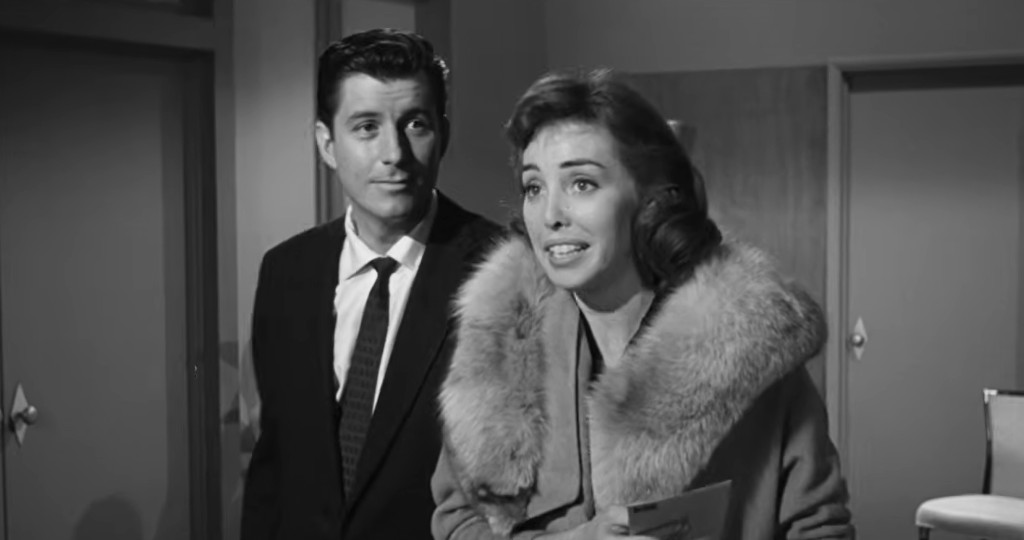
The script has some merit in that it blends two genres that usually didn’t coincide too often: the corporate drama and the mad scientist/monster movie. It also has a theme that has been considered by some as proto-feminist. It makes use of the old theme of external beauty hiding a monster beneath – perhaps most famously formulated by Oscar Wilde in his 1890 novel A Picture of Dorian Gray.
As usual, then, Roger Corman starts off with a promising setup. This is the kind of premise that a writer like Charles Griffith could have had a field day with. Alas, Leo Gordon is no Charles Griffith. The Wasp Woman suffers from the same problem as many of the monster movies of the era: an inability by the screenwriters to create an interesting drama involving other characters than the victim/monster itself. This is Janice Starlin’s film – it is her story from start to finish. Of course, this is the way it should be. The problem is that all of the other characters are simply bystanders. Even Dr. Zinthrop is simply a genie in a bottle who grants Starlin her wish, and has no other story function. In my plot synopsis I didn’t even mention the romantic/hero couple of the movie, Bill (Anthony Eisley) and Mary (Barboura Morris), simply because they are of no consequence to the plot. They do get suspicious of what Zinthrop and Starlin are doing, they do spy and scheme, and they do try to stage an intervention. The problem is that none of this spying and scheming has any impact on the plot. They aren’t able to prevent Starlin from turning into a wasp woman, from killing or from dying in the end. Even if they do manage to suss out what’s going on, they are unable to use their knowledge for anything useful. The script would have worked better if the story was told from Bill’s and Mary’s point of view, and would have let the audience find out what was going on alongside them. As it is written, the audience is in on the secret from the beginning, and only wait for Bill and Mary to catch on – with little payout in the end.
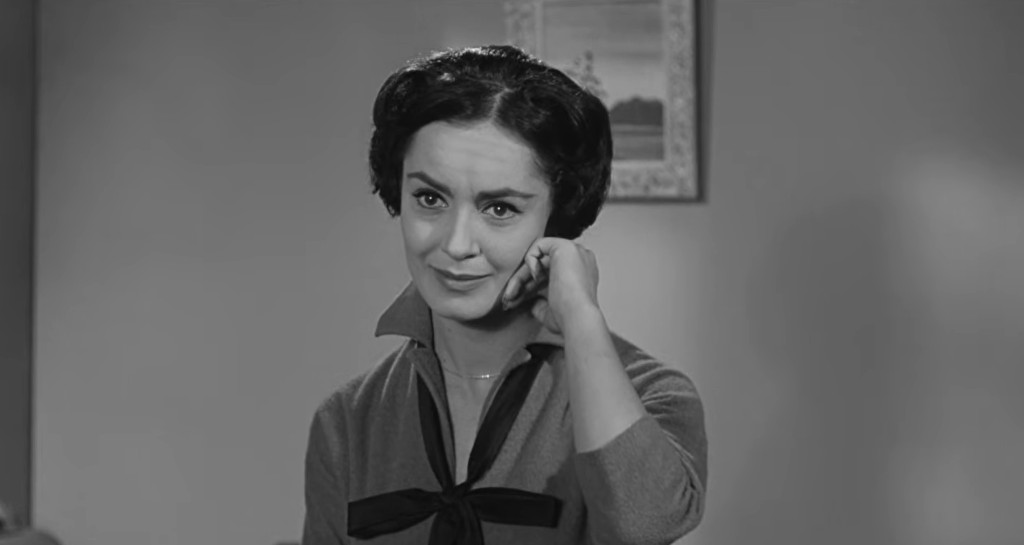
Compounding this problem is that there isn’t a single character in the film that Starlin interacts with on an emotional level. There’s no-one pushing her to rejuvenate herself, there’s no-one threatening to dethrone her as the CEO of the company. There’s no love interest she needs to look younger for, no parent she wants to appease. No revenge plot and no drama that drives her to her decision. She simply wants to save her company from failing. And while it is refreshing once in a while to not get clichéd backstories to motivate monster action, this complete lack of personal drama and relations makes this an oddly flat and hollow film.
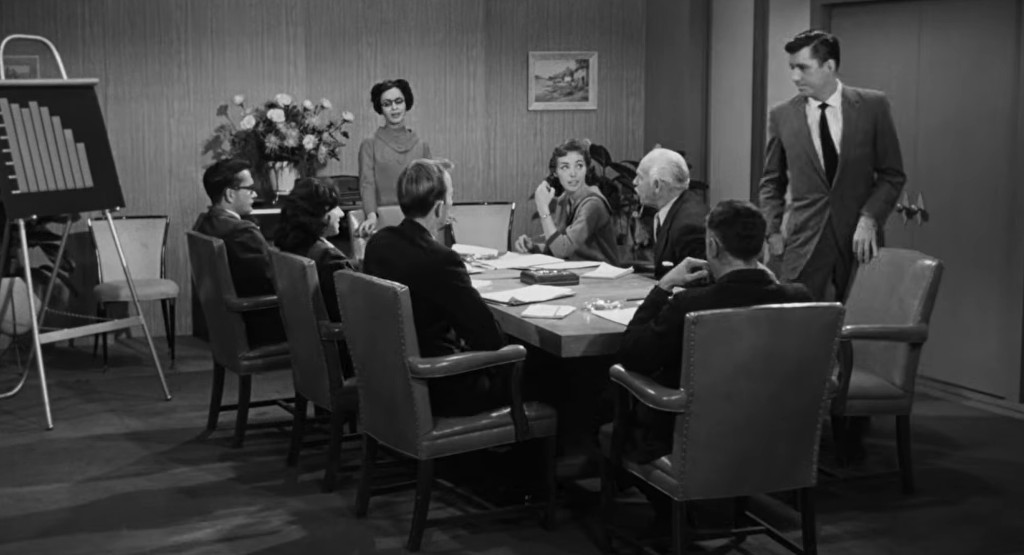
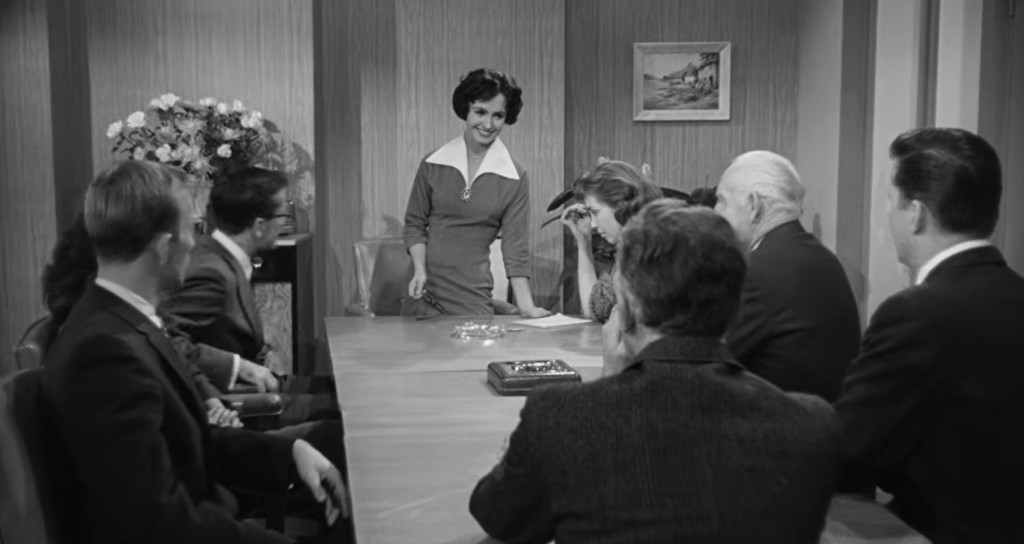
As usual, Roger Corman directs a film that is better than any film made on $50 000 in Hollywood has any right to be. He gets multiple angles and setups for every dialogue scene and carefully avoids the classic B-movie setup of having a group of people just standing in a row reading dialogue. The cast is well rehearsed, and Corman uses the movement of people on screen to create dynamic and bring energy to a film that is really only shot in four rooms. Harry Neumann isn’t Corman’s best cinematographer, but the Hollywood veteran knows how to light and set up a shot. The film does resemble a TV show more than a horror movie, but I suppose this was an aesthetic that Corman went for, to contrast with the horror content. Editor Carlo Lodato overuses static heads as inserted reaction shots, especially in board meeting scenes, but other than that, the editing is fine.
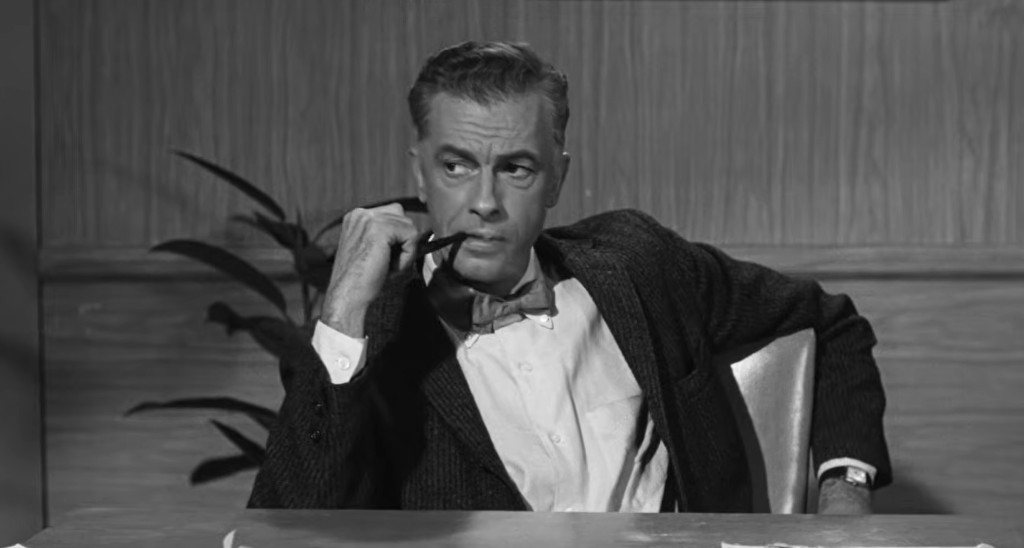
The real reason to watch The Wasp Woman is Susan Cabot, who shows that she would have deserved a better career in the movies that the one she had. In an interview with Tom Weaver, she named the role of Janice Starlin as her favourite one, as it presented her with an acting challenge, having to, essentially, play the same character at age 40 and age 22 (she was herself 32 at the time). She does perhaps play the role of 40-year-old Starlin a bit older than needed, but this is only natural, as she needed to create a clear contrast to her younger self. She tells Weaver she tried to give the illusion of age through playing her 40-year-old self stiffer, with more control and less emotion, and her younger self as a bubblier, happier, more energetic woman. The older woman is a bit caricatured, but overall, Cabot absolutely shines in this role, clearly revelling in a character presenting her with far more challenge that most leading lady B-movie roles. Even as the somewhat embittered and caricatured older woman, Cabot gives the role nuances and charm, with a kindness and warmth cracking through the tough businesswoman facade she has created for herself. This notion is also referenced in the screenplay, going a tad deeper that many other screenplays of its ilk. The screenplay is also refreshingly free from reactionary notions regarding a woman’s place as the head of a major company. As the younger Janice, Cabot creates a very likeable and endearing character, engaging the audience when the script doesn’t.
The Wasp Woman has repeatedly been applauded for its feminist themes. The film highlights women’s struggles in their professional lives with ageism, beauty standards and cultural norms. Some, like Susan Doll at Turner Classic Movies, questions how deliberately political Corman’s intentions are. But others have noted that Corman’s “lighthearted feminism” is too prevalent in his early movies to be a coincidence. Catherine Essinger writes in Bright Lights Film Journal: “While his progressive agenda is evident in many ways, nowhere is it more striking than in his depictions of women. Even current Hollywood films generally fail to measure up to the bar Corman set in presenting women in the 1950s. The characters he developed with his writers are consistently and unapologetically ambitious, sexual, intelligent, and adventurous. They are not restricted in their dress, profession, or behavior, unless it is done to show the gross unfairness of that restriction. This advanced presentation of women and equality is by no means common to independent movies or the teen market. One cannot fully appreciate the feminism of Roger Corman until his work is compared to that of his contemporaries. It is not present in the works of Jerry Warren, Bert I. Gordon, Robert L. Lippert, and the many other producers and directors who worked on what became known as ‘Poverty Row.’ In those films, women were nearly always decorative and in need of rescuing. Their behavior and professions were bifurcated into two distinctly separate camps of good girls and tramps if they were young enough or kindly mothers and evil crones if they had entered middle age. In Corman’s films, on the other hand, women’s options were myriad.”
Corman was known for pushing his cast and crew to their limits, underpaying them and having them do things that that were not quite in line with work safety regulations. But as many former Corman actors have attested, he never discriminated on basis of gender. Female actors did just as much of their own stunts as male actors, and were just as badly treated as the men in the cast – which can be seen as progressive in a sort of backhanded way. Corman also famously had a lot of women working in production capacities. This was most prominent in his company New Line Cinema in the 70s and 80s, when he employed producers like his wife Julie Corman, Gale Ann Hurd and Mary Ann Fisher, but it was also true of his 50s era, to a lesser degree. Case in point is Kinta Zertuche, who has a story credit for The Wasp Woman, but who was also a key player for Corman as location scout and script supervisor on several films.
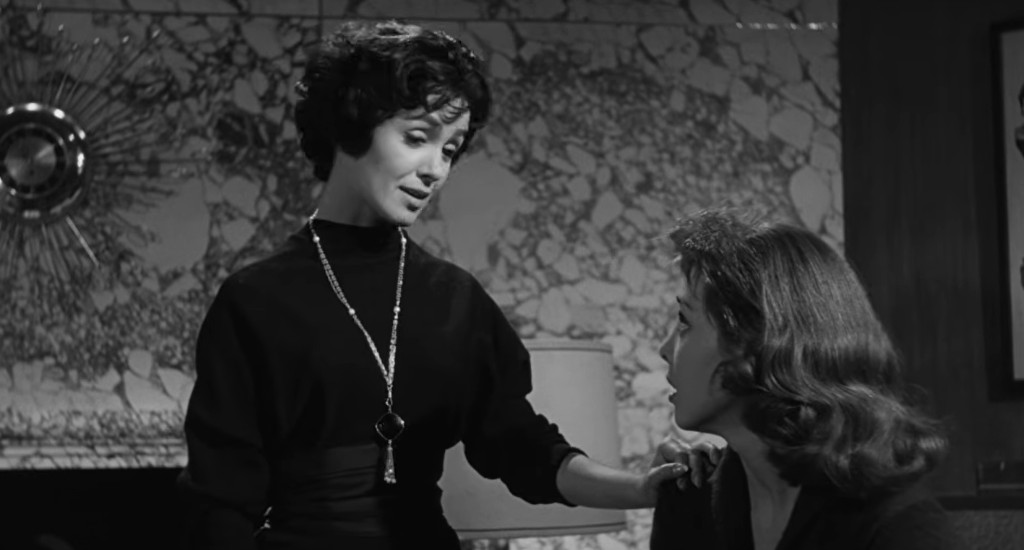
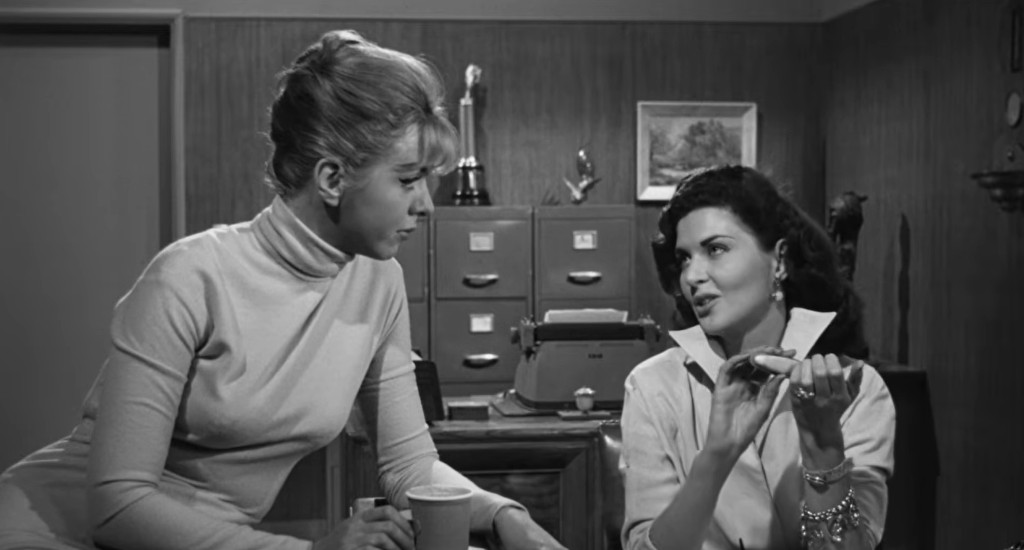
All the most interesting characters in The Wasp Woman are female. It is a shame that more isn’t done with Barboura Morris‘ role as Mary, because she is pretty well written for what material she does have, and she is played exceptionally well by Morris – another actress that deserved a better career. One of the highlights of the film are the two bitching secretaries that sit around a desk and gossip in a beautifully blasé manner. The roles are played to perfection by Carolyn Hughes and Lynn Cartwright. Again, it’s a shame that their characters are completely redundant.
Even mad scientist Dr. Zinthrop doesn’t make much of a dent in the story, other than providing Janice with her serum. The character as such is under-written, and one can’t blame veteran character actor Michael Mark for being forgettable in the role. A former Universal stock actor, we have seen Mark here on this blog before, most noteably as the nosy friend of the villain in Bert I. Gordon’s Attack of the Puppet People (1958, review). Anthony Eisley in the male “lead” and Frank Gerstle in a larger supporting role are both fine, but forgettable.
The music in The Wasp Woman is often oddly mismatched with the visuals on display. For example, a tense, suspenseful moment may be coupled with lighthearted jazz music, while a board meeting has a background of droning, brooding strings. This is no fault of composer Fred Katz, who is credited for the score, as he didn’t write a single lote for The Wasp Woman. Instead, he wrote the score for Corman’s previous film, the horror comedy Bucket of Blood (1959). Corman owned the rights the the score of that particular movie, which meant that he, penny-pinching as always, started to recycle it. Eventually, what has become known as the “Corman theme” would feature in no less than seven films.
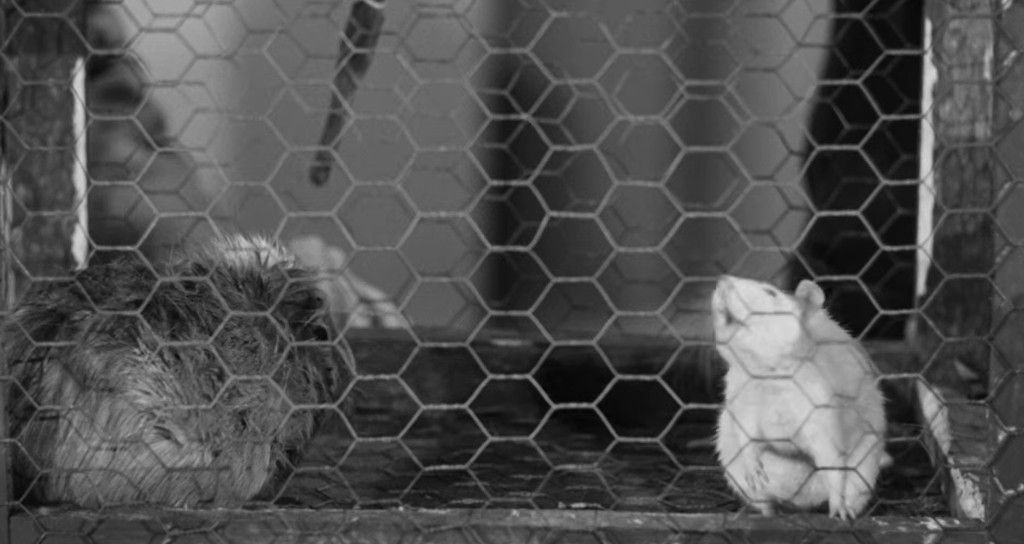
The “special effects” in The Wasp Woman are few and far between. We get the first one when Dr. Zinthrop demonstrates his youth serum to Janice by injecting his guinea pigs. Through the magic of editing, we see the guinea pigs decrease significantly in size. If we look closer, we can also see that they have turned into rats.
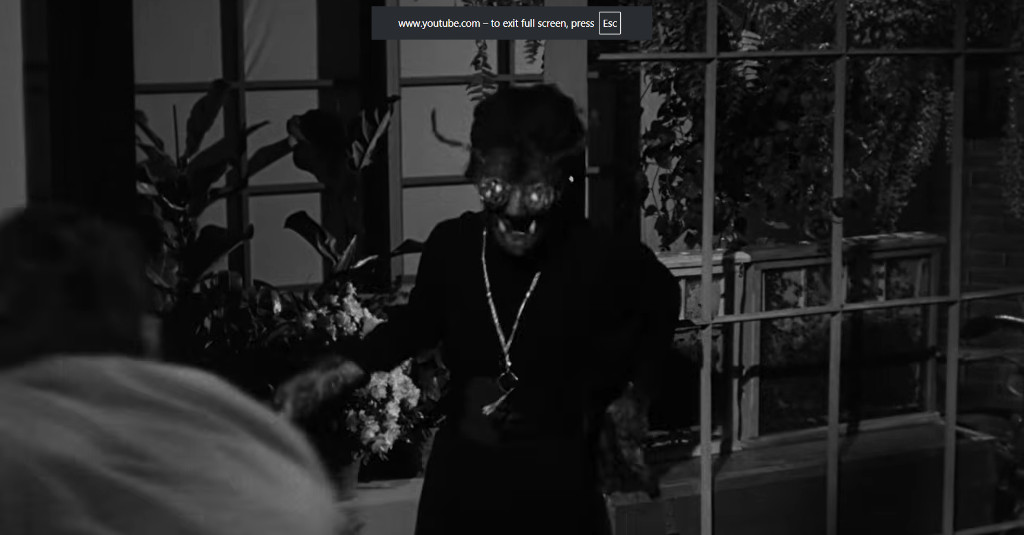
The main effect in the film is the face mask used by Susan Cabot when she turns into a wasp woman. There’s no intermediate stages or transformation scenes, Janice simply changes from one to the other off-screen. The mask was an unarticulated, rudimentary job made with papier mache and rubber and stopped just short of Cabot’s jawline. It’s approriately grotesque but not very good. However, in an interview Cabot gives the impression of having approached the task seriously and enthusiastically, trying to make the most out of her monster turn. In order to bring realism to the idea that a small woman could take down large men, she suggested to Corman that the wasp woman needed to move with great speed, taking her victims by surprise. Because the effects budget was what it was, Cabot created gore by filling her mouth with chocolate sauce and squirting it out through a slit in her mask whenever she attacked the necks of her victims, simulating blood.
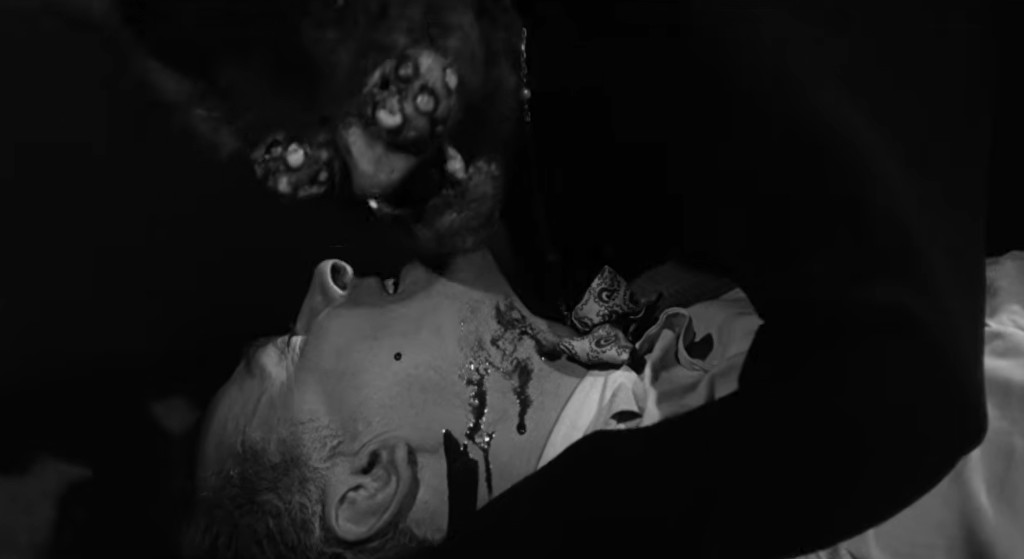
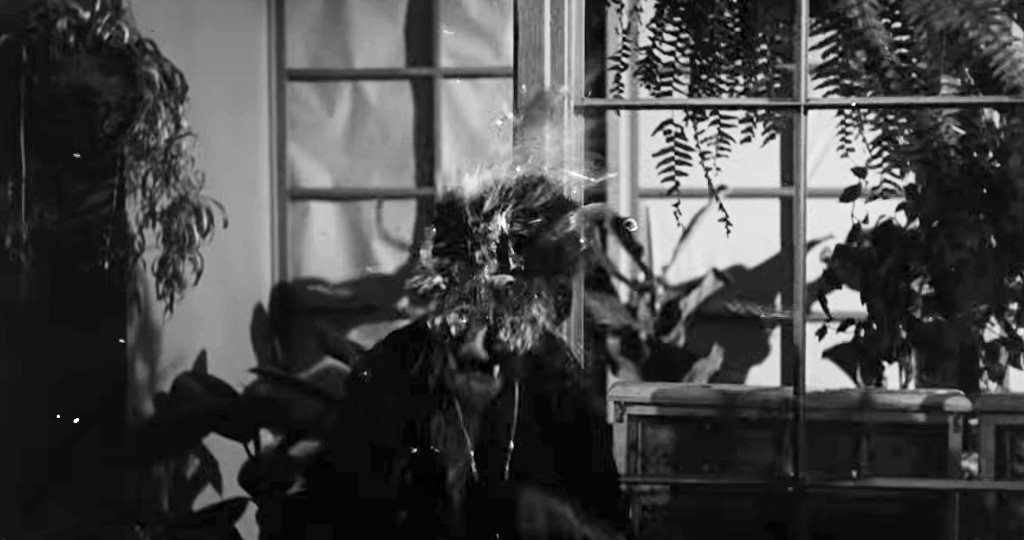
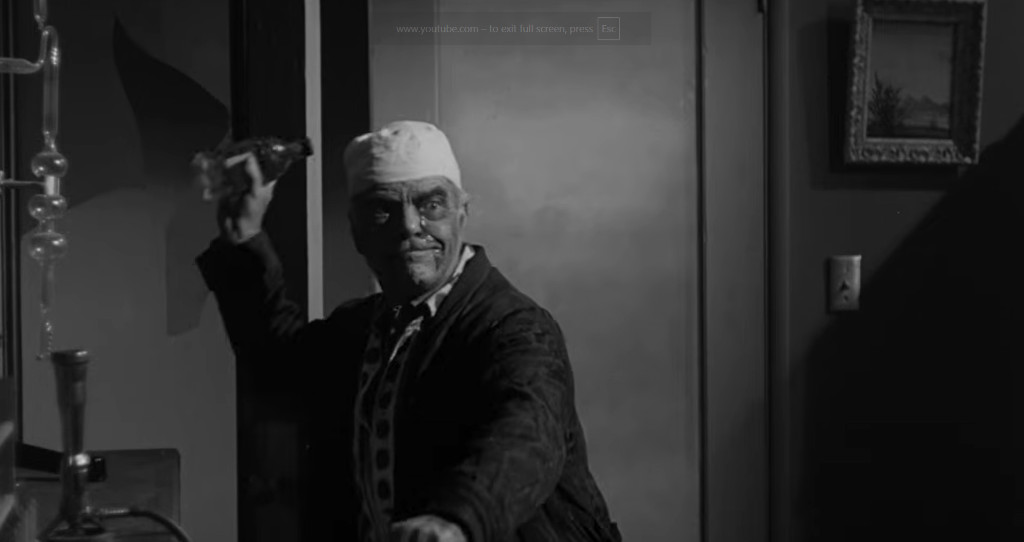
As was the norm in Corman’s movies, Cabot did all her own stunts, including having a bottle thrown at her, and crashing through a window. In her Weaver interview, she says that the final climactic scene in which all this is to happen, someone was supposed to throw an empty breakaway bottle at her, supposedly filled with acid, but that someone had instead filled it with water. When it hit her face it hurt tremendously, and when the wasp woman puts her hands in front of her face in shock, it was a genuine reaction. Because it was all in one take, she couldn’t stop, but instead had to stoop down, out of frame, in order to let the effects team pour smoke liquid on her face, portraying the acid burning her. But they went overboard and the smoke got into the mask and almost suffocated her. Because there was no hole for the mouth, she couldn’t alert the effects team, but after she clawed a while at the mask, they got the idea and splashed water on her.
Again, as always with Roger Corman, a monster movie isn’t just a monster movie. At least on the level of an idea, there’s an attempt to explore a theme beyond just having a monster rampaging on the screen. These ideas were seldom developed into genuinely satisfying scripts, but I suppose that just reflected the time and money available. But in the case of films like It Conquered the World (1956, review) and Not of This Earth (1957, review), Corman and screenwriter Charles Griffith were able to make some actual quality films shine through all the low-budget hokum, and it always started with Corman’s initial idea of something greater than just a cash-grab monster flick (even if that was what they were). Other times that one idea just wasn’t developed enough, and this was often the case when it wasn’t Griffith sitting behind the typewriter. This includes The Wasp Woman, and no matter how much you applaud the film’s progressive intentions, the fact is that this script just isn’t where it’s at.
There’s little scientific accuracy in these proceedings, starting with the fact that wasps don’t produce royal jelly and guinea pigs shrinking and becoming rats. But that’s just to he expected in a low-budget monster movie from the era. It adheres well enough to its own internal logic, which is never very well formulated anyway, that it gets away with its inconsistencies.
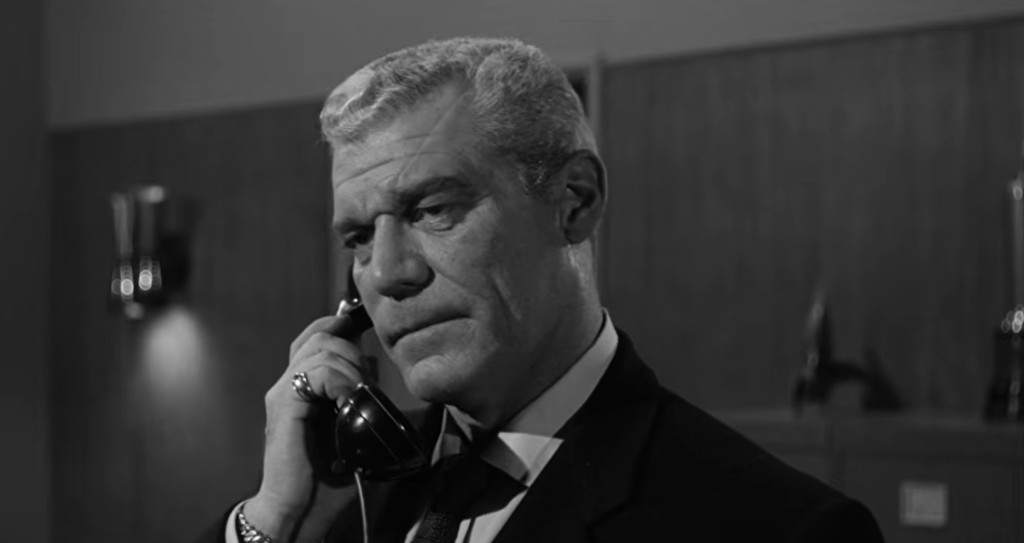
Corman, despite his reputation for making shoestring-budgeted cash grabs, knew how shoot films, had a fantastic eye for blocking, setups and for creating dynamic even when he held a single shot for much longer than mainstream directors would dare. He surrounded himself with seasoned and capable cinematographers and editors. Corman was also well aware that directing actors were not his forte, and some would say he didn’t direct them at all, which is why he always tried to hire actors that he felt could do their jobs without much guidance. As a result, almost all of Corman’s 50s films are technically solid entertainment, if nothing more. Such is the case with The Wasp Woman, even if it isn’t among his best output of the decade.
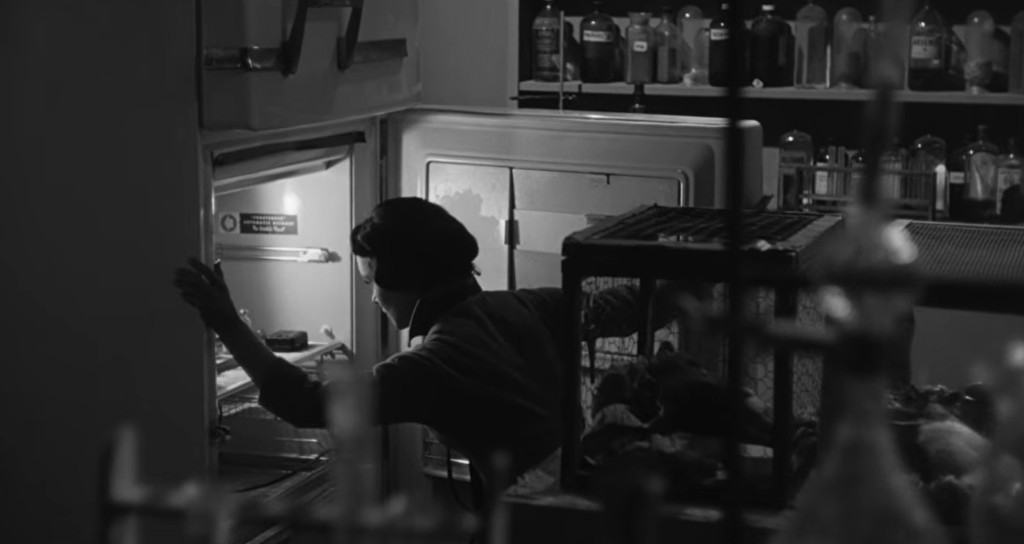
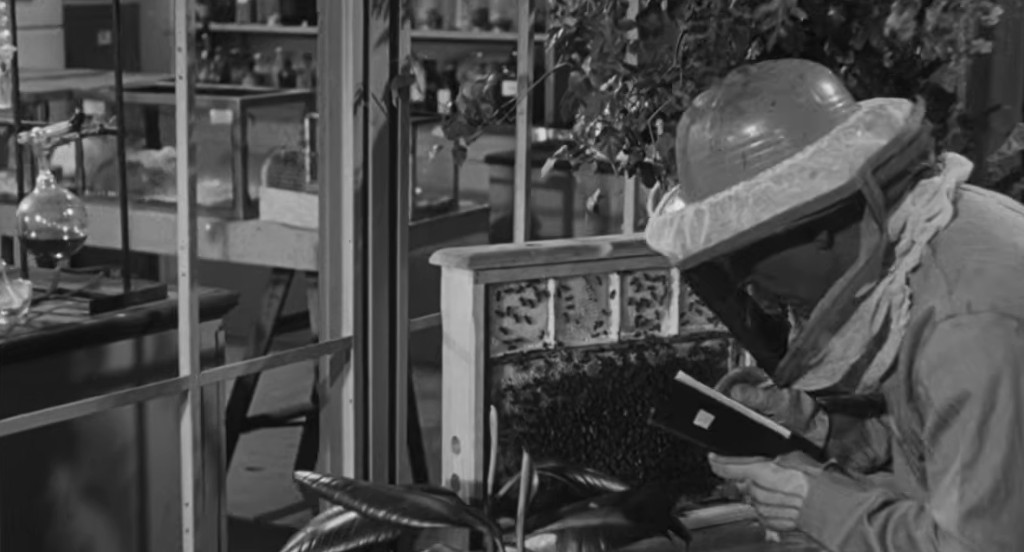
Extra footage was added for the film’s 1963 theatrical release, as the original length of just over 60 minutes was too short for TV’s movie slots. Corman hired Jack Hill to direct 12 minutes of extra footage, primarily a prologue showing Dr. Zinthrop being fired from his job at a bee farm, and people driving around searching for him later in the film. Michael Mark returned to reprise his role as Dr. Zinthrop. Aron Kincaid was hired to play a beekeeper who interacts with Mark in the prologue. Because Mark returned to the role, many later critics have missed the fact that his prologue was added for TV. The TV version seems to be the one most readily available on YouTube, so if you want to watch the original theatrical film without the extra padding, you should seek out the 61-minute version.
Reception & Legacy
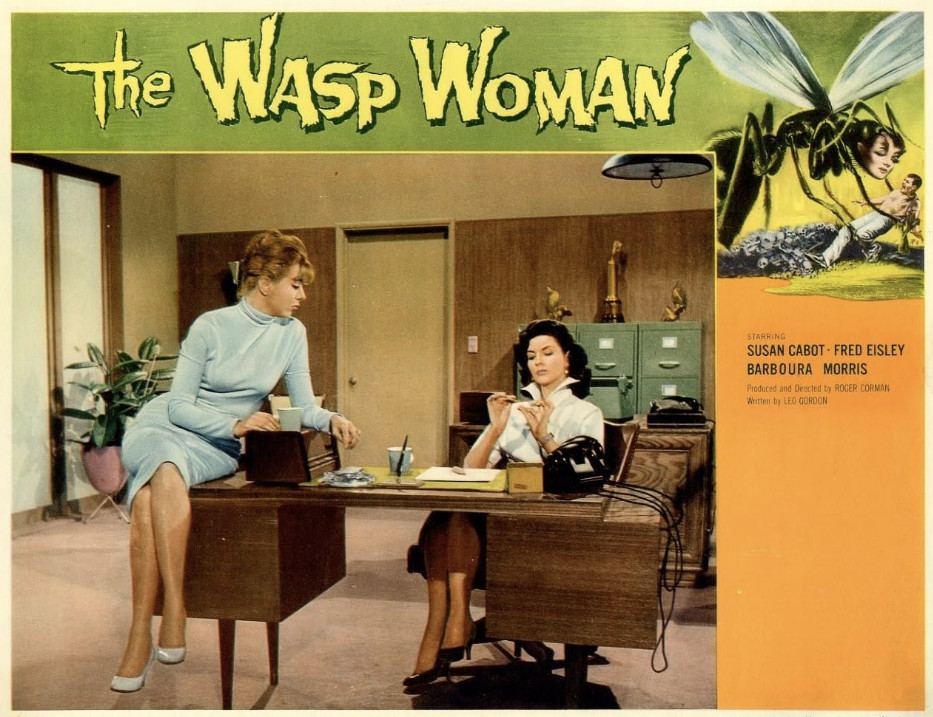
The Wasp Woman was released in cinemas in the US in October, 1959, on a double bill with Beast from Haunted Cave, produced by Gene Corman. It also had a theatrical release in the UK in 1959, but not in the rest of Europe. It played in selected Latin American countries in 1962, including Mexico and Peru. The film was not a major success, but grossed $100,000 in its initial theatrical run, leaving Roger Corman with a modest profit.
The movie received moderate to negative reviews. The Los Angeles Times critic Charles Stinson was fairly forgiving, noting it “was not nearly as bad as we had expected”, and wrote that with a little more time and effort it could have been a rather good science fiction picture: “Leo Gordon’s script is smoothly urbane with nice surprising little touches of humor here and there. Slim, intense, brunette Susan Cabot, who always impresses, does excellently nuanced work as the neurotic lady with the worries and the wasps”. The New York Times was less enthusiastic, calling it “a mess of a movie” plagued by “too much talk and not enough action”.
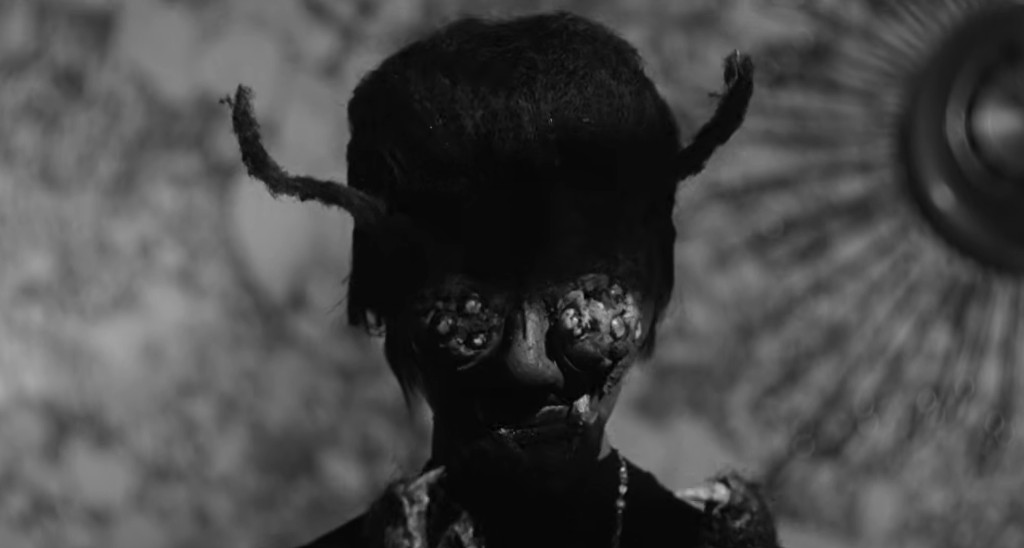
Variety‘s Peter Glenville, or “Glen” said the movie “has interesting points and looks polished but it’s pretty slow and not very frightening”, but nevertheless gave it a moderately positive review: “Daniel Haller makes the sets look smart and […] Corman has them nicely peopled with probable characters who act fairly convincingly. […] Susan Cabot is very good as are Fred Eisley and Barboura Morris […] Gordon’s screenplay does provide them all with a believable humanity, which is a pleasant relief.” However, Glenville criticised the film’s abrupt and unresolved finale, which in his opinion “just seems senseless”.
The Motion Picture Exhibitor opined The Wasp Woman was “nicely made and enacted satisfactorily”, but panned Susan Cabot’s monster makeup. On a more negative note, the Hollywood Reporter called it a “dull and predictable” sci-fi thriller with “little to offer”.
British Monthly Film Bulletin gave the movie its lowest III-rating, writing: “The earlier, more realistic scenes of this modest shocker, which is slow to get going, are pretty unlikely, while the later bouts of fantasy are ludicrous rather than terrifying. Routine stuff, in fact, for determined enthusiasts only.”
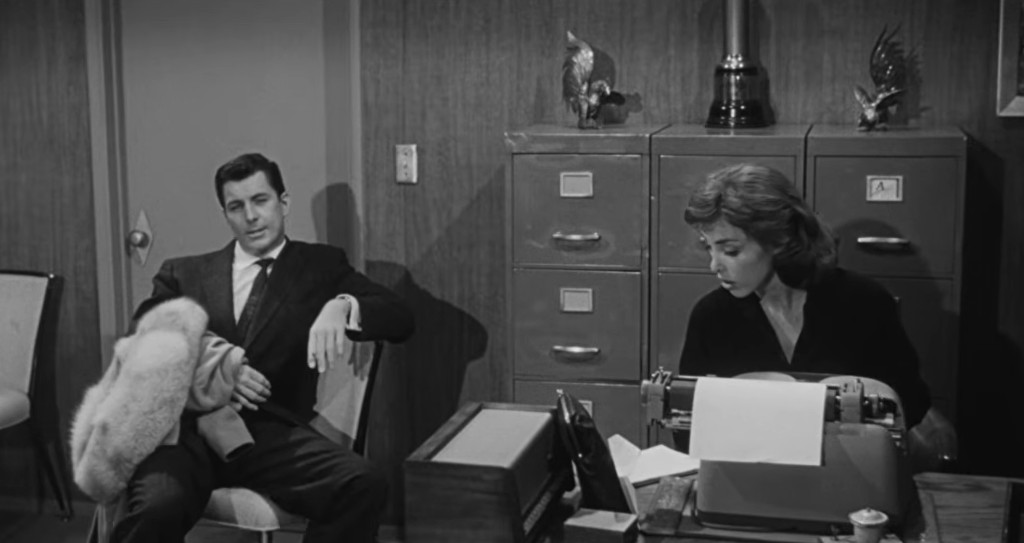
Leonard Maltin in his Classic Movie Guide (1969) gave the film a positive 2.5/4 rating, while TV Guide only awarded it 1/4 stars. Phil Hardy in his Encyclopedia of Science Fiction Movies (1984) called it a minor entry from Corman, but singled out Cabot’s performance; “Gordon’s script is intelligent but Corman fails to make the wasp woman’s activities sufficiently frightening”.
Jeffrey Anderson at the San Francisco Examiner (2003), was rather positive, writing: “One of Corman’s better films, aided by Susan Cabot’s sharp presence”.
Bill Warren, author of the definitive bible of 50s science fiction movies, Keep Watching the Skies! (2009) was not a fan. Warren reiterates many of the flaws I have pointed out in my own review, such as the wealth of under-developed characters and the forced and pointless romantic subplot, as well as a lack of general drama. However, like most critics, Warren praises Susan Cabot’s performance. He concludes: “Even in his worst films, and this is one of them, Roger Corman’s intelligence (if not his taste) shows through in places. It’s a silly, bad movie, but not stupid, just foolishly conceived”.
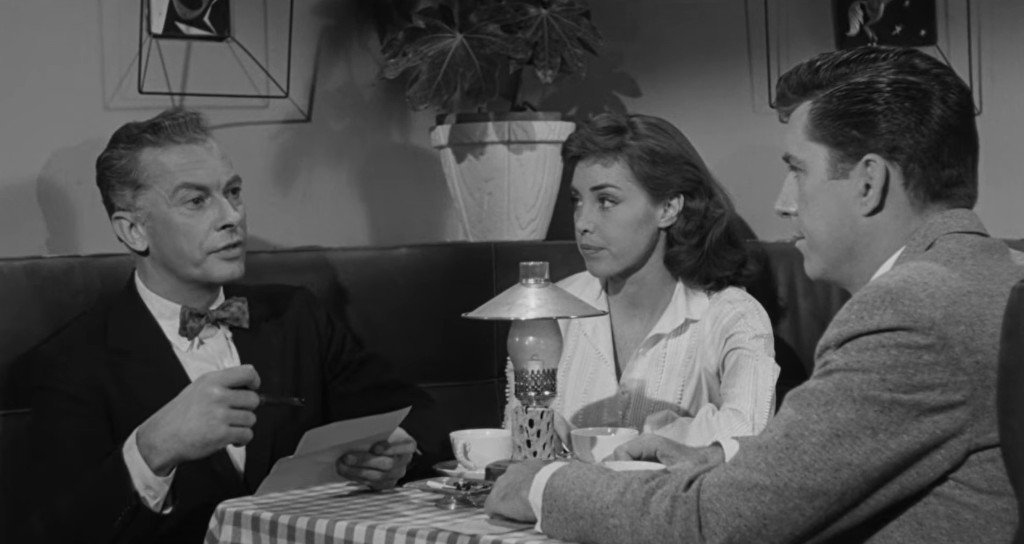
Several later scholars and critics have delved into the underlying feminism of The Wasp Woman. In her 2011 article for TCM Susan Doll writes: “However low budget and campy the special effects are in The Wasp Woman, Corman is applauded by many contemporary scholars for his modern female characters whose misadventures often reflect feminist issues or concerns. Just how deliberately political his intentions were is open to debate, but The Wasp Woman does feature some interesting themes and subtexts regarding powerful women in modern society.”
At SpliceToday, Emina Melonic concludes her review: “The Wasp Woman is one of those sci-fi gems, a beautiful artifact unearthed, a complete surprise for any Roger Corman fan, and a cinephile. It crosses the boundary of the usual B-movie genre into something far more profound—an exploration of human need for power, the inevitable hubris, and the seductive dance of the feminine and masculine.”
If you want to delve deeper into Corman’s percieved feminism, I can recommend Helen Cox’s article at the The Joan Wilder Substack, or for a really long read, the afore-mentioned article by Catherine Essinger at Bright Lights Film Journal.
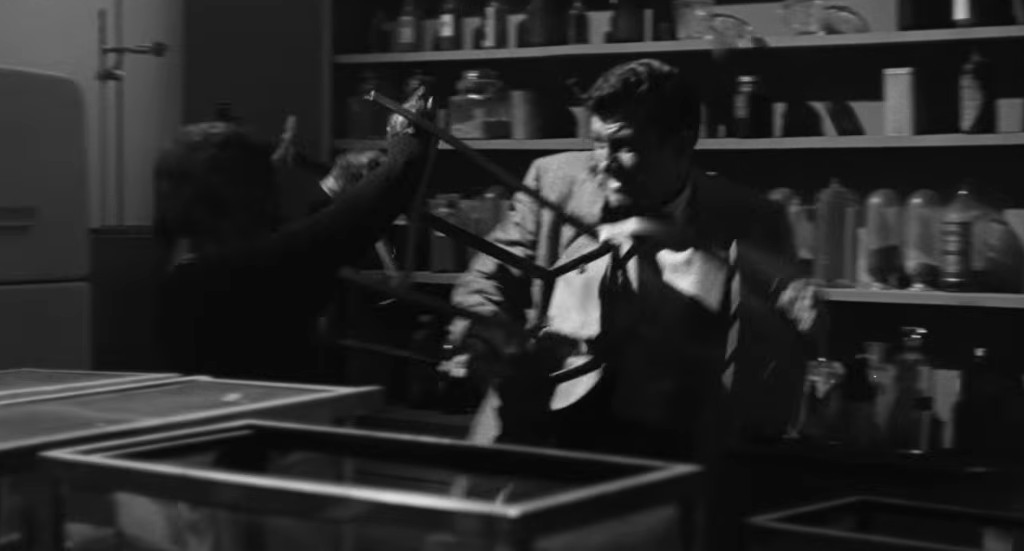
Finally, as not to get too wrapped up in the idea of Roger Corman as a male Simone de Beauvoir, M. Fenn takes him down a few pegs: “Corman is not a friend of women. Most of his films are standard exploitation fodder that become only more grotesque as censorship loosened up in the ’60s and ’70s. I just find it interesting that in the 1950s, when most B movies would have only one token woman (if any) whose sole mission was to decorate the set and give the men someone to rescue, Corman’s women had their own motivation (connected to men as it might be) and were the directors of their own stories. He earns a couple points for that. Plus Beverly Garland and Susan Cabot!“
The Wasp Woman was, as mentioned, released for TV by Allied Artists in 1963, as a package dubbed “The Exploitables”, and it fell into the public domain in 1988. As a result, it was inevitably picked up by MST3K in its 5th season.
The movie has also had numerous home video releases, most notably a 2018 Shout! Factory remaster and filmmaker Fred Olen Ray’s 2024 Retromedia release, where it is coupled with its original theatrical double bill, Beast from Haunted Cave. And, as mentioned, it is freely available on YouTube and several other platforms.
The Wasp Woman was remade for TV, again with Corman as producer, in 1995, by legendady schlock director Jim Wynorski. The premise is essentially the same, although the movie features a good deal more nudity, and even wasp breasts. Janice Starlin was played by Jennifer Rubin, best known for leads in The Crush (1993) and Screamers (1995).
Apart from the official remake, critics point out at least two films that lift enough material and themes from The Wasp Woman to qualify at least as knowing homages. The first one was Universal’s The Leech Woman, released only a year after Corman’s film, in 1960, and the second the 1988 low-budget effort The Rejuvenator/Rejuvenatrix. A direct descendant of The Wasp Woman is the best picture Oscar nominee The Substance, directed by Coralie Fargeat and starring Demi Moore as an ageing actress taking a black market rejuvenation serum, with dire consequences.
Cast & Crew
Much has been written, by me as well, about the life and career of Roger Corman. If you want a rather comprehensive write-up about his background and filmmaking philosopy, please check out my review of It Conquered the World (1956). By 1959 Corman was entering the end of his early phase as a super-low-budget director and producer within the Hollywood system. With the creation of his own company, he started working independently, and focused more of his energy on importing European films, both high- and low-brow to the US, as well as distributing other independent filmmakers’ movies. As a director and producer, he moved on to slightly more prestige products, such as his 60s Edgar Allan Poe cycle, and later a string of groundbreaking motorcycle movies. In the 70s, with his New World Pictures, Corman launched the international success of Filipino low-budget action and exploitation movies with producer Cirio H. Santiago and Eddie Romero, popularising, among other things, the women-in-prison subgenre. On US soil, he produced a number of cult classics, including Death Race 2000 (1975), Deathsport (1978) and Piranha (1978). For more on Corman’s later career and his huge influence on other filmmakers, see my obituary tucked into my review of War of the Satellites (1958).
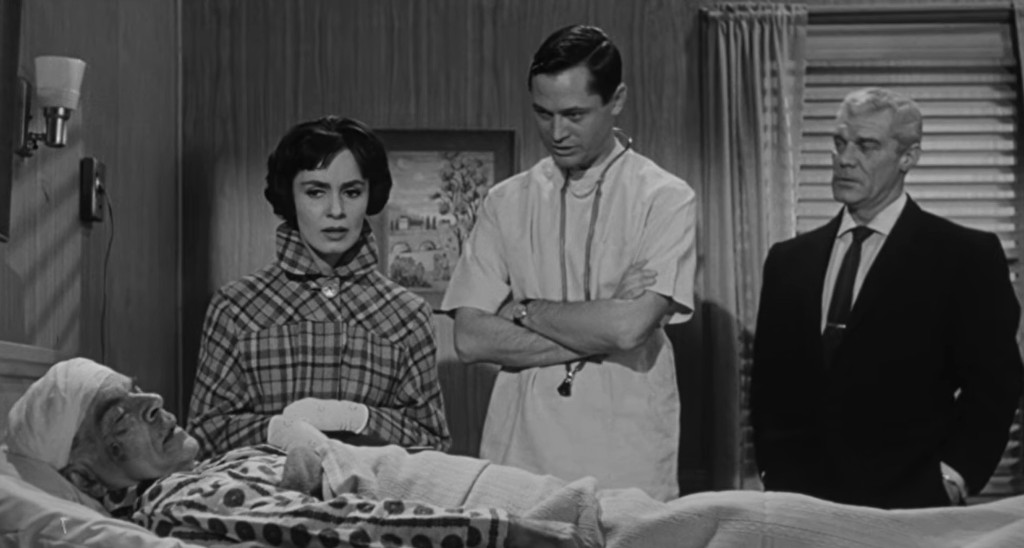
Screenwriter Leo Gordon is an interesting character. Born in 1922 into poverty in Brooklyn, he spent four years in prison for armed robbery before taking advantage of thr GI bill in the 40s to turn his life around. Enrolling in the American Academy of Dramatic Arts, he discovered his talent for acting and writing.
A contradiction of sorts, Gordon was one of the most fearsome brawlers on screen, famously in films like Hondo (1953) and McLintock (1963), both times opposite John Wayne, as well as the prison riot leader in Don Siegel’s Riot in Cell Block 11. After filming, Siegel commented that Gordon was the scariest man he ever met. As an actor, he appeared in over 200 films or TV productions between 1951 and 1994. At the same time Gordon became known as a witty and sharp screenwriter for both film and TV. He wrote around 20 films and worked on over a dozen TV shows. He was a frequent Corman collaborator, writing, among others, The Cry Baby Killer (1958), The Wasp Woman (1959) and Attack of the Giant Leeches (1959), and co-wrote Tower of London (1962) and The Terror (1963). He wrote the big-budget war movie Tobruk (1967), produced by Gene Corman for Roger’s company. He also regularly wrote for successful western shows, and in the 70s penned over 20 episodes of the science fiction series Adam-12.
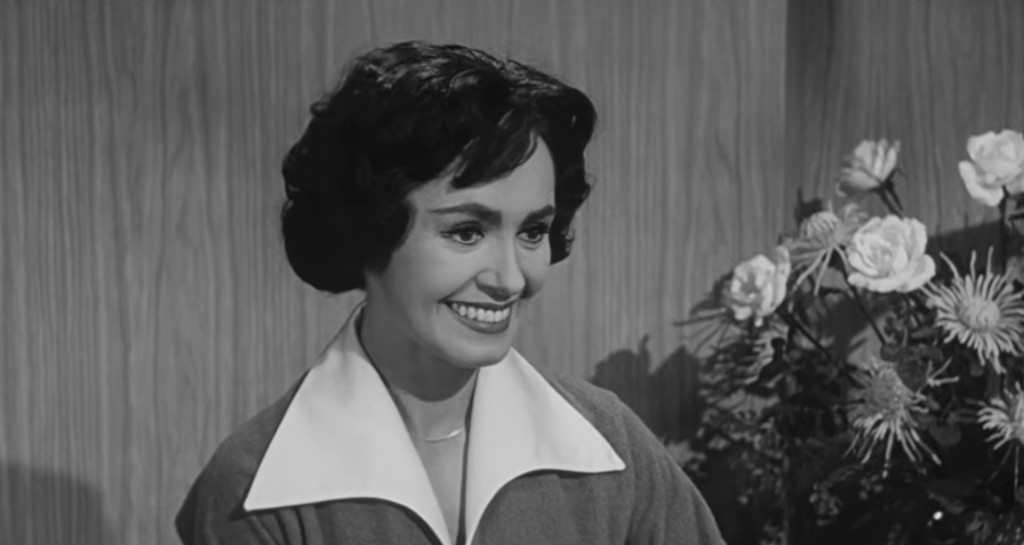
Bostonite Susan Cabot moved to New York at an early age, where she contemplated a career in art, music or acting, but ultimately caught the acting bug in 1947. Her movie career proper started in 1950, and she was quickly signed on to Universal. However, after four years of playing bland roles in westerns and Arabian Night films, she quit to pursue her interests in the arts. Roger Corman lured her back to the movies with leads in his vice films Carnival Rock (1957) and Sorority Girl (1957). She eventually made four more films for Corman: The Saga of the Viking Women and Their Voyage to the Waters of the Great Sea Serpent (1957), War of the Satellites (1958, review), Machine-Gun Kelly (1958) and The Wasp Woman (1959). However, as Corman moved much of his productions abroad, and then left much of his old crew when moving on to his Poe cycle, Cabot retired for good. In a later interview with Tom Weaver, Cabot says that while the films were low-budget, she appreciated the characters that Corman gave her the opportunity to play: “He gave me a lot of freedom, and also a chance to play a lot of parts that Universal would never have given me. Oddball, wacko parts, like the very disturbed girl in Sorority Girl and things like that. I had a chance to do moments and scenes that I didn’t get before.” She also named Janice Starlin in The Wasp Woman as her favourite role, because of the acting challenge it presented.
Tragically, Cabot was killed in her bed by her own son in 1986, apparently with a background in mental illness and substance abuse on both sides.
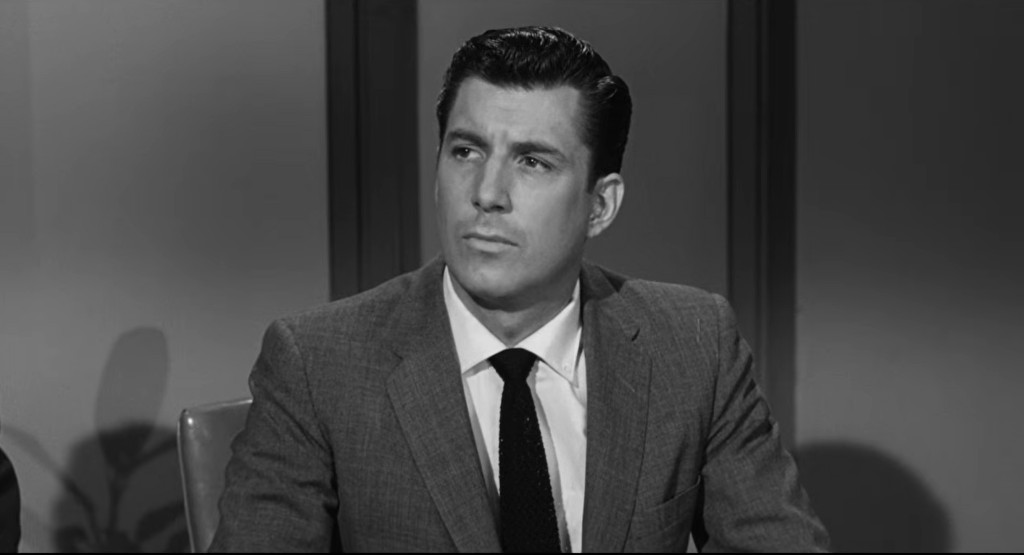
Romantic lead in The Wasp Woman, Anthony Eisley, studied drama in Miami, eventually ended up on Broadway, and from there to television. The Wasp Woman was his first “lead”, if you can call it that, but later that sane year he got his real breakthrough when he was cast in the lead of the TV show Hawaiian Eye, which he played in 98 episodes between 1959 and 1962.
In the following three decades, Eisley struggled to get good roles, but kept himself afloat by accepting leads in low-budget schlock movies and TV guest spots. When things got lean, he doubled as a stunt driver. He did a number of comedies, including Frankie and Johnny (1966), starring Elvis, but is primarily remembered for appearing in around a dozen low-budget horror and science fiction movies. These include leads or co-leads in Antonio Margheriti’s Lightning Bolt / Operazione Goldman (1966), The Navy vs. the Night Monsters (1966), with Mamie Van Doren, Journey to the Center of Time (1967), The ill-regarded The Mighty Gorga (1969), Dracula vs. Frankenstein (1971), with J. Carroll Naish & Lon Chaney Jr, The Doll Squad (1973), the infamously bad Monster (1980), with James Mitchum & John Carradine, and had a minor role in Deep Space (1988), a film stacked with B-movie and character actor stars like Charles Napier, Ann Turkel, Bo Svensson and Julie Newmar.
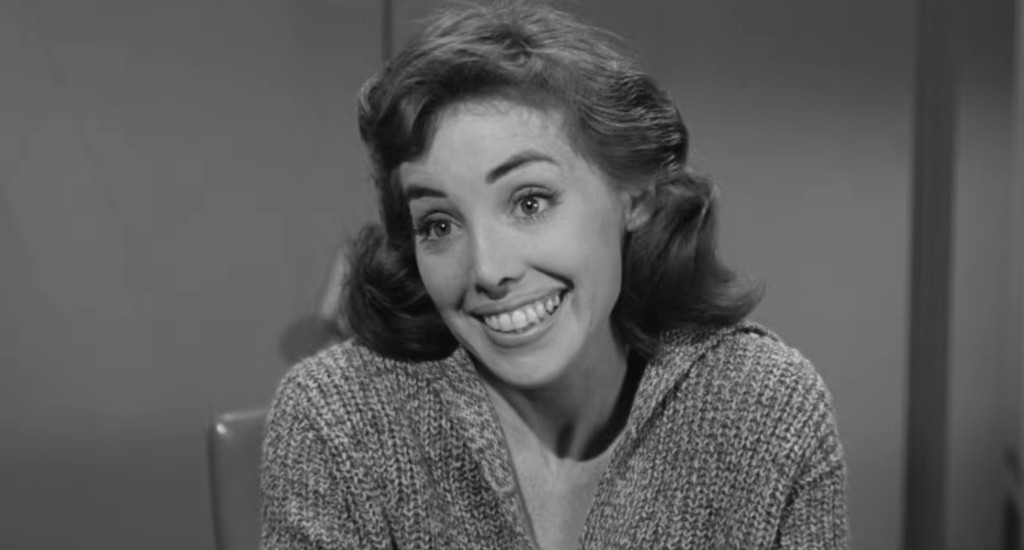
Barboura Morris, playing Anthony Eisley’s romantic interest in The Wasp Woman, was part of Roger Corman’s stock company during the 50s and 60s, appearing in 16 Corman movies altogether. Only her final film in 1970 was not a Corman film. After receiving much criticism for not directing his actors, Corman took acting lessons in 1957, and one of his classmates was Barboura Morris. He immediately cast her, along with fellow cormanites Dick Miller and Susan Cabot, in a co-lead in Sorority Girl (1957). From hereon she had leads or co-leads in The Wasp Woman (1959), A Bucket of Blood (1959), Atlas (1961), (1966) and The Trip (1969). Along with a handful of other actors, she was one of the few that crossed over from Corman’s 50s movies to his 60s Poe and moyorcycle films, along with Jack Nicholson, Jonathan Haze, Leo Gordon, Dick Miller, Bruno VeSota and a few others. Like Susan Cabot, Marboura Morris was a talented actress that could well have had a more significant career.
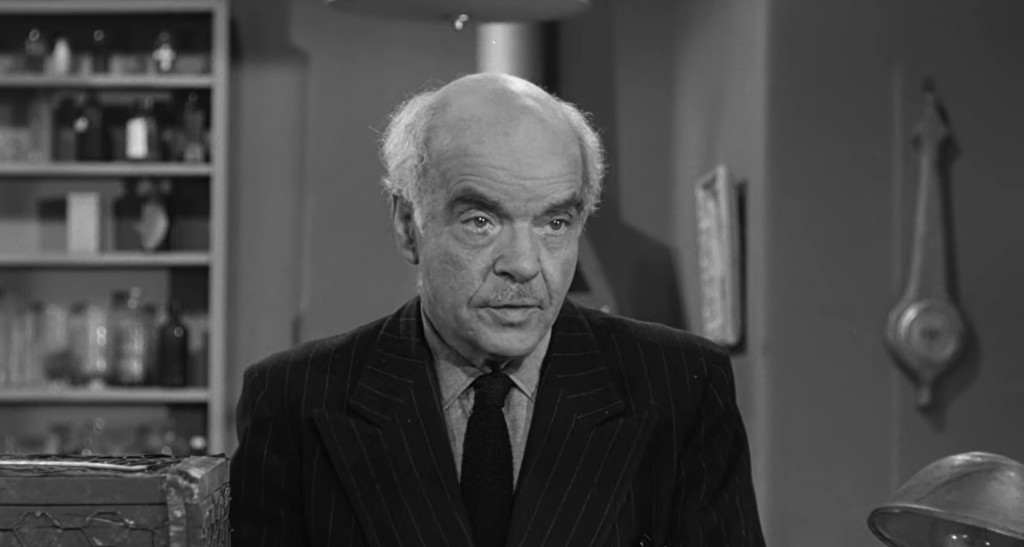
Michael Mark was long a Universal stock actor, and appeared in four original Universal Frankenstein films: Frankenstein (1931, review), Son of Frankenstein (1939, review), The Ghost of Frankenstein (1942, review) and House of Frankenstein (1944, review). The first film had him doing one of the film’s pivotal – albeit small – role, as the father of little Maria, who is accidentally drowned by the Frankenstein creature played by Boris Karloff. The image of Mark carrying the limp Maria in his arms, demanding vengeance, is film legend. He also had barely noticeable parts in sci-fis like 6 Hours to Live (1932) and Return of the Fly. Then suddenly he was upgraded to substantial supporting roles in Attack of the Puppet People (1958, review), and The Wasp Woman 1959).
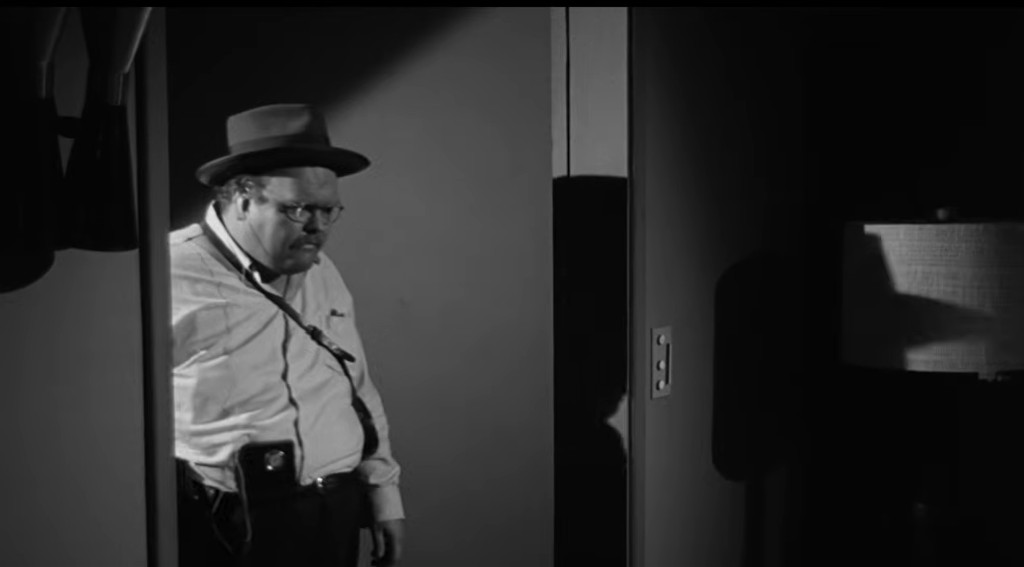
The Wasp Woman features Bruno VeSota in a small comedic role as a nightwatchman. Bruno VeSota was a character actor and director. Born in 1922 in Chigaco, VeSota started his career on stage, where he both acted and directed, as well as in radio. He made his television debut in 1945, directing over 2000 live brodacast episodes and acted in over 200. He moved to Hollywood in 1952, where he started appearing in bit parts in movies and guest spots in TV. His association with Roger Corman started as early as 1954, when he appeared in the Corman-scripted The Fast and the Furious, and quickly became a Corman staple, appearing in 15 films produced and/or directed by the low-budget specialist. He directed three low-budget films: The Female Jungle (1955), The Brain Eaters (1958, review) and Invasion of the Star Creatures (1962). He also appeared in and co-directed the experimental horror film Dementia in 1955. Rotund and expressive VeSota was known for his colourful bit-parts, and sometimes got more substantial roles in Roger Corman’s movies. VeSota was also a colourful character in real life, and enjoyed a good prank. A less-than-healthy lifestyle led to his death of a heart attack in 1976, only 54 years old.
Bruno VeSota appeared in War of the Satellites (1958, review), The Wasp Woman (1959), Attack of the Giant Leeches (1959), Invasion of the Star Creatures (1962), Creature of the Walking Dead (1965), The Wild World of Batwoman (1966) and The Million Dollar Duck (1971). He directed the SF movies The Brain Eaters (1958) and Invasion of the Star Creatures (1962).
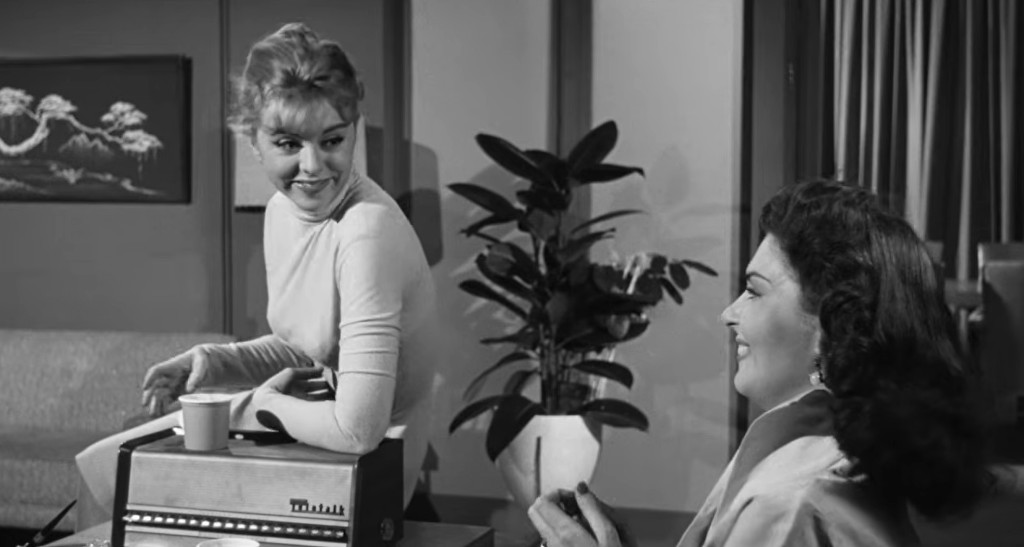
Lynn Cartwright plays one of the hilariously blasé secretaries. Cartwright was an acting student in New York when she met ex-con and actor Leo Gordon. The couple moved to Hollywood when Gordon found an acting agent, and soon started getting good roles as heavies in movies. However, Cartwright struggled on in minor TV guest spots. Her career took a slight turn upwards when Gordon started working as a screenwriter, and was able to get her cast in small and sometimes even larger supporting roles in his films. But even in low-budget movies like Queen of Outer Space (1958, review) and The Wasp Woman (1959), she was tucked away in minor parts. She got few roles in the 60s, but made a “comeback” in the 70s, working primarily in super-low-budget sexploitation movies, and she became a favourite of cult director Rod Amateau – although she still appeared mostly in roles such as “assistant”, “secretary”, and the like. She appeared as just such an assistant in the infamously bad Robert Vaughn no-budget schlocker The Lucifer Complex (1978) and in another small role in Amateau’s baffling Nazi comedy Son of Hitler (1979), with Peter Cushing. In 1992 she got a surprisingly dignified ending to her career, as she appeared in the final scene of the baseball classic A League of Their Own – as the older version of Geena Davis‘ character, a role she got for her uncanny resemblence to Davis.
Art director Daniel Haller is interesting for horror and science fiction fans as a director and producer of several H.P. Lovecraft movies. Haller became a Roger Corman staple as an art director in 1958, thanks to his ingenious low-budget work with War of the Satellites (1958), and one of the few crewmembers that followed Corman into his Edgar Allan Poe years. He also worked as co-procucer (with Corman in the wings) on AIP’s Jules Verne adaptation Master of the World (1961) and H.P. Lovecraft adaptation War-Gods of the Deep (1965). In 1965 he also transitioned into direction, and directed a good handful of B-movies for AIP, including another Lovecraft movie, Die, Monster, Die! (1965), Corman’s biker movies Devils Angels (1967) and The Wild Racers (1968), as well as the quite successful Lovecraft apaptation The Dunwhich Horror (1970). Haller switched exclusively to TV direction in 1970, and did so with some success. Among others, he directed episodes of Charlie’s Angels, Battlestar Galactica, Buck Rogers in the 25th Century, Knight Rider and Airwolf. He also directed the feature film Buck Rogers in the 25th Century (1979). He retired in 1988, and as of writing in January, 2025, is still in the books of the living.
Jack Hill, who directed the additional TV footage for The Wasp Woman, went on to become a merited producer, writer and director of B-movies himself. Hill worked as a co-writer and/or co-director on three Mexican/US science fiction movies: Fear Chamber (1968), Incredible Invasion (1971) and The Bees (1978), the first to starring Boris Karloff in his final years. However, he is best known as a seminal blaxploitation director, working with Pam Grier on films like The Big Doll House (1971), Coffy (1973) and Foxy Brown (1974). He also co-wrote Francis Ford Coppola’s Dementia 13 (1963), wrote and directed Spider Baby or, the Maddest Story Ever Told, and co-wrote Death Ship (1980).
The unsung queen of fashion of Roger Corman’s movies and AIP:s 60s beach party output was Marjorie Corso. Born in 1912, she worked as a supervising costumer, costume designer and in the wardrobe department from at least the late 40s to 1970. IMDb gives her around 90 movie credits, but a Los Angeles Times obituary claims she worked as supervisining costumer on over 200 films, mostly uncredited. Among her undredited work are listed such prestige major studio pictures as Forever Amber (1947) and All About Eve (1950). However, in 1955 she switched from the anonymous work at major studios to the challenging but probably creatively rewarding task of outfitting cowboys, teenage delinquents, saloon girls, soldiers, aliens, astronauts, scientists and monsters in low-budget movies. She worked on Corman’s directorial debut Five Guns West in 1955, and stayed on for almost all of his movies between 1955 and 1963, including all of his Edgar Allan Poe cycle. In the mid-60s Corso continued to work for AIP, in particular for their beach party cycle. On the side, she also did projects for other independent producers and Poverty Row studios. All in all, she has wardrobe or costume designer credits for 20 science fiction movies, from It Conquered the World (1956, review) to Space Probe Taurus (1965). Anecdotes tell that on the Poe movies Corso was required to work closely with production designer Daniel Haller in order to realise Corman’s specific colour palette, even though she sometimes had to raid and repurpose previous films’ wardrobe in order to get the costumes done on time and within budget. On AIP’s beach party films, her budget wasn’t enough to outfit all the extras, so she told the extras to bring three or four summer outfits, and then mixed and matched in order to get the right teenage beach party feel for the movies.
Another Corman and AIP veteran was props master Karl Brainard whose career trajectory closely resembled that of Corso’s.
The Wasp Woman (1959) was the final film of cinematographer veteran Harry Neumann. Neumann had been around since the very dawn of Hollywood, with his first official credit dating back to 1918. Never a first choice for A-list movies, he nonetheless made himself a name as a quick and reliable DP. Along the way he shot around 350 movies, which equals out at around 12 movies a year. While he worked in neary every conceivable genre, the vast majority of his pictures were spent on the windswept plains and ranches outside Los Angeles filming westerns with stars like John Wayne, Hoot Gibson, Bob Steele and Johnny Mack Brown. Neumann spent much of the 40s and 50s making B-movies for Monogram/Allied Artists, including the sci-fi movies The Ape (1940, review), Flight to Mars (1951, review), The Maze (1953, review) and The Bowery Boys Meet the Monsters (1954). The Wasp Woman was his only film for Roger Corman – since it was Allied Artists that distributed Corman’s Flimgroup pictures, they provided the director with the DP.
Both Roger and Gene Corman have cameos in the movie, ever pinching pennies.
Janne Wass
The Wasp Woman. 1959, USA. Directed by Roger Corman. Written by Leo Gordon & Kinta Zertuche. Starring: Susan Cabot, Barboura Morris, Anthony Eisley, Michael Mark, William Roerick, Carolyn Hughes, Lynn Cartwright, Frank Gerstle, Roy Gordon, Bruno VeSota. Music: Fred Katz (stock). Cinematography: Harry Neumann. Editing: Carlo Lodato. Art direction: Daniel Haller. Makeup: Grant Keate. Sound: Philip Mitchell. Wardrobe: Marjorie Corso. Produced by Roger Corman for Filmgroup & Allied Artists.


Leave a Reply