
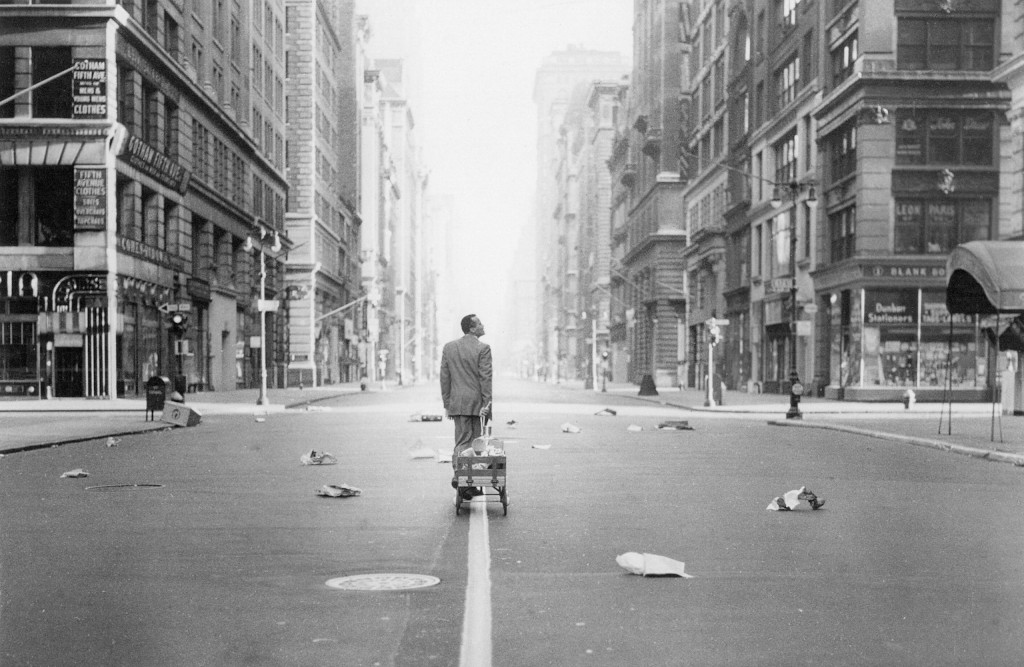
A black man and a white woman seem to be the only survivors of a nuclear apocalypse. This 1959 cult classic starring Harry Belafonte explores racial tensions against a sci-fi backdrop. It is as well known for its stunning footage of an empty New York as it is for bungling its thematic core in a cop-out ending. 6/10
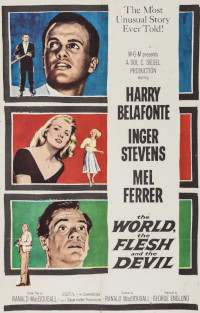
The World, the Flesh and the Devil. 1959, USA. Directed by Ranald MacDougall. Written by Frederick Reyher, Ranald MacDougall. Inspired by novel by M.P. Shiel. Starring: Harry Belafonte, Ingrid Stevens, Mel Ferrer. Produced by Harry Belafonte, George Englund. IMDb: 6.8/10. Letterboxd. 3.6/10. Rotten Tomatoes: N/A. Metacritic: N/A.
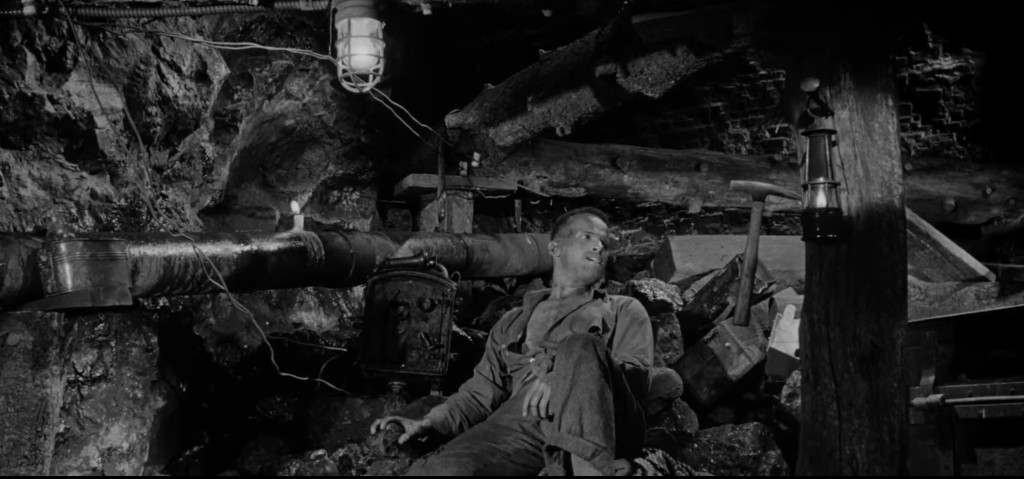
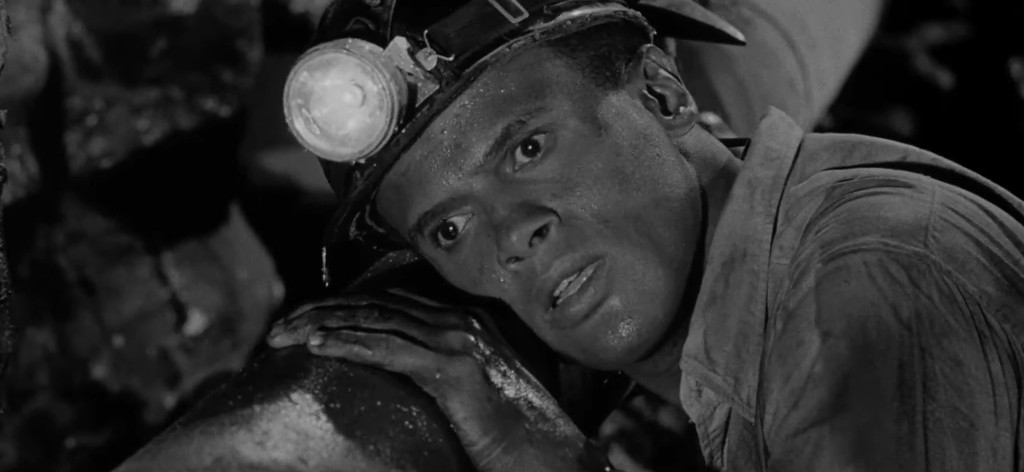
When an explosion goes off on the surface above him, Pennsylvanian mine inspector Ralph (Harry Belafonte) gets trapped alone deep underground. His colleague tapping on a pipe above, as well as the sounds of the men trying to dig him out are his only contact with the outside world. But six days in, all sound have stopped. Ralph manages to dig himself out the rest of the way, but when he reaches the surface, he is met with a ghost town. All humans have simply vanished. Newspaper headlines speak of nuclear war, evacuations and the end of the world.
The World, the Flesh and the Devil from 1959 is something as rare as a big-budget science fiction movie from the late 50s. Written and directed by Ranald MacDougall and co-produced by Harry Belafonte, the movie uses the post-apocalyptic empty world trope to tackle US race relations. Studio interference lessened its impact, but it is still seen as a bold attempt at adresseing social issues through science fiction.
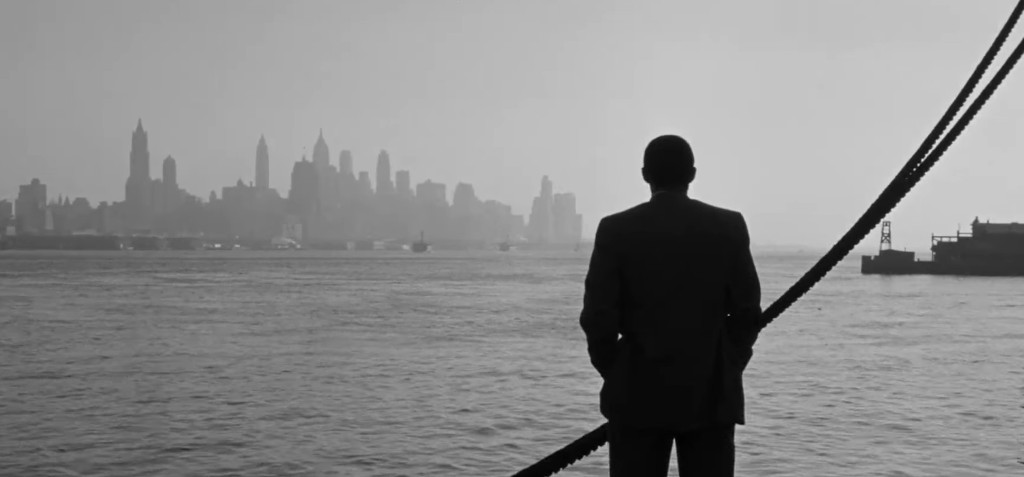
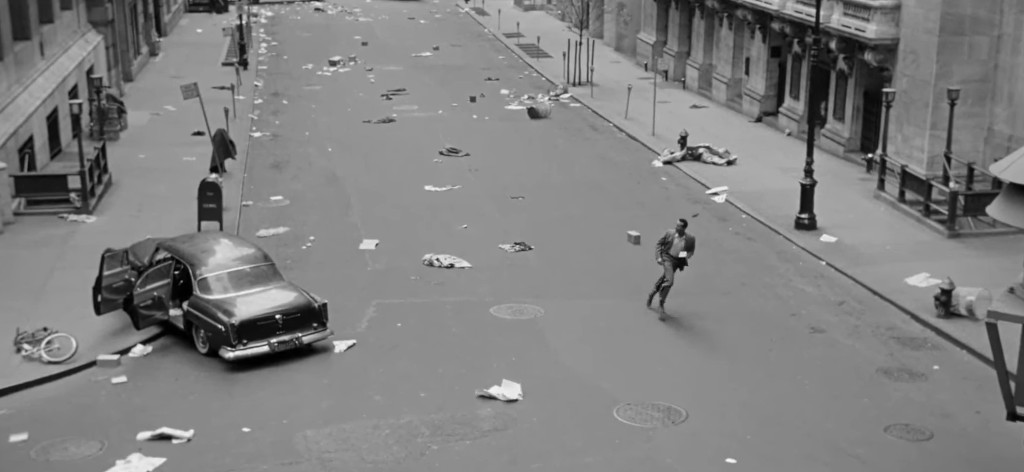
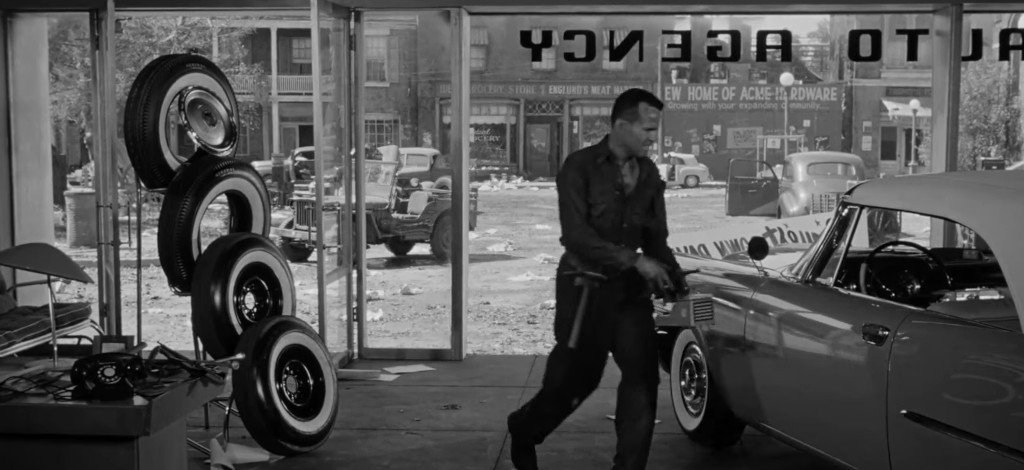
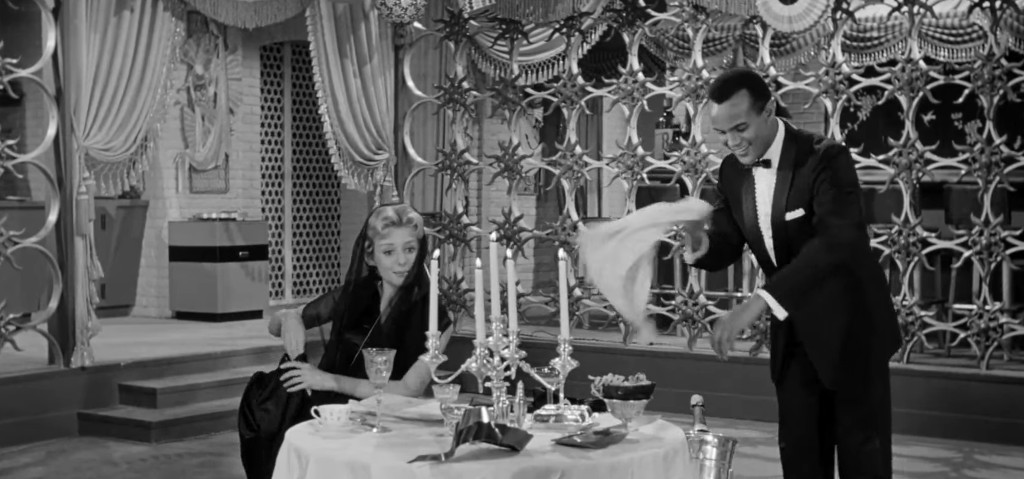
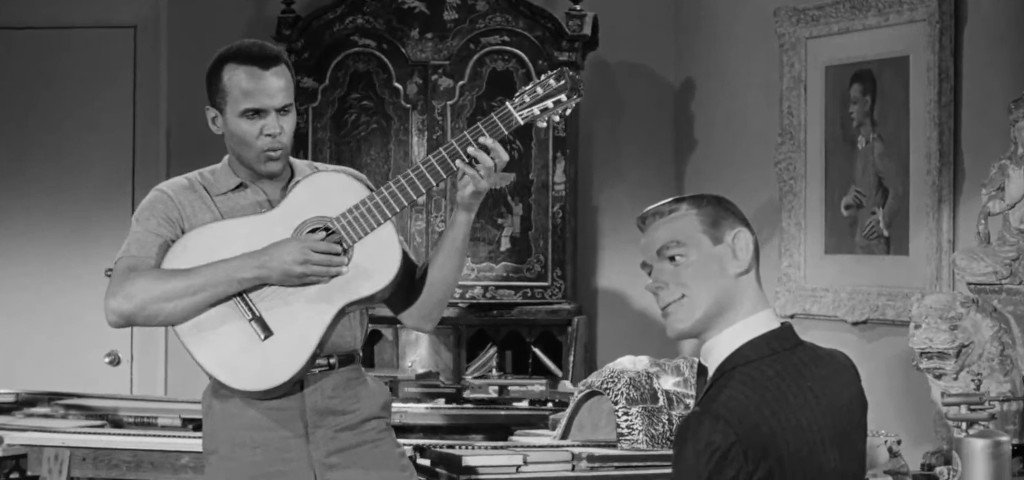
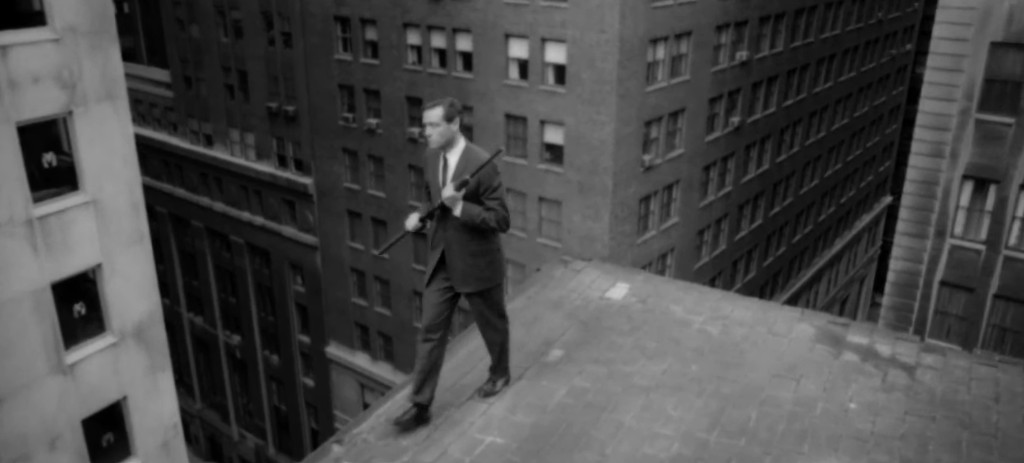
Ralph makes his way through an empty USA to New York, which he finds deserted. In a desperate search for people he roams beneath the city’s skyscrapers, newspapers flying through the streets like tumbleweed, shouting at the shuttered windows, firing his gun in the air and ringing the church bells in hopes of getting someone’s attention, until he finally breaks down in despair at a church altar. Accepting his situation, Ralph starts building a new life for himself as the last man on Earth, moving into a luxury apartment, gathering supplies from nearby stores and fixing his street’s electricity. He also starts hoarding books and art in order to save them for generations to come. To keep himself amused, he makes friends with two storefront mannequins whom he christens Betsy and Snodgrass, and whom he talks to and serenades on a guitar. Freed from the social constraints of society, Ralph starts living his life like nobody’s looking, dancing in the streets and enjoying his status as the King of New York. Until it grows old, and his joy turns to bitterness and loneliness. He takes out his frustration on the ever-smiling “caucasian” Snodgrass, and tosses him out on the street from his balcony. Which is when he hears a woman scream.

Sarah (Inger Stevens) has secretly been observing Ralph for a long time, but has been afraid to approach him – possibly because she is a white woman and he a black man. When she sees Snodgrass smashed on the pavement, she fears Ralph has taken his own life.
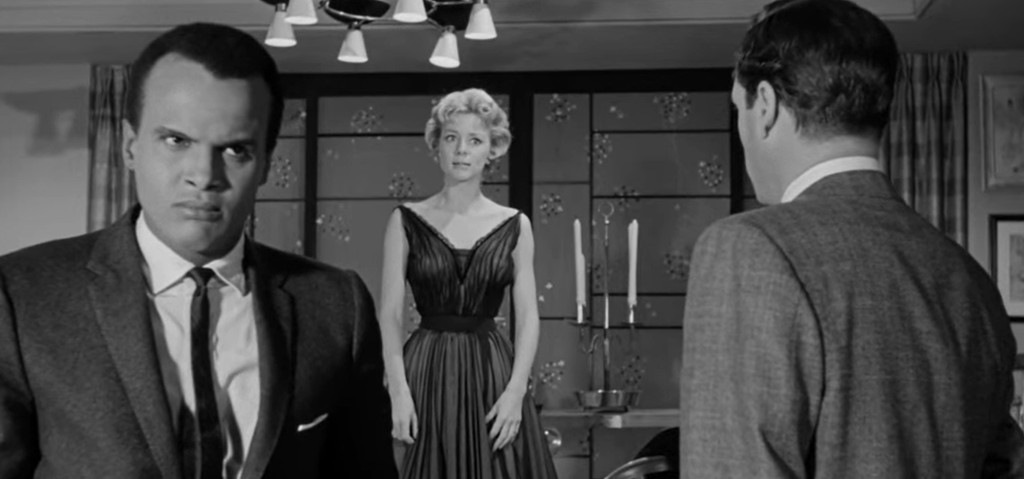
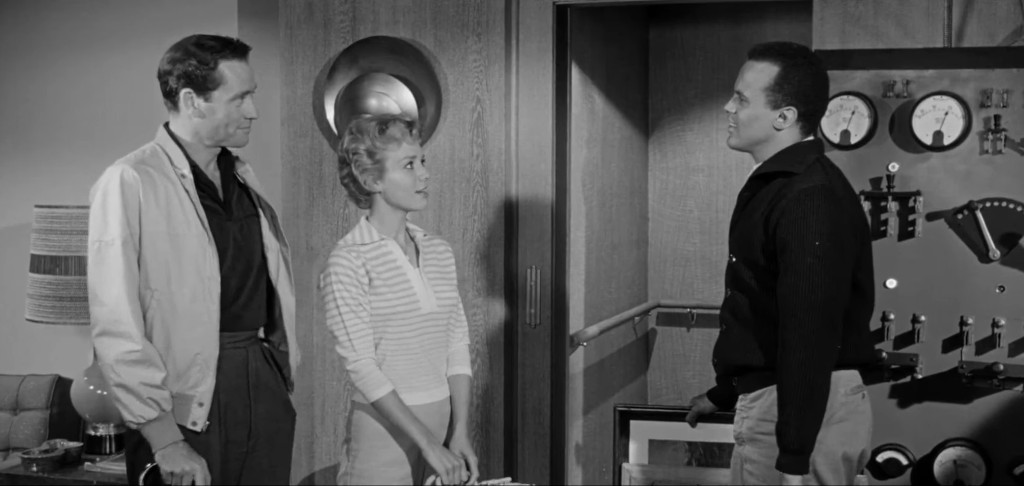
Gradually the two last people on Earth befriend each other, but keep their distance. Over time an emotional bond starts developing between Ralph and Sarah, but the question of their different races separates them like a glass wall. In particular, it is a wall that Ralph refuses to break. Despite them being, to their knowledge, the only two people alive, Ralph falls back on his social conditioning. He tip-toes around the subject of their growing feelings for each other, refrains from touching Sarah, and when she suggests them moving in together, he refuses: “People would talk”. Sarah keeps pushing Ralph, but he won’t budge. And while Sarah gets frustrated with Ralph’s refusal to let go of the segregation norms of society, Ralph’s anger flares up when priviliged Sarah shows her lack of awareness of their different social status. In a famous scene where Sarah jokingly says: “I’m free, white, and 21, and I’m gonna do what I please!”, he bursts into anger, replying: “That didn’t mean anything to you, just an expression you’ve heard for a thousand times. Well to me it was arrow in my guts!” When discussing marriage at one point, Ralph outright slams the idea that the two of them could ever get married, but promises that they will find some other survivor that Sarah can marry.
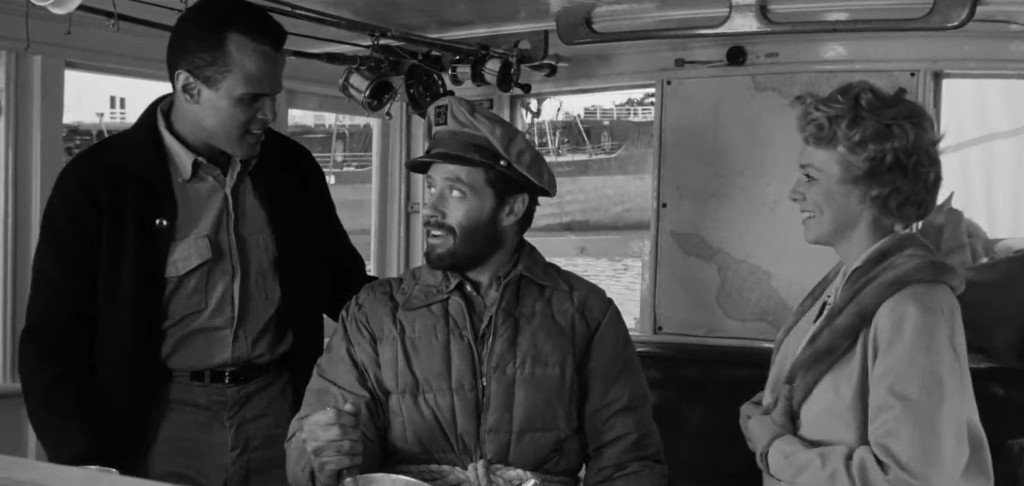
Every day at noon Ralph sends out a message on a radio communications device, hoping to hear back from some other survivor. After a while messages start coming in. But they are infrequent, garbled and in languages Ralph can’t understand, “probably from Europe or South America”. But one day a boat comes in, carrying a survivor, a handome white man called Benson (Mel Ferrer). While overjoyed at meeting another human being, Benson’s arrival also shatters the delicate balance of Ralph’s and Sarah’s awkwardly orchestrated love relationship.
Benson is also a good guy, he describes himself as an “ex-idealist” and seems to fit the bill of a liberal lefty with no qualms about Ralph being a black man. In fact, he even suggests that Sarah and Ralph move in together. However, Ralph, now retreating even further back into his social conditioning, seemingly hands over Sarah to Benson, and almost completely removes himself from Sarah’s life. While it is obvious that Sarah is in love with Ralph, every day that passes also seems to bring her closer to Benson, as Ralph has shut himself out and away from their social group.
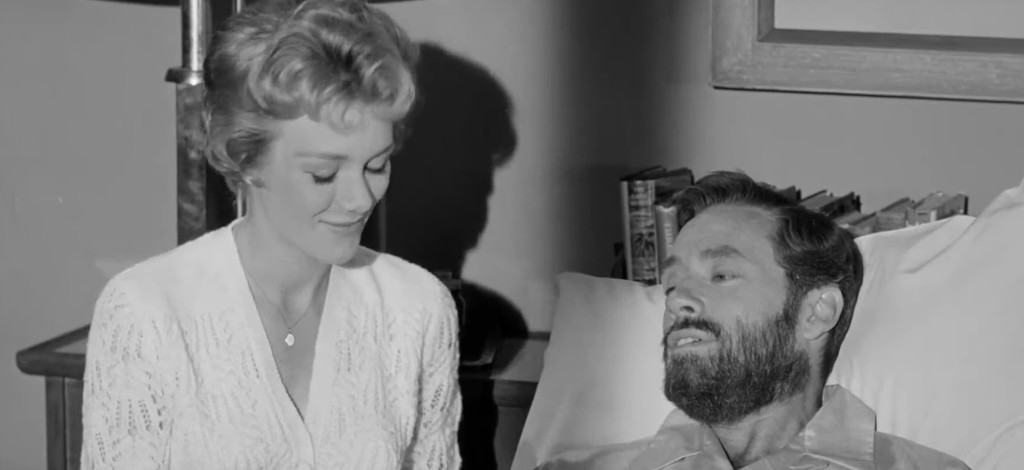
As time passes, though, the rivalry between Ralph and Benson becomes obvious. Sarah seems to keep up hope that Ralph will at some point lower his guard, but at the same time courts Benson as her “second choice”. Her refusal to openly choose between one or the other drives Benson and Ralph into open warfare, climaxing in Benson threatening Ralph with a gun – and the two of them engaging in a shoot-out on the rooftops of New York.
Background & Analysis
Two major post-apocalyptic films came out in 1959: On the Beach and The World, the Flesh and the Devil. While the first dealt very explicitly with the nuclear anxieties of the Cold War, the second really only used its nuclear apocalypse theme as a vehicle for another burning topic: US race relations.
The film is very, very loosely based on M.P. Shiel’s apocalyptic novel The Purple Cloud from 1901. In short, the novel follows a protagonist, Jeffson, who miraculously survives an apocalypse (a volcanic cloud) that kills all humans and animals on Earth. The novel stretches over several decades, and follows Jeffson’s descent into madness and megalomania, and sees him build a massive temple out of gold to himself on an island. He develops his own theology and philosophy, seeing himself as a pawn trapped between forces he describes as “Black” and “White”, and takes pride in being the person who finally ends the human race. Until one day, he discovers a woman, Leta, in the rubble of Constantinople, who was born just before the apocalypse and has no notion of civilisation or a world before. At first, Jeffson mistreats and ignores Leta, but her affections wear him down and he finally accepts the role of them as Adam and Eve, starting a new chapter for humanity.
One cannot mention M.P. Sheil without mentioning his overt racism, as the father of the literary trope of the “yellow peril” through his novel The Yellow Danger, as well as his otherwise controversial beliefs and philosophies. His racism isn’t quite as blatant in The Purple Cloud, although his thoughts on non-caucasians is made clear throughout the text. The Purple Cloud, whilst controversial, remains a highly readable novel to this day, as apposed to The Yellow Danger.
Paramount had wanted to turn the novel into a film as early as 1940, what with the rumblings of the possibility of a nuclear bomb, however, the project was put on hold. It was again dusted off in 1945, but when the US bombed Hiroshima and Nagasaki, the time was not optimal politically to make a movie showing the aftermath of a nuclear apocalypse. In 1956 the rights to the novel were bought up by Sol C. Siegel, at the time a producer and MGM and head of his own company, Sol C. Seigel Productions.
Using The Purple Cloud as a starting point, the film’s script is based on a screen story called “The End of the World” by vocally leftist screenwriter, novelist and newspaper correspondent Ferdinand Reyher. “The End of the World” was also the working title for the movie. The actual screenplay was put together by the film’s director Ranald MacDougall, who is best known for having adapted the classic rags-to-riches drama Mildred Pierce (1945) for Michael Curtiz and Joan Crawford.
Sol Siegel’s stated purpose was to produce a post-apocalyptic story tackling race relations in the US. For the purpose, he reached out to extremely popular singer, actor and activist Harry Belafonte, who had his own newly founded company that focused on getting accurare depitcions of African-American lives into production and bolster the involvement of black people in movie making. Belafonte signed on as co-producer with his company HarBel Production, and as lead actor.
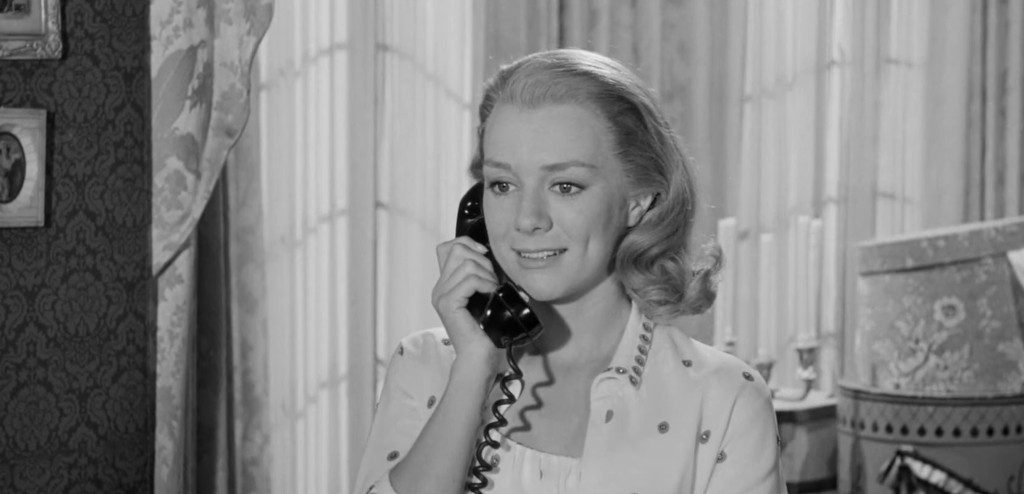
Shooting began in late April, 1958 and carried on until the beginning of June. The movie was filmed on location in New York, in Culver City, New Jersey, and at MGM Studios in Los Angeles. The estimated budget of the film was $1,7 million, which was a lot of money for a science fiction film, but sort of mid-tear for an A-list drama film.
In 1959, depictions of interracial romance were still extremely rare, partly because of strict race laws still in place in several states, and because of the Hays code, which prohibited interracial relationships on screen. Films that did deal with interacial romance were, basically, only possible thanks to a few loopholes. One was the “passing as white” trope, where a light-skinned non-white actor could pass as white, and have a relationship with a white counterpart, as long as the counterpart thought the person was white. Another way was to cast a white actor in the role as, for example, an Asian or Native American character, in which case the film didn’t strictly break the rule of showing an interracial romance on screen. One of the few films that had shown romance between a black and white actor was Harry Belafonte’s previous movie Island in the Sun (1957).
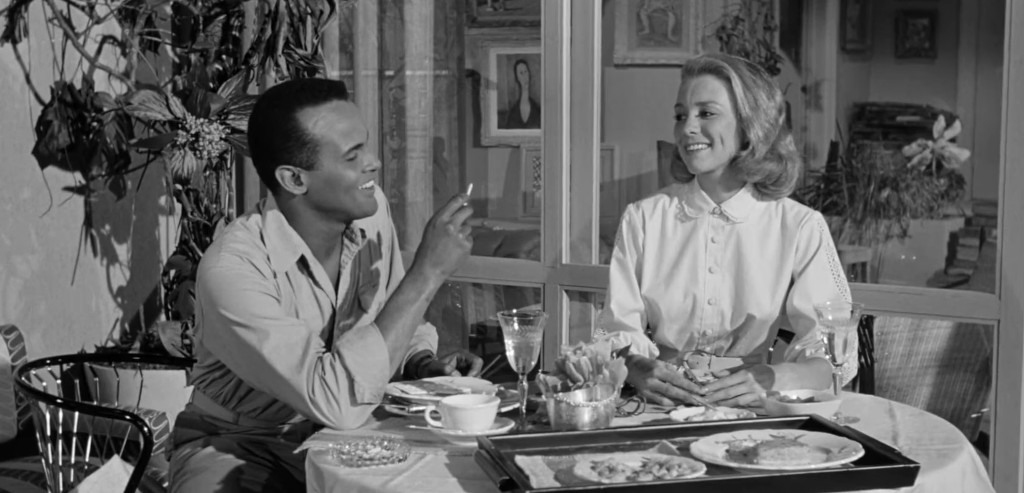
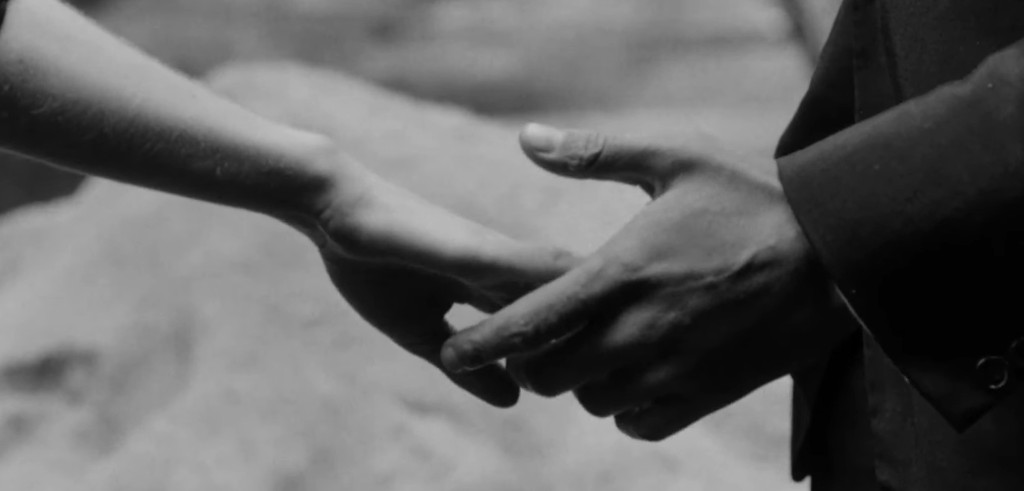
In Island in the Sun, Belafonte had been forced to cut an interracial kiss because of studio pressure, and this time he was determined to get it right. The Hays Code was beginning to lose its significance, and as the civil rights movement was starting to gain traction, many thought it was about time to let cinema reflect reality and push social norms in a progressive direction. I don’t usually like to spoil a movie’s ending, but in this case it is impossible to properly analyse the picture without talking about. In the original ending, Ralph and Sarah share a kiss, making it clear that Sarah chooses black Ralph over white Benson. Nevertheless, in the original ending, Benson offered Ralph his hand in brotherhood – both setting aside his romantic quarrel and their racial differences.
This was the ending that was scripted, and filmed. However, the film’s distributor MGM nixed this ending, fearing both the cencors and public reaction, in particular in Southern states. The ending was reshot with Sarah taking Ralph’s hand, and as they begin walking toward the sunset, Sarah calls out to Ben, extending his other hand to him. In the theatrical ending, the three walk off to begin a new life together.
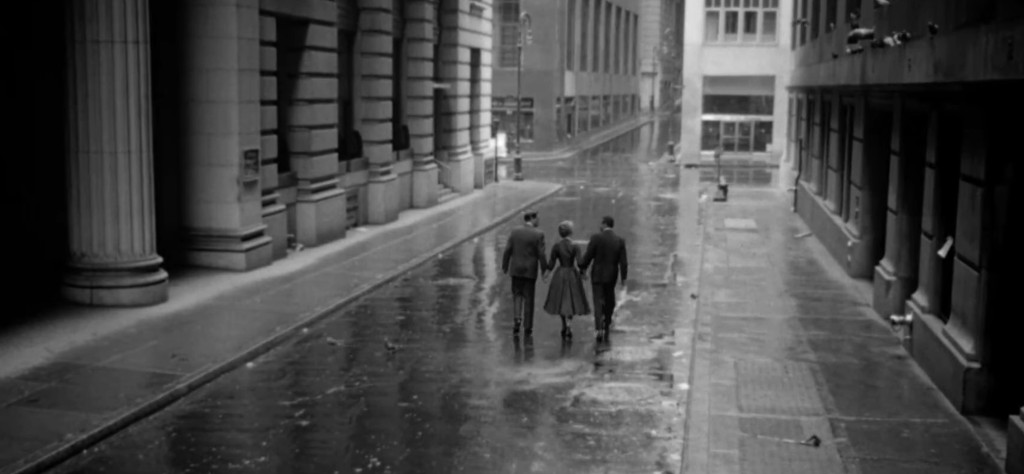
Many film historians and critics have pointed out that this cop-out ending nullifies pretty much the entire film. Furthermore, it is confusing. If anything, it suggests an interracial menage à trois, which is, I’m sure, not what the studio had in mind. In the original movie, Sarah and Ralph kissed, whereby Ben took Ralph’s hand. It was not the kiss that was the main point, but the fact that Ben accepted Ralph as a brother. But this was also nixed by the studio, which instead forced Sarah to act as an intermediary between Ralph and Ben, making her seem like a babysitter between two quarreling boys, which robs the scene of all its power.
In later interviews, Harry Belafonte said that the three actors were furious at the studio’s meddling, and desperately tried to convince the producers and director to keep the original ending as written, to no avail.
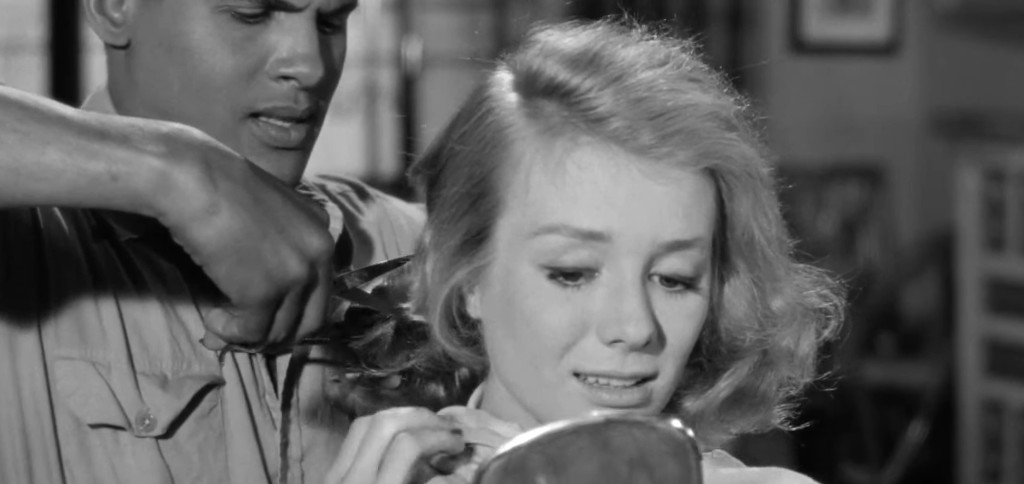
But to be honest, the ending is not the only problem with the film. The first part of the movie is the strongest – with Belafonte roaming the empty world, and the first scenes with him and Inger Stevens. The film is at its best showing the tension between Ralph and Sarah, exploring how the budding love between them is curtailed by the race divide. There’s a wonderful scene in which Ralph awkwardly cutting Sarah’s hair is used as a metaphor for sexual intercourse. However, the film’s dynamic changes completely when Benson enters the picture. This is, of course, intentional, but it doesn’t do the movie any favours. Instead of doing any intelligent exploring of the race relations between Ralph and Benson, the film regresses into stereotypical cockfighting as seen in so many other movies, with two men fighting over a woman who gets little say in the matter. Granted, the script is aware enough to let Sarah point this out, but as a viewer, I fault Sarah as much as anyone else. While she accuses the men of bickering over her like a prize, she also never puts her foot down herself, expressing what she wants out of the situation.
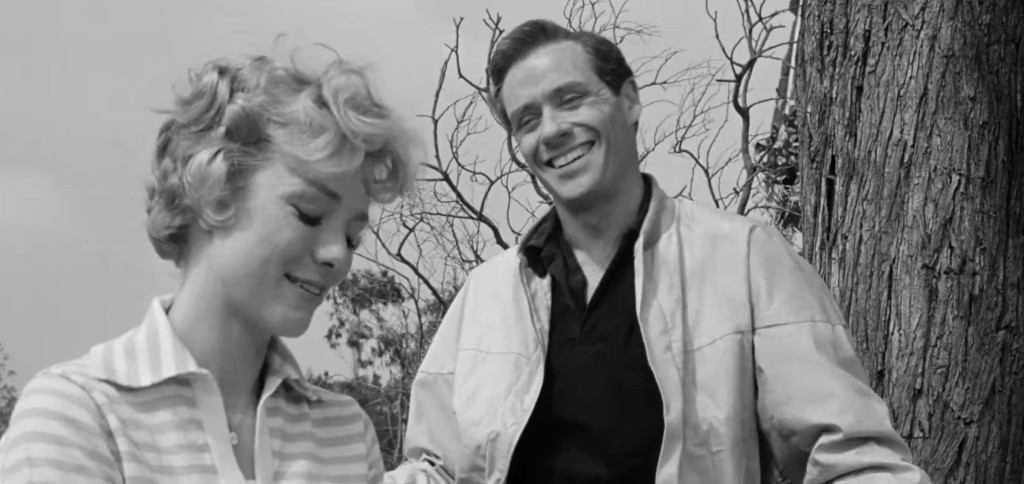
I never quite buy Benson as a character. He’s too charming and too enlightened to go all dark side in the end. When he first goes looking for guns and bullets I was yanked out of the picture, as it seemed to me as such an overreaction and out of character. This feels like forced conflict for conflict’s sake. At the same time, while it is clear that Ralph’s refusal to break his chains of segregation is supposed to be symbolic, as the film progresses, it becomes ever harder to take his character seriously as well. As the critic for Time magazine, wrote, it is hard as a viewer to accept that when all of humanity has been wiped out, “the three people who have managed to save their skins will spend most of their time worrying about the color of them”. While it is easy to understand that the screenwriters have wanted to tell a symbolic and metaphorical story, the symbolism becomes detrimental to the story when it renders the characters implausible.
All this is irritating, because for about 40 minutes, before Sarah shows up, The World, the Flesh and the Devil is a terrific movie, and for about 65 minutes, before Benson shows up, it is a really good movie. But for the remaining 30 minutes, it just keeps getting more implausible, frustrating and muddled. What started out as a fantastic, original and daring idea devolves into cliché and loses whatever moral compass it had in the beginning.
The dialogue is occasionally stunning and filled with double entendre, innuendo and hidden meanings. The movie has impeccable scenes, like Ralph dancing in the street or cutting Sarah’s hair. The chemistry between Belafonte and Stevens is sizzling. During these moments, this is a film that one desperately wants to like. At other times, the dialogue is clunky and clichéd, and the scenes of Ralph and Benson cockfighting bear little realism. There is no energy whatsoever between Stevens and Mel Ferrer, and mere idea that they would get together seems laughable.
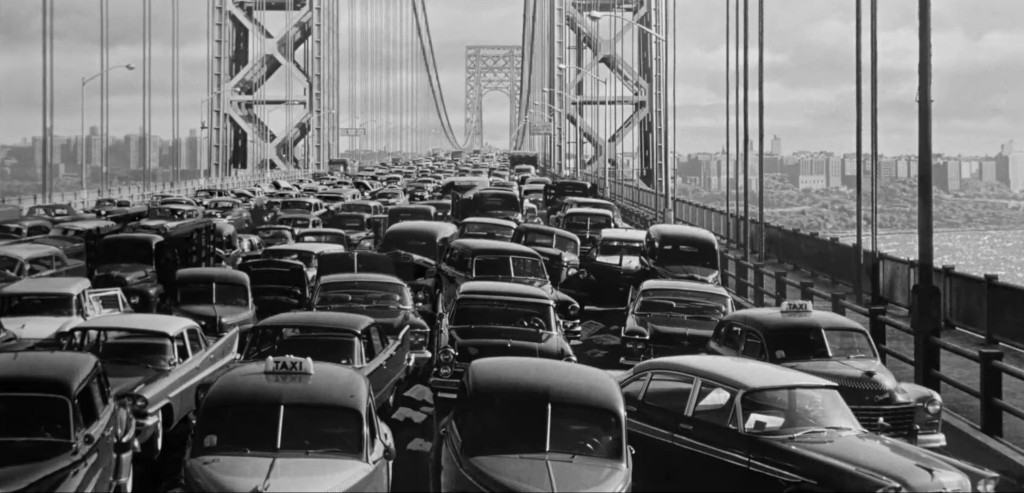
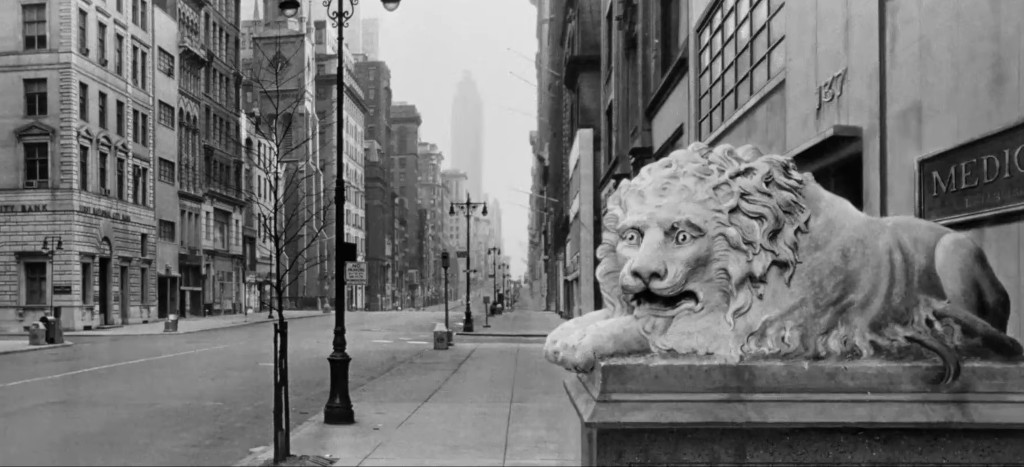
Likewise, the film is occasionally stunning. Today it is best remembered for its first third, with Ralph making his way through the empty world, discovering bridges filled with abandoned cars and walking beneath the beautifully shot skyscrapers of New York. I had watched this film many years before I rewatched it for this article, and had very distinct memories of the film’s first 30 minutes, but hardly remembered anything of the plot. In order to pull of the shots of an empty New York, MacDougall started filming in late April, and took advantage of the early spring morning sunlight, and managed to get permission to close down one city street at a time before the morning rush. Other times, MacDougall and cinematographer Harold Marzorati shrewdly film Belafonte from a frog’s perspective, angling the camera so that nothing at street level is visible in the frame, effectively editing out all people and cars from the shot. To this day, these are probably the most haunting post-apocalyptic images ever put to film. The effect is enhanced by Franklin Milton’s magnificent sound design (even if he overuses the echo effect at times).
The film does get a lot of stuff right, and the intentions of the filmmakers should be celebrated. The character of Ralph, in particular, is an extremely interesting one, in his stubborn refusal to emancipate himself in the presence of a white person. I’m not knowledgeable enough to do an academic take on this, but if you’re interested in how W.E.B. Dubois’ theories of double consciousness and Focault’s Panopticon relates to Ralph’s character, then I urge you to head over to Stéphanie Larrieux’s excellent academic article on the matter in Quarterly Review of Film and Video.
While perhaps more celebrated as a singer, Harry Belafonte was primarily trained as an actor, and even won a Tony award for his stage work in 1954 before his music career really took off in the late 50s. Apart from fellow American Negro Theater alumn Sidney Poitier, Belafonte was one of the few black male actors to receive romantic leads in mainstream movies in the 50s. Belafonte also carries the first third of The World, the Flesh and the Devil on his lonely shoulders, and does so with absolute bravado. Unfortunately his acting deteriorates alongside his character the further the film moves, but that can’t be put on Belafonte, but rather the script. Ingrid Stevens also shines in her absurd, hyper-strung, at once naive and shrewd character, and manages to keep it interesting and honest even while the writing gets worse toward the end of the film. Mel Ferrer was a good actor, but he somehow seems miscast in his role in this movie. Maybe it’s the entire character of Benson that just doesn’t sit right, but Ferrer also isn’t able to elevate it above the written page.
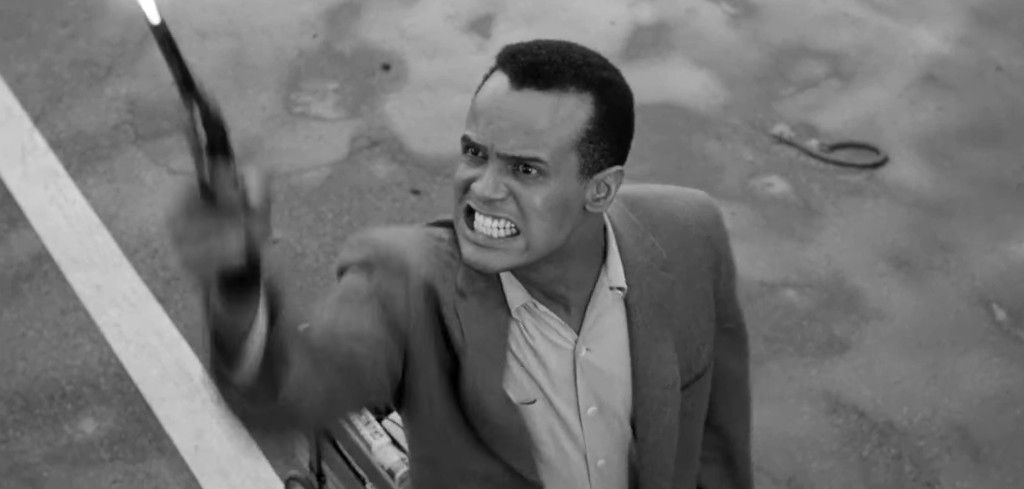
Celebrated composer Miklos Rosza elevates the film with a grand, orchestral terror full of low brass, discordant strings and atonal notes to illustrate Ralph’s apocalyptic dispair in the early stages of the film. In contrast, he infuses playful jazz notes in the domestic scenes where we see Ralph fooling around with his mannequin friends and his toy train, juxtaposing his initial anxiety with the comfort he builds himself as the King of New York. The film also features a number of musical numbers performed by Harry Belafonte himself. But instead of making these “show tunes” recorded in a studio, all the songs are performed on-set using “diegetic sound”, meaning recorded during filming, rather than dubbed in post- or pre-recording. The studio wouldn’t have let Belafonte star in a film without singing, as he was one of the biggest recording artists on the planet at the time, and this was a way for the filmmakers to let the studio have Belafonte singing, while still making his singing an integrated part of the story.
As far as the science fiction element goes, this is only used as window dressing. The screenwriters invent a “radioactive fog” or the like, which conveniently renders itself completely harmless after six days, and doesn’t seem to affect either bottled water or canned goods in the slightest. Sarah’s miraculous survival is never explained, neither, really, is Benson’s. Neither is it explained where all the bodies of three billion dead people have disappeared, as we never come across a single dead person in the entire movie. This, or course, was a stylistic choice by the director, that only serves to highlight the strictly symbolic purpose of the apocalyptic backdrop of the story, only there to serve as a canvas for the actual theme of the movie to play out against. When used in such a way, there is little point in nitpicking science or logic.
Apocalypse movies were nothing new in 1959, they have existed more or less since the birth of the feature film, from depictions of biblical Armageddon, to the eruption of Vesuvius, from deluges to viral outbreaks leaving the world devoid of men. However, the aftermath of a nuclear war was a post-war trope, that can be said to have first come into play in the low-budget movie Five (1951, review), the first movie to portray a world in which most of humanity has been wiped out by nuclear fallout. Curiously, that movie also touched on race relations, and had a story about an outsider disrupting the peace within a small group of survivors. Directed by radio pioneer Arch Oboler, it has its flaws, but is an intelligent and thoughtful rumination on the need for humanity to start anew. With heavy biblical undertones, it also ends with an Adam-and-Eve situation.
While big-budget movies sometimes dealt with apocalyptic visions in the 50s, like George Pal’s When Worlds Collide (1952, review) and The War of the Worlds (1953, review), post-apocalyptic visions were largely left to low-budget producers. Often these films showed little of the aftermath of whatever calamity had befell Earth, but holed up their cast in a house or apartment, turning the movie into a chamber drama. Such was the case with Target Earth (1954, review) and Day the World Ended (1955, review). Other films placed the story so far in the future that they dealt alternative societies that had grown up in the aftermath, such as Captive Women (1952, review), World Without End (1956, review) and Teenage Caveman (1958, review).
As the 50s were drawing to a close, tackling the issue of a nuclear apocalypse had seemingly become accepted in Hollywood, despite the US government’s attempts to shush the fears of nuclear accidents in its push to get the American public to accept nuclear power plants. Partly, this had to do with the realisation over the 50s that a nuclear explosion was not survibable even if you weren’t caught in the immediate blast. By the late 50s, the dangers of nuclear fallout were commonly known. This fuelled the popularity of Nevil Shute’s 1957 novel On the Beach, a post-apocalyptic story set in Melbourne, that follows the city’s residents preparing for their inevitable death from nuclear clouds. Certainly, it was on the back of the popularity of this book – and United Artists’ plans to turn it into a movie – that MGM greenlit The World, the Flesh and the Devil.
The primary blame for The World, the Flesh and the Devil not living up to expectations must be put on MGM, which refused to accept the scripted ending. While apologists may point out that interracial relations were prohibited by the Hays code, the fact is that the code was becoming increasingly obsolete in 1959. It was originally enforced in an era when the major studios also owned the majority of all movie theatres, and since all major studios were bound by the production code, they simply could not release films in their theatres that were not PCA approved. However, because of anti-trust regulations, by the 50s, movie studios were no longer allowed to own movie theatres, and the theatres themselves were not bound by the Hays code, which was an agreement of self-regulation between the studios. In 1952 the US Supreme Court ruled that the Production Code Association didn’t have a legal right to enforce its rulings, since movies were protected under free speech laws. Despite this, major Hollywood studios continued to uphold the Hays Code, at least nominally, until 1968.
However, by 1959 the code was already being challenged by many directors and producers. Themes like homosexuality, sexual intercourse, drug use and interracial relationships were explicitly dealt with in numerous films, and bypassed the code by using innuendo and euphemisms for things that were obvious for all moviegoers. Because theatres were not bound by the code, they happily rented movies that hadn’t passed PCA approval. In 1959 alone, United Artists released two smash hit films that were independently approved without PCA approval: Billy Wilder’s classic gender-bending comedy Some Like It Hot, which became one of the most popular films of the year, as well as John Cassavetes’ urban jazz drama Shadows, including, among other things, a romance between a black woman and a white man.
While MGM was formally bound by the Hays Code, the studio had already set out distribute a message film dealing with race relations in the US. Once greenlit, one would assume that the studio were on board with challenging prevailing norms, which is why their insistence on a cop-out ending is so disappointing. Not only is it a morally cowardly choice, its also an artistically bad one, as it renders the whole movie kind of pointless.
Not that this is the only problem The World, the Flesh and the Devil: as I have pointed out earlier, the quality of the film steadily deteriorates the further along it progresses, due to script problems and muddled themes. What make this so tragic is that it is an occasionally fantastic fillm, and had it kept the quality of the first half, this would be a bona fide classic. Now it feels like flashes of absolute brilliance setting up a lost opportunity.
Reception & Legacy
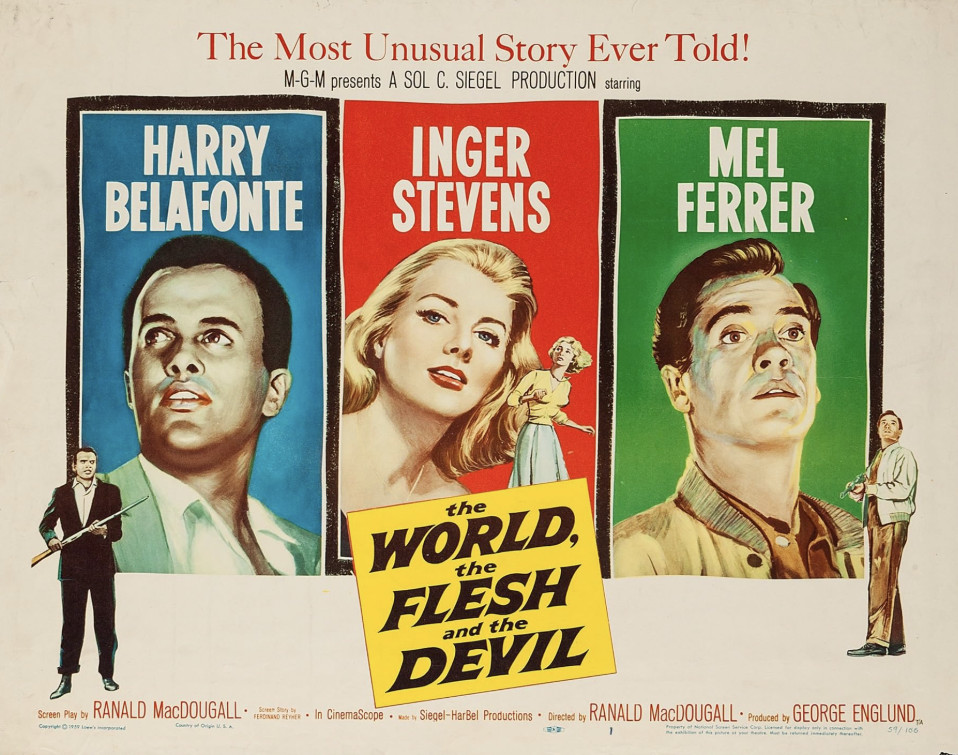
The World, the Flesh and the Devil premiered in April, 1959, in the US, and got worldwide distribution. However, it received mixed, predominantly negative press: conservatives railed against the theme of interracial relationships, while progressives found the cop-out ending disappointing. Despite MGM’s attempts to censor the movie’s most controversial topics, many theatre chains, primarily in the US South, boycotted the film, resulting in a loss of a substantial part of the market. During its initial theatrical run, the film only made around $1 million in theatrical rentals, leaving MGM with a net loss of $1,7 million. It seems that in trying to please everyone, MGM ended up alienating everyone instead.
Major press outlets praised the film’s visuals, acting and in particular its first half featuring Belafonte alone in New York. Almost unanimously, though, all critics thought the race question was poorly handled and the love triangle clichéd. As Los Angeles Mirror-News stated, the film “soon bogs down in a standardized Hollywood plot of racial issues and the old triangle”. Always curmudgeonly Bosley Crowther in the New York Times praised the beginning of the film: “the drama is graphic and interesting, presenting the science fiction idea in good, vivid cinematic style”. However, he loathed the ending: “Mr. Reyher and Mr. MacDougall have attempted to suggest an ideal by having the three walk hand in hand down Wall Street at the end, after the men have had a fight. But this is such an obvious contrivance and so cozily theatrical that you wouldn’t be surprised to see the windows of the buildings suddenly crowded with reintegrated people, cheering happily and flinging ticker tape.” Saturday Review was mainly confused about the ending: “Are we to assume that some sort of polygamous arrangement has been worked out, or will the three henceforth lead entirely sexless lives, thus dooming both white and colored races to extinction?”
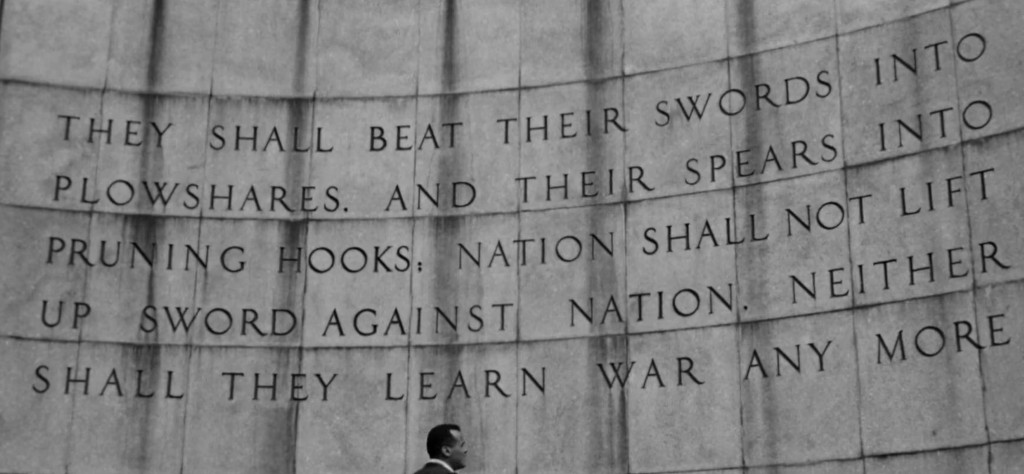
Time magazine both praised and panned the film, calling it “passionately sincere, pictorially brilliant, monumentally silly”. The Time critic, like many others, felt that if the world ended, the question of skin colour would hardly be at the forefront of our worries, even in a country as preoccupied with skin colour as the United States. The critic concludes: “The story falls into the predictable triangular pattern, which soon resolves into the predictable eternal question: Which boy will get the girl? In this instance, the answer is intended to answer the race question, but since actor Belafonte’s skin seems just about as light as actor Ferrer’s, the audience may justifiably wonder if the question itself is not almost academic.”
The trade press was slightly more positive, and predicted that the film would do good business. Many opened their reviews by calling it “unusual”, “interesting”, “fascinating” and “provocative”. Again, the visuals and the overall premise received praise from the trade critics, as did the acting and the direction. Photoplay magazine, in a lighthearted review, gave The World, the Flesh and the Devil a 3/4 star rating, writing: “It’s exciting to watch, and it’ll give you plenty to argue about afterwards. Science-fiction readers, however, will find the idea long familiar and the execution unrealistic”. Motion Picture Daily called the film “strikingly photographed”, and, again, praised both Belafonte’s performance and the first half of the movie.

However. Harrison’s Reports wrote: “The ending […] is a letdown, as it solves neither the racial questions nor the romantic problem”. Motion Picture Daily said: “The second part of the film is less interest-sustaining”. The Film Bulletin opined: “a firmer resolution of the issues raised by the screenplay would would have been more desirable”.
Variety’s “Powe“, in a predominantly positive review, wrote: “Although, overall the film is engrossing, curiously it gets less effective as as additional survivors turn up. […] Perhaps it is in the handling of the problems brought on by Miss Stevens’ appearance and Ferrer’s that the letdown comes. […] MacDougall is justified in leaving the future obscure, but the characters could have been more firm.”
Later critics have echoed the sentiments of their 1959 counterparts. Leonard Maltin (1969) gave the movie a 3.5/4 star review, writing: “Intriguing film starts well, bogs down halfway through, and presents ridiculous conclusion. Best scenes are at beginning, when Belafonte is alone in an impressively deserted Manhattan.” Phil Hardy in The Encyclopedia of Science Fiction Movies doesn’t seem to mind the ending, nor feel that it was in anyway squandered. Otherwise, he opines that the scenes of the desolation of New York is brilliant, but that the latter part of the movie is “too wordy”. As no Hardy review is complete without at least one glaring error, he also claims that Benson is “horrified” over the union between Ralph and Sarah, which he certainly isn’t.
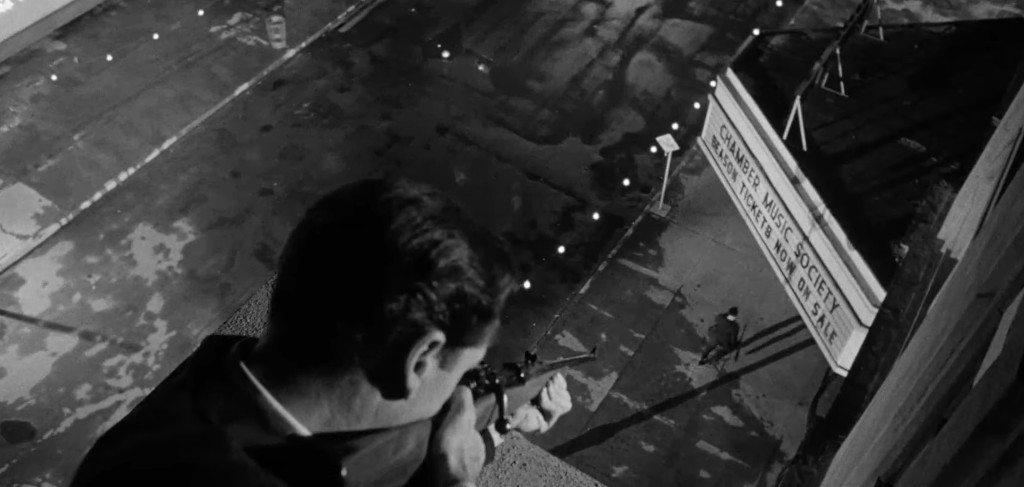
In an unusually opinionated article in Keep Watching the Skies! (2009), Bill Warren seems disproportionately annoyed not only over the fact that the science fiction themes were handled sloppily, but that the race theme was added in the first place.
My favourite modern-day sci-fi critic Glenn Erickson writes at DVD Talk: “The first half of the movie is extremely interesting as it offers a wealth of detail about what life might be like for a Robinson Crusoe marooned in a major metropolis. […] Unfortunately, the visually stunning finish is also a cowardly dodge that fails to resolve the story or do justice to its progressive theme. The trio’s situation just doesn’t seem that much of a problem: with so few people left alive, you’d think three consenting adults could figure out their own compromise with the now-irrelevant social niceties of the past.”
The film is still rightly praised today for its progressive intent, and for the fact that it was one of the few films in the 1950s portraying an interracial romance between a black and a white lead actor, be it that it squandered the premise. However, the film’s greatest legacy is its eerie visualisation of an empty New York – visuals that still stand up today as some of the best of their kind in movie history. While the films The Omega Man (1971) and I Am Legend (2007) were based in Richard Matheson’s 1954 novel I Am Legend, their visuals are strongly inspired by The World, the Flesh and the Devil. The 2007 Will Smith vehicle even relocates the proceedings from Matheson’s Los Angeles to New York, and borrows the idea of having storefront mannequins as surrogate friends. Like Belafonte, Smith also takes out his frustration on one of his mannequins.
Ever the shrewd businessman, Roger Corman didn’t take long to ape talked-about movies: in 1960 he produced and directed a low-budget ripoff, sans the racial theme in The Last Woman on Earth. 1985’s fairly well-regarded The Quiet Earth also mimics The World, the Flesh and the Devil, at least initally, to the point that it can almost be labelled an unauthorised remake.
The rights to the film currently belongs to Warner, and it is available through Warner Archive Collection on DVD and Blu-ray. As of writing it is streamable in the US on Prime, Apple TV, Fandango and Kanopy. In the rest of the world, it is available at Prime and Apple TV, but availability varies from country to country. It is not difficult to find illegal streaming options in places where it is not available for legal streaming.
Cast & Crew
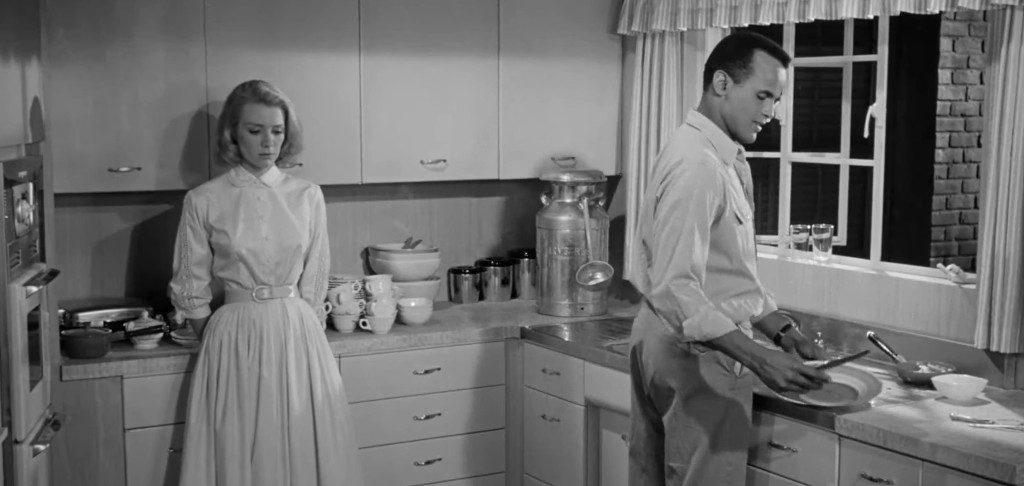
Most of the cast and crew of The World, the Flesh and the Devil have precious little science fiction pedigree outside of this film. The only one really interesting for sci-fi audiences is Mel Ferrer, who appeared in a handful of SF movies – and to a degree Inger Stevens, who had a couple of interesting turns in The Twilight Zone.
Jamaican Harry Belafonte needs no introduction. One of the few people to achieve the EGOT – winning an Emmy, Grammy, Oscar and Tony (although the Oscar was not for his acting, but for his activism), Belafonte was trained as an actor, but got his biggest success as a singer. His burst onto the music scene with the album Calypso in 1956, which became the first LP by a single artist to sell a million copies. His musical success diminished with the British wave of rock music starting to dominate the pop charts in the mid-60s.
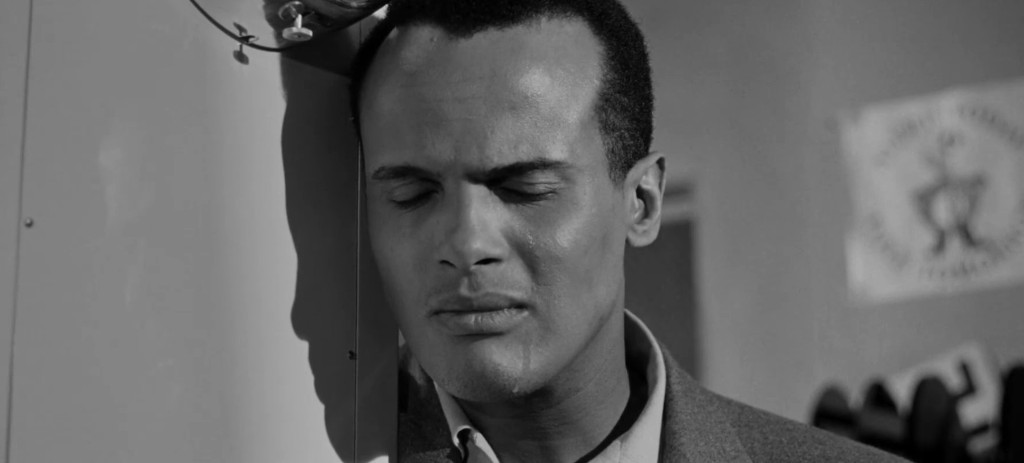
Belafonte made his film debut in 1953 and got his breakthrough in 1954 with the all-black musical Carmen Jones, although his singing was, ironically, dubbed by an opera singer. Island in the Sun (1957) and The World, the Flesh and the Devil (1959) both saw him in roles where his character had a relationship with a white woman. His biggest success, both critically and commercially, was Odds Against Tomorrow (1959), a crime caper with social themes, in which Belafonte gets hired alongside a racist partner to pull off a bank robbery. The movie was produced by Belafonte’s company and directed by Robert Wise. Dissatisfied with the roles offered him in Hollywood, Belafonte took a hiatus from acting in the 60s, but returned in the 70s when given the opportunity to star opposite his old friend Sidney Poitier in Buck and the Preacher (1972) and Uptown Saturday Night (1974). He returned sporadically to the big screen in the years to come, for example in the sci-fi adjacent alternate reality movie White Man’s Burden (1995), opposite John Travolta, and in the historical dramas Kansas City and most notably Bobby (2006). His last screen appearance came in Spike Lee’s celebrated BlacKkKlansman (2018), in which he played an elderly civil rights activist.
Harry Belafonte’s civil rights activism deserves a chapter of its own. Suffice to say, he as an outspoken socialist and civil rights activist, a confidante of Martin Luther King and a revered presence in the ACLU. In both his music and his stage and film career, he brought his activism to the forefront.
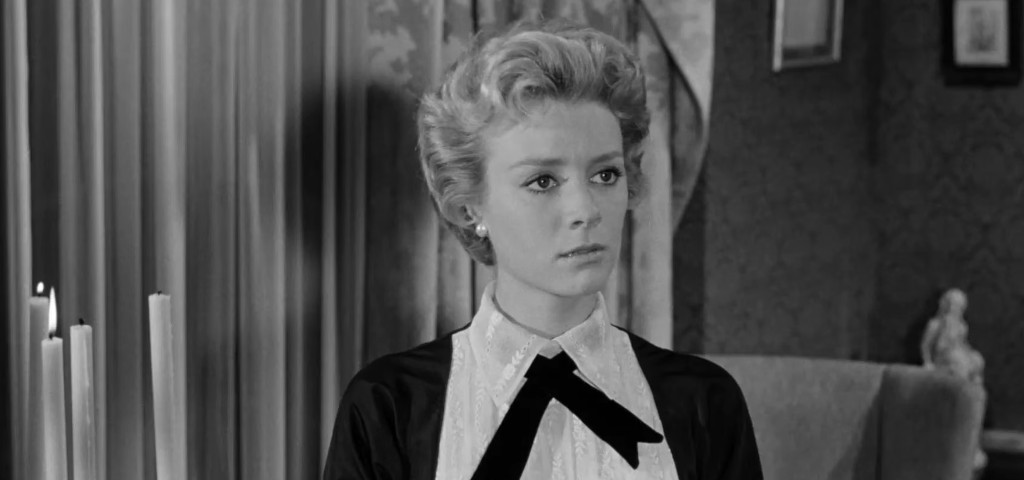
Inger Stevens‘ life was one of both tragedy and success. Born Inger Stensland in Stockholm, Sweden, she was called to the US at the age of 10 in 1944 to live with her estranged father, and at a young age she ran away to work in burlesque, and soon took up a career as a model and actress, and eventually trained the the Actors Studio. Through commercials and summer stock she started getting guest spots in TV series in the mid-50s and made her film debut as a leading lady opposite Bing Crosby in the drama film Man on Fire in 1957. In 1959 she performed what is considered one of her finest roles, that of Sarah in The World, the Flesh and the Devil. The same year, she also made a failed suicide attempt. However, she bounced back, and continued what was to be a very successful acting career over the 60s. While many of her roles were stereotypical love interest clichés, she also made a splash in a number of more dramatic outings. She showed her comedic wit in the box-office success A Guide for the Married Man (1967), had a celebrated turn as Richard Widmark (of Swedish descent) in Don Siegel’s neo-noir Madigan (1968).
One of her best remembered roles was in Hang ‘Em High, Clint Eastwood’s first Hollywood film after Sergio Leone made him an international star in his spaghetti westerns. Stevens plays an emotionally scarred woman out for revenge, hooking up with Eastwood. Roger Ebert gave the movie 3/4 stars, and in a tongue-in-cheek review wrote: “You can tell it’s a Hollywood Western because Inger Stevens lives in the boarding house and Ed Begley is shaking his fist at the hero even before the titles begin. […] Miss Stevens […] seems to have nailed down the boarding house role. She was a widow boardinghouse operator in Firecreek and a lady barber and boarding house operator (with a heart of gold) in Five Card Stud. This time she boards in the boarding house. These roles always give her at least one chance to sit by the bed of the wounded man and nurse him back to life.”
Some of Stevens’ best work was done in TV. She appeared in two of the most well-regarded episodes of The Twilight Zone: “The Hitch-Hiker” and “The Lateness of the Hour” in 1960, and in 1962 won an Emmy for her appearance in an episode of an episode in The Dick Powell Show called “Price of Tomatoes”. She is, however, best remembered for her leading role in the comedy series The Farmer’s Daughter, where she played the no-nonsense governess of a congressman’s children. Commercially successful, it turned Stevens into a household and ran for four seasons between 1963 and 1966.
While Inger Stevens’ public image was dominated by her bright smile and gleeful demeanor, she apparently fought demons in private. In 1970 she was found dead in her home due to an overdose of drugs and alcohol, and her death was ruled as suicide. After her death it was revealed that she had been secretly married to black actor and producer Ike Jones since 1961, life mirroring her role in The World, the Flesh and the Devil.
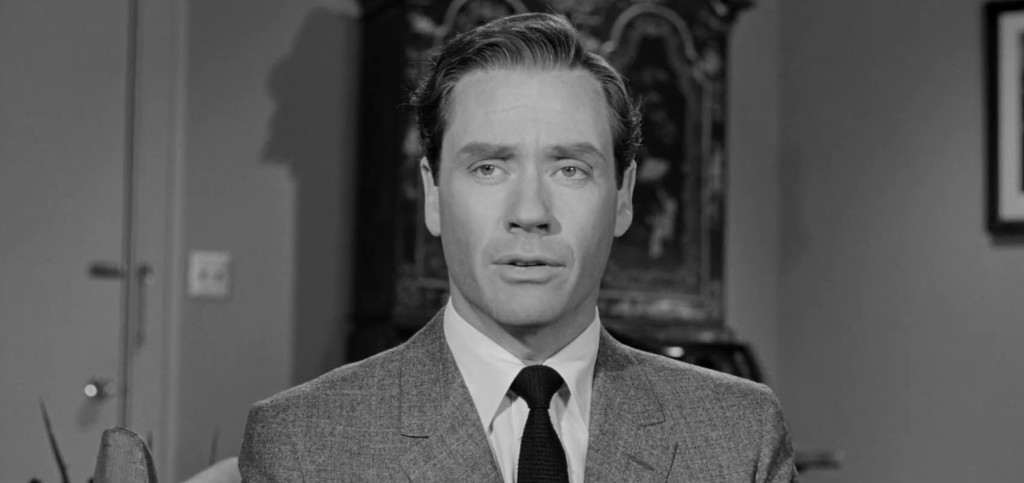
Mel Ferrer is often described as miscast in The World, the Flesh and the Devil, as he was better known for playing aloof, arisctocratic and often villainous characters (he was a favourite in costume dramas), when his role here is more of a charming everyman. Ferrer started his career on stage as a teenager in the late 30s, eventually making a name for himself on Broadway, and entering the movie business in the 40s – originally hired by Columbia as a “director hopeful”. He mainly worked as a dialogue coach at Columbia, but also directed a couple of B-movies. He was the snatched up by RKO in the late 40s, then controlled by Howard Hughes. He was the final director on the costly four-year flop Vendetta, which Hughes micromanaged to death, replacing both Max Ophüls and Preston Sturges, and was often used as a “patch-up” director on other problematic productions, although he also got a chance to direct a couple of films from scratch.
Ferrer moved to MGM in 1952, and focused on screen acting. His highlight was probably the role as the villain in the historical drama Scaramouche, in which he had a famous swordfight against Stewart Granger. Other hit films for MGM were Lili (1953), Knights of the Round Table (1954), in which he played King Arthur and King Vidor’s War and Peace. At MGM he met Audrey Hepburn, whom he married. He made a detour to Europe for a couple of years, where he did a few films, including Elena and Her Men (1956), co-starring Ingrid Bergman and directed by Jean Renoir. Upin returning the the US in 1956, his acting career never quite reached the same heights as it did at his first round with MGM, and he started to slip from prestige pictures increasingly to B-movies in the 60s. However, he became a popular actor in Europe, particularly in Italy. Standouts were Roger Vadim’s Blood and Roses (1960) and El Greco (1966), which he co-produced.
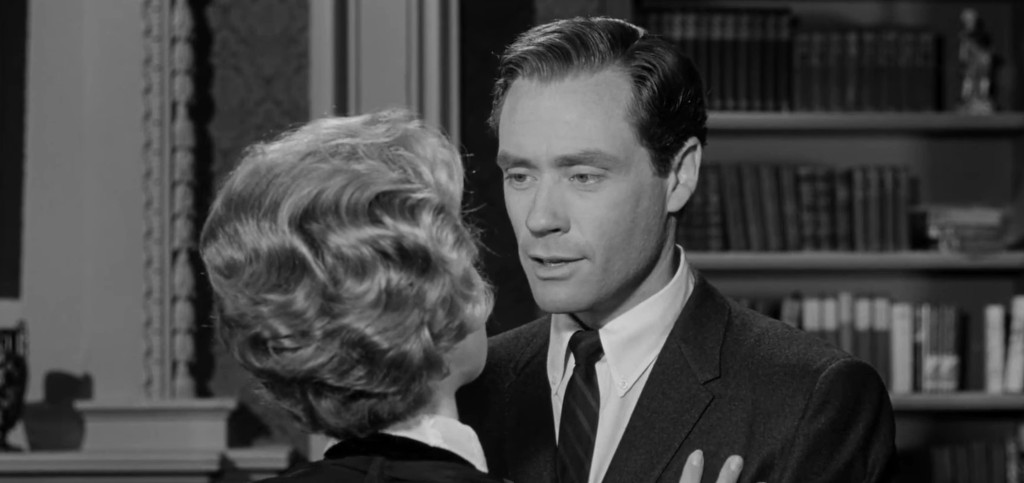
In the coming years, Ferrer was a busy player, with large parts in B-movies and European films, and smaller ones in major Hollywood productions, such as The Longest Day (1962), Charade (1963), Sex and the Single Girl (1964) and The Fall of the Roman Empire (1964). In 1967 he peaked as a producer with the critically acclaimed thriller Wait Until Dark, directed by Terence Young and Starring Audrey Hepburn.
Ferrer’s greatest legacy from the 70s and 80s, however, was as the star of a plethora of horror and science fiction movies, many of them Italian, which took advantage of his marquee draw and reputation as a serious actor. Straight horror movies worthy of mention are The Antichrist (1974), Eaten Alive (1976) and The Great Alligator (1979). Among his science fiction appearances are The World, the Flesh and the Devil (1959), the French/British The Hands of Orlac (1960, co-starring Christopher Lee), as well as three Italian pictures: the Hollywood star-studded Stridulum (1979) and Nightmare City (1980). He was also among the actors hired to shoot additional material for Sergio Martino’s Island of the Fishmen (1979), which was eventually released in the US as Screamers in 1981. He also appeared in Irwin Allen’s TV movie The Return of Captain Nemo (1978) and guested a number of sci-fi TV shows, including Wonderwoman (1977).
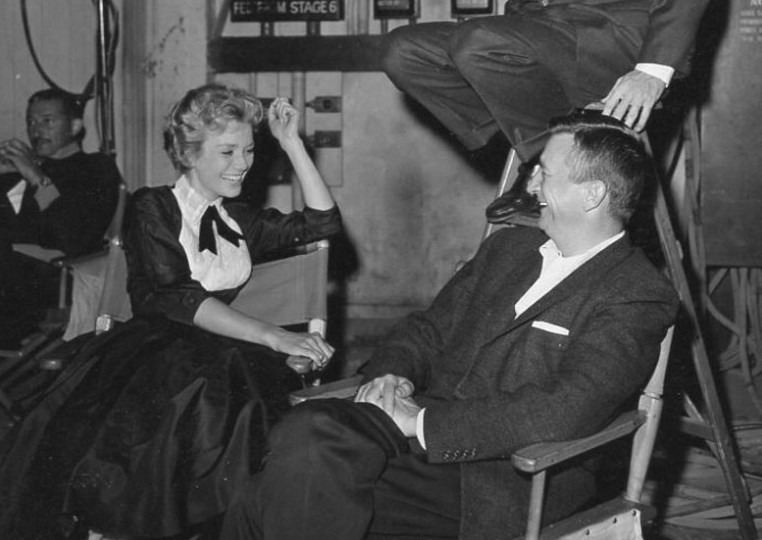
Director Ranald MacDougall was primarily a screenwriter, best known for adapting the novel Mildred Pierce for MGM and Michael Curtiz in 1945, creating one of the most critically acclaimed Hollywood movies of all time, and putting Joan Crawford back on the Al-list where she belonged. In 1947 he co-wrote another smash hit for Crawford, Possessed, and had his hands in Alfred Hitchcock’s Marlene Dietrich vehicle Stage Fright (1950). He co-wrote Byron Haskin’s ant army melodrama The Naked Jungle (1954), Michael Curtiz‘s crime comedy We’re No Angels (1955) and the post-apocalyptic message film The World, the Flesh and the Devil (1959), which he also directed.
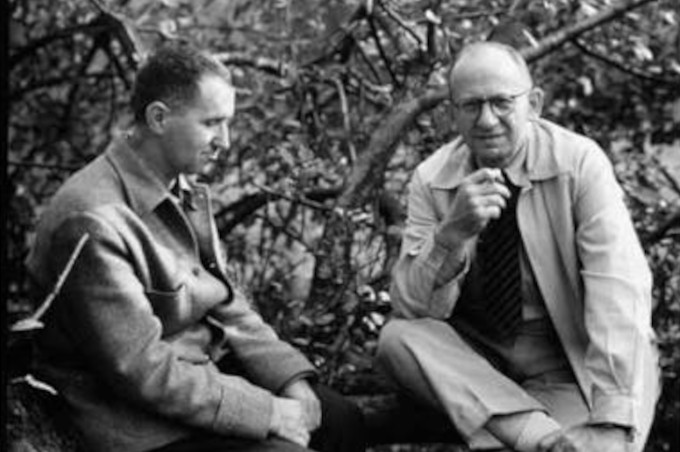
The screen story was written Ferdinand Reyher, a veteran screenwriter, novelist and newspaper correspondent. Harvard-educated Reyher served as a war correspondent for several prominent newspapers and magazines during WWI, and wrote several novels from the 20s to the 50s. He was a long-time friend of legendary German playwright Bertolt Brecht, and was a key collaborator on Brecht’s development of the classic play Life of Galileo in 1938. It was Reyher that helped Brecht emigrate from his exile in Finland through the Soviet Union to California in 1941. Reyher began writing screenplays in the 30s, and was used by several major studios as a script doctor. Most of his films are rather obscure to modern audiences. His only science fiction movie was The World, the Flesh and the Devil (1959). However, there is another sci-fi connection, as he was one of the writers who adapted the screenplay for the 1933 lion taming film The Big Cage, starring Clyde Beatty, from which much footage was pilfered for Universal’s monster movie Captive Wild Woman (1943, review). Because of the explicit leftism of much of his writing, Reyher had trouble finding work during the cold war, and during the 50s and 60s he became increasingly dependent on the income of his wife, Chinese Eileen Chang, who was a successful novelist and a prolific screenwriter of Chinese movies.

Chang is best known for writing the novella Sè, Jié, which Ang Lee’s acclaimed Lust, Caution (2007) is based on. Her books were also adapted for the Chow Yun-Fat vehicle Love in a Fallen City (1984) and Stanley Kwan’s Red Rose White Rose (1994). Her Mandarin translation of Bangqing Han’s Wu Chinese novel The Flower Girls of Shanghai, which was turned into the award-winng film Flowers of Shanghai in 1998. Of her original screenplays, which she penned from the the 40s to 60s, the best remembered is probably that of Long Live the Missus!, released in the second golden age of Chinese cinema in 1947.
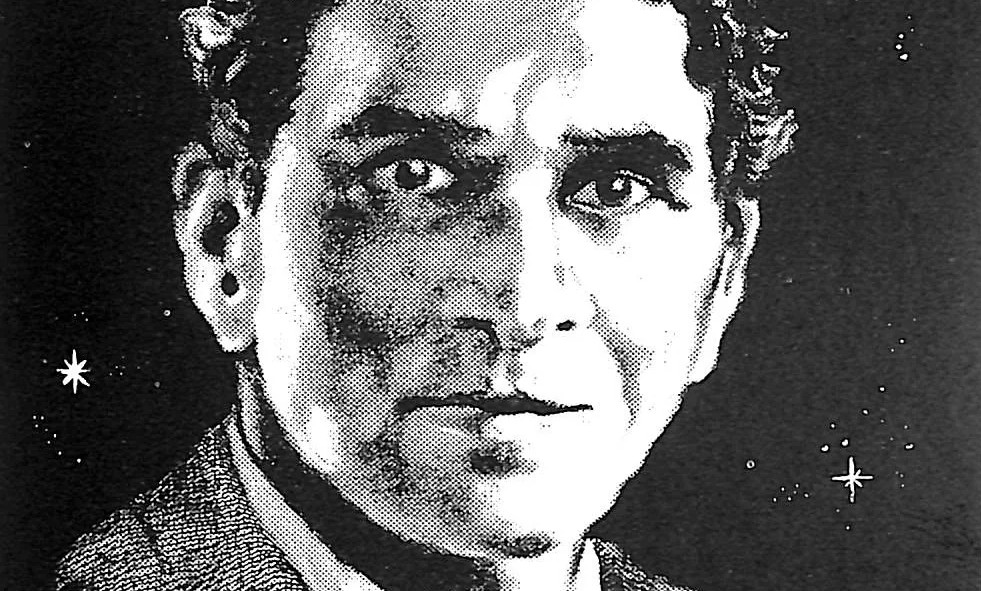
The author of The Purple Cloud was an interesting and controversial British fellow by the name of M.P. Sheil, who rose to some prominence as an author in the late 19th century, in particular through his novel The Yellow Danger, a stunningly racist piece of writing that capitalised on Western anxieties about Chinese imperialist ambitions. The novel became a best-seller and helped influence a number of late 19th and early 20th century so-called invasion novels, many of which had science fiction elements. The Yellow Danger remains Sheil’s best-selling novel, largely due to its extraordinary popularity upon release. However, Sheil considered it a hack work, and was later embarrased by its success. His literary reputation rests almost entirely on his 1901 novel The Purple Cloud, one of the first modern takes on the post-apocalypse and empty world theme, removed from the metaphorical symbolism of the apocalyptic writers of the Romantic era. While not an instant commercial success, The Purple Cloud has since been translated into numerous languages and reprinted repeatedly, and is counted as a classic in its genre. M.P. Sheil’s greatest success came at the turn of the century, and although he continued to be published until the 30s, his popularity waned over the years.
While he maintained a devout xenophobe and proponent of eugenics for all of his life, he also dabbled in radical left politics, and translated several revolutionary pamphlets into English for Sylvia Pankhurst’s Workers’ Socialist Federation. Later scholars have seen Shiel’s revolutionary streak as driven less by socialist values than by a chaotic desire to overthrow the Victorian capitalist society and replace it with a new, scientific world order. In addition to his racism and misoginy, Shiel was also found guilty in 1914 for having sexually abused his 12-year-old stepdaughter. At the time, the trial was covered up as a fraud case, and it wasnt until nearly a hundred years later that the truth came to light.
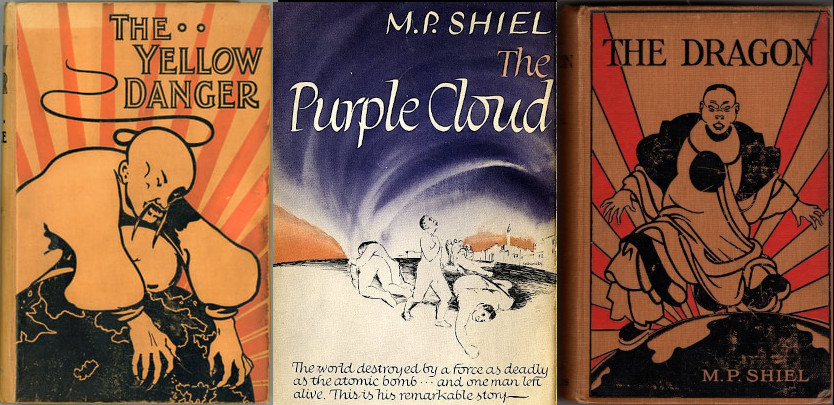
The only work of film or television that has been officially credited to the works of M.P. Sheil is The World, the Flesh and the Devil, but his influence on literature and film is significantly larger than this. The Yellow Danger served as an obvious blueprint for Sax Rohmer’s hugely popular, deeply sinofobic book series about the supervillain Fu Manchu (1912). This character, in turn, laid much of the foundation for racist stereotype of the mustachioed Asian villain of numerous comic books, films and TV series, see for example Ming the Merciless in Flash Gordon (1936, review), Marvel’s Yellow Claw (1956) and The Mandarin (1964), as well as DC Comics’ Ra’s al Ghul (1971). The Purple Cloud influenced much of the post-apocalyptic fiction to come. It is seen as a major inspiration for Jack London’s The Scarlet Plague (1914), and, as mentioned, The Omega Man and I Am Legend. Stephen King has named it as a primary inspiration for his 1978 novel The Stand, which has been turned into miniseries in 1994 and 2020.
In a way, it is ironic that the person who adapted Shiel’s story for screen for his only film credit was married to a Chinese woman.
Composer Miklos Rosza was one of the most celebrated movie scorers during Hollywood’s golden age, and wrote the music for such blockbusters as Double Indemnity (1944), Spellbound (1945) and Ben-Hur (1959). He composed the music for four science fiction movies: The Man in Half Moon Street (1945, review), The World, the Flesh and the Devil (1959), The Power (1968) and Time After Time (1979). In the 50s his music was also often used as stock in science fiction films, serials and TV shows.
Almost everyone on the crew has won at least one Oscar or Emmy, but lets pick up a few of those who have some sci-fi connection. Makeup artist William Tuttle worked on over half a dozen science fiction films, including The Forbidden Planet (1956, review), The World, the Flesh and the Devil (1959), The Time Machine (1960) and Logan’s Run (1976).
Robert Justman had a substantial career as an assistant director in the 50s, but his contribution to science fiction was far more important as a TV producer. Hustman worked as associate producer on the first George Reeves TV series The Adventures of Superman (1953–1956). He worked in the same capacity on almost all episodes of the original Star Trek series (1966–1969), and also co-produced over a dozen episodes of Star Trek: The Next Generation (1987–1988).
Franklin Milton was sound supervisor on The World, the Flesh and the Devil (1959), The Time Machine (1960), Atlantis: The Lost Continent (1961), Around the World Under the Sea (1966) and The Power (1968).
If you’re ever wondering who designed what the future looked like on film in the 70s, then the answer might well be Matthew Yuricich. Yuricich worked as a matte artist on 20 science fiction movies, including Forbidden Planet (1956, review), Soylent Green (1973), Westworld (1973), Death Race 2000 (1975), Logan’s Run (1976), Close Encounters of the Third Kind (1977), Star Trek: The Motion Picture (1979), Blade Runner, 1982), Ghostbusters (1984), Masters of the Universe (1987) and Bill & Ted’s Bogus Journey (1991).
Janne Wass
The World, the Flesh and the Devil. 1959, USA. Directed by Ranald MacDougall. Written by Frederick Reyher, Ranald MacDougall. Inspired by novel “The Purple Cloud” by M.P. Shiel. Starring: Harry Belafonte, Ingrid Stevens, Mel Ferrer. Music: Miklos Rosza. Cinematography: Harold Marzorati. Editing: Harold Kress. Art direction: Paul Grosse, William Horning. Makeup: William Tuttle. Sound: Franklin Milton. Special effects: Lee LeBlanc. Visual effects: Matthew Yuricich. Produced by Harry Belafonte, George Englund, Sol C. Siegel for Sol C. Siegel Productions, HarBel Productions & MGM.


Leave a Reply