
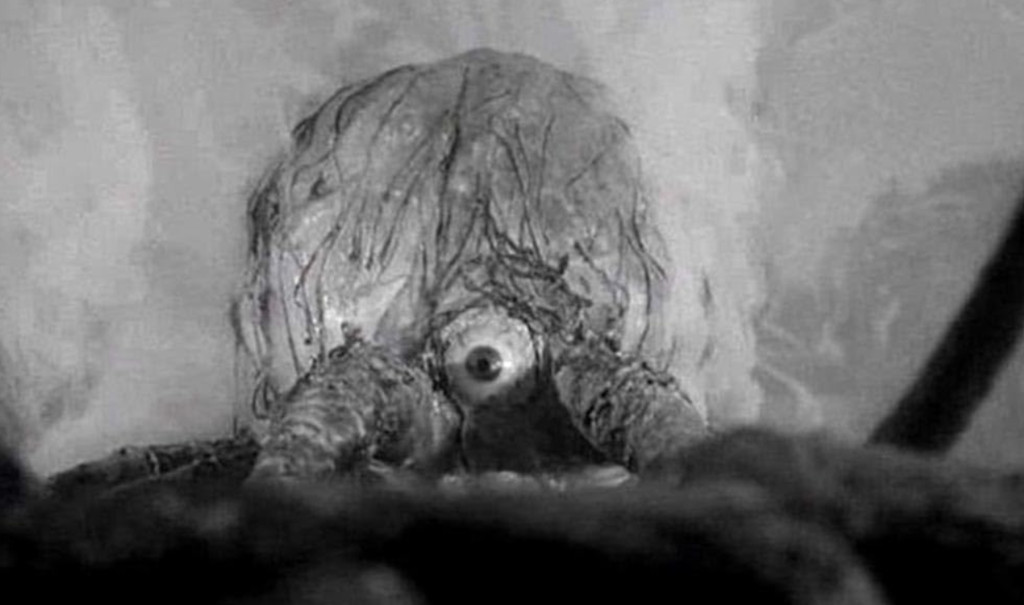
Aliens hiding in the mist surrounding the Swiss Alps terrorize a small ski resort in this 1958 British low-budget cult classic. Despite Les Bowie’s variable effects and Jimmy Sangsters occasionally wobbly script, this is a fairly effective and atmopsheric little horror thriller. 6/10
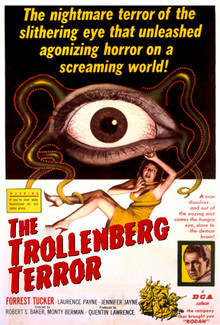
The Trollenberg Terror. 1958, UK. Directed by Quentin Lawrence. Written by Jimmy Sangster, based on TV serial written by Giles Cooper et. al. Starring: Forrest Tucker, Janet Munro, Jennifer Jayne, Laurence Payne, Warreh Mitchell. Produced by Robert Baker & Monty Berman.
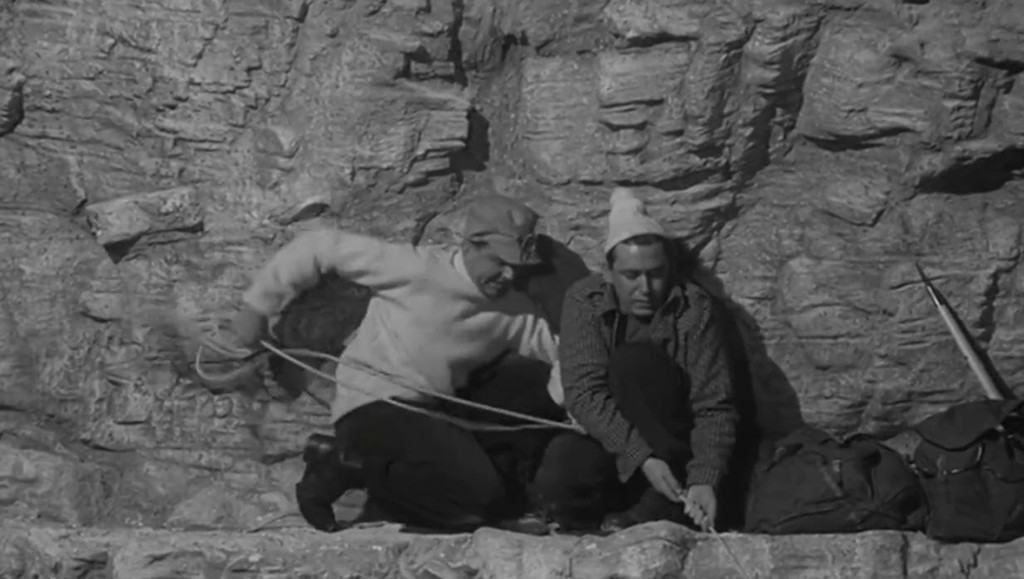
On a ledge of the Swiss Alps, two young men wait for their mate to descend from higher above, off screen. He complains that he’s suddenly wrapped in a strange mist, after which he shouts that someone is coming, then lets out a frightful scream and tumbles across the screen. His friends catch his rope as he falls and pull him up, and recoil in horror – his head has been ripped clean off. We then cut to a suggestive point-of-view shot of a train speeding through the Swiss landscape into the darkness of a tunnel – and the opening credits begin.
This is a highly effective opening to the British 1958 low-budget SF/horror film The Trollenberg Terror, releases in the US as The Crawling Eye. Modelled on the hugely successful Quatermass TV shows and movies, the film was based on yet another television show with the same name, and produced by the small outfit Tempean Film and distributed by Eros Film. The script was by none other than Hammer’s scriptwright extraordinaire, Jimmy Sangster.
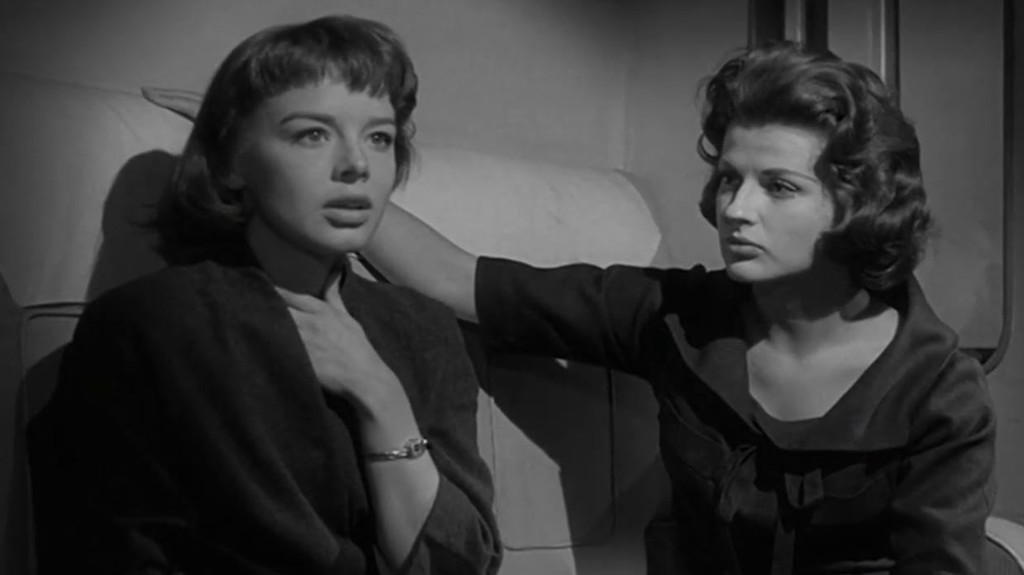
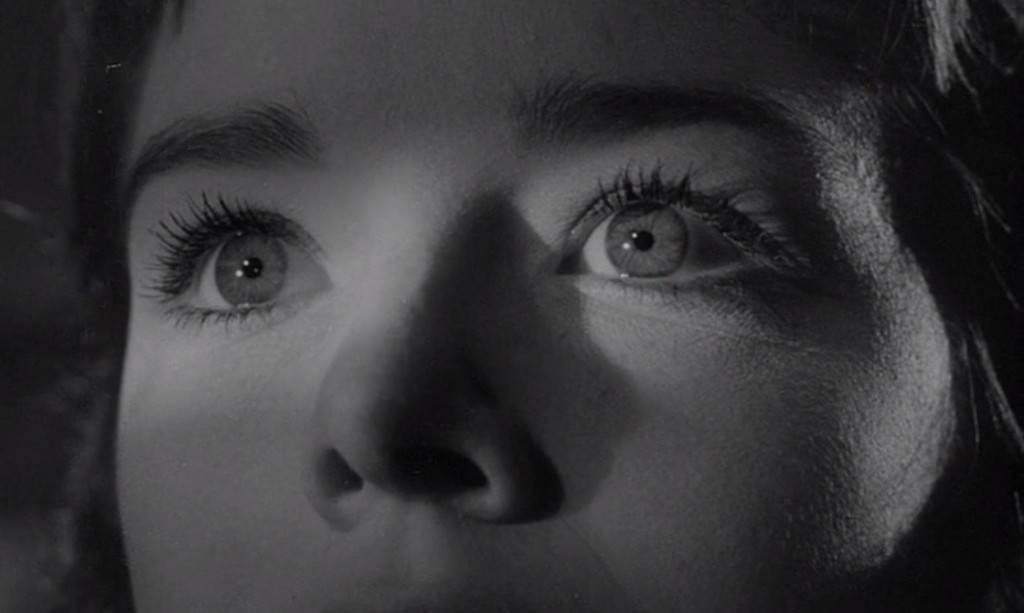
Returning to the train, we meet sisters Anne (Janet Munro) and Sarah Pilgrim (Jennifer Jayne), a showbiz mentalist sister act on their way to Geneva for a holiday. But as they near Trollenberg station, Anne collapses onto the lap of fellow traveller, American Alan Brooks (Forrest Tucker), and then insists, for no obvious reason, that the sisters get off at the ski resort of Trollenberg, which also happens to be Alan’s destination.
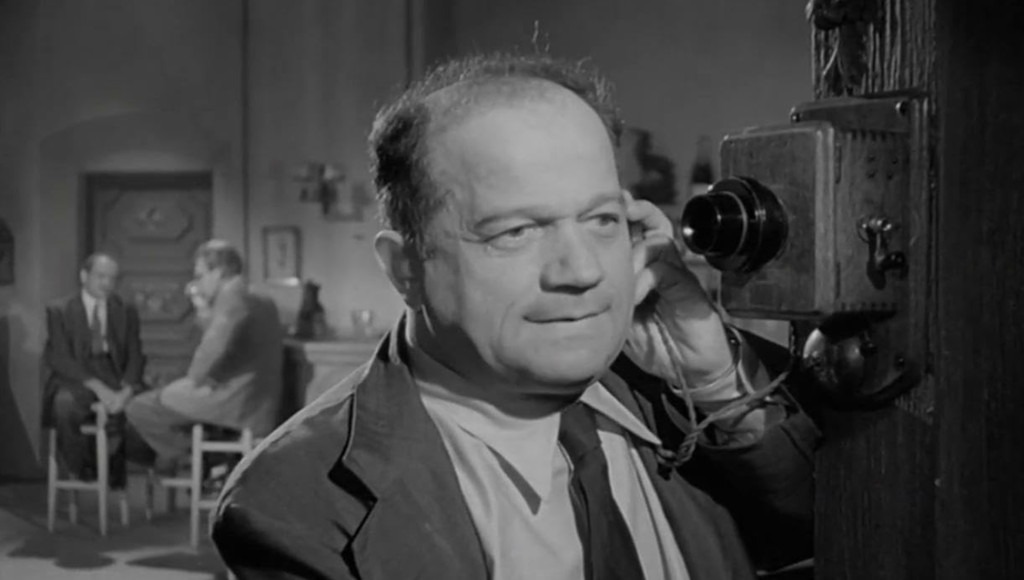
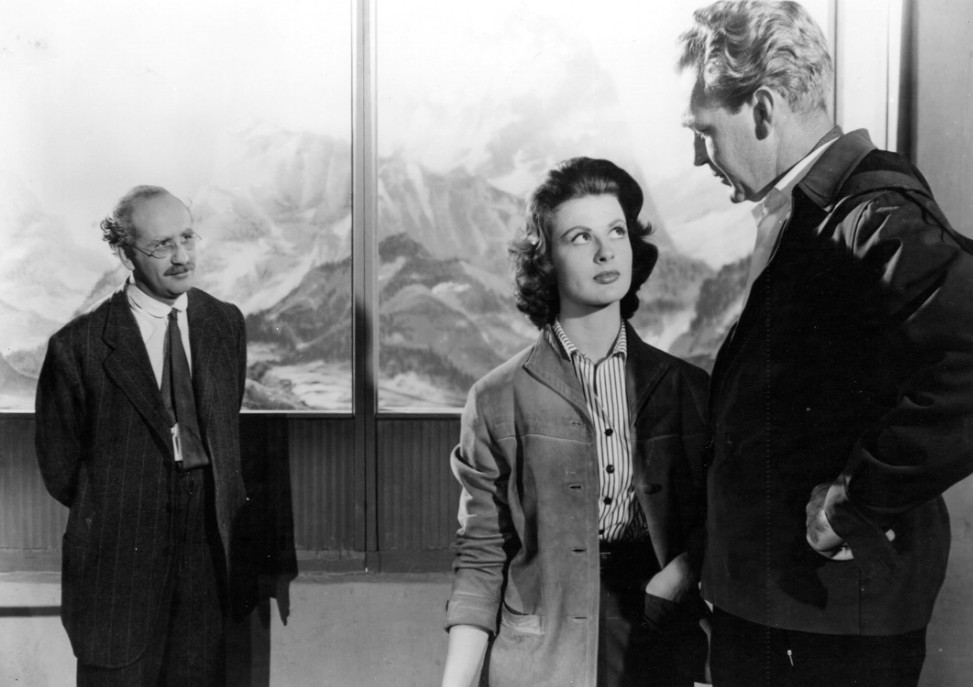
It is off-season, and the hotel resort has few guests, and the trio settles in. Alan soon visits his old friend Dr. Crevett (Warren Mitchell), a researcher in cosmic rays, who works in an avalanche-proof, high-tech observatory higher up in the mountain. It turns out that Alan is in fact a paranormal researcher employed by the UN, and he is in town to help Crevett investigate a string of mysterious murders on the Trollenberg mountain. The two are tight-lipped, but suggest that it may be a reprisal of something they have previously encountered in the Andes, but which remained unsolved because of a lack of evidence, and has turned Alan into a bit of a laughing stock at work. Crevett has his geiger radars turned onto a mysterious cloud that seems to be hovering about the mountain, and apparently moves by its own volotion – and it is radioactive. A could that resembes something they both witnessed in the Andes…
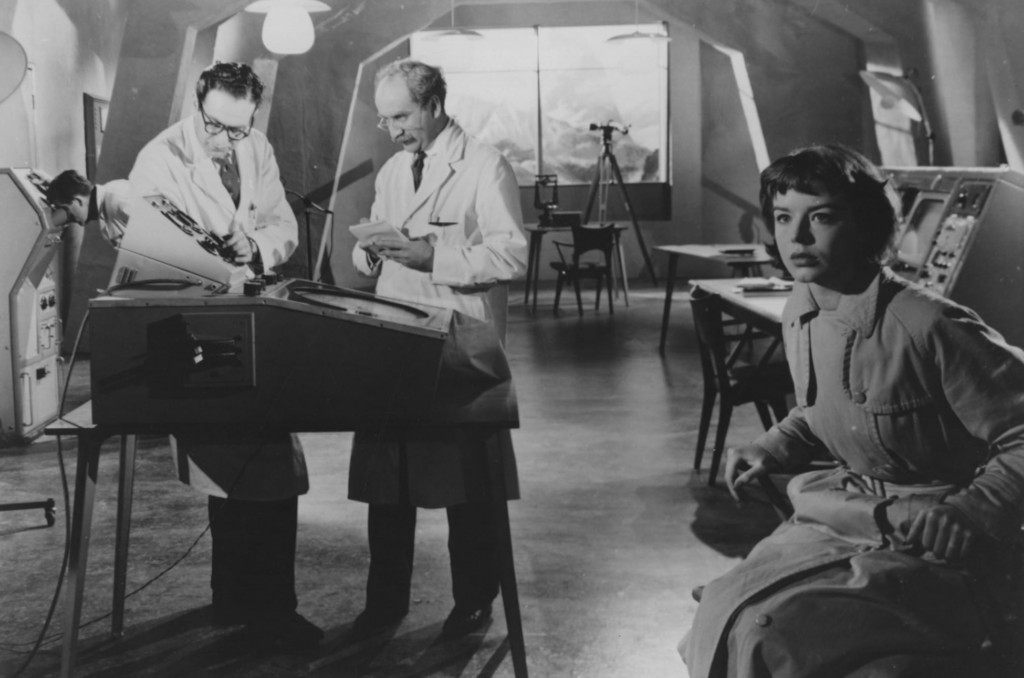
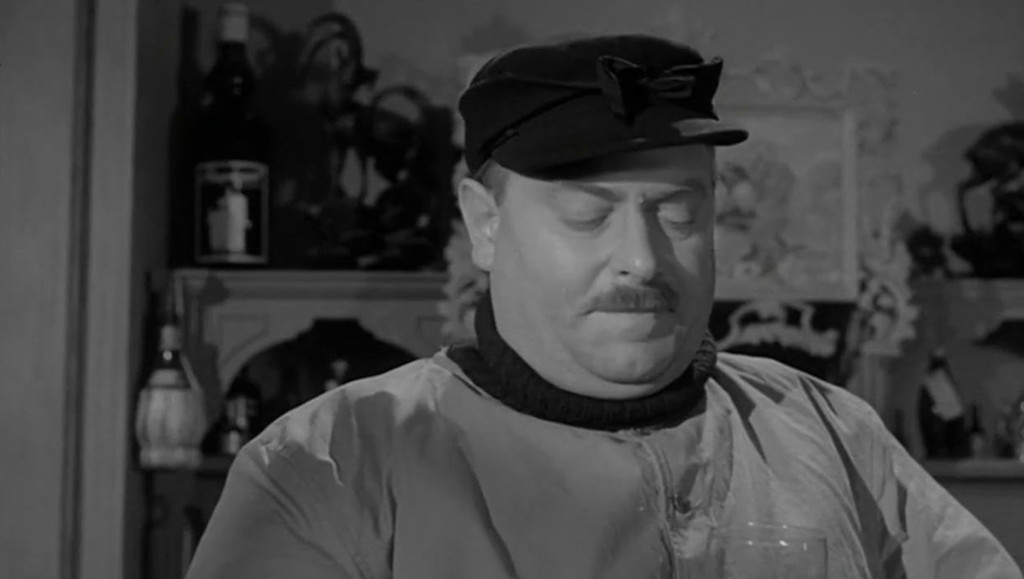
Also among the populace at the hotel are hotel proprietor and town mayor Klein (Frederick Schiller), loyal bartender Hans (Colin Douglas) and a British guest by the name of Philip (Laurence Payne), a journalist, also here to investigate. There are also two mountaneers, Dewhurst and Brett (Stuart Saunders & Andrew Faulds), who are on site to investigate the deaths, and at the night of Alan’s and the sisters’ arrival, they head on up the mountainside, and take refuge for the night in a halfway hut.
The same night, the Pilgrim sisters give the guests and staff at the hotel a small mentalist show, but in the middle of their show, Anne trails off and starts describing a scene outside the halfway hut, narrating how Klein ventures outside of the hut into the mysterious cloud – apparently describing the scene from the point of view of the cloud. Distraught, she warns Brett (who of course can’t hear her) not to approach the cloud. Exhausted, she collapses. After taking care of Anne, Alan talks to Sarah, who reveals that while their act started out as a stage illusion, over the years, Anne seems to have developed true telepathic powers. Alan, surprisingly, does not seem surprised, and only insists that Anne be kept under observation. The next day, Alan and a team of climbers visit the halfway hut and discover that Brett is gone and Dewhurst is inside the hut, frozen stiff, and with his head torn off. Everything in the hut is deep-frozen, even the telephone wires have have been put under such extreme cold that they have been destroyed and crumble in the hands of the team.
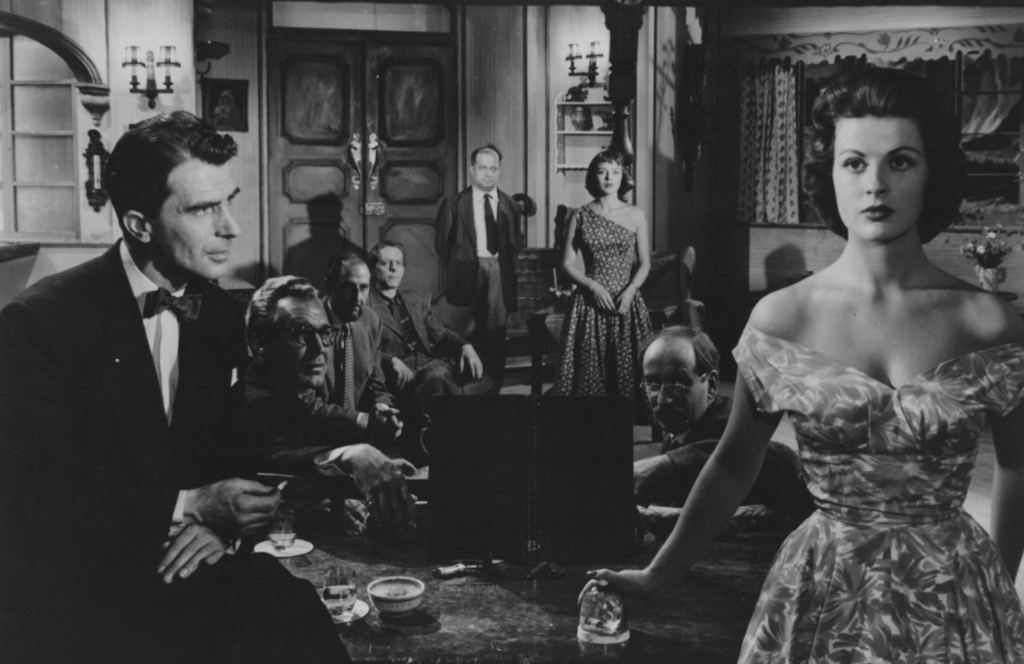
Back at the observatory, Alan explains to Philip and the rest that in the Andes, he and Crevett encountered the same mist, which they speculated engulfed aliens that have landed to take over the Earth. Their existance only in the mountains, they speculated, could be due to the thinner atmosphere, akin to that of their home planet. In the Andes they never got to the bottom of the problem, as the mist disappeared before the authorities arrived. Now, as they observe the mist from the observatory, they realise the aliens are creeping ever lower down, adjusting to the thicker atmopshere.
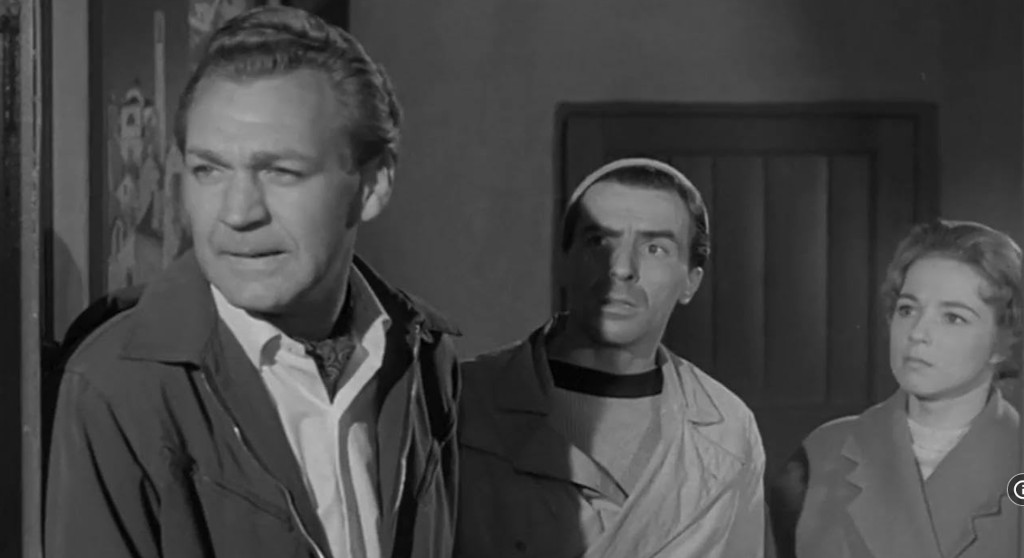
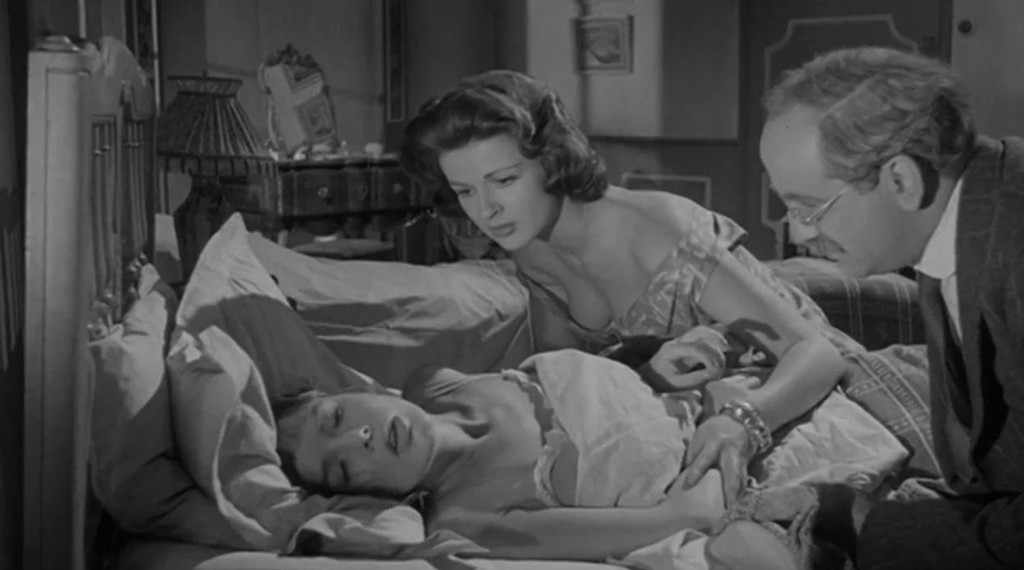
The next day, Brett returns to the hotel, seemingly dazed and with his muscle coordination messed up, which alerts Alan, as Brett has a drink at the bar. When Anne enters the room, Brett pulls a knife and attempts to kill her, but he is knocked out by Alan. Alan explains that a similar thing happened in the Andes, with the mist sending a zombified man to kill a telepathic woman because she would alert humans about their existence. Upon examination, Crevett realises that Brett has in fact been dead for 24 hours, and is now a zombie controlled by the aliens. He is sedated and placed in a locked room. However, during the night he awakes, breaks free, kills Klein and breaks into Anne’s room. However, Sarah alerts Alan, who arrives in the nick of time and shoots zombie Brett.
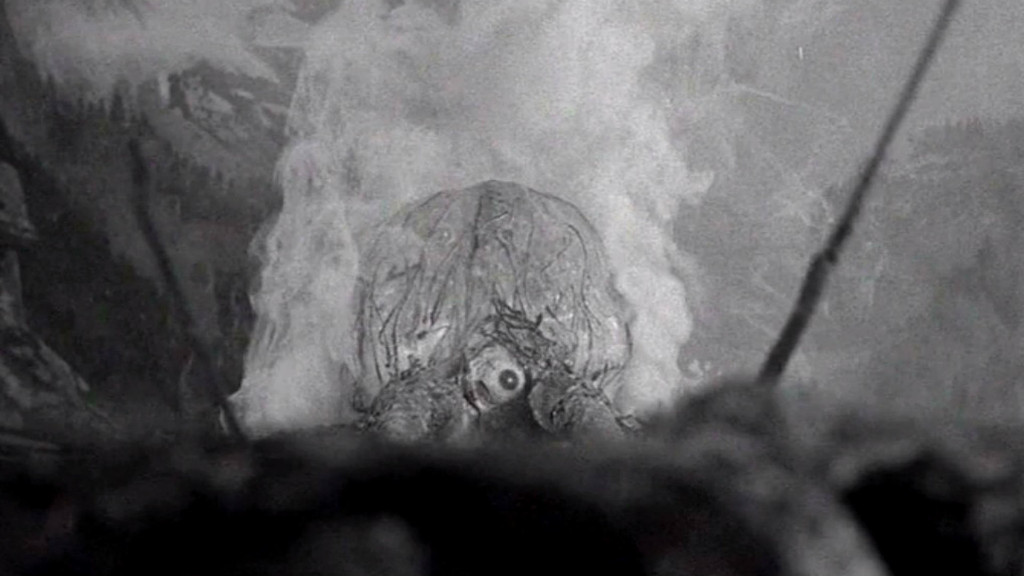
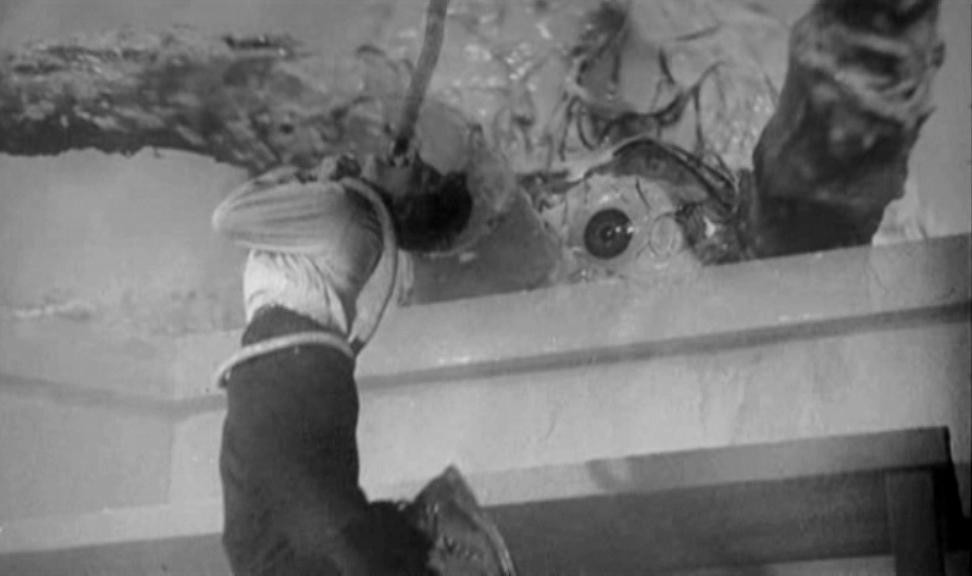
In the morning, it becomes clear that the mist is now moving toward the hotel and the town, and Alan and Philip organise an evacuation of the guests and villagers (who seem to number only a dozen) to the heavily fortified observatory, with the cable cars. Just as Alan is about to leave with the last car, they realise a small girl has gone back to the hotel to fetch her toy, and Alan runs to the rescue. As he arrives, the door of the hotel is being smashed in, and through it peaks an enormous, fleshy octopus-like creature with a single, staring eye. One of its tentacles reaches out for the girl, but Alan hacks it off, and they barely make to to the observatory.
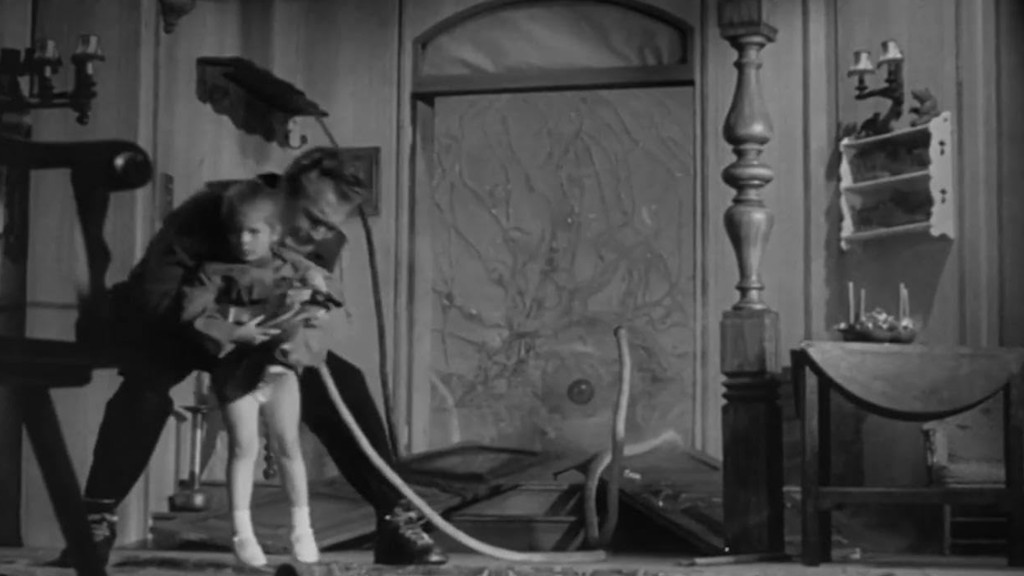
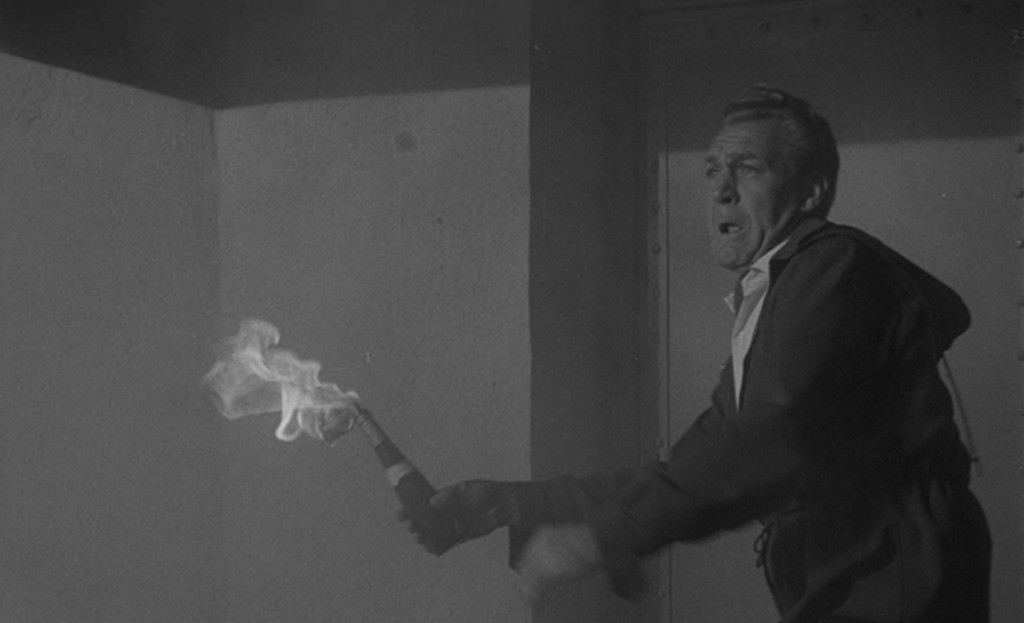
Back at the observatory, the the mist has now divided, as four different monsters are laying siege to the building. Alan theorises that since the creatures are cold, they can be destroyed by heat, and has Philip and the others prepare Molotov cocktails, and ventures outside to test them on the creatures, which recoil at the fire. He then calls in UN planes to fire bomb the monsters. But as the creatures start breaking down the walls of the observatory – will help arrive in time?
Background & Analysis
Some of the best science fiction of the 50s was created for British television and radio. Hammer Films used much of TV’s sfi-fi output as base for their movies. The most famous example, of course, is The Quatermass Experiment (1953, review), the groundbreaking show which was adapted by Hammer as The Quatermass Xperiment (1955, review). But also Hammer’s The Abominable Snow Man (1957, review), Columbia’s 1984 (1956, review) and Artistes Alliance’s The Strange World of Planet X (1958, review) were based on TV shows, and Spaceways (1953, review) and the Dick Barton films were based on radio plays and shows.
The same is true for Tempean Films’ 1958 cult classic The Trollenberg Terror, released in the US as The Crawling Eye, keeping with the formula created when The Quatermass Xperiment was retitled The Creeping Unknown. The TV series was produced by television channel ATV and written by George F. Kerr, Jack Cross and Giles Cooper under the collective pseudonym of “Peter Key”. Both The Strange World of Planet X and The Trollenberg Terror were produced and directed by Quentin Lawrence, who also wound up directing the movie version of The Trollenberg Terror.
The rights to both ATV’s and Lawrence’s TV shows were bought by distributor Eros Film, which seems to have operated very much like American International Pictures in the US; Eros would bankroll independent producers, who would go on to produce quota quickie movies, often with a US export in mind, through their own production companies. Eros already had a good working relationship with Robert Baker and Monty Berman at Tempean Films, who took on the job of producing The Trollenberg Terror, while the production of The Strange World of Planet X was given to George Maynard and Artistes Alliance. Baker and Berman were able to secure the services of Hammer’s top screenwriter Jimmy Sangster to write the script, just as they had done for their previous SF film Blood of the Vampire (1958, review), which premiered just three months before The Trollenberg Terror.
It was Quatermass creator Nigel Kneale who laid much of the foundations of British SF on TV and in film. For one, most of it was Earth-bound, and it mostly omitted many Hollywood tropes, such as UFO’s, Frankensteinean monsters, death rays and futuristic gadgetry, and so on. It was mostly cerebral, and the plot was moved forward by ordinary people doing their jobs, in a rather British stiff upper lip fashion.
What sets The Trollenberg Terror apart, though, is that it relies rather heavily on special effects, and in particular the ending is proof that Tempean Films, and perhaps the British film industry in general, was not quite up to the same level as Hollywood when it came to producing special effects movies. The Quatermass films generally relied on very simple, amorphous monsters in order to achieve a level of credibility that Hammer knew it couldn’t get with highly detailed creatures that needed to be puppeteered and/or inserted into shots with elaborate visual effects and miniature work. And in The Abominable Snowman, Val Guest deliberately kept the snowmen out of sight in order not to smash the illusion. In The Trollenberg Terror, however, director Quentin Lawrence attempts to do what he couldn’t do with the TV series: to bring the monsters out into the open.
As with many TV shows in Britain in the era, The Trollenberg Terror was aired live, like a TV play, which severely limited the use of special effects and allowed no visual effects. Thus, in the TV show, the monsters were kept out of sight, perhaps with the exception of the odd tentacle. Surely Lawrence jumped at the idea of actually showing the audience the tentacled eye-beings. This he did with the help of special effects master Les Bowie, primarily a matte painter, but an expert in pretty much all fields of special effects. Bowie had already created the monsters for The Quatermass Xperiment and its unofficial sequel X the Unknown (1956, review), so Lawrence knew he would be in good hands.
The finished product is a bit of a mixed bag. The effects of The Trollenberg Terror are often called out as shoddy by modern critics, but there’s both good and bad in the movie. We are so familiar with the kind of monster that the – Ixodes – as they were called in the TV series, represent, that we easily view them as laughable and derivative. But in 1958, they were quite novel, and extremely ambitious not just for a low-budget movie, but for any movie. It cost Disney a million dollars to create the squid for 20,000 Leagues Under the Sea (1955, review), so one can forgive Bowie and Lawrence for not achieving quite the same result on basically pocket lint. That said, the monsters have a sort of fleshy feeling to them that is rather effective, and must have – and indeed seems to have – scared the bejeezus out of young movie-goers in 1958, and continued to do so when the film was aired on TV.
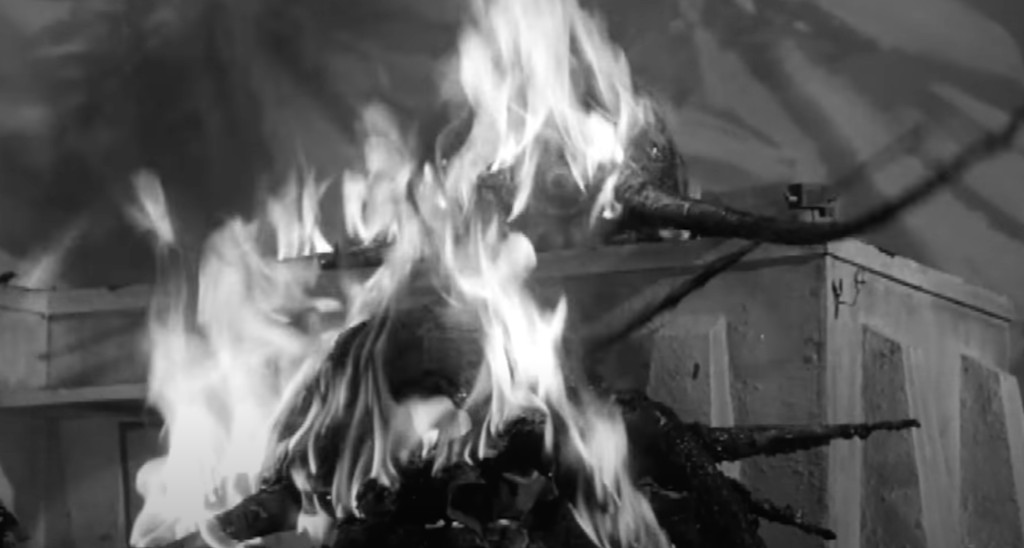
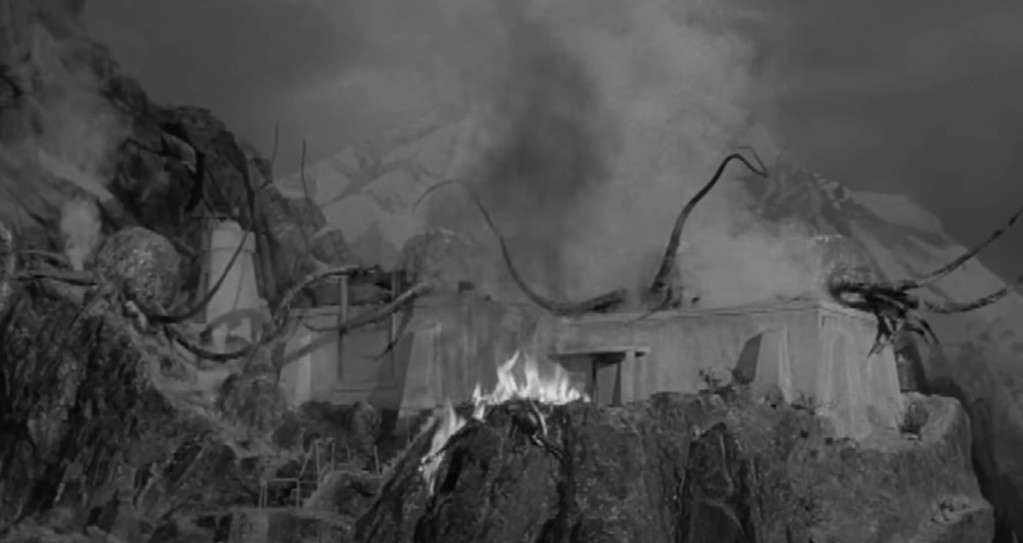
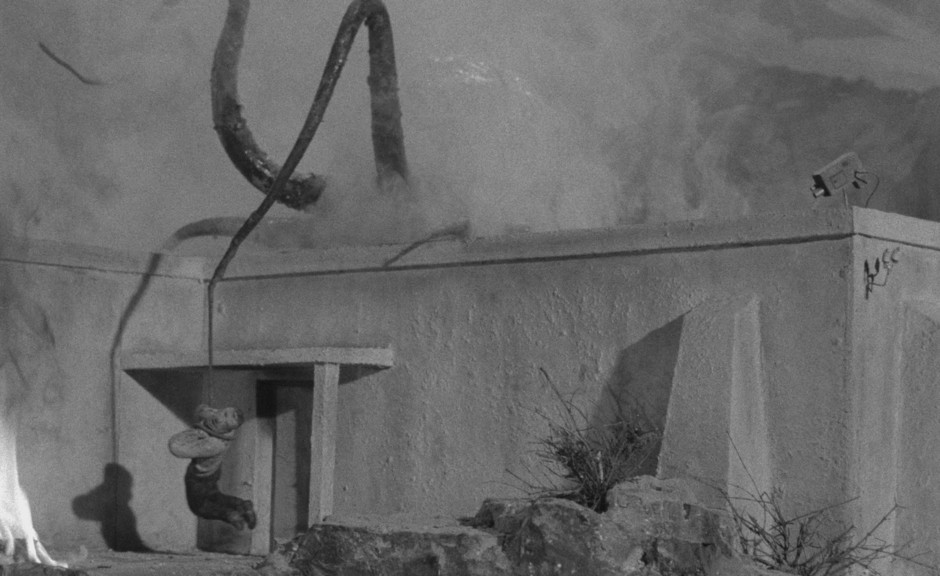
The scenes where the monsters move up the mountain toward the research station have gotten a lot of flack in later years, but I honestly don’t understand why. Sure, they are not up to modern effects standards, but for the most part I think the model work stands up rather well. The biggest problem is that Bowie isn’t able to make the tentacles movie naturally, as they are operated with wires from the outside, rather than from the inside. The creatures themselves are well crafted, and the sequence is well filmed and edited as not to let you linger too long on any particular shot of the models. There is one shot, which lasts no more than a second, of one of the monsters picking up a rather badly made miniature dummy of Laurence Payne, which is particularly atrocious, but other than that, most shots in this sequence work fine. Granted, the illusion is shattered in the very last moments of the film, when the UN forces drop fire bombs on the monsters. This is partly because of that tricky problem that has always haunted miniature filming: fire doesn’t scale. A miniature might look superb, but as soon as you set it on fire, you reveal it as a miniature. Another problem is that Lawrence and Bowie film too many monsters at the same time in wide shots, and their unnatural tentacle wawing just makes them look rather silly. But on the whole, I’m pretty sure that when you saw those, icky, fleshy, veined eye creature move straight toward you and fill up the entire screen at a movie theatre, it would have been pretty much the scariest thing you had seen in a movie up to that point in British film history.
No, what prevents this movie from becoming a classic is not the effects, but once again Jimmy Sangster’s script. Sangster was a good screenwriter – up to a point. He often had good ideas, he knew how to create suspense and he was good at dialogue. But as evidenced particularly in movies like The Revenge of Frankenstein (review) and Blood of the Vampire, both made the same year as The Trollenberg Terror, he often had difficulty fleshing out the plot between the beginning and the end to a coherent, meaningful story. In both the afore-mentioned movies, the plot treads water for much of the movie. He was much better when he adapted TV material and had a ready-made plot to lean on. This being the case in The Trollenberg Terror, it is one of Sangster’s better scripts in that it has a clear forward momentum during most of its running time.
However, it is still a problematic script, and it’s difficult to tell whether this is because of Sangster or if the problems are artefacts from the TV show, as the series wasn’t recorded and archived for posterity, and there seems to be very little information about the show online. What makes the film (and the TV show) rather special is the fact that it is seemingly centered around Anne Pilgrim and her psychic connection to the aliens. The movie also benefits greatly from Janet Munro’s outstanding performance in the female lead. However, around halfway through the movie Anne gets pushed aside completely and becomes a bystander and damsel in distress. Ultimately, her psychic connection to the Ixodes have no bearing on the film’s resolution, and once the mystery of what is going on in Trollenberg is revealed, Anne really doesn’t play any part in the proceedings.
As stated, it may be that this is an artefact of the TV show, but it is also symptomatic of Sangster’s writing. Sangster often toyed with a number of interesting ideas in his script, but was seldom able to tie them together and in with the resolution of his movies. More often than not, they were left hanging, making them seem more like padding than anything else. In the original Quatermass TV series, Professor Quatermass literally talked the monster to death, engaging in a mental duel with the monster that had taken over an astronaut’s mind and body, forcing the astronaut to remember who he was and force the alien to commit suicide. It stands to reason that a TV show that focuses on a psychic woman who is in telepathic contact with alien invaders would place this connection at the heart of the show’s finale – however, I have found no information on whether this was the case or not. I do suspect, though, that the TV show did not end with fire bombs, as the live-aired production would not have been able to produce such effects. I suspect, therefore, that Sangster, who found Nigel Kneale’s original ending to the Quatermass show talky and tedious, has removed the original ending for The Trollenberg Terror and added the air strike as a more visually dramatic finale. Which it is, but it is also a boring and prosaic ending to a movie in which the aliens’ mind control powers have been such a prominent point.
Several US critics, like Bill Warren, have cited a vagueness about several plot points, such as why the aliens fear the psychics, which I think is a matter of them having watched the shortened US version, The Crawling Eye, in which some of the exposition may have been lost. In fact, Alan Brooks explains very clearly why the psychics are a threat to the aliens in the original version – it’s because they can alarm the rest of Earth’s population about the aliens’ existence. A better question is why the aliens continue to try and kill Anne even after their cover is blown. There is no logical reason for them to do so, other than giving the script a damsel in distress.
Despite its scripting flaws and the occasionally sub-par special effects, The Trollenberg Terror is still a better-than-average quota quickie B-movie. The basic idea is somewhat novel, at least among all the derivative monster B-movies that Hollywood was producing at the time. And the story unfolds in a refreshingly unprogrammatic way. The introduction of the main characters is intriguing, and following along as their mysteries unravel gives the film a sense of excitement and tension from the very beginning. The female characters are unusually well written for a film of this type, and even Alan Brooks is given a certain degree of personality traits, which is quite unusual for a leading man in a science fiction B-movie from the 50s.
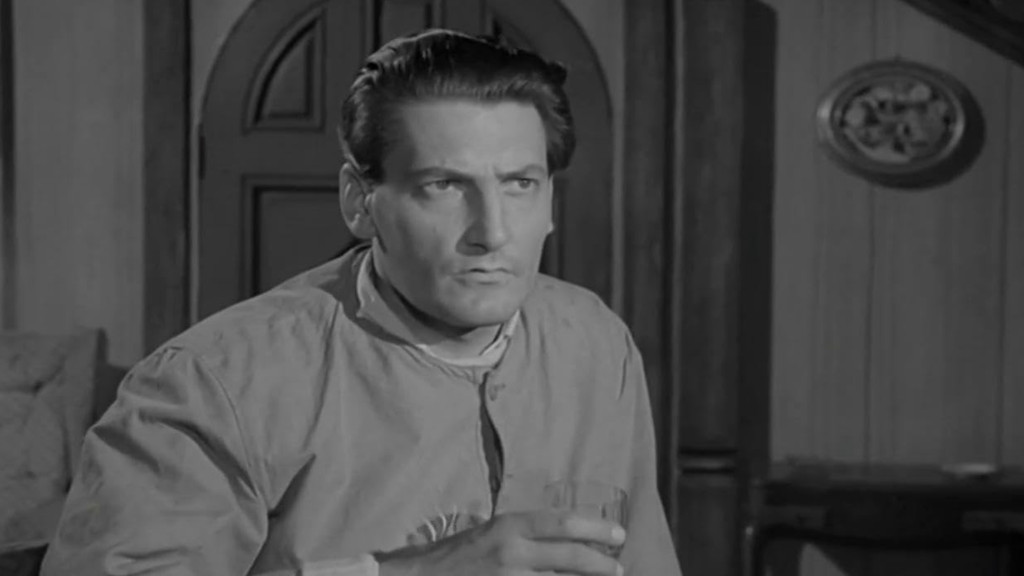
The character of Brooks, the American UN troubleshooter, is a character constructed solely for the film, as a way to get an American actor in the lead – as demanded by US distributor DCA, and the normal standard for British low-budget exports to the American B-movie market. Unfortunately, director Lawrence seems to have insisted that the TV show’s leading man Laurence Payne get a substantial role in the movie, so the role of Phillip has been retained, even if it is completely redundant. Even more bewildering is that Phillip walks away with Anne at the end of the movie, as they have hardly had any interaction to speak of.
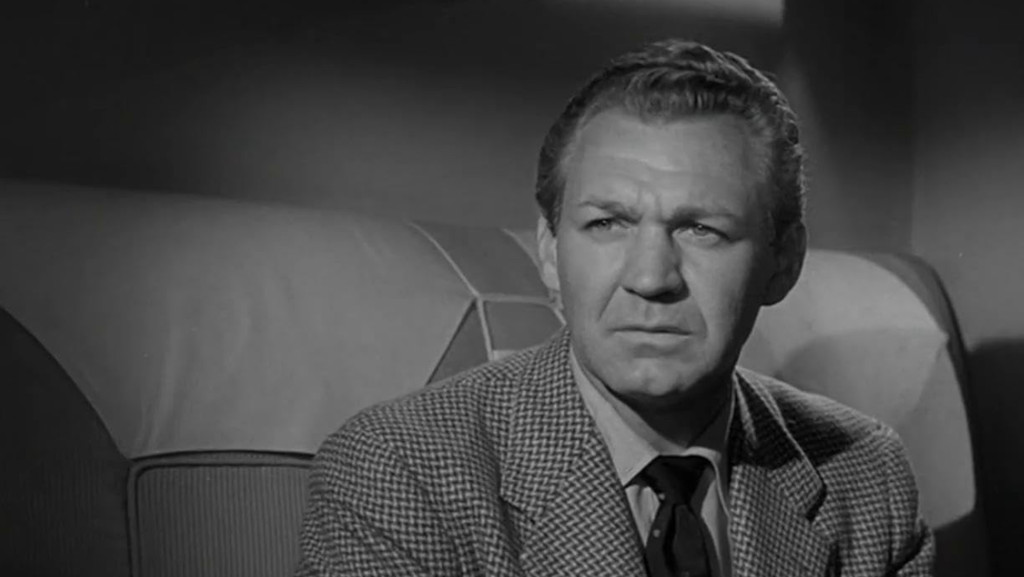
The acting is good across the board. I was sceptical about Forrest Tucker when I first saw him in The Strange World of Planet X, where he was miscast and had to play a terrible character. He was much better in The Abominable Snowman, and I think he does very well in The Trollenberg Terror as well. Tucker was a gruff player of second leads and heavies, primarily in westerns, and was probably happy to get to play other, more intelellectual, roles in British SF. He was one of a number of minor American movie stars who were brought over to Britain to play leads in B-movies, as to get a marquee name for the US audiences. Often these actors appeared as bulls in china shops in the dry and dialogue-heavy British science fiction movies, but they undoubtedly also brought a much-needed energy to the proceedings. In The Trollenberg Terror Tucker also shows that he has acting chops and nuance.
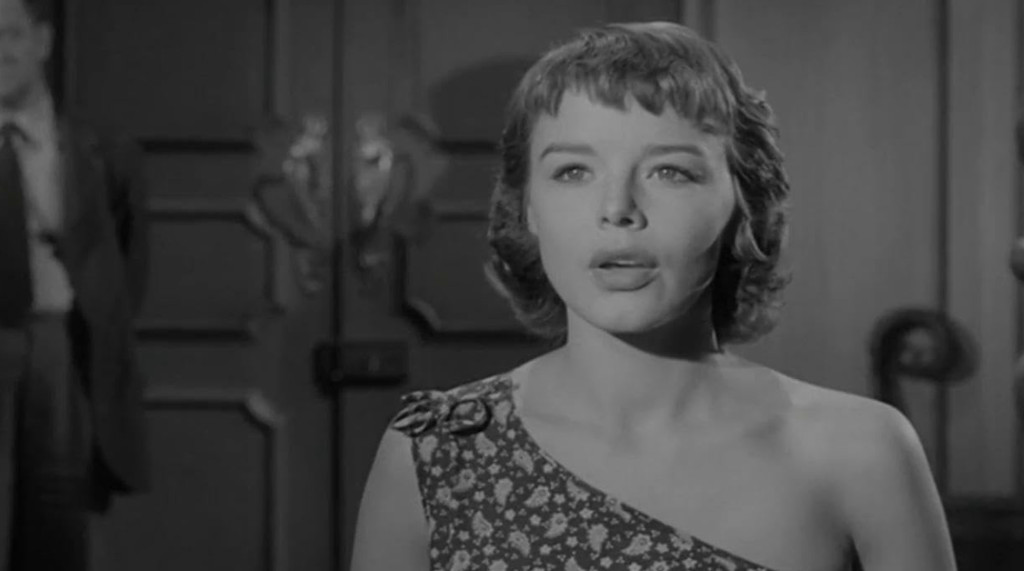
The real find of the movie is Janet Munro, here in her first lead. So little name recognition had she, that Jennifer Jayne, who plays her sister, is actually billed higher than she is. Munro is able to portay a combination of mystery, mischief and child-like naivety that makes Anne a spellbinding character, and is extremely powerful in the scenes where she is called upon to show dramatic emotions. It’s just too bad that the script leaves her a passive bystander after the first half of the movie. However, it must have been partly on the strength of her portrayal in this film that Disney cast her in the first of her big-budget films for the company. The rest of the cast is capable, some providing very strong support, others comfortably sputtering along in well-rehearsed types.
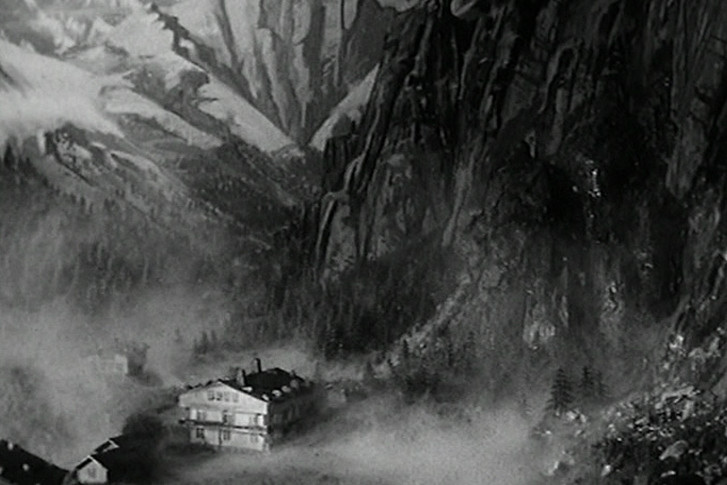
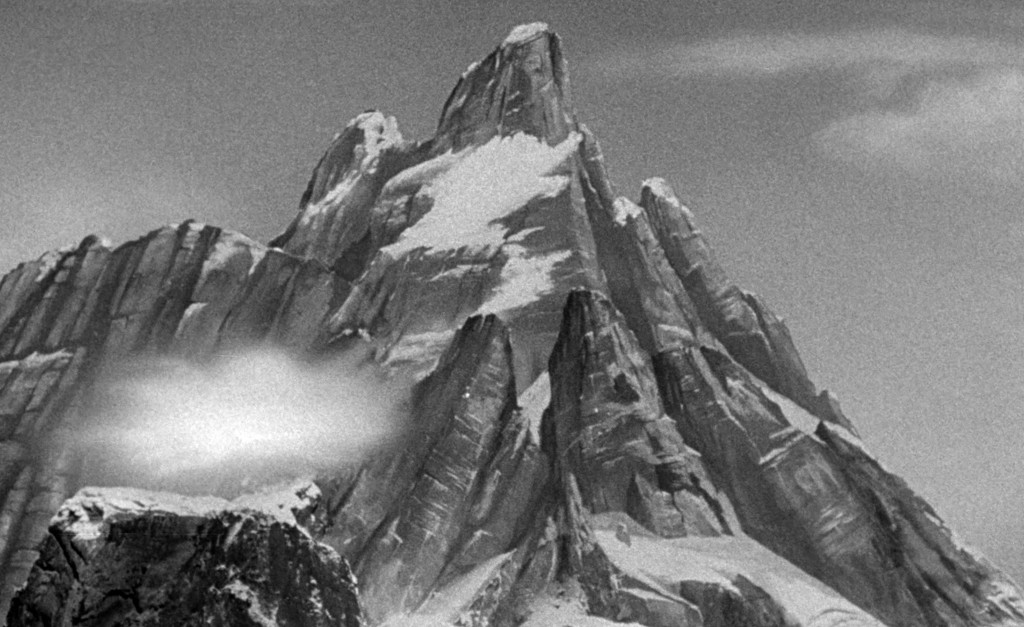
The Trollenberg Terror was shot at Southall Studios, in the Middlesex area of South London, one of the very first proper film studios in England. The Trollenberg Terror was actually the last film made in the studio before in closed down. There may be some second unit or stock footage from the Alps, although much of what we see of the Alps is actually studio-bound, matte paintings or miniature footage, as Les Bowie and his team needed to be able to control the mist and special effects in the Alpine valley of the story. Incidentally, Les Bowie in an interview complained about the budget and schedule allotted for the special effects, claiming that the mist was represented by “two wads of cotton stuck to a photograph of a mountain”. This has entered public consciousness and is often repeated, even though anyone watching the film can clearly see that the mist is not made with “two wads of cotton”, and the mountain is a painting and not a photograph, and that Bowie was probably exaggerating for effect.
Trollenberg is a made-up town, and no such municipality exists in Switzerland. However, there is a small area in Germany, fairly close to the Swiss border, called Trollenberg. It lies in a sparsely populated agricultural district, and seems to have few other attractions than a small business that makes artesan cheese (shoutout to Conni’s Käsemanufaktur!) and an old townhouse that can be rented for birthday parties.
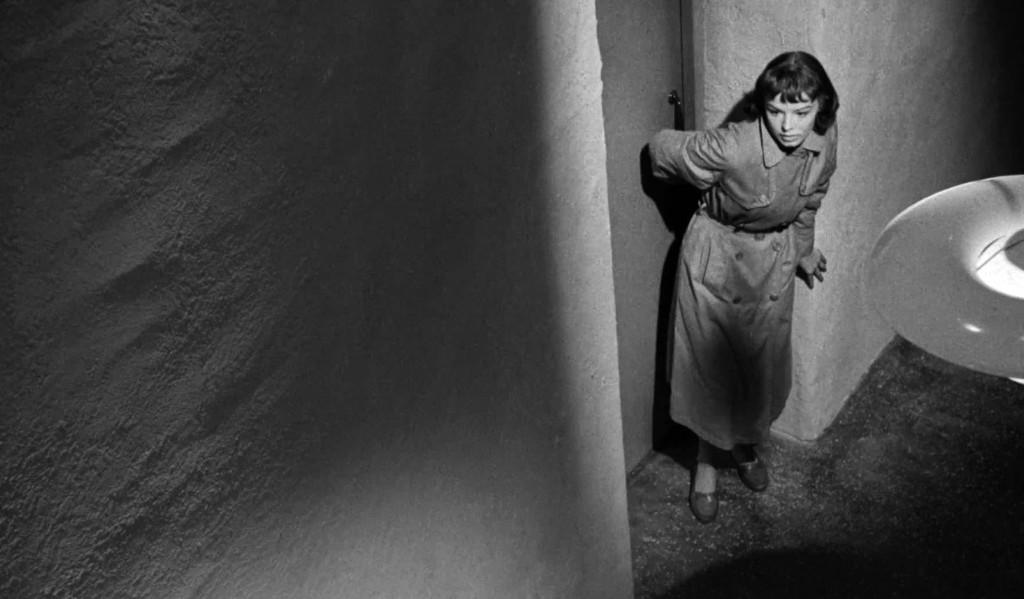
The Trollenberg Terror is a flawed but interesting science fiction horror movie, and one of the better low-budget SF films from the latter half of the 50s. It works best as a psychological/supernatural thriller during its first half, and becomes more of a programmatic monster movie toward its second half. That said, it is still able to conjure up some real moments of suspense at the back half as well. The monsters are a bit silly to a modern eye, but even they have their effective moments. The effects are of variable quality, but that’s to be expected from a low-budget 50s programmer. This was director Quentin Lawrence’s feature debut, and with that in mind, he handles things admirably, and maintains a steady directorial grip throughout the proceedings without doing anything particularly impressive. The film’s low budget is obvious in its often claustrophobic framing – when we see a wide shot it is almost inevitably a miniature or a matte painting. It is a film for the 50s B-movie fan exclusively, but those who like that sort of stuff will find it not at all a badly crafted little picture.
Reception & Legacy
The Trollenberg Terror opened in October, 1958 in London, and according to the Motion Picture Exhibitor’s London correspondent Jock MacGregor, it “proved highly lucrative”. In the US, it was shortened by 1o minutes from its original 85-minute running time, and released under the title The Crawling Eye, according to the usual formula for retitling these British Quatermass-inspired movies (The Creeping Unknown, X the Unknown, etc). In America, DCA distributed it on a double bill with The Strange World of Planet X, another British picture exported by Eros Film, and also starring Forrest Tucker. It was consquently retitled Cosmic Monsters. The US premiere took place in December, 1958.
The Trollenberg Terror received fair to good reviews upon release. The often critical British Monthly Film Bulletin was reservedly positive, giving it its 2/3 rating, writing that “several sequences […] are generally alarming, although much more could have been made of the dramatic moments”, and adding that the film seemed to have been shot and edited in a hurry. Often wary of gore, the MFB noted that “close-ups of such details as severed heads and melting flesh is more in evidence than in most science fiction pieces”. The magazine concluded that “more accomplished direction might have resulted in a film as effective as the Quatermass series”.
Richard W. Nason at the New York Times was less enthralled: “[the] double bill […] of The Crawling Eye and The Cosmic Monster do nothing to enhance or advance the copious genre of science fiction”. He was among the minority, though. Paul V. Beckley at the New York Herald-Tribune thought The Crawling Eye was “not the best of its breed but more than satisfactory for most of its length”. Variety wrote: “This is a better-than-most horror film which, despite its extravagant play upon the imagination, retains a chilling air of plausibility”. The Motion Picture Exhibitor said the movie had okay production and nice acting, and opined that it containted “considerable suspense, even horror” and “should do okay where fare of this type is popular”.
As of writing, The Trollenberg Terror/The Crawling Eye has a 5.2/10 rating both on IMDB and Rotten Tomatoes (and a 67% Fresh rating), and a 2.7/5 rating on Letterboxd – a very average score from both audience and critics, in other words. The film’s audience score is probably taken down a notch or two by its inclusion in the MST3K show, even if the effects of Tom Servo’s & Co’s riffing is slowly being levelled out as the show’s ever-dwindling existence has lost much of its cultural impact.
Modern online critics are generally pleased with the movie, while pointing out what they percieve as inconsistencies and technical flaws. In his 3/5 star review at Moria, Richard Scheib writes: “The Trollenberg Terror is not an astoundingly great film – its story and the ground it covers is standard for the genre and all the rest, including the acting and effects is no more, no less than the average science-fiction film of the period. It is however well directed with Quentin Lawrence adding a tense psychological dimension that is enough to make it a good film. […] However, when The Trollenberg Terror moves from the realm of psychological to outright horror – when it confronts its aliens – it becomes less effective.”
Mark Cole at Rivets on the Poster calls it “a creepy, slow burn mystery which builds plenty of suspense”, but feels the monsters are disappointing. “But if you can overlook silly effects and instead enjoy a film with a strange mystery and slowly building horror, then you might want to take a look. It isn’t as good as most of the British SF films of the age, but it is an enjoyable minor effort, if you can overlook its modest flaws.”
At Trailers from Hell, Glenn Erickson also feels no need to nitpick flaws and occasionally shoddy effects: “The Crawling Eye/Trollenberg Terror always worked for this viewer. The pacing of the thrills is good, the characterizations are pleasing and director Quentin Lawrence works up good suspense in key scenes. The nervous camera and eerie sound effects leading up to the first monster reveal are excellent — we really want to know what’s behind those chalet doors. The film did what we wanted — it stirred our imaginations.” Even Andrew “Zero Stars” Wickliffe at The Stop Button refrains from giving the movie zero stars, and awards it 1/4. According to Wickliffe, the film succeeds in gaining its one star (a mark of merit from Wickliffe) despite the ineptitude of director Lawrence on the strength of the TV series solid setup, a decent script by Sangster and good performances.
The Crawling Eye became a staple on US television, and has thus built up a reputation as a much-loved cult film among American audiences. John Carpenter has cited it as an inspiration for The Fog (1980) and Stephen King title-drops it in his novel It (1986). It has also been speculated as a source of inspiration for King’s novella The Mist (1980). Its status as a TV staple has also led to the film popping up in a number of films and TV shows as a movie watched by characters in the stories. The Misfits has recorded a song called “Crawling Eye”, with lyrics that reference the film. It has also been noted that self-acclaimed classic horror fan Jordan Peele’s picture Nope (2022) shares certain similarities with The Trollenberg Terror. Frank Darabont’s adaptation of King’s The Mist (2007) has also been called out for paying homage to the 1958 movie. In a review of the film in the Boston Herald, the critic discusses the similarities between The Trollenberg Terror, The Fog and The Mist and writes: “Notably, John Carpenter has reportedly credited The Trollenberg Terror as the inspiration for his 1980 film The Fog. Maybe someone in the business should be thinking about a Trollenberg remake? Just sayin’.” Unfortunately, no such remake seems to be forthcoming.
Cast & Crew
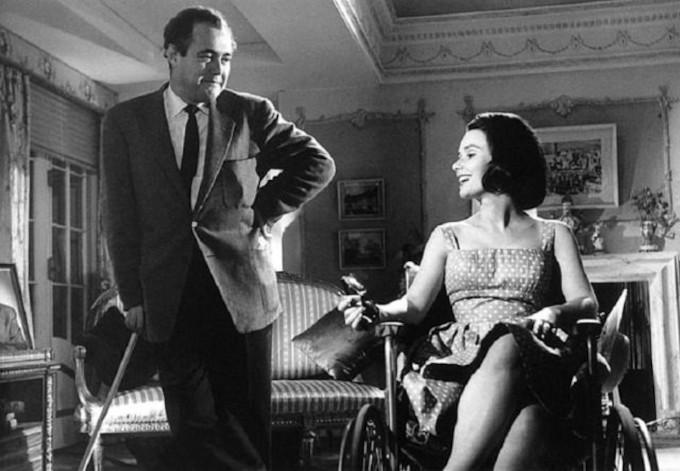
Screenwriter Jimmy Sangster is nothing less than a legend among screenwriters. One might almost say that he single-handedly wrote Hammer into the hottest horror studio in the world in the late 50s – with stiff competition from American AIP. In many ways Sangster is comparable with Curt Siodmak on the other side of the pond. Both were hugely influential and extremely prolific, albeit limited, writers. But where Siodmak is today routinely dismissed as a hack, Sangster is almost universally celebrated. This despite the fact that Sangster’s scripts were often the Achilles’ heel of Hammer’s movies, preventing even the best of them from graduating from good to excellent films, with perhaps a couple of exceptions – The Quatermass Xperiment being one of them.
Sangster was always at his best when he adapted TV shows and had a clearly laid-out plot to follow, and in these cases he was even capable of improving on the originals – his Quatermass work is prime example of this. When he wrote from scratch, he often floundered. Despite interesting thematic content, new spins on old tropes and regularly witty and intelligent dialogue, he struggled with stringing together dramatically and thematically coherent plots. Of course, it didn’t help that he was often forced to churn out scripts on extremely tight schedules. Nevertheless, Sangster revived the horror film internationally, dusting off the stale mad scientist/monster movies of the 40s, and shifted focus from the monsters to their creators, bringing back psychology and intellect into a genre that had sorely missed it for over a decade. I have written extensively about Sangster and the turns of his career in previous posts, so follow this link for more on him.
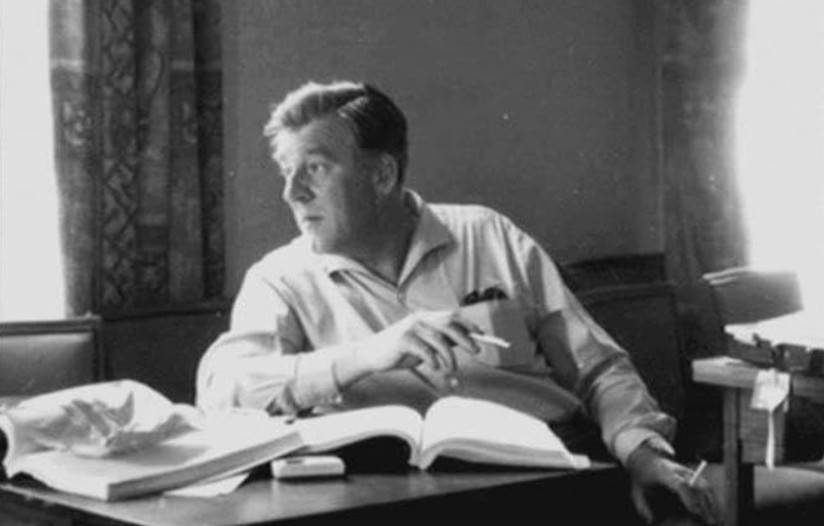
Quentin Lawrence was primarily a TV director, active between 1955 and 1979, who had a long career at ATV, which was one of the four channels belonging to ITV, Britain’s first commercial TV channel. ATV was the channel covering London and the Midlands. For posterity, the TV work he is probably best remembered for is the fact that he produced and directed two early science fiction TV serials, The Strange World of Planet X and The Trollenberg Terror, both in 1956. He also directed episodes of several other TV shows, many of them science fiction or fantasy, but also did long stints on more traditional faire, such as classic soap operas Emmerdale and Coronation Street. Lawrence only directed six feature films, mostly crime dramas, and the one that he is remembered for: The Trollenberg Terror.
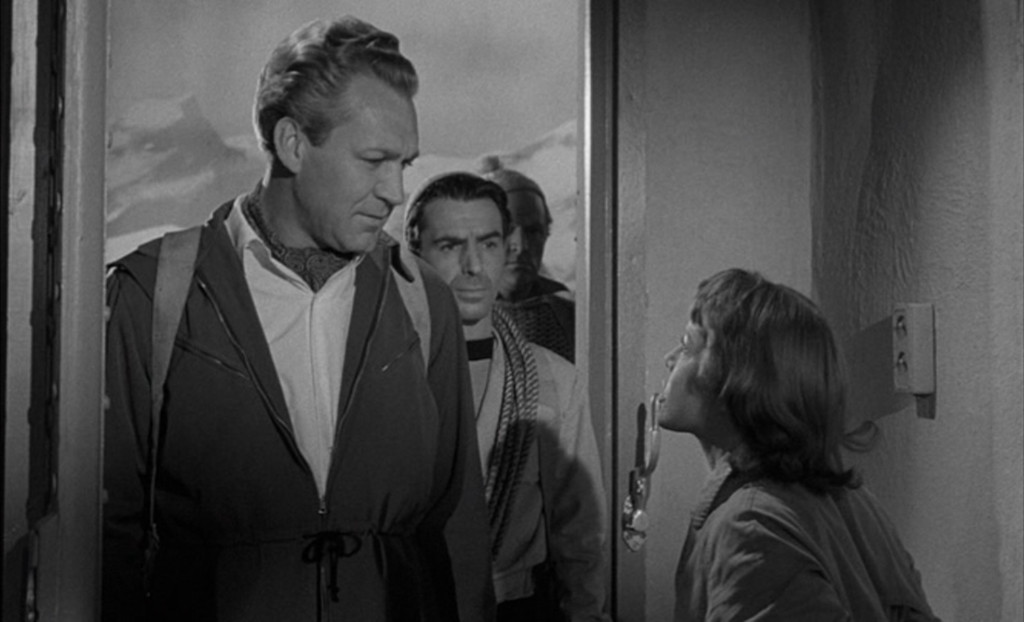
Despite his burly physique and often gruff on-screen presence, American Forrest Tucker actually got his start as a song-and-dance-man in vaudeville, performing in Washington, D.C. in his teens in the 30s. He made the move to Hollywood in 1940, where he started mainly in roles as henchmen and brawlers, often in westerns, a genre in which he would become a mainstay. Producers soon realised that Tucker had genuine acting talent, and also comedic timing, and he spent most of the 40s alternating between supporting roles and B-leads, and was able to acquire a bit of a marquee value, despite his career being interrupted for four years due to service in WWII. In the successful war movie Sands of Iwo Jima (1949), he co-starred not only with John Wayne, but with no less than three other science fiction lead actors: John Agar, Arthur Franz and William Hudson – of course, before any of them had done anything in sci-fi.

Come the early 50s, Forrest Tucker was a sure-fire lead or co-lead in B-movies, primarily westerns and crime dramas, but also the occasional musical and comedy. His association with British film started in 1953, when he starred the maritime adventure film Laughing Anne, co-produced by Republic Pictures. In 1955 he co-starred with Eva Bartok in Hammer’s crime drama Break in the Circle, again sent over by Republic by way of 20th Century Fox as the American draw. It was probably Hammer who brought him over again in 1958 to co-star with Peter Cushing in The Abominable Snowman (1958), and it seems while he was there, Eros Film took advantage of him in The Strange World of Planet X and The Trollenberg Terror.
1958 also saw Tucker return to the stage for a national touring production of The Music Man, which he performed over 2,000 times over the next five years, and followed up with work on Broadway in 1964. He was then cast as Sgt. Morgan O’Rourke in the popular TV show F Troop (1965-1967), which was probably the project that gave him his biggest audience in the US. After this, he continued acting in film and TV as a sought-after character actor, with the occasional lead sprinkled in, such as in the short-lived comedy/SF TV show The Ghost Busters (1975) and the science fiction/action movie Thunder Run (1985). His last performance was in the science fiction TV movie Timestalkers (1987).
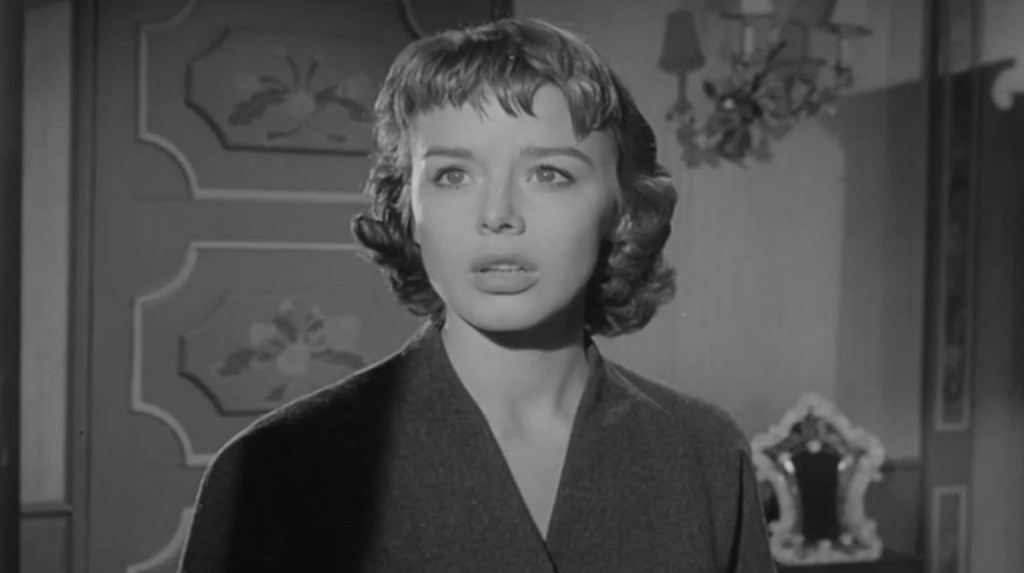
Scottish Janet Munro spent much of her childhood touring with her comedian father, and during the WWII joined him in entertaining British troops. Her sights set on an acting career, she started working in repertory theatre in her teens, doing small parts and odd jobs, ending up as stage manager by the age of 17. At 20, she was a full-time actress, and made her TV debut in the lead of the TV movie I Capture the Castle (1954) for ITV, and three years later appeared in three TV plays for the ITV Television Playhouse. One of these was a play called Pickup Girl, which was seen by Disney’s UK casting agency. They were so impressed by Munro that they invited her to screen test for the female lead in Disney’s live-action film Darby O’Gill and the Little People, opposite fellow Brits Albert Sharpe and Sean Connery. Disney was so impressed with her, that the company offered her a five-year contract. This was a lucky break for Munro, who had been trying for years to get a contract with British studios, without succeeding. The studios didn’t doubt her acting capabilities, but thought she wasn’t “right” for films. As the Rank Organisation put it, she was “too individual”. It took an American studio to recognise Munro’s star potential. Darby O’Gill and the Little People earned her a Golden Globe as “best newcomer”.
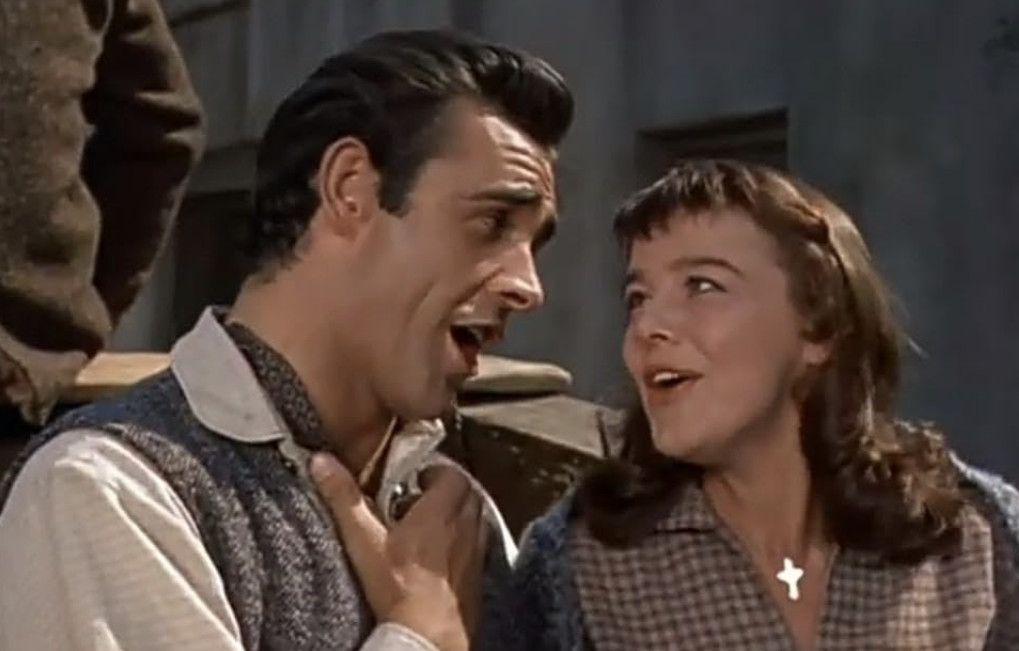
But before she headed to Hollywood, Munro had time to star as the psychic female lead in the science fiction horror movie The Trollenberg Terror (1958). During the coming five years, she appeared in the female lead in Disney’s Third Man on the Mountain (1959) and appeared as the shipwrecked tomboy taken in by the titular family in Swiss Family Robinson (1960). After her Disney adventure, Janet Munro had a successful – althought not stellar – career playing mainly leads in British feature and TV films. One of these was Life For Ruth (1963), for which she was nominated for a BAFTA for best actress. Another one was her second and last science fiction movie The Day the Earth Caught Fire (1962), directed by Val Guest. Considered a minor SF classic, it is probably the role she is best remembered for today. Munro’s life ended tragically when she died of a heart attack in 1972, only 38 years of age.
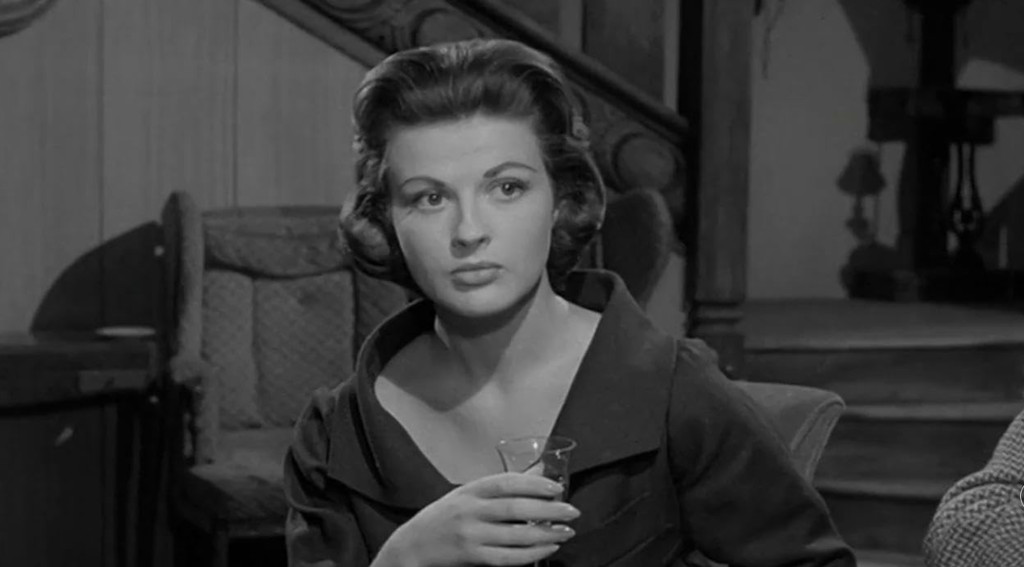
Jennifer Jayne was primarily a busy TV and stage actress, active on screen between 1949 and 1985. The highlight of her TV career was probably playing the wife of the titular mythical Swiss folk hero in the series William Tell (1958–1959). A very popular show, it was also syndicated to the US, and its popularity probably explains why Jayne was billed above Janet Munro in her first science fiction movie The Trollenberg Terror (1958), even if Munro was clearly the female lead. The success of the show also provided Jayne with a handful of leading lady movie roles in the early 60s, although by the end of the decade she primarily appeared as guest star on TV. In 1965 she appeared in two Hammer films: Dr. Terror’s House of Horror (1965) and Hysteria (1965). Her second and last science fiction movie was Amicus’ They Came from Beyond Space (1967), in which she played the female lead. Under the pseudonym Jay Fairbank she also wrote the screenplays for the horror anthology film Tales That Witness Madness (1973) and the horror comedy Son of Dracula (1973).
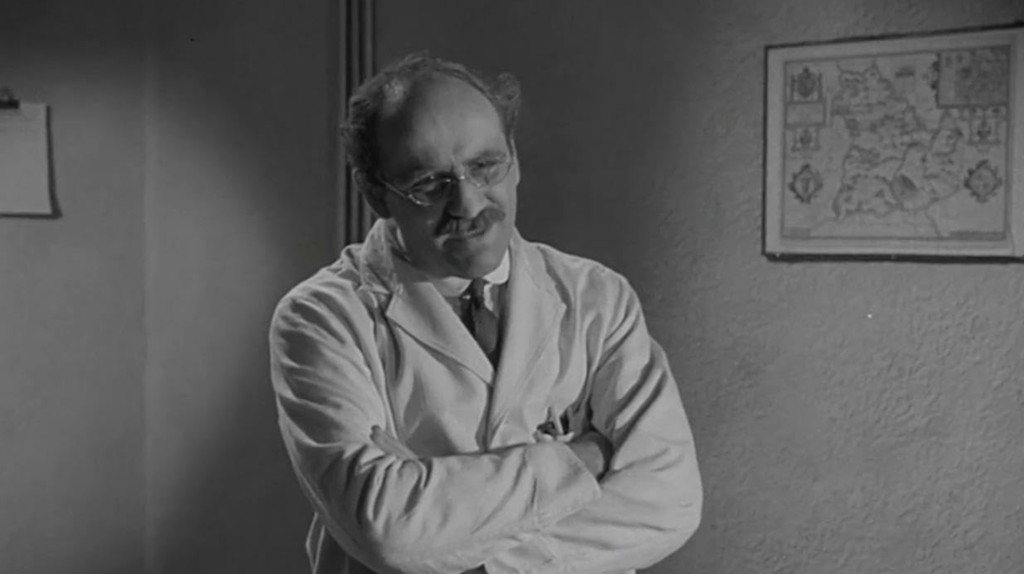
The resident egghead in The Trollenberg Terror (1958) is played by revered character actor Warren Mitchell, who was brought in as a last-minute replacement, as the original actor backed out of the project. Mitchell had a long and celebrated career in radio, on screen, on TV and on stage, lasting from 1951 to 2015. While he plays an elderly scientist in The Trollenberg Terror, he was actually only 32 at the time, seven years younger than Forrest Tucker, whose elderly mentor he is supposed to portray. The reason he often played older characters was his early balding.
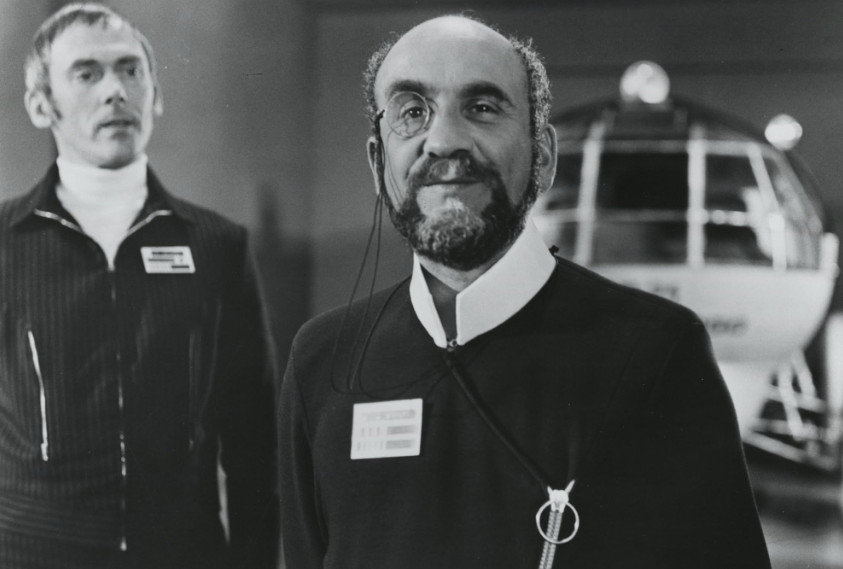
I’m not going to be able to do justice to Warren Mitchell’s nearly 200 film or TV appearances, nor his stage prowess in a short post. But suffice to say that Mitchell became a national sensation in 1965 thanks to his portrayal of the bigoted Alf Garnett on the sitcom Till Death Do Us Part (1965-1975), and its reboots, film adaptations, and several other spinoffs and cameos featuring the character. During his career he won a BAFTA, two Olivier Awards and two Evening Standard Theatre Awards. Mitchell appeared in central roles in four science fiction movies: The Trollenberg Terror (1958), Unearthly Stranger (1963), The Night Caller (1965) and Moon Zero Two (1969).
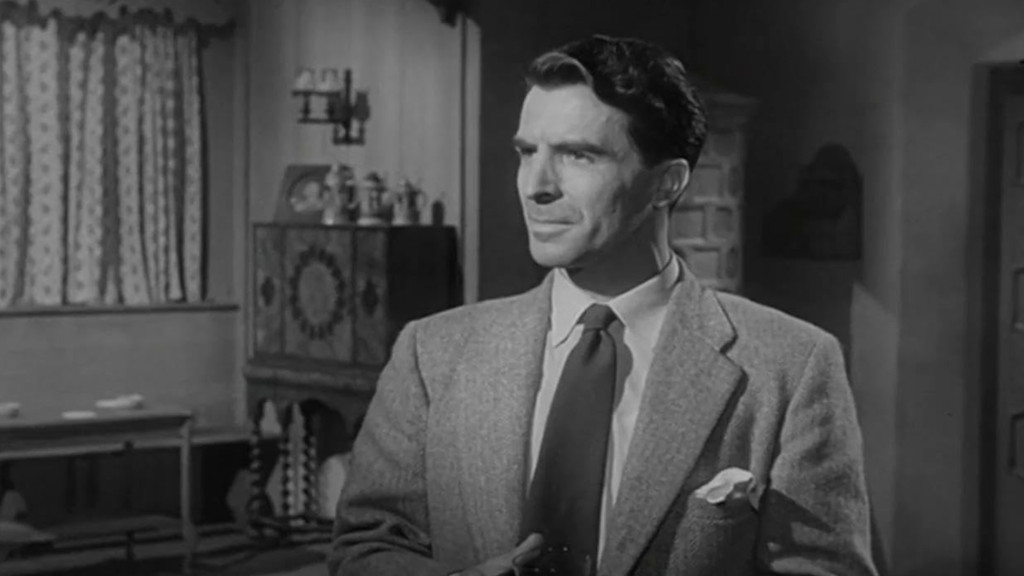
Laurence Payne, who played the lead in the TV version of The Trollenberg Terror, and is bumped down to sidekick in the movie version, was an acclaimed Shakespearean stage actor and also worked extensively in TV between 1946 and 1992, best known for playing the titular modern swashbuckler in the series Sexton Blake (1967-1971). The series cost him the eyesight in one of his eyes, as he refused to rest in order to let his cornea reattach itself after an accident during a fight scene. The Trollenberg Terror remains his best remembered movie role. He appeared on six episodes of Dr. Who, playing three different characters in three different seasons. Payne was also a painter, a pianist, a fight choreographer and a writer. He penned 11 humorous crime novels.
Janne Wass
The Trollenberg Terror. 1958, UK. Directed by Quentin Lawrence. Written by Jimmy Sangster, based on TV serial written by Giles Cooper, George Kerr & Jack Cross. Starring: Forrest Tucker, Janet Munro, Jennifer Jayne, Laurence Payne, Warreh Mitchell, Frederick Schiller, Andrew Faulds, Stuart Saunders, Colin Douglas, Derek Syndey, Colin Douglas. Music: Stanley Black. Cinematography: Monty Berman. Editing: Henry Richardson. Art direction: Duncan Sutherland. Makeup: Eleanor Jones. Sound: Richard Smith. Special effects: Les Bowie. Produced by Robert Baker & Monty Berman for Tempean Films, Eros Films & DCA.
 Scifist.
Leave a comment