

After accidentally eating experimentally enhanced chickens, residents of Buenos Aires start doing and saying exactly what they want. A pleasant little comedy from 1957, which falls short as a satire. 5/10

Cinco gallinas y el cielo. 1957, Argentina. Directed by Rubén Cavallotti. Written by Agustín Cuzzani. Starring: Narciso Ibáñez Menta, Luis Arata, Irma Cordoba. Produced by Julio Steinberg. IMDb: 7.8/10. Letterboxd: N/A. Rotten Tomatoes: N/A. Metacritic: N/A.
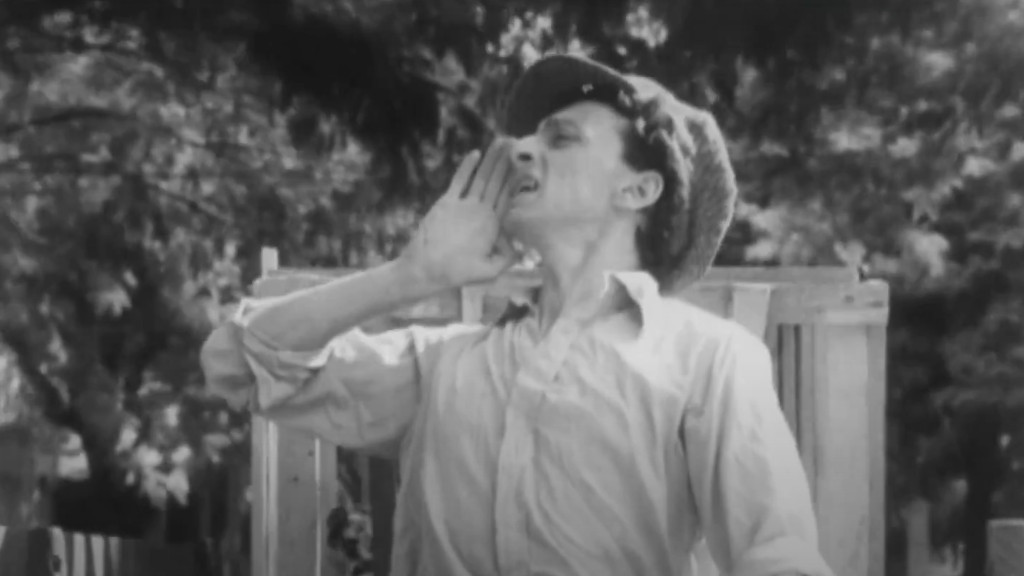
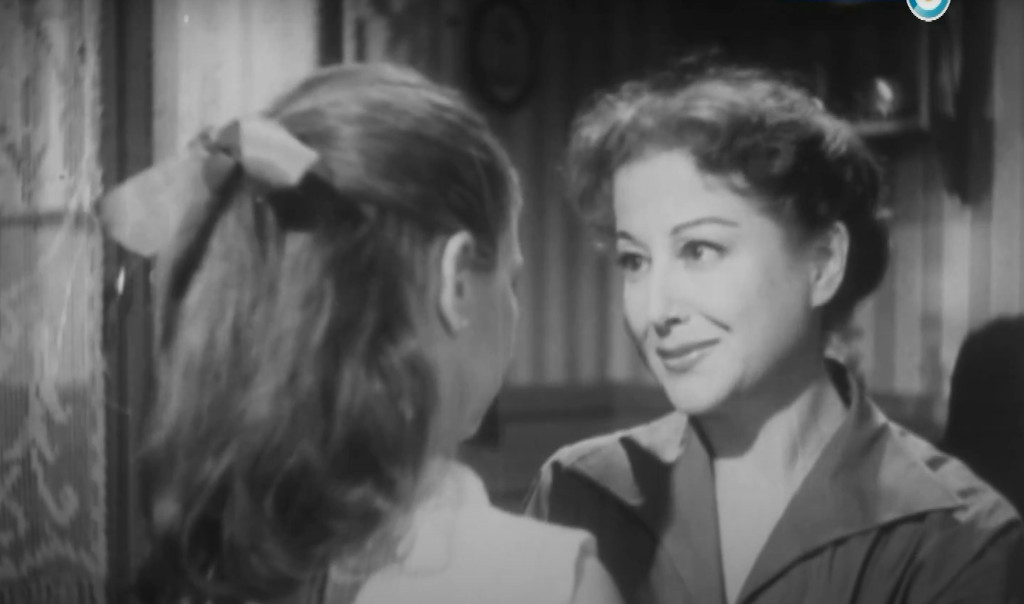
One night in Buenos Aires a thief steals five chickens, without knowing they are test subjects in a secret government project. They are inoculated with a serum which makes anyone who eats them audacious. The next day, the unwitting thief starts selling the chickens from his donkey cart. One goes to a restaurant, where it is eaten by a tram driver, fed up with driving the same route for 34 years (Luis Arata), another to the household of a rich couple, who are pretending happiness despite being furious at each other (Irma Cordoba and Ricardo Castro Rios), and a third to a poor bank teller (Narciso Ibáñez Menta), who needs 25,000 pesos in order to pay for plastic surgery for his daughter, whose face has been scarred in a boiler explosion. A fourth goes to a woman whose husband is cheating on her (Nelly Cobella and Ignacio Quirós). Meanwhile the police notify the public about the theft of the chickens, anticipating a wave of chaos and crime, as the serum will make people lose their fear and inhibition, and will start doing and saying exactly what they want to.

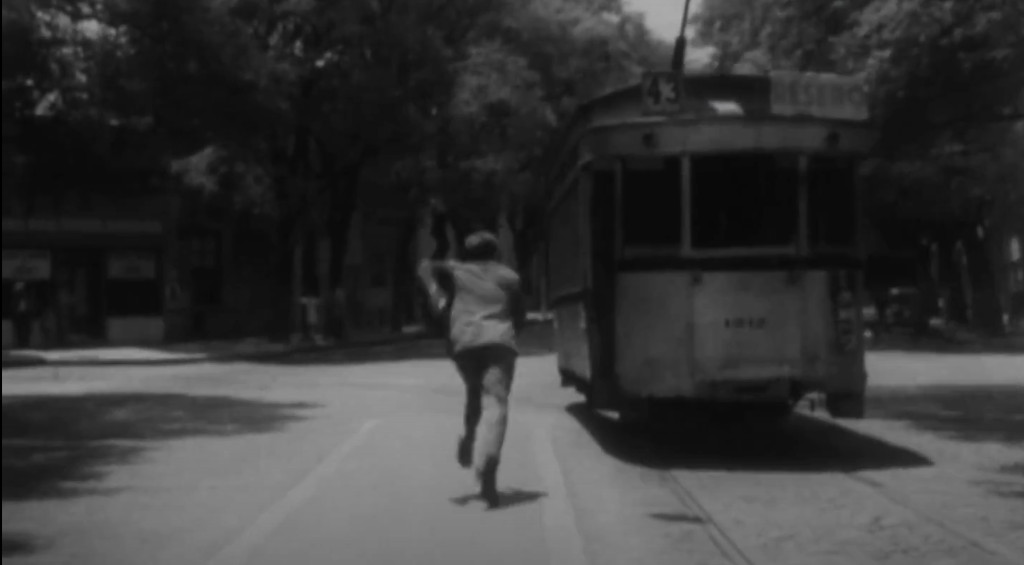
That’s the setup to the light-hearted Argentine 1957 science fiction melodrama Cinco gallinas y el cielo, which translates as “Five chickens and the heavens”. It was the directorial debut of Rubén Cavallotti and starred some of the biggest actors of the country, including horror legend Narciso Ibáñez Menta in the lead, in an unusually sympathetic role. Today it is probably best remembered for the long segment showcasing Buenos Aires’ tram system.

Rather than a linear plot, Cinco gallinas y el cielo is made up of three separate stories which are connected only through the fact that all of them involve people who have eaten the enhanced chickens. Irma Cordoba gets the courage to kick her obnoxious husband out (and the maid subsequently gives the haughty Cordoba a thrashing). Luis Arata decides to take his tram off route in order to help an old lady get to her granddaughter’s(?) birthday party, to the delight of his fellow passengers. Nelly Cobella picks up the courage to leave her cheating husband, and the two make up on the same tram. Most of all, we follow Narciso Ibáñez Menta’s bank teller, who decides to steal money from a rich bank customer for his daughter’s operation. We also take part in the hunt for the fifth and final chicken, which escapes from the theif’s cart in a scuffle with some street kids. In the end, both Menta and Arata willingly give themselves up to the police, who have been armed with an antidote. However, both are happy with their choices, despite possibly looking at time in prison. In the end, the scientist is reunited with his lost chicken, closing off the film by contemplating that “a little more audacity in this world might not be such a bad thing”.
Background & Analysis

There is a strain of moral philosophy that theorizes that our morals are only as strong as our fear of getting caught. While I think this is dubious, at best, the idea has provided fodder for a lot of science fiction. What would happen if we were free to say and do whatever we wanted in the spur of the moment, without having any fear of the possible consequences? H.G. Wells explored the idea in The Invisible Man, a novel which inspired a whole subgenre. Many films have also mined the consequences of serums and inventions that makes us lose our inhibitions. One spin-off of this is the truth serum, which can often provide moments of comedy and resolution, or carry entire films. Another one is that of grownups regressing to the mental stage of children, as seen for example in the Finnish SF comedy Hormoonit valloillaan (1948, review) and the Hollywood screwball comedy Monkey Business (1952, review). Cinco gallinas y el cielo feels a bit like the offspring of these kind of movies, and perhaps also the Mexican effort Una movida chueca (1956, review), in which a hustling tramp gets the ability to see into the future. Interestingly, this is not the first science fiction movie involving fowl. In 1951, Val Guest took the idea of the goose and the golden egg (or in this case, radioactive) literally in the comedy Mr. Drake’s Duck (review).
Cinco gallinas y el cielo also continues Latin American SF movies’ peculiar obsession with facial deformities. The Mexican horror melodrama A Macabre Legacy (1940, review) saw a mad doctor scarring the face of his wife and her lover, and the tragic villains of Argentina’s Una luz en la ventana (1942, review) and Mexico’s El monstruo resucitado (1953, review) were both motivated in their actions by their own grotesque facial deformations.
Argentina was not a major player in science fiction in the 50’s. Its output over the decades had been sporadic. The country’s first foray into the genre was the bizarre no-budget production El hombre bestia (1937, review). It was followed up 15 years later with the old dark house movie Una luz en la ventana, in which Narciso Ibáñez Menta played the acromegalic mad scientist, in a film that laid much of the foundation for the country’s fledgling horror genre. It took almost a decade for the next SF movie to come out of Argentina, the interesting Jekyll and Hyde adaptation The Strange Case of the Man and the Beast (1951, review). In tone and story, Cinco gallinas y el cielo mostly resembles the Mexican movies The Genius (1948, review) and Una movida chueca, starring comedy stars Cantinflas and Clavillazo, respectively, in that it is a social melodrama with comedic overtones, using the science fiction element merely as a starting point for moral and social ruminations.

The movie was written by famous playwright and satirist Agustín Cuzzani, who occasionally moonlighted as a screen- and teleplay writer. While his usual satire of capitalism is not perhaps as prominent here as in some of his other works, it is not hard to read into it a critique of modern society, where a bank teller must resort to stealing from his employer in order to pay for an operation for his daughter, or where a tram driver who loves his job gets disillusioned with being stuck in the same routine for decaces.
The production clearly strives to be an idea film, but because the four stories at its centre are so dissimilar, it is difficult to pin down exactly what the idea is supposed to be. In the Irma Cordoba segment, the film takes a crack at society’s wealthy socialites and the Luis Arata segment about the tram driver is clearly the one with with the heaviest societal critique, levelling criticism against the soul-draining repetitiveness of modern work life. I watched the movie with auto-generated Youtube translation, and didn’t quite catch the gist of the story about the woman leaving her cheating husband, as it was told completely with talking heads.

The moral of the Ibáñez Menta storyline also struck me as somewhat murky. The segments involving Menta are very sympathetic, with a sweet, caring father trying to get treatment for his young daughter. A tragic accident has scarred half of her face. While dramatic, the injury doesn’t seem to have any negative impact on her life, in fact we see her quite happy and enjoying her day. Menta also states that the hospital has informed him that her injury is not a detriment to her health, and as it is a cosmetic, rather than health issue, he will have to pay for plastic surgery out of his own pocket. A progressive moral of the story would have led her parents to accept her as she is, scars and all, but instead the film celebrates the idea that it is morally acceptable to commit bank robbery in order to secure that your daughter looks pretty when she grows up.

Perhaps screenwriter Cuzzani isn’t advancing any one particular moral message, but rather explores the consequences of a world where we weren’t held back by our inhibitions, societal rules and codes, and dared to freely do and say whatever we wanted. But in that case, the film would still have needed something more to tie it up than the platitude spoken by the scientist in the end. After all the build-up, the movie falls a bit flat.

This was Rubén Cavallotti’s directorial debut, but you wouldn’t know by looking at the film. It doesn’t stand out in any particular way, but Cavallotti proves a steady and capable man at the helm, keeping things flowing and dynamic. As a historical document, the film is particularly interesting for its lengthy sequences filmed inside a Buenos Aires tram. At times, it feels like a love letter to the city’s public transportation. The only real special effect is the little girl’s facial scarring, of which we only get a quick glimpse, but which holds up well. The action scenes are limited to a pillow fight and a juvenile kerfuffle.
The acting is outstanding, featuring several of Argentina’s top talents, including Narciso Ibáñez Menta, Irma Cordoba and Luis Arata. Ibáñez Menta’s touching portrayal of the father, and Arata as the old tram driver who finds new happiness in going off-road are particularly memorable. The entire cast is strong, but unfortunately I can’t find a source that connects the actors with the characters, so I’m not able to identify the excellent performers playing, for example, Menta’s wife or the thief.

As stated, the movie is available as a pretty clean and crisp copy on YouTube. Unless you speak Spanish, you’ll have to make do with auto-generated subtitle translation, but it is more than adequate for following the story, even if you will probably miss any subtleties in the dialogue. It is interesting mainly for its obscurity, but it is also a fairly well made and entertaining little film, despite its script-related flaws. Good performances and a sort of naive charm make it enjoyable enough.
Reception & Legacy
Cinco gallinas y el cielo premiered in Argentina in August 1957. The only record of it being screened outside of Argentina is that it was featured at film festivals in Czechoslovakia and Spain. Consequently, background information and reviews are scarce. I have found no English-language reviews either from the time of the film’s release, or from later sources. I do think this is probably the first English-language review proper posted online.
Neither have I really found any Argentine reviews, however, Wikipedia lists two short opinions from contemporary critics in Argentina. The critics at the time of the film’s release don’t seem to have been overly impressed. Noted critic Rolando Fustiñana wrote: ”Excessive dialogue written without much finesse, lack of cohesion in the story and uneven quality in the tone.” And newspaper La Razon said: ”Production without major pretensions but that has elements that make it interesting.”

A user review on Letterboxd states it is a “cute little episodic comedy”, and continues: “one episode is clearly Bunuel-inspired, but reading anything meaningfully anti-authoritarian into this would be a stretch”.
The film has a high 7.8/10 rating on IMDb, but with only 25 votes, this is hardly reliable.
Cast & Crew
Director Rubén Cavallotti was born in Uruguay in 1924. A lover of cinema from an early age, he saw few possibilities to develop in the fledgling Uruguayan movie industry, and relocted to greener pastures in Argentina, where he worked himself up the ladder from assistant to assistant director to such noted directors as Lucas Demare and Fernando Ayala. Cinco gallinas y el cielo (1957) was his directorial debut.
Cavallotti hit his stride in the 60’s with films like Luna Park (1960), Una Máscara para Ana (1966) and Convención de vagabundos (1965). Often combining comedy with social issues, his films championed the little man pursuing his dreams. While he often received a lukewarm reception by critics, his films were popular with the audience. In later years, he taught cinema.

Screenwriter Agustín Cuzzani was a well-known playwright and satirist, distinguished by his leftist views and critique of capitalism. He is credited for merging the genres of farce and satire into something which critics came to label as “farsatire”. His best known play is the almost SF-ish El centroforward murió al amanecer (“The centre-forward died at dawn”), about a football player kidnapped by a mad scientiest who plans on breeding super-babies from exceptional human beings. It has been filmed several times.
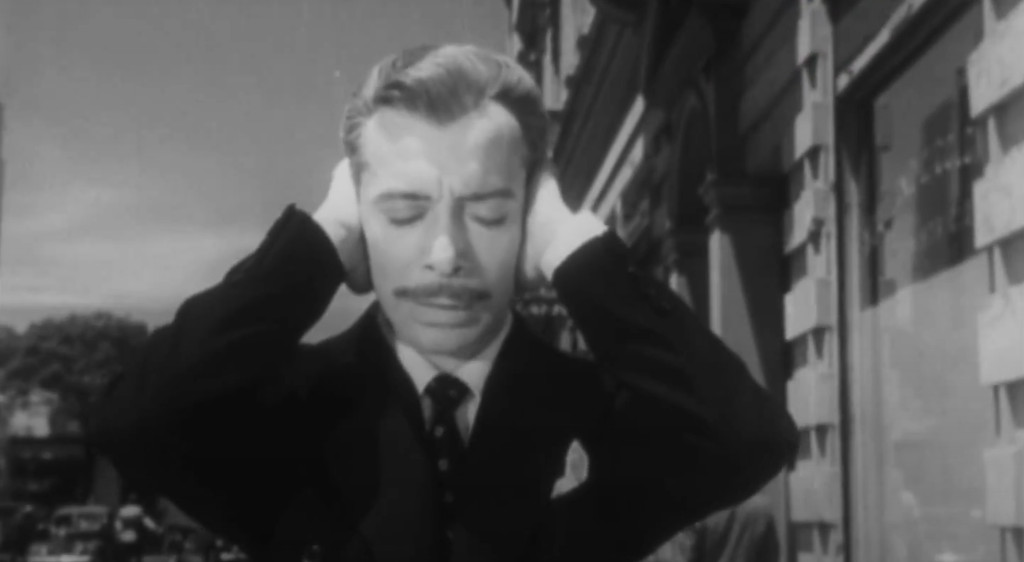
Narciso Ibáñez Menta was a Spanish stage actor who relocated to Argentina in the thirties. Clearly drawn to classical horror roles, Ibáñez Menta played them on stage, but for didn’t have much chance to do them in the movies, as such movies weren’t made in Argentina, really before the sixties. It was on TV that he became a true horror icon, which is probably why he is so little known to a non-Hispanic audience. Here he took on the classic horror pieces from literature and the stage, not least in the hugely popular series Obras maestros del terror (1959) and Historias para no dormir (1966-1982). Apart from Una luz en la ventana (1942), Cinco gallinas y el cielo (1957) and the brain transplant film I Hate My Body (1974), few of his films are of SF interest, however, he did do quite a bit of science fiction material on TV, both as writer and director and as an actor.

Luis Arata was a celebrated stage actor from the 30’s to the 60’s, and a respected lead and character actor in film, although his movie credits stretch to only a dozen and a half. His role in Cinco gallinas y el cielo was one of his last movie roles, and garnered him a best supporting actor award from the Argentinian Institute of Cinema. Irma Cordoba was likewas a star of the stage, and a popular movie actress during the golden age of Argentine cinema in the 30’s and 40’s. She was also a hugely popular star on TV, and kept working on stage, TV and in films well into the 1990s.
Janne Wass
Cinco gallinas y el cielo. 1957, Argentina. Directed by Rubén Cavallotti. Written by Agustín Cuzzani. Starring: Narciso Ibáñez Menta, Luis Arata, Irma Cordoba, Ricardo Castro Ríos, Alita Román, Carmen Caballero, Nelly Cobella, Rafael Diserio, Ignacio Quirós, María Ibarreta. Music: Tito Ribero. Cinematography: Vicente Cosentino. Editing: Geraldo Rinalidi. Art direction: Germán Celpi. Produced by Julio Steinberg for Julio Steinberg Producciones.


 Scifist.
Leave a comment