

A mission to Mars returns to Earth with a monstrous stowaway aboard the space rocket. United Artists’ 1958 proto-slasher is clunky and occasionally hilarious, but Jerome Bixby’s tight script builds up some real tension, and gets a few points for originality. 6/10.

It! The Terror from Beyond Space. 1958, USA. Directed by Edward Cahn. Written by Jerome Bixby. Starring: Marshall Thompson, Shirley Patterson, Kim Spalding, Ann Doran, Dabbs Greer, Paul Langton, Ray Corrigan. Produced by Robert Kent & Edward Small. IMDb: 6.0/10. Letterboxd: 3.0/5. Rotten Tomatoes: 6.1/10. Metacritic: N/A.
During the first manned mission to Mars in 1973, the spaceship is damaged during landing, and soon after, the whole crew dies under suspicious circumstances, save one crewman, Col. Edward Carruthers (Marshall Thompson). Soon after, a rescue mission arrives under the command of Col. Van Heusen (Kim Spalding). Their mission is to bring Carruthers home for a court martial, under suspicion of having killed his crew. However, Carruthers swears he is innocent, and sticks to a crazy story of a Mars monster being responsible for the deaths of his team.
This is the setup, told in the first three minutes of the film, of It! The Terror from Beyond Space, produced in 1958 by Robert Kent and Edward Smalls, and directed by low-budget specialist Edward Cahn. Although a bona fide cult classic in its own right, it is perhaps best known today as one of the works that heavily inspired Dan O’Bannon’s screenplay for Alien (1979).
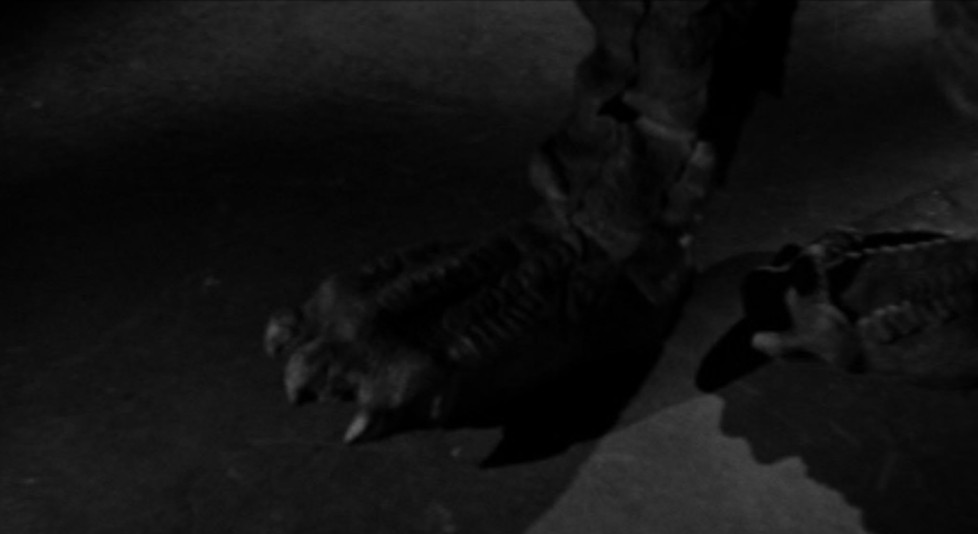
Not yet four minutes into the film, as the rescue ship is about to take off, the we the audience is made aware that Carruthers is probably telling the truth, as we see the reptilian hands and feet of the monster, which has stowed aboard the rocket. And we’re not ten minutes into the film before it kills the first crew member, Kienholz, (Thom Carney). And it doesn’t take long before a second victim, Gino, is claimed (Richard Hervey).
By now, Van Heusen, who has been extremely hostile toward Carruthers, starts to consider that this monster business might just be possible, especially after Kienholz’s body is found drained of all bodily fluids in one of the ship’s air ducts. As Maj. Purdue (Robert Bice) crawls into the duct to see if he can find Gino, he is also attacked by the monster, and barely makes it out alive.

The entrance to the air ducts is in one of the lower levels of the five-story rocket, and the crew decide to rig the hatches with grenades, hoping to blow the monster to smithereens as it exits, and then withdraw to the upper levels. Through the intercom they can hear as one grenade after the other goes off, apparently to little effect. And when the monster starts punching itself through the central hatches, they realise they are in deep trouble.
For the rest of the film’s 50 minutes, this is basically an old dark house film set on a spaceship. Crewmen are killed off one by one, as the team frantically try to figure out a way to kill the monster. Guns obviously don’t work, neither does gas or electrocution, or even the radiation from the nuclear pile powering the ship. Meanwhile, tension is added as one of the crewmembers, Lt. Calder (Paul Langton) is trapped in one of the lower levels with the monster, and is able to squeeze into a small space, where he can fend fend off the thing with a blowtorch. Furthermore, Van Heusen is mauled by the monster and infected with an alien parasite. The ship’s doctor, Mary Royce, (Ann Doran) concludes the only way he is to survive is through constant blood transfusions. However, the blood packs are down below, on the level under the one in which the monster is hanging around.

Some personal drama is also included, as obnoxious Van Heusen’s girlfriend Ann Anderson (Shirley Patterson) starts falling for Carruthers. There’s also the ever-present suspicions toward Carruthers for constantly coming out unscathed from situations where others are trapped, hurt or killed – leading to accusations of him being a self-centered coward (which, of course, he isn’t).
Finally, having exhausted all options, the remaing crew, also including Eric Royce (Dabbs Greer), barricade themselves in the ship’s uppermost level, awaiting certain death as the monster keeps working itself up through the steel hatches. But at the final moment, Carruther realizes that the monster needs air to breathe, and command all crew members to put on their space suits. As the monster punches through the last hole, Van Heusen, finally redeeming himself, makes a heroic dash (he’s already dying) past the monster to get to the air lock controls, and gets himself killed in the process. As the air rushes out of the ship, the monster slowly dies.
Background & Analysis

It! The Terror from Beyond Space (1958) is a rare picture inasmuch as it was produced for United Artists, a company that didn’t make a lot of science fiction movies in the 50s. However, by the mid-50s, UA saw the business American International Pictures was doing with its low-budget science fiction movies, and wanted in on the business. Between 1956 and 1958 UA made deals with a number of independent producers to finance half a dozen moderately cheap SF products – most notably three movies produced by Arthur Gardner and Jules Levy, two of which were quite good: The Vampire (1957, review) and The Monster That Challenged The World (1957, review).
In 1958 independent producer Robert Kent approached UA producer Edward Small and managed to convince him to co-produce two science fiction/horror B-movies for the studio. Kent hired Jerome Bixby to write the two movies, planned as a double bill, what eventually became It! The Terror from Beyond Space and The Curse of the Faceless Man (review). Bixby was an unusual screenwriter for science fiction movies for the simple reason that he was a working science fiction writer. He had designs to get into screenwriting, and his double bill for UA was his first two scripts. The screenplay for It! The Terror from Beyond Space was both novel and derivative. While the plot of a monster aboard a spaceship would later become a trope, not least after Alien (1979), it had never been done on the screen before 1958, and Bixby should rightly be credited for introducing it to the screen. On the other hand, Bixby’s script was heavily inspired by two other sources.

The first was Howard Hawks’ 1951 movie The Thing from Another World (review) — the title even echoes the first movie. That, of course, was based on John Campbell’s 1938 novella Who Goes There. With the exception of the setting It! repeats The Thing’s basic plot of a nigh indestructible monster invading a the secluded, claustrophobic habitat of a small group of people, killing off one person after the other, with the protagonists frantically working on a way to kill it. The second major source of inspiration was A.E. van Vogt’s fixup novel The Voyage of the Space Beagle (1950), and particularly the first part of the book, adapted from van Vogt’s 1939 short story Black Destroyer. In both versions, a vicious and seemingly indestructible and intelligent panther-like creature infiltrates a space ship where it starts wreaking havoc. The crew of the Space Beagle fail to kill it, but are eventually able to trick it into a “life boat” and eject it from the ship.
According to critic and film scholar Bill Warren, the movie has been somewhat reworked from Bixby’s original script. Partly this had to do with the fact that Bixby wrote it as an A-movie, and some of his ideas were simply not doable on a small budget. Another change is that the film proceeds in a linear manner, while the original script, according to Warren, was told in an awkward and unecessary flashback structure. In a later interview, Bixby said he quite liked what the producers and director Edward Cahn had done with the film.

It’s easy to poke fun at It! The Terror from Beyond Space, starting with the title. First of all, the alien doesn’t come “from beyond space”, it comes from Mars. Secondly, what does “from beyond space” even mean? Another thing that will have most audiences chuckling is the care-free manner in which the crew of the ship fires off grenades, guns, and in the end even a bazooka on the spaceship. The creature easily punches its way through all the hatches of the ship, but setting off a dozen hand grenades in a single spot is fine? Then there’s the unlikely romantic triangle developing between Carruthers, Anderson and Van Heusen. Anderson and Carruthers barely meet before they are practically smooching. It’s also somewhat in bad taste that the two lovebirds start holding hands right in front of Van Heusen right after he has been mauled by the alien.
The script is full of plot contrivances and warps in logic. For example, how is it that Calder is able to hold off the alien with a small blowtorch, but grenades and bazookas don’t even faze it? And why doesn’t anyone come up with the obvious idea to suffocate the monster earlier? It’s clear that it breathes air, there’s an airlock and the crew spend most of their time literally in the same compartment as the space suits. And the list goes on.

But despite all the nonsense, Bixby utilizes the building blocks of his script quite well. It’s a very simple story. Crewmen go missing, and the protagonists must figure out what is happening to them, what it is that is killing them, and what will kill it, before it is able to work itself up through all the four compartments of the space ship and wipe out the entire crew. Bill Warren complains that the film’s story is too simple, and that it starts treading water quite early. However, I feel that Bixby is able to mix things up rather well. He gives the protagonists different tasks to complete in order to keep things moving, without losing focus of the main storyline. For example, after Van Heusen is mauled, the crew must fetch the blood packs from a compartment below the one where the monster is, meaning they must somehow sneak past the monster both going down and back up. This, in turn, leads to Calder getting trapped with the monster, adding another spin on the story. Meanwhile, Van Heusen is fighting for his life on a stretcher. Bixby also uses the fact that Carruthers is suspected of murder to create an atmosphere of distrust and conflict. The mistake he makes is having too many people that have Carruthers’ back, and this conflict feels rather resolved even during the first fifteen minutes of the film, even if the script kind of keeps coming back to it.
This is a main flaw in the screenplay: resolving and revealing things too early. The film’s biggest mistake is revealing the monster during the first five minutes. Instead of keeping the audience guessing, the camera shows a reptilian foot just minutes after takeoff from Mars, and it doesn’t take long before we see the monster in all its “glory”. And once we see it, it’s just another guy in an ill-fitting rubber suit, awkwardly stumbling around the spaceship set.
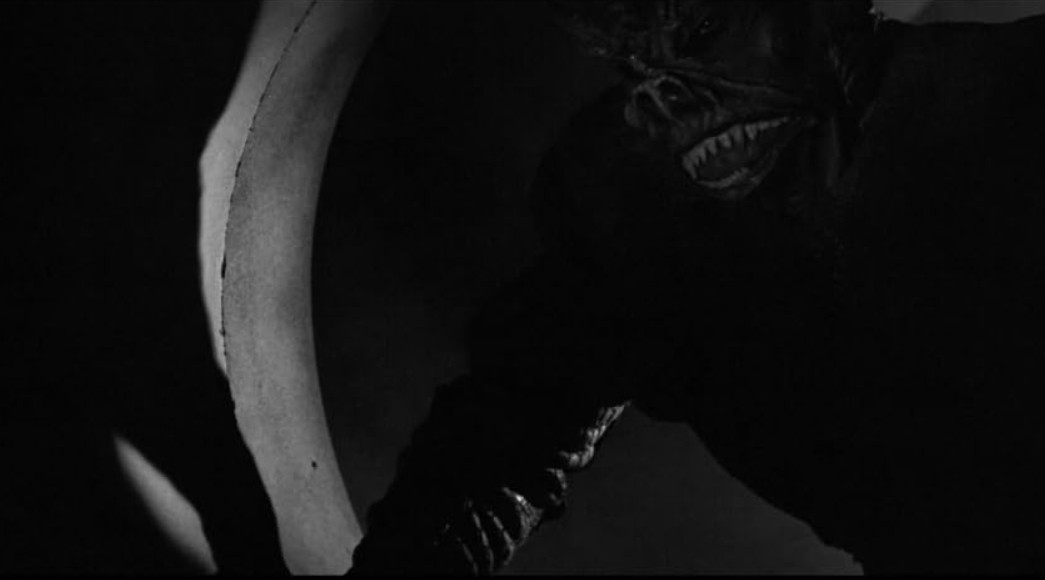
The monster also turned out to be the biggest headache of the movie. United Artists had looked at the stuff AIP did on a small budget, and was impressed by the studio’s monster maker, Paul Blaisdell. In AIP’s movies, Blaisdell not only designed and made the suits himself, with help from wife Jackie, and often his assistant Bob Burns, later a famous movie prop collector. He also usually played the monsters. However, on It! The Terror from Beyond Space, UA didn’t want Blaisdell in the film. Instead, the producers decided to add a little bit of marquee value to the monster by having it be played by Ray “Crash” Corrigan; stuntman, ape actor and minor Saturday matinee star in the 30s. Corrigan, however, was seriously on the slide career-wise in 1958. Severely alcoholized and ill-tempered, he had a reputation as being difficult to work with. And true enough, when it came time for taking his measurments for the alien suit, Corrigan couldn’t be bothered to travel to Topanga on the outskirts of Los Angeles where Blaisdell lived and had his workshop, and instead sent the suit maker his long johns as reference. And while long johns can give you an idea of certain measurements, they tell you little about the size of wearer’s head. So Blaisdell just had to model the head of the alien on one of his pre-made busts, made in according to his own, rather thin, face. When Corrigan turned up on set, it became clear that Blaisdell had not taken into account the actor’s prominent jaw, with the result that Corrigan’s jaw jutted out of the mouth of the creature mask. With no time to make adjustments to the mask, the producers just decided to paint his jaw to make it look like a toungue.
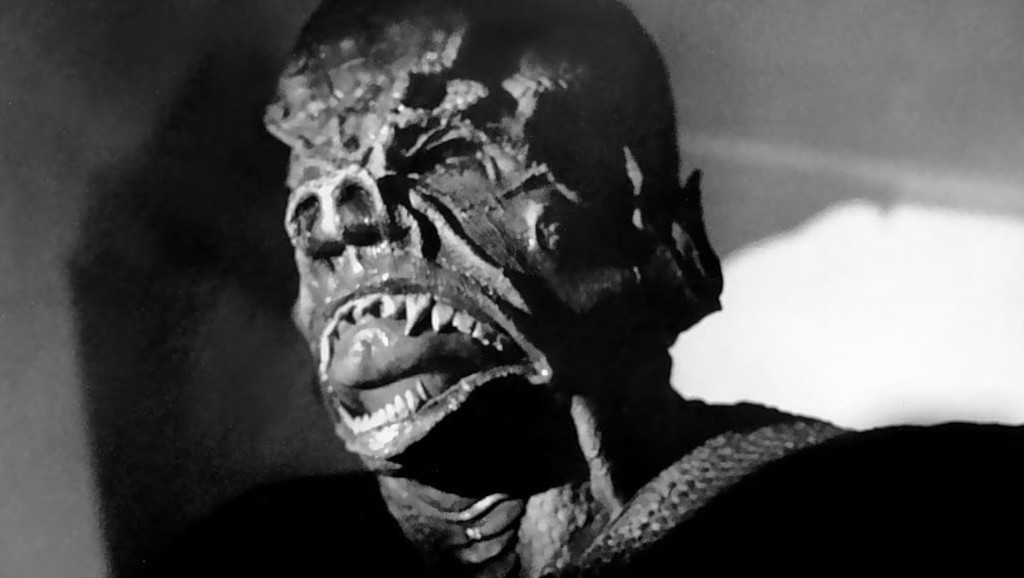
Unfortunately, this gave the monster a rather comical look, as if it was constantly pulling a funny face, and in a last-minute attempt to dispel some of the unintentional humour, Blaisdell added some extra teeth to the mask. It didn’t help much, and director Cahn tried to offset the problem by keeping the alien in the shadows as much as possible. And while the rest of the costume fitted Corrigan better than the head, it wasn’t without its problems. Because Corrigan had provided Blaisdell with his long johns, these were used as the basis of the suit, onto which Blaisdell glued hundreds of individually fitted latex scales, making the final look resemble the gill-man from The Creature from the Black Lagoon (1954, review). Unfortunately the monster also looks like it is wearing a pair of long johns, rather than having a scaly skin. The suit looks saggy and folds here and there as it moves, and looks nothing like skin – the fact that it is an actor wearing a suit is all to obvious.
The fact that it is described as agile and lightning-fast also creates an almost comical juxtaposition to what we see in screen – which is a monster lumbering clumsily around the ship. Corrigan couldn’t see very well through the eye holes, and it didn’t help that he was constantly plastered on set, and refused to follow Edward Cahn’s direction. He was described as being contrary and always in a bad mood. His drunkenness and bad behaviour held up filming, plus the fact that he repeatedly damaged the suit, which meant that Blaisdell had to be on hand during filming to patch it up, a fact that Blaisdell was not happy about. Corrigan’s antics rubbed off on lead actress Shirley Patterson, who is described as having constantly been in a bad mood during filming, bemoaning the fact that she was forced to appear in a low-budget science fiction film. Paul Blaisdell recounts that it was not a happy set, and that only lead actor Marshall Thompson seemed to enjoy himself.

However, the bad mood on set doesn’t carry over too much into the finished film. All actors involved are seasoned pros, and veterans like Ann Doran, Dabbs Greer, Paul Langton and Robert Bice make sure that the acting remains professional. Marshall Thompson in his second SF lead is as sympathetic and out of place as he was in Fiend Without a Face (1958, review), bringing a soft-cheeked jovialism to the role – one he may have secured due to his familiar resemblence and similar energy to science fiction star John Agar. Kim Spalding, playing Van Heusen, is perhaps the weakest link of the acting chain, and Shirley Patterson doesn’t exactly impress either.
Robert Kent and Edward Cahn keep things simple in terms of the visuals. There are very few visual effects on display in It! The Terror from Beyond Space. We only ever see Mars in a single matte painting in the beginning of the movie, and the rest of the film is almost entirely played out in the spaceship. The spaceship interiors are surprisingly well realized (courtesy of William Glasgow) with their four levels connected by a central ladder, bringing some sense of realism to the movie, as opposed to similar films in which the characters seem to stroll around an office block when moving about their rockets. The fact that the film has four different spaceship sets speaks to the fact that it probably had a slightly higher budget than its AIP counterparts. The four levels are central to the film’s plot and they way in which it builds tension and drama, and are well utilized in the story. The most spectacular effect is probably the space walk scene, which is very simply done by tilting the camera 90 degrees, making it look as if the actors are traversing the outside of the rocket vertically. It is a prime example of an effect that doesn’t cost anything and is very easy to accomplish, but nevertheless is very effective.

Paul Sawtell and Bert Shefter have provided a functioning score to the movie, partly reusing some of Sawtell’s earlier themes and cues. Al Overton provides a good soundtrack. Particularly effective is the creature’s menacing growls, which actually sound pretty good, as opposed to similar effects in other movies, and provide the monster with most of its menace.
It! The Terror from Beyond Space is one of the many science fiction movies of the 50s that allows women on the space crew. Rather than a sudden outburst of progressive of feminist values, this was often done simply in order to get a female character into the movie – the only way to get a romantic subplot into a film entirely set on a spaceship is by making the women part of the crew – or, of course, having your male heroes be gay, and the 50 weren’t quite ready for that yet. The woman-in-space trope usually played out in one of two ways. The first was to have a female scientist who repressed her “feminine side”, and needed convincing from the romantic hero that as a woman she really wasn’t interedted in science or a career, but in giving birth to children and fetching her husband his pipe and slippers. The other possibility was having the women spend their time doing traditionally “feminine” things, like serving the men coffee and providing band-aids when the guys were mauled by space monsters. It! The Terror from Beyond Space takes the latter route.
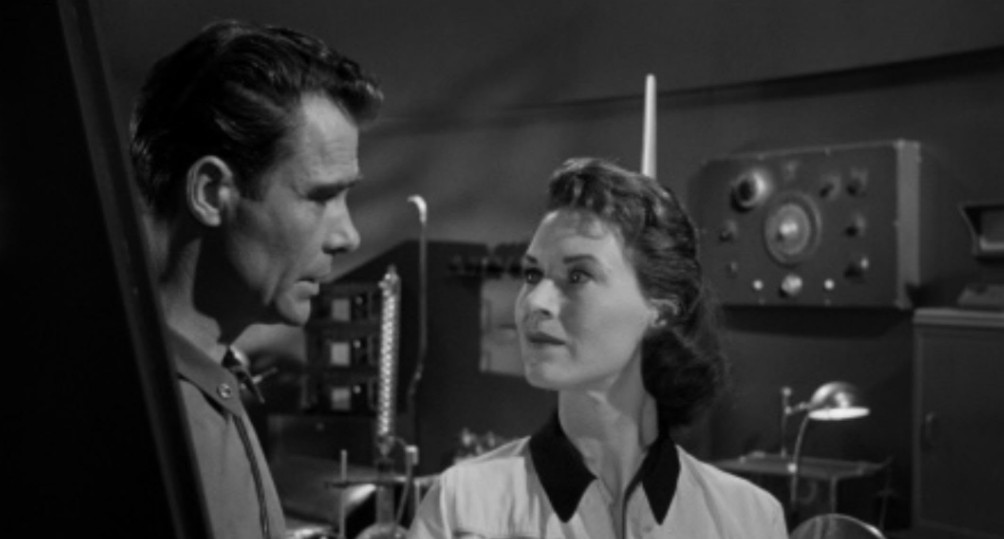
In fact, most of the time, the women on board the space ship react and behave in a perfectly normal manner, as functioning parts of the crew. No-one belittles them or calls them out for being “out of place” on the ship or “walking refrigerators” for their scientific interest. But for some reason, the filmmakers feel the need to include a scene in which the women chirp about with coffee pots, and serve the men food. I suspect that the scenes were added to bring a sense of realism and everydayness to the space mission, and 50s values being what they were, nobody probably ever thought twice about having the women doing the serving. More than anything, this is a sign of how stuck we all are in our own tradition and time, unable to break free of the prevailing norms when trying to describe the future or alien cultures. Granted, this was set in 1973 and not 2023, so norms wouldn’t have changed that much. In real life, it wasn’t until the early 80s that official gender discrimination was abolished both for astronauts and cosmonauts.

All in all, It! The Terror from Beyond Space is a rather routine monster shocker, following the established tropes of the genre, complete with ill-conceived romantic interludes and a contrived “enemy from within”. But it does so with a few original twists that make it feel refreshing among all the programmatic low-budget dregg being churned out of Hollywood in the late 50s. It doesn’t hurt that it has a reasonably intelligent and well-crafted script that brings some genuine tension to the proceedings. A better – or at least more involved – director could have done more with the visuals. Eddie Cahn, as usual, films mostly in wide shots, often keeping the action far away from the camera, minimizing the need for multiple camera setups. Apart from the shots in which the monster is kept in the shadows – out of necessity rather than because of any artistic choice – the film has little atmosphere, and is mostly filmed in bright, flat lighting, with little done to accentuate the claustrophobia and terror that should permeate a spaceship in this kind of situation. Granted, any attempt to create genuine horror out of the movie would be dispelled as soon as the unwieldy monster lumbers into frame. Nevertheless, this remains a genuine classic and one of the better science fiction films at the tail end of the 50s SF craze.
Reception & Legacy

It! The Terror from Beyond Space was released in the US in August, 1958 on a double bill with The Curse of the Faceless Man. The movie pairing was by all accounts a success and brought United Artists a good profit. Some posters sported the challenge: “$50,000 guaranteed by a world-renowned insurance company to the first person who can prove “IT” is not on Mars now!” Whether or not this was an actual thing or just a marketing ploy, any insurance company would be pretty safe, as it is impossible to prove a negative.
Reviews in the trade press were mostly mildly positive. Variety was among the most negative, in which critic Ron wrote: “it’s mostly old stuff, with only a slight twist”. British Monthly Film Bulletin was a lot more positive, noting that the filmed hinged on a battle of wits between the crew and the “snarling, rubbery creation”. Giving it a 2/3 rating, the magazine wrote: “The film is effectively staged, and if not in the front rank of science fiction, provides an acceptable addition to the gallery of monsters”. Jack Moffitt at the Hollywood Reporter called it “a rousing science fiction film”, and Harrison’s Reports noted the film’s originality in that it was set entirely on a spaceship, calling it “an above-average program picture of its kind”.
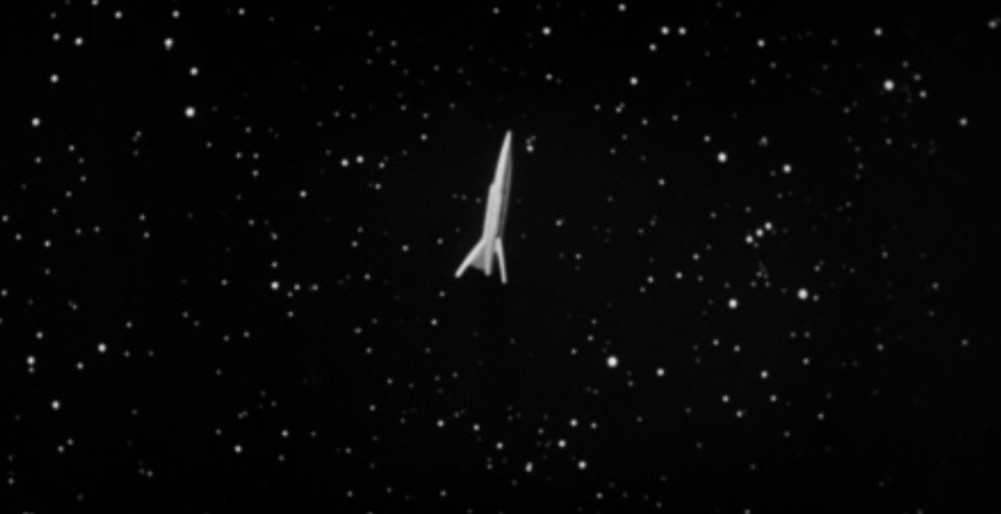
As of writing, the film has a 6.0/10 rating on IMDb based on over 6000 votes and a 3.0/5 rating on Letterboxd, based on over 3000 votes. Review aggregate Rotten Tomatoes gives it a 6.1/10 rating.
Online critics tend to have an affinity for It! The Terror from Beyond Space, while still acknowledgeing its flaws. But leave it to the inimitable Andrew Wickliffe at The Stop Button to give it a zero-star review, comparing the film to a middle-school theatre project, and lambasting the direction, the monster and the acting: “Of ten actors – we’re supposed to remember all their characters, following a painfully weak introduction to them – only Marshall Thompson gives a good performance. Kim Spalding, as his antagonist, gives one of the worst performances I’ve seen lately in a theatrical release.”
On the other hand, Richard Scheib at Moria gives the movie 3/5 stars, citing a “a reasonable script, one that economically constricts the action to a minimal number of sets and keeps it moving tightly along”, a “fair degree of suspense” and some “reasonable sequences”. Reid at Films in Boxes gives it 2/5 stars and writes: “For being kinda silly 50’s scifi action thing, it does a good job of building up suspense. Unfortunately, it’s cut down by the unnecessary romance subplot and by their goofy-ass interactions with the monster itself.” Mitch Lovell at The Video Vacuum awards the picture 2.5/5 stars: “The first part of this movie is a major snoozefest. It’s almost exclusively made up of scenes of astronauts walking around the ship hollering each other’s names over and over and over again. […] The film does get markedly better once our boy It starts draining people and turning them into Robert Smith clones. And I guess it goes without saying that the best thing about the flick is the monster. […] If it wasn’t for the monster, It! The Terror from Beyond Space would be a total dud.”

While a minor cult classic in its own right, the film’s greatest claim to fame is its similarity to Ridley Scott’s Alien (1979), as scripted by Dan O’Bannon. Many generations of science fiction fans have claimed that Alien is really just a big-budget copy of – equally – It! The Terror from Beyond Space and Mario Bava’s Planet of the Vampires (1965). The similarities are obvious: a nigh-indestructible alien bent on killing off the crew infiltrates a space ship. It does away with the crew members one by one, and at one time uses the ship’s air ducts as a hiding place. Finally, the monster is dispatched through the opening of a hatch – albeit with different results; in the former movie the creature is suffocated through a lack of air, while in the latter it is sucked into space.
Without at this time getting too entangled in the complicated production history of Alien, it is worth mentioning that the 1979 movie is a patchwork of inspirations. Dan O’Bannon himself said that he didn’t steal from any film in particular – he stole from everyone! This obviously included both It! and Planet of the Vampires. However, both movies owe some of their greatest debts to Canadian writer A.E. van Vogt. In 1951, van Vogt published a fixup novel titled The Voyage of the Space Beagle, incorporating four previously published short stories about a science ship encountering different alien menaces on its voyage through space. The idea of an indestructible alien monster tearing up a space ship really comes from Van Vogt. It’s screenwriter Jerome Bixby has readily acknowledged that he used the book’s first story, Black Destroyer, as a source of inspiration for his script. And 20th Century-Fox settled with van Vogt out of court over the similarities between Alien and the book’s third story, Discord in Scarlet, in which an alien infiltrates the ship and starts laying eggs in the stomachs of the crew members.
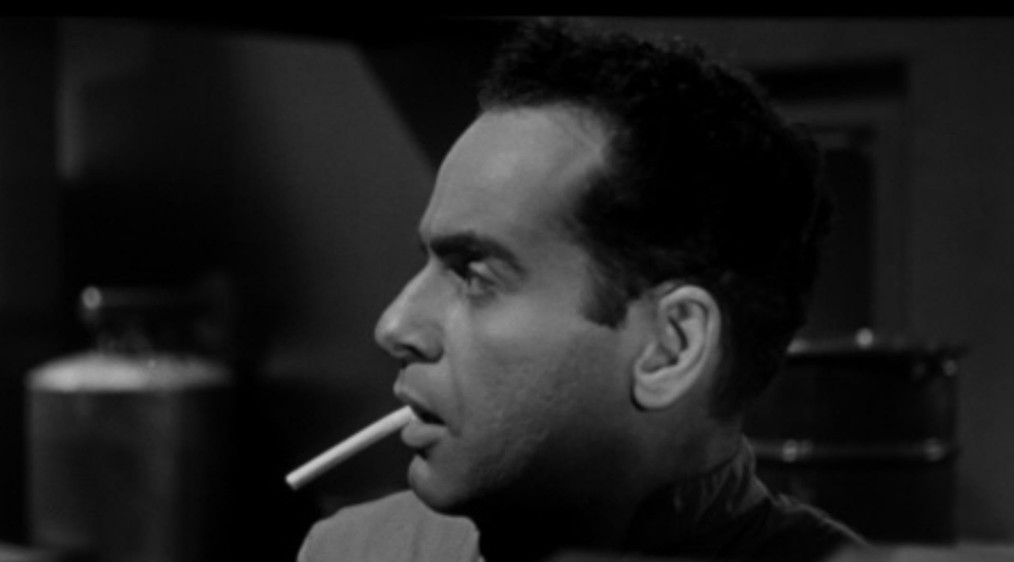
So while it is clear that It! The Terror from Beyond Space did inspire Dan O’Bannon and co-writer Ronald Shusett, there are numerous other inspirations that have either been stated by O’Bannon or are obvious enough. These include films like Them!, The Thing from Another World, O’Bannon’s own movie Dark Star (1974), Forbidden Planet (1956, review), Jaws (1974) and Halloween (1978), as well as literary works by A.E. van Vogt, Clifford D. Simak and Philip José Farmer, and artworks by such artists as H.R. Giger and Moebius. Furthermore, the script was heavily edited by producers David Giler and Walter Hill, with their greatest contribution being the Nostromo’s central computer and the plotline of Ash the android – further drawing inspiration from such works as Arthur C. Clarke’s and Stanley Kubrick’s 2001: A Space Odyssey (1968) and the literature of Isaac Asimov. Alien used some of the central tenets of It! The Terror from Beyond Space, but like all great works of art, drew inspiration from an entire catalogue of art history to create something entirely new and exciting. No art is created in a vacuum, and all art leans on its predecessors, whether it attempts to subvert, heighten or pay homage to the tropes that have come before. Claiming that Alien is a ripoff of It! The Terror from Beyond Space is like claiming that a Ferrari is a ripoff of a horse-drawn wagon. Sure, they have some of the same basic ideas, sort of, but are two very different beasts.
Cast & Crew
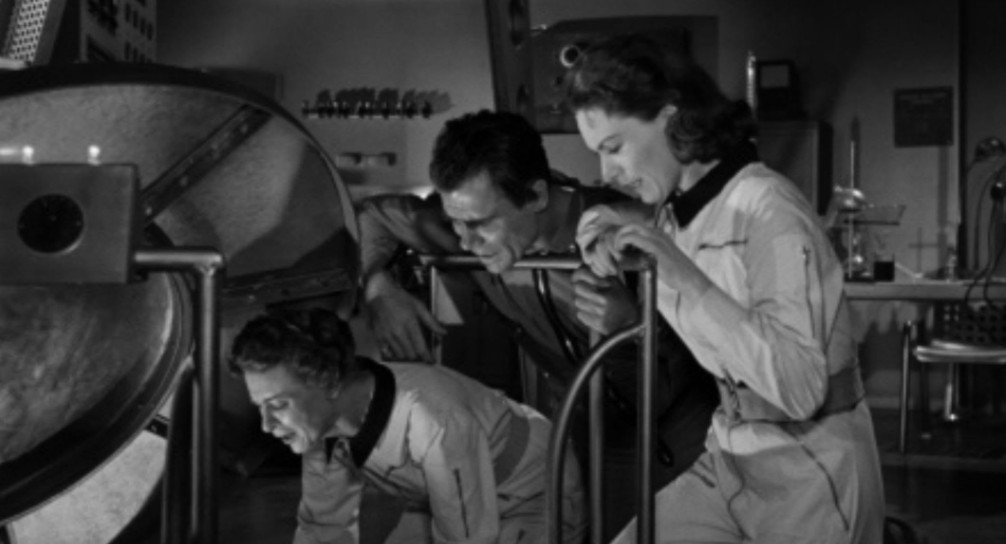
The producers of It! The Terror from Beyond Space was Robert E. Kent and Edward Small. Small started his career in production in the silent era and remained an independent produced throughout a career that lasted until 1970. However, in the early 30s, his production company struck a deal with United Artists, and Small produced several A-movies for UA during the 30s and 40s. In the 50s he was relegated to B-pictures and low-budget movies, until he ended up making straight-up exploiation in the 60s. Robert Kent was another independent producer, who started his career as a screenwriter. He eventually started doing films for Edward Small and United Artists, including It! The Terror from Beyond Space (1958), Curse of the Faceless Man (1958), Invisible Invaders (1959), The Flight That Disappeared (1960) and Twice Told Tales (1961), starring Vincent Price.
Although not nearly as well-known to a mainstream audience as Ed Wood or Roger Corman, Edward L. Cahn is synonymous with the 50’s subgenre of so-bad-they’re-good Z-movies. Cahn began his career in the films as early as 1917 as a production assistant, and soon graduated to editing at Universal. Eventually, he became one of the studio’s top editors, before switching to directing in the early thirties, “turning out cheap and cheerful crime melodramas and comedies”, according to an IMDb bio by I.S. Mowis. Pretty much flying below the radar at Universal and MGM, he struck out as a freelancer in 1945, with much work but little recognition, making B-movies and shorts for various companies.

However, after a dry spell in the early 50’s, Cahn was back with a vengeance, now with his eyes set on the minor studios that were producing B-movie quickies for a teenage audience, like Columbia, Allied Artists and not least AIP. Cahn was hired to make movies that called for little artistic flair, but a steady directorial hand by someone who agreed to work fast, cheap and didn’t care too much about the end result, as long as there was a comprehensible film in the can, which could be sold to indiscriminate teenagers on the power of the poster alone. Not quite as prolific as Corman, Cahn still churned out at half a dozen films, sometimes more, each year between 1955 and his death in 1963. He became a go-to guy for crime thrillers, westerns and horror movies, with a seeming knack for zombie films. But he also made more traditional teen or “rock and roll” movies, as well as girls-in-prison films. His science fiction films include Creature with the Atom Brain (1955, review), Voodoo Woman (1957), Invasion of the Sauce Men (1957, review), Curse of the Faceless Man (1958), It! The Terror from Beyond Space (1958) and Invisible Invaders (1959). Best known of these is probably It! The Terror from Beyond Space, on the merit of it being one of the many works to inspire Ridley Scott’s Alien (1979). This was also perhaps his best movie of the era.
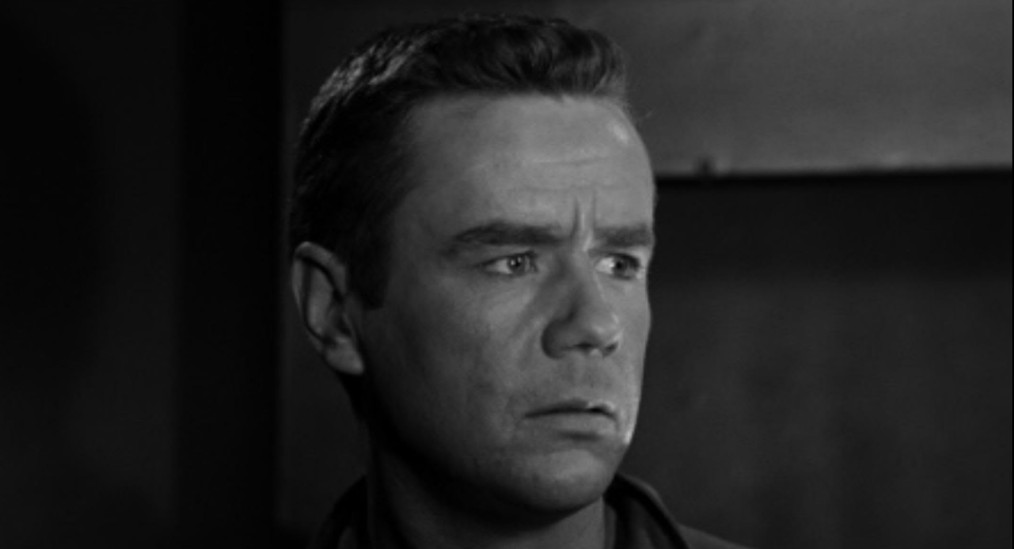
Lead actor Marshall Thompson had a long and quite successful career, and was able to adapt and reform himself over the years, eventually combining his work in front of the camera with producing and directing. In the 50s he also racked up something of a science fiction legacy. Thompson began as a young boy-next-door in the mid-40s at Universal, mostly in smaller roles. He moved to MGM in 1946, and had decent supporting roles, as his IMDb bio puts it, “in perfunctory nice-guy assignments”, without ever rising to leading man status. His MGM contract was terminated around 1950, and he went freelance. Thompson’s freelance work during the first half 50s was of varied quality, he mostly did supporting roles and a few leads in B-pictures, both for major and minor studios. 1955 was an important year, as it marked a high point with a co-lead in Universal’s war movie To Hell and Back, and another co-lead in United Artists’ Battle Taxi. The latter film left no large imprint on movie history, but it was the first collaboration with producer Ivan Tors, who would later prove instrumental for Thompson’s career.
The quality of Thompson’s films, or at least their status, diminished during the latter half of the 50s, and he found himself doing leads in minor pictures, while working ever more frequently in TV. 1957 saw him starring in a small Mexican-US African adventure film called East of Kilimanjaro, by all accounts not a very good one, but one which cemented his passion for animals and wildlife. His status as a minor science fiction notability came about in the late 50s, when he starred in three SF movies, including Richard Gordon’s Fiend Without a Face (1958, review) and First Man in Space (1959). Most importantly, he starred in United Artists’ It! The Terror from Beyond Space (1959), inspired by A.E. Van Vogt’s fix-up novel The Voyage of the Space Beagle (1959). A mediocre and in many ways clunky low-budget monster movie, it built on a novel idea of an alien monster infiltrating a spaceship, and has been claimed as a major inspiration on Alien (1979).

The mid-60s became the high point in Marshall Thompson’s career, as he directed the war film A Yank in Vietnam (1964), on the strength of which his old friend Ivan Tors hired him as director on several episodes of the animal-themed hit TV series Flipper in 1965. The same year saw the release of Tors’ family movie Clarence the Cross-Eyed Lion, where Thompson starred as Dr. Marsh Tracy, a veterinarian living in Africa with his daughter, taking care of animals. The film was based on a story treatment by Thompson. The following year Thompson appeared in another Tors film, the science fiction movie Around the World Under the Sea. However, more importantly, Thompson and Tors decided to create a TV series based on Dr. Marsh and Clarence, and the result was Daktari (1966-1969). The TV show became a surprise hit, ran for four seasons, and finally lifted Thompson into star status. Tors’ and Thompson’s animal-themed collaboration continued with the TV series Jambo (1969), which Thompson presented and narrated. In 1972 he starred in the children’s movie George, about a Saint-Bernard living in the Swiss Alps, and he had a recurring role in a TV series (1972-1974) based on the movie. In 1982 he appeared in another dog-themed film, White Dog.
After the success of Daktari, Thompson worked mainly in TV, although he found time to appear in a handful of feature films, including the SF/horror film Bog (1979), an ultra-low-budget monster movie inspired by Creature from the Black Lagoon (1954, review). He only worked sporadically in the 80s, focusing more on providing nature and wildlife photography for TV, and made his last film apperance in 1991.

Canadian-born Shirley Patterson moved to California with her family in the 30’s because of her father’s health issues. She began acting on stage and in 1941 won the Miss California pageant, however she was later disqualified when it turned out she was underage. She was noticed by a Columbia scout in a stage play, and was signed to the studion in 1943. She appeared in B-movies, sometimes as a leading lady, and is best remember from her work in the era for playing the female lead in the original Batman serial (1943, review).
Patterson took a hiatus from acting 1947-1953 in order to raise her family, and re-emerged in Hollywood under the moniker of Shawn Smith, which is how she is credited in It! The Terror from Beyond Space. She mostly appeared in supporting and bit parts in this era, but science fiction returned her to leading lady status. She had a supporting role as the Martian woman Elaine in World Without End (1956, review), and appeared as the female lead in The Land Unknown (1957, review) and the cult classic It! The Terror from Beyond Space (1958). However, her comeback was cut short when she broke her leg in seven places in a skiing accident in 1958. She wore a cast for a year and a half, which ended her acting career.

Ann Doran made her debut as a child actress in the silent era in 1922, but didn’t go down the path of the child star, despite being born into an acting family. After her debut proper in 1934, she went on to become one of the most prolific supporting actresses in Hollywood, by one account apprearing in over 500 films and 1000 TV episodes (IMDb lists 230 movies abd 150 TV shows). For much of her career, she worked under contract for Columbia. She had a few leads as an ingenue in B-movies early on in her career, but mostly did supporting work, some large, some smaller, and bit-part work. Doran is best known for playing James Dean’s mother in Rebel Without a Cause (1955). Her SF credits include the Boris Karloff vehicle The Man They Could Not Hang (1939, review), she pops up as a psychiatrist in Them! (1954, review), The Man Who Turned to Stone (1957, review), and most famously, she was one of the crew members whose spaceship gets infiltrated by an alien in It! The Terror from Beyond Space (1958). Doran was a regular face on TV from 1950 until her retirement in 1988. She passed away in 2000, at the respectable age of 89.
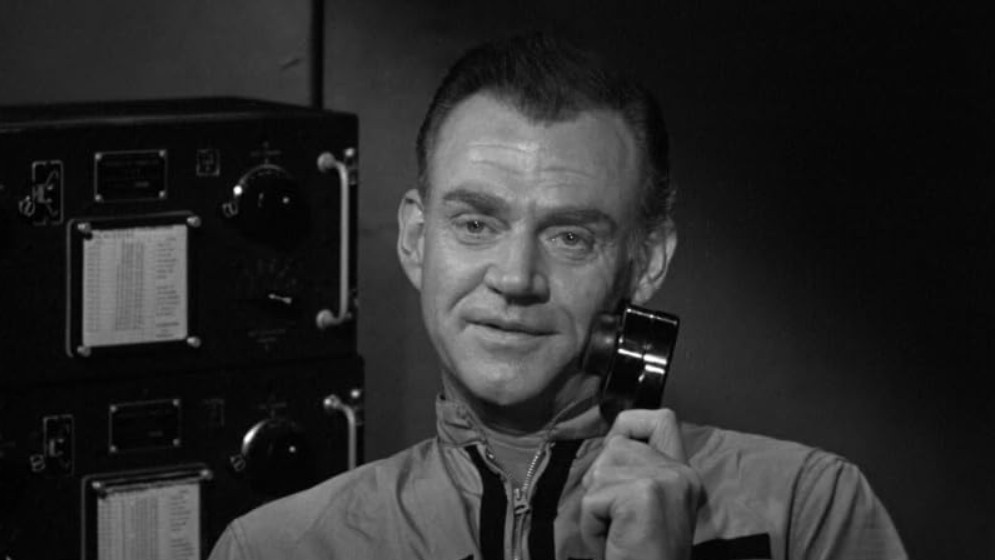
Brilliant character actor Dabbs Greer has a larger-than-ususal role in It! The Terror from Beyond Space. Greer was often stuffed away in small but memorable roles. He appeared in Invasion of the Body Snatchers (1956, review), The Vampire (1957, review) and It! The Terror from Beyond Space (1958). He finally became a household name in 1974, when he was cast in the recurring role of Rev. Robert Alden in the TV show Little House on the Prairie.

In the role as Calder, the guy with the blowtorch in It! The Terror from Beyond Space (1958), we see Paul Langton, a respected but little-known character actor. We have bumped into him on this blog before, as the obnoxious lead in W. Lee Wilder’s terrible yeti film The Snow Creature (1954, review), and as the brother of the titular The Incredible Shrinking Man (1957, review). He also turned up alongside SF veterans John Carradine in Allied Artists’ The Cosmic Man (1959, review) and John Agar in United Artists’ Invisible Invaders (1959). Furtherm he had the honour of appearing in the very first episode of The Twilight Zone, as one of the doctors revealed at the end the episode, monitoring Earl Holliman’s astronaut trainee in an isolation booth. However, Langton’s definitive claim to fame is his recurring as the wily Leslie Harrington on the soap opera Peyton Place, a role he reprised in 219 episodes between 1964 and 1968.
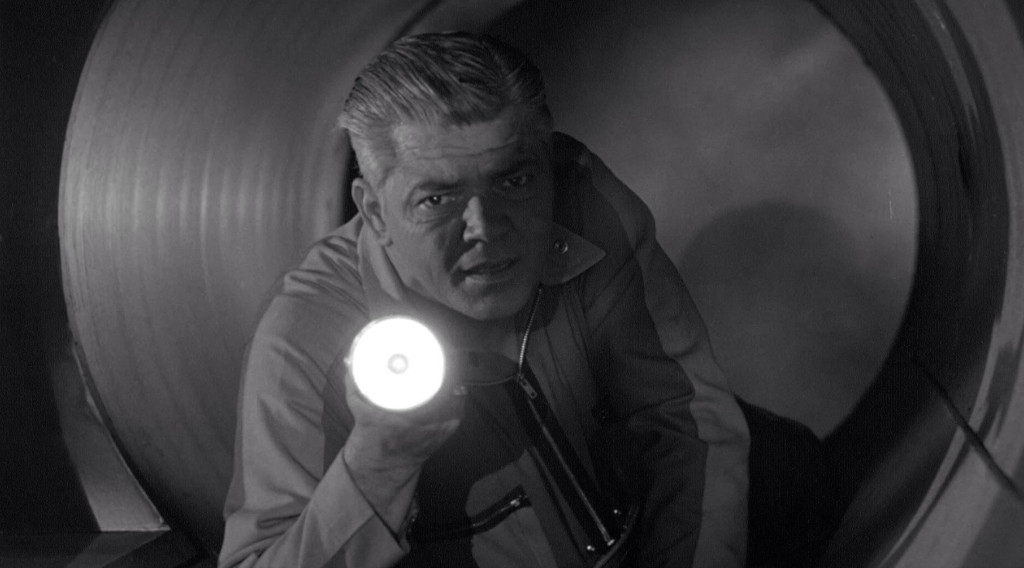
Prolific character actor, stocky Robert Bice, does one of his many substantial, if not always memorable, supporting parts – however, this one is the one he is perhaps most remebered for by SF fans. Bice was a western staple who had better luck on TV than on the big screen. He had a small role as an Eskimo chief in Red Snow (1952, review), and a larger one in Invasion, U.S.A. (1952, review), where he played one of the five main characters hypnotised by “Mr Ohman” into believing swarthy hordes of Asian communists have invaded the US. Bice also had a big supporting part in Captive Women (1952, review). He played small parts in Port Sinister (1953, review) The Snow Creature (1954, review), and Space Master X-7 (1958, review), and yet a substantial role in the cult classic It! The Terror from Beyond Space (1958), as Major John Purdue aboard a space ship invaded by an alien. Bice plays the character who crawls down an airduct in one of the film’s most memorable scenes — one which would come to inspire Alien (1979) and a number of other movies.

Rounding up the crew of the spaceship in It! The Terror from Beyond Space are Richard Benedict, Richard Hervey and Thom Carney. Benedict had a brief moment in the limelight as the worker trapped in a mine shaft in Billy Wilder’s Ace in the Hole (1951). He was also part of the heist crew in the original Ocean’s Eleven (1960). He later took up a fairly successful director, working mostly in TV.

Ray “Crash” Corrigan was a stuntman, ape actor and one-time matinee idol who started his career in the early 30s as an ape actor. Back then, making ape suits was expensive, and studios were glad to hire actors who brought their own gorilla costumes – with the added benefit that they also tended to have training in how to play apes. I physically able actor with a good gorilla suit could always find work in Hollywood – but usually it meant you had to create the suit yourself. Corrigan gradually graduated into small roles outside of the suit, and appeared in She (1935, review) and the serials The Phantom Empire (1935, review) and Flash Gordon (1936, review). He got his big break in 1937, when Republic Pictures deciced to do their own version of the hugely popular Flash Gordon serial, and cast Corrigan in the lead. Undersea Kingdom (1937, review) was a somewhat clunky affair and never achieved the same success as its inspiration. It did, however, put Corrigan on the map as a leading man.

Corrigan played the lead or semi-lead in a number of other cheap western serials, as well as in a few low-buget films. He is reported to have been quite engaging in his upcoming western serials. He never gave up his ape man job though, and as an owner of a gorilla suit, and with much experience, he was a cheap and talented addition to many films. Corrigan went ape in The Ape, 1940, with Boris Karloff), in Dr. Renault’s Secret (1942, review), Captive Wild Woman (1943, review), The Monster Maker (1944, review), Unknown Island (1948, review), Bela Lugosi Meets a Brooklyn Gorilla, 1952, review) and Killer Ape.
Janne Wass
It! The Terror from Beyond Space. 1958, USA. Directed by Edward Cahn. Written by Jerome Bixby. Starring: Marshall Thompson, Shirley Patterson, Kim Spalding, Ann Doran, Dabbs Greer, Paul Langton, Robert Bice, Richard Benedict, Thom Carney, Ray Corrigan, Pierre Watkin. Music: Paul Sawtell, Bert Shefter. Cinematography: Kenneth Peach. Editing: Grant Whytock. Art direction: William Glasgow. Makeup: Layne Britton, Loren Cosand. Sound: Al Overton. Special effects (monster suit creator): Paul Blaisdell. Produced by Robert Kent & Edward Small for Vogue Pictures & United Artists.


 Scifist.
Leave a comment