

Boris Karloff stars as Dr. Frankenstein in this 1958 low-budget production about a TV crew getting killed off in an old castle. Despite the title, there is nothing futuristic about this tedious and predictable but mildly entertaining adaptation. 4/10
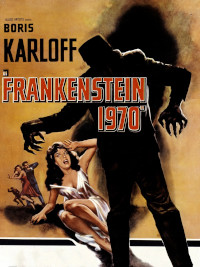
Frankenstein 1970. 1958, USA. Directed by Howard Koch. Written by: Aubrey Schenck, Charles Moses, George Worthing Yates, Richard Landau. Inspired by the novel “Frankenstein” by Mary Shelley. Starring: Boris Karloff, Tom Duggan, Jana Lund, Don “Red” Barry, Charlotte Austin, Rudolph Anders, Mike Lane. Produced by Aubrey Schenck. IMDb: 4.9/10. Letterboxd: 2.7/10. Rotten Tomatoes: N/A. Metacritic: N/A.
The last descendant of the infamous Baron von Frankenstein, Victor (Boris Karloff), has invited a TV crew to his family castle, because he needs their money for a nuclear reactor. The TV crew, including Douglas Rowe (Don “Red” Barry), his publicist Mike Shaw (Tom Duggan), actress Carolyn Hayes (Jana Lund) and script supervisor Judy Stevens (Charlotte Austin) are there two film a drama documentary about Victor’s famous ancestor and his monster.
That’s the setup for producer Aubrey Schenck’s 1958 low-budget picture Frankenstein 1970. Despite its title, there’s nothing particularly futuristic about it, and it mainly takes place inside Frankenstein’s gloomy castle. The film is mainly of historical value for being the only one in which Boris Karloff ever played Dr. Frankenstein. Directed by Howard Koch, it’s not quite as bad as its reputation would have it.
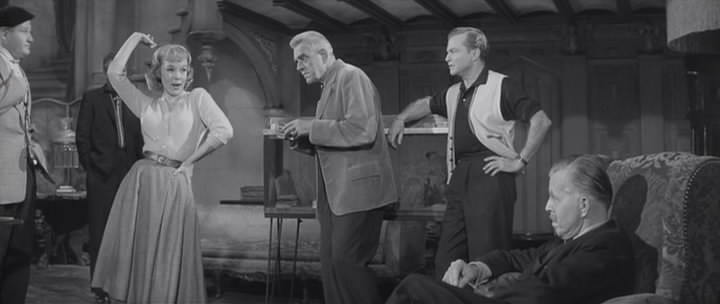
Victor Frankenstein’s friend and accountant Wilhelm Gottfried (Rudolph Anders) is suspicious about what old Frankenstein is doing in his secret lab, and what he needs a nuclear reactor for. But when he asks too many questions, Frankenstein reminds him, with an evil grin, of the story of the inquisitive colonel who ended up with his tongue cut out. This Frankenstein is a tortured soul, crippled and prematurely aged after being tortured by the Nazis during WWII (there’s a suggestion that he has been castrated too). But he is also a wholly unpleasant and ruthless man, who despises having the film team trampling over his family name.
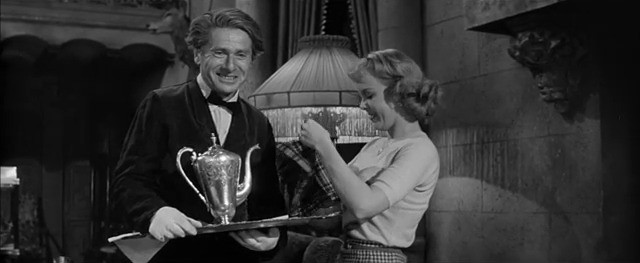
When the nuclear reactor finally arrives, the audience is keyed in to Frankenstein’s secret (which hardly comes as a shock): he is trying to perfect his ancestor’s experiment in creating a living being. But: there’s a change of pace when Frankenstein takes a liking to beatiful Miss Hayes, a liking that is not mirrored in Hayes’ feelings towards the sinister Baron. However, she does feel sympathy towards Frankenstein’s simple-minded butler Shuter (Norbert Schiller), whom she gifts with a scarf.
Meanwhile, Frankenstein uses his nuclear reactor to bring back the old creature (Mike Lane) in his hidden lab beneath the cellar of the castle. Frankenstein has stripped the monster’s head from flesh, intending to create for it a new head and face. In his lab Frankenstein also just happens to have a clay bust he is working on, modelling it on an photograph of himself as a younger man, before his disfiguration – may this have some connection to the new face of the creature?, the audience is called upon to ask itself. One night, Shuter accidentally opens the secret path (in an old sarcophagus) to Frankenstein’s secret lab, and catches old Victor working on his creature. Victor bemoans: “why did it have to be you?” and the hypnotizes Shuter. He uses Shuter as the raw material for his creature, transferring to it Shuter’s heart and brain, but when he is about to give it Shuter’s eyes, he bumps it to the fridge door and drops the glass jar they are contained in. Now he must get new raw material.
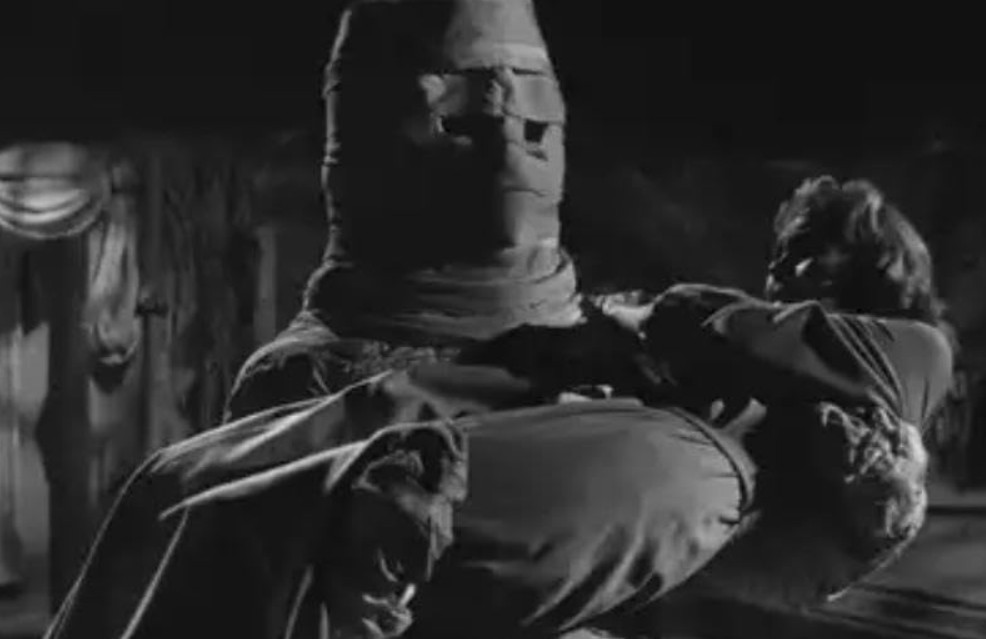
He wakes up the creature and finds Shuter’s brain still obays his hypnotic commands. Now he needs to use the guests in his house for their eyes. He orders the creature to go get Shaw, but instead the monster brings Judy (who has just had Mike Shaw trying to get into her bed). Of course, the creature can’t have female eyes, so Frankenstein sends it out again, but now it brings the cameraman, who has the wrong blood type. Another pair of eyes down the drain. By this time, the rest of the inhabitants of the castle are getting suspicious of all the people disappearing, and call in the police (Irwin Burke), who come snooping around without finding anything. Finally, Frankenstein’s old friend Gottfried confronts him, with the end result that his eyes end up with the creature. By this time, the film crew (or what’s left of it) have put two and two together and go to the police station, where they are able to convince the authorities that Frankenstein is up to no good. While the police is on the way, Frankenstein hypnotizes Mike Shaw into convincing actress Carolyn Hayes to come down to the basement, where the creature (Shuter) grabs her and starts carrying her to the lab (for reasons unkown). However, when Carolyn realizes it is Shuter inside the monster’s cranium, she is able to plead with him to let her go. Shuter then snaps out of Frankenstein’s spell. He descends to the lab and confronts Frankenstein, and they both perish in a cloud of radioactive steam.
Background & Analysis
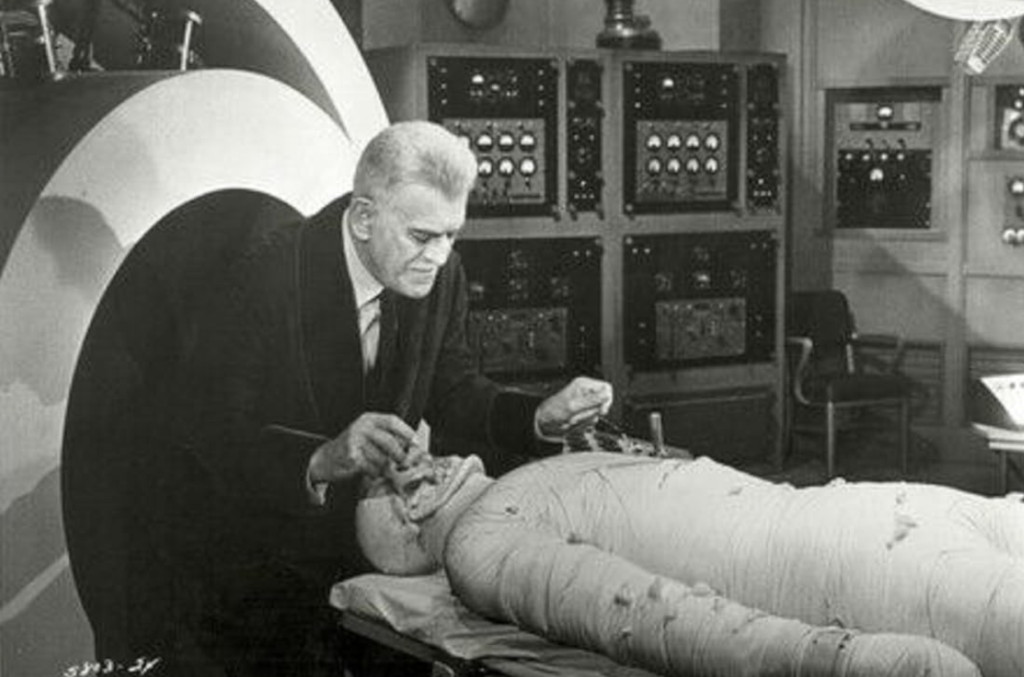
In 1958 Frankenstein was once again back in vogue. Hammer had led the charge with its reimagining of the franchise with The Curse of Frankenstein (1957, review), starring Peter Cushing and Christopher Lee. On the US teen market, American International Pictures scored big hits with their movies I Was a Teenage Werewolf (1957, review) and I Was a Teenage Frankenstein (1957, review). On top of all, Universal’s old horror films from the 30s and 40s had become popular on TV. In 1958, the time must have seemed right for an entrepreneuring producer to bring back the original ghoul to the big screen.
The producer was Aubrey Schenck, of the powerful Schenck family who ran both Fox and MGM. Aubrey was a former Fox lawyer who had segued into film production for the studio (his uncle was the head of the company), and had by 1958 formed his own company, along with producer/director Howard Koch, with which he released movies primarily through United Artists. In 1957, they made a three-picture deal with Boris Karloff, worth $25,000 per movie – a substantial sum of money for an actor at the time. The first one was Voodoo Island (1957) and the second Frankenstein 1970. A third movie was announced in 1958, to be called “King of the Monsters”, but the film never materialized. According to Howard Koch, interviewed by Tom Weaver, Schenck didn’t hold up his part of the deal with Karloff and the film never went into production. Also, United Artists weren’t interested in Frankenstein 1970, but Schenck was able to sell it to Allied Artists, on the pitch that he was going to be able to borrow a CinemaScope lens from Fox free of charge thanks to his contacts.
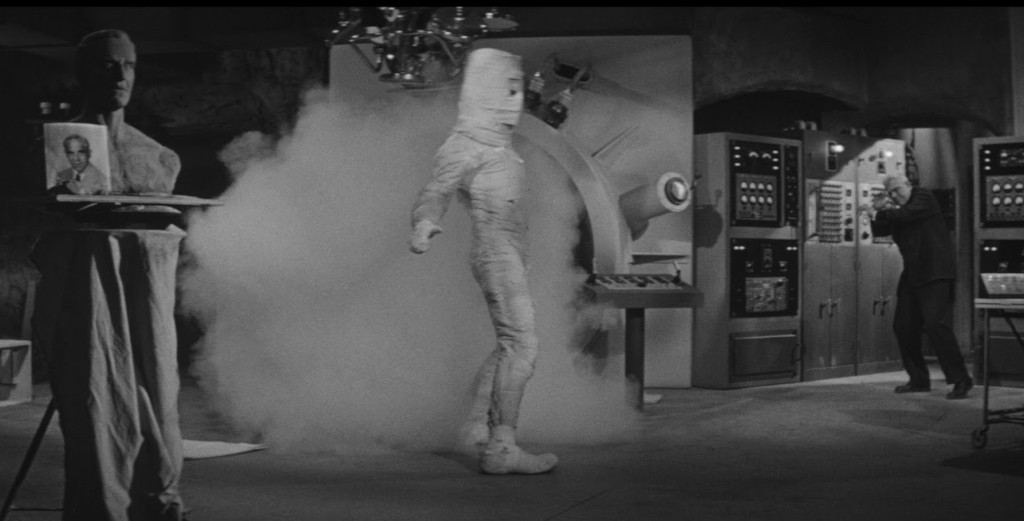
It was Aubrey Schenck that came up with the story for Frankenstein 1970 along with Charles Moses. For the screenplay, the producers went to Richard Landau, who had collaborated with them on several films, including Voodoo Island, and seasoned science fiction writer George Worthing Yates. Yates, in particular, was probably responsible for much of the techno-babble in the film. During his surgical procedures, Frankenstein makes audio notes on a recorder, much like a real scientist would do during an experiment like this. The movie looks rather good, for a film with a budget of a little over $100,000. Especially the sets inside the castle have an A-film feeling. That’s because the movie was filmed on an A-film set, Warner’s Errol Flynn/Dorothy Malone vehicle Too Much Too Soon (1958). Aubrey Schenck was in good standing with studio head Jack Warner, who allowed them to rent the still standing set for $20,000. With $45,000 tied up in the set and Karloff’s fee, Koch tells Tom Weaver they had $60,000 with which to pay for the rest of the production. This included both the catacomb sets (classic papier mache caves) and Frankenstein’s lab. The lab is filled with all the classic techno cabinets, gauges and blinking lights familiar from these kind of movies, and in the center of it stands a large, circular apparatus that looks like a large metal “portal” with sliding doors. This is where the Frankenstein monster is being “stored”.
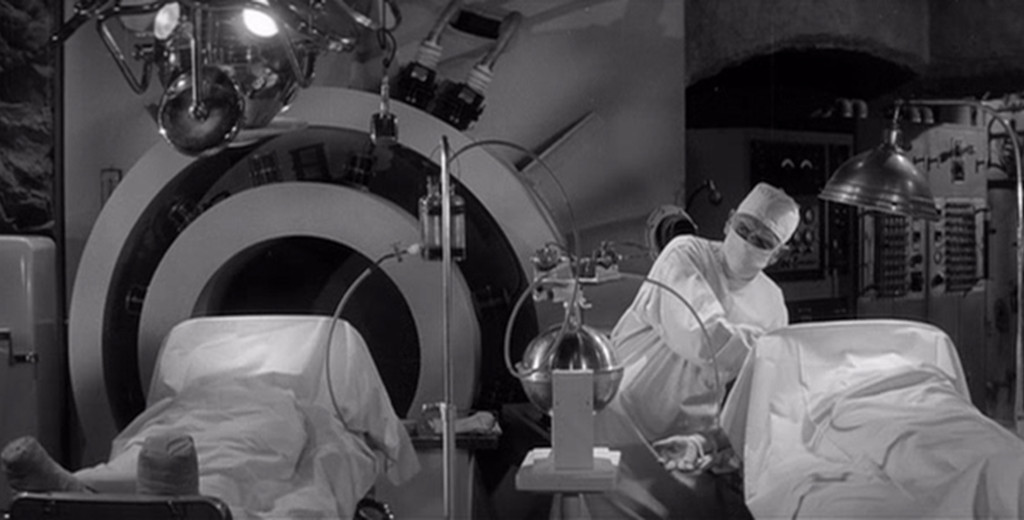
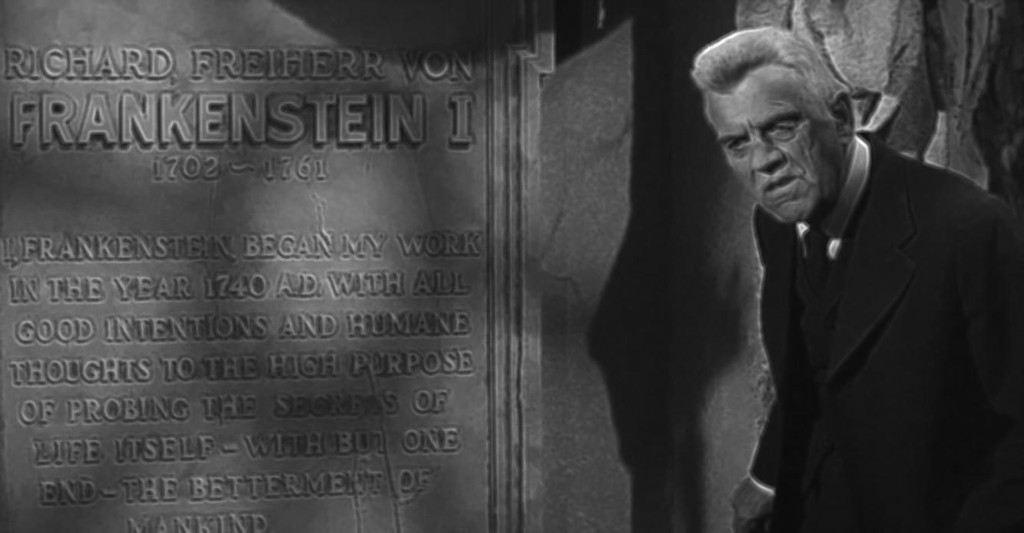
The monster storage bin is really the only thing that feels even remotely futuristic in the movie – it resembles an MRI machine, if anything. The title is a bit of a mystery. The film had several different production titles, such as “Frankenstein’s Castle”, “Frankenstein 1960″ and Frankenstein 2000”. The title Schenck settled for , Frankenstein 1970, promises some kind of futuristic twist on the story, seeing as the film is set 12 years in the future. However, there’s nothing in the film suggesting that it is set in the future. Most of it has a classic gothic feel, and people dress, talk and behave like it was 1958. According to the dialogue, the TV production is supposed to mark “the 320th anniversary of Dr. Frankenstein”. Counting back from 1970, that means 1740, a year that is meaningless in the context of Mary Shelley’s book, which is set in the early 19th century. However, there is a plaque shown in the movie which states “Richard Freiherr von Frankenstein I (1702-1761). I, Frankenstein, began my work in 1740…” etc. For reasons unknown, the producers have seemed fit to create a wholly new mythology for Frankenstein, unconnected to Shelley’s book. That still doesn’t explain the arbitrary choice to celebrate Frankenstein’s 320th anniversery, but perhaps that was just an in-joke. The whole idea of placing the story in the future seems odd from the perspective of the finished film, as there is no point to the futuristic setting, apart, perhaps, from bringing Frankenstein into the atomic age. Most of all, I suspect this was a marketing gimmick.
The film’s central problem is its script. Clearly, there is at heart an idea by Schenck and Moses to update the Frankenstein story to the atomic age. As such, this is not necessarily a bad idea, but screenwriters Landau and Yates fumble around with it, one suspects partly due to budgetary restrictions. If your settings are going to be an old castle and a lab, and you have no budget for any extravagancies outside of these perimeters, then you are going to have to fall back on the old tropes. But clearly, the screenwriters are reluctant to do this. There is one magnificent scene, the one that opens the whole film, with Carolyn Hayes chased through a dark, foggy night by a partly unseen creature. It is a thrilling, atmospheric scene that promises a good, taut, gothic horror story. Alas, it turns out to be a film in the film: it’s the TV crew shooting their mockumentary. Alas also: it remains the standout scene in the entire film, as no other scene even comes close. But it shows that director Koch knew how to do this stuff, if he would only have had the chance.

The rest of the film is plodding. At heart it is an old dark house movie: a cast trapped inside an old, creepy castle being picked off one by one by a unkown murderer. But for an old dark house film to work, you need good characters, a good cast and interesting drama between the characters. Also, a key element is that the assailant is unknown to the audience, or at least some element of murders are unknown. This film has none of the above. The characters are not terrible, and they have some sense of personality, but the film isn’t able to squeeze any real drama out of them. There’s the director and his ex-wife/assistant, and the publicity man who is trying to bang the lead actress. However, they all get along fine and the feeble attempt at romance is underwritten and not nearly interesting enough for us to care about – and crucially has no bearing on the main story.
Charlotte Austin’s B-movie résumé belies her talent – she was actually a rather good actress, and stands out among the cast of Frankenstein 1970. Jana Lund is not terrible, but was cast more for her looks than her talent. Don “Red” Barry was more at home in westerns, but had a sprightly, bullish energy that works for his role as the director, or would have worked if the character was better written. Tom Duggan was a TV personality – basically a TV host – and it shows in the end result. He is portrayed and written sort of as a lovable scoundrel, as were so many of the leading men characters at the time, but Duggan isn’t really able to breathe any life into the role. Boris Karloff could usually elevate a mediocre movie, but for some reason he chose to ham it up in Frankenstein 1970. He is still memorable – he always was – and has a couple of scenes showcasing how good he was at balancing between the jovial and the sinister. But for the most part, Karloff seems to be doing a parody of himself, so to speak, or should we say a parody of the Frankenstein character. Part of the problem is that the character itself is badly written. Frankenstein, the script seems to want to say, should be given respect and sympathy because he endured torture at the hands of the Nazis because he refused to collaborate with them. But there is nothing sympathetic about the character, and given that he is ready to go through a whole house full of bodies in order to achieve his “immortality”, one is inclined to suspect that he is just the kind of person who would have actually collaborated with the Nazis to save his own skin.
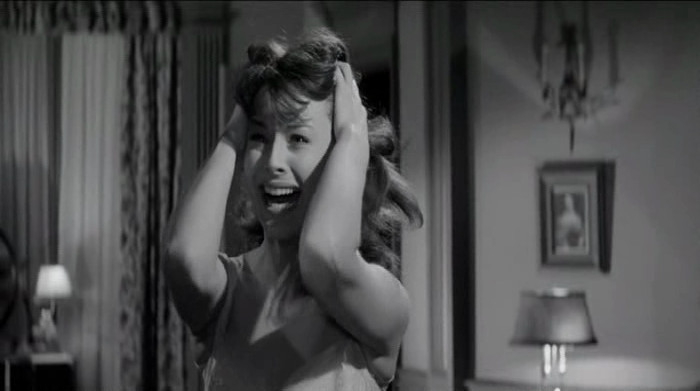
Rudolph Anders, whom we have seen in top form as the Nazi villain in the otherwise questionable film She Demons (1958, review) gets little to work with in Frankenstein 1970, but is solid as Frankenstein’s old friend. Bit-part actor Norbert Schiller, who often did comedic turns, does what the script requires of him as Frankenstein’s lovable butler.
Apparently, everyone on set were quite aware of Karloff not doing the film any favours, but nobody had the guts to tell him. Director Koch is described by his cast as a wonderful human being, but one who was perhaps a little bit too nice with his actors, especially if they were big stars. Koch himself tells Tom Weaver that he was too starstruck by Karloff to tell him to stop hamming it up: “A was afraid to say to him that it was too much! That’s not right, but […] we were not great talents, we were just trying to make movies.”
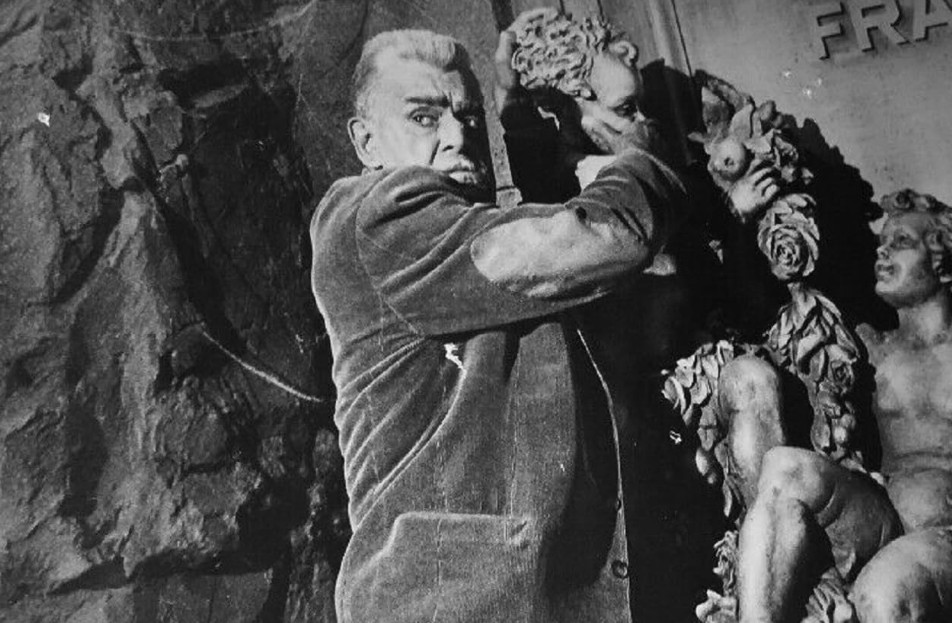
One of the main drawbacks of the movie is that it lacks stakes. We know almost from the get-go how everything is going to play out. Dr. X will build a creature, and Brad and Janet are both going to come through unscathed in the end. A few of the supporting characters are going to be killed off, Janet will be kidnapped and in the end the creature will turn on Dr. X, and they will both perish. That’s the mold, and that’s exactly what happens. None of the characters are interesting enough for us to invest in them, not even Karloff’s.
The film keeps building toward a surprise ending, but throws in so many hints along the way, that it is hardly a surprise to anyone that Frankenstein has created the creature’s face in his own image. He keeps talking about being the last of his family, and there’s the hint at his castration, and he even says at one point that he is creating his creature in order to give himself immortality, of sorts. One of the main plot points is him creating a new face for the creature, and early on we see him working on a clay bust from a photograph of himself as a younger man. The surprise twist would have been if the creature’s face wasn’t that of Karloff in the end.
The script also shows off a typical trope connected with lazy writing: hypnotism. This is the first film in which Dr. Frankenstein is now also a hypnotist, as this is an easy way for a screenwriter to get his characters to act out of character, logic, self-interest or free will.

The central part of the plot during the second half of the movie is Frankenstein’s hunt for eyes for the creature. First of all, for a brilliant scientist, Frankenstein is hardly particularly smart. A missing butler might have gone unnoticed, but when he starts killing off an entire TV crew that are known to be lodging in his castle, he is pretty much putting up a sign saying “I’m the killer!”. There is hardly any rush to get the eyes, why just not wait until the film crew is gone and attack some unwitting stranger? Or better yet: go visit the morgue where you got the rest of the stuff. And for an eyeless creature, the monster sure seems to see surprisingly well, chasing the guests all around the castle. Rather, it seems to have problems with its hearing. When Frankenstein tells it to get the (male) director, it instead grabs his ex-wife, despite her having screamed her lungs off in the creature’s face, in a decidedly non-male voice.
The film also struggles to reach its finale. The plot needs the creature to kidnap the female lead and carry her to the lab, but the screenwriters fail to come up with any reason for it to do so. The creature is ordered by Frankenstein to bring her, but it is never explained why. By this time, the creature is finished, so he doesn’t need her for body parts, and there’s no other reason for him to bring her. Yes, it’s made clear that Frankenstein has the hots for Carolyn, but he knows that the police are on their way, so presumably his thoughts would be on making a getaway. What is he going to do? Bang the blonde while the police knock down the door? Nevermind that he probably isn’t even capable of doing any banging.
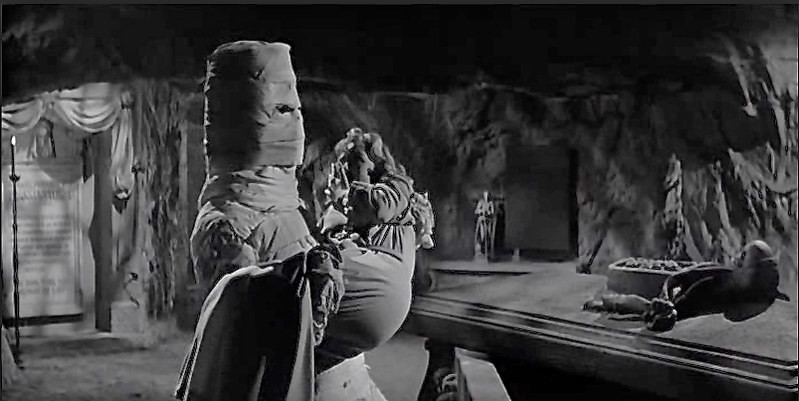
All these inconsistencies and plot holes probably arise from the fact that the film doesn’t really have much of a plot. Everything revolves around Frankenstein finishing his creation – whereas in Shelley’s original novel, as well as in Universal’s original film, the creature was awakened fairly early on in the proceedings. Neither Shelley nor James Whale were particularly interested in the technical aspects of the creation, but rather in the relationship between the creature and its creator. In its 1957 film, Hammer chose to focus on Dr. Frankenstein himself, turning their whole franchise into a character study of the doctor. Schenck and the writers have seemingly tried to do something similar with Frankenstein in Frankenstein 1970, but the writing is just not up to scratch, and the script seems to have been thrown together in less than a week. Frankenstein’s morbid narration of his surgical procedures promises some shock value, but pretty soon it’s clear that his dictation serves as little more than padding, as he starts rattling off meaningsless technical mumbo-jumbo for minutes on end, inducing more yawns than frights.
A good monster might have been a redeeming factor, but there is nothing scary about the creature of Frankenstein 1970. Not only does it mostly bumble about clumsily, it also doesn’t look the least scary. During the entire film, it is swathed in bandages, and for some bizarre reason, Schenck and Koch have decided to give it a head piece that mostly resembles a bucket turned upside-down.
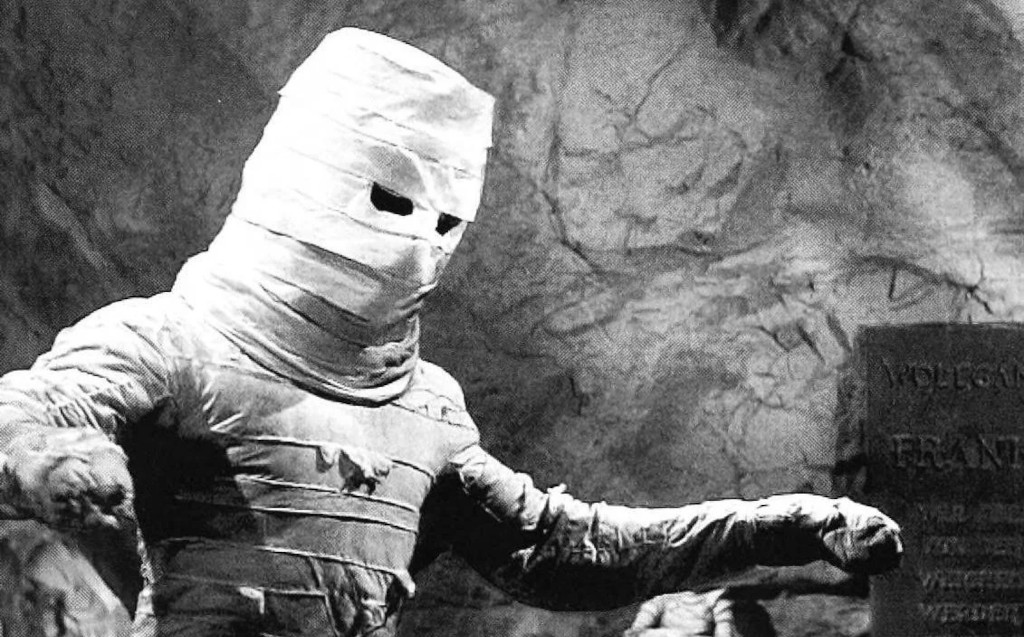
Frankenstein 1970 is hardly frightening, and the opening scene is the only one with any real gothic atmosphere. However, the filmmakers took a page from Hammer and instead opted for amping up the gore. There is one scene in which Frankenstein massages (and narrates it) Shuster’s heart in close-up when he is transferring it to the creature’s body, and there are a couple of somewhat eye-popping scenes of eyeballs. A novelty I have not scene in another horror film prior to this is a garbage disposer into which Frankenstein tosses eyes and other useless material, and we hear it emit a kind if gurgling sound, as if someone was flushing a toilet. Koch told Tom Weaver that the original sound effect included crunching, but they were forced to remove it by the censors. These are some fun little additions, and bring a bit of bite to an otherwise unremarkable film.
Director Howard Koch was the first to admit that Frankenstein 1970 was not a great movie. He tells Tom Weaver the cast and crew had too little time and too little money to make it work: “I don’t feel I did such a great job on Frankenstein 1970 because I didn’t really have much time to think. […] I was just glad to get the scenes done.”
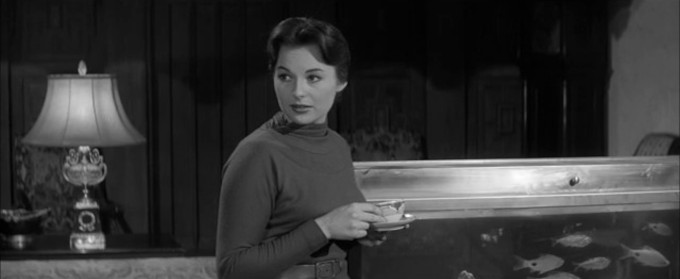
In another interview with Tom Weaver, lead actress Charlotte Austin praises both Koch and Karloff. Koch was “a nice, dear man”, she says, and tells Weaver they nicknamed him “The Velvet Whip”. She says Karloff was lovely and gentlemanly, but a quiet, private person, who did his scenes and returned to his dressing room: “A very quiet, gentle person who you didn’t trespass upon”. She also says that she thought it was degrading that Karloff was forced to be in a movie like Frankenstein 1970.
Despite all its flaws, Frankenstein 1970 has an odd appeal. It is competently filmed, and there are shots where Koch’s talent as a director shines through the otherwise dull photography. Despite the meandering plot, the film isn’t exactly dull, but manages to keep the viewer mildly entertained throughout, partly thanks to the mainly decent performances. And despite his hamming, Karloff is always worth watching. It’s just a shame that Frankenstein 1970 was his swan song to the franchise, and one would have granted him a better film in which to finally play the original mad doctor. At the end of it all, the movie feels like a lost opportunity.
Reception & Legacy
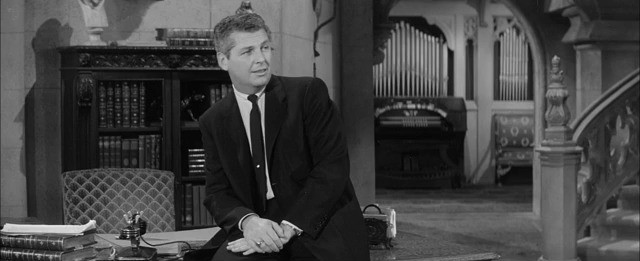
Frankenstein 1970 premiered in July, 1958, on a double bill with Queen of Outer Space (review), starring Zsa Zsa Gabor, and the pairing went on to do good business at the box office.
The film got mixed reviews in the US trade press. Powr in Variety was quite positive, calling it “a competently made production” which was “competently written”, and said that Karloff did “a careful, convincing job with his role”. He does note, however, that TV personalities Tom Duggan and Irwin Burke are not quite up to specs as actors. Harrison’s Reports was not quite as convinced, saying that the film’s suspense was uneven and the story confusing. However, the magazine noted that the fact that Karloff was playing Dr. Frankenstein would be enough to fill seats. Which it was. British Monthly Film Bulletin, however, gave no quarter: “There is nothing in this latest addition to the Frankenstein saga to suggest the traditional monster created on the screen a quarter of a century ago. Despite the title, there is no sign of this story being set in the future, and the whole inept effort is a slight on the horrific name of Frankenstein.”
Bill Warren in his book Keep Watching the Skies! called Frankenstein 1970 an “unimaginative film” with “muddled logic” and a “raggedly organized story” that wouldn’t warrant any lengthy comment if it wasn’t for Karloff’s involvement.
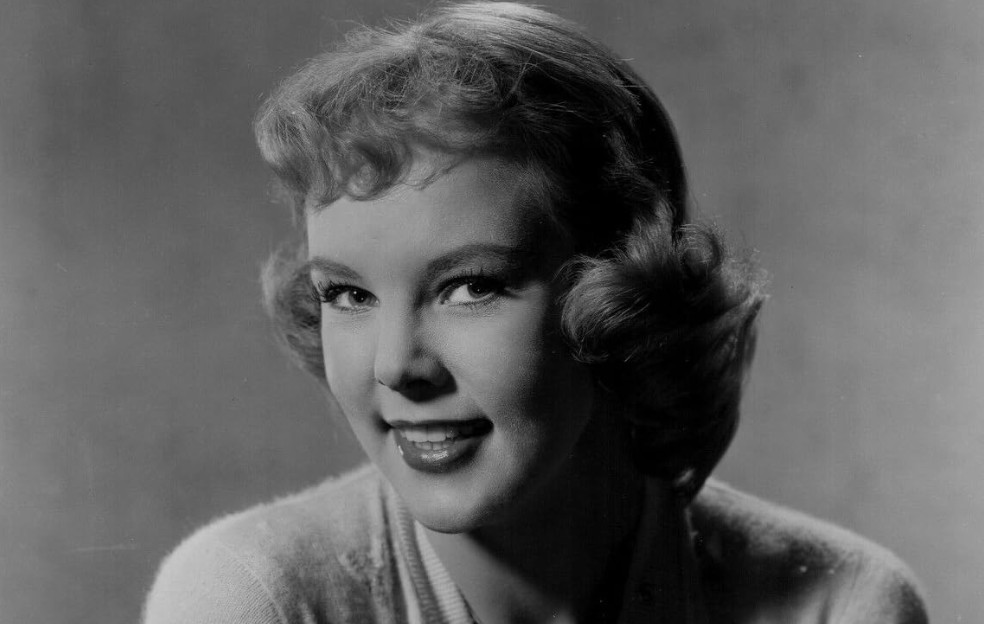
Frankenstein 1970 has a 4.9/10 rating on IMDb and a 2.7/5 rating in Letterboxd, which are low numbers for a Frankenstein movie, especiallt one starring Boris Karloff – however, i have a feeling that the film has been somewhat re-evaluated by fans in recent years.
Modern critics all agree that this is not a particularly good film, but many also have a bit of a soft spot for it. Robin Bailes at Dark Corners opines that the plot element of Frankenstein putting together his monster is “incredibly slow but not really bad”. However, “Unfortunately the film keeps cutting away to the thinly drawn characters of the film crew and their tedious romantic intrigues”. Mark Cole at Rivets on the Poster agrees that the movie has its fare share of flaws, but: “Still there is an amiable B-Movieness about the whole affair: the setting are moderately impressive in a limited stage-bound sort of way (even if definitely not up to the Hammer standard that was just coming in), the cast is competent, and the story has the advantage of being a new twist on a very old story.” Richard Scheib at Moria gives it a 2/5 star review, calling it “routine and unexceptional”, but he notes that it looks rather good.
Cast & Crew
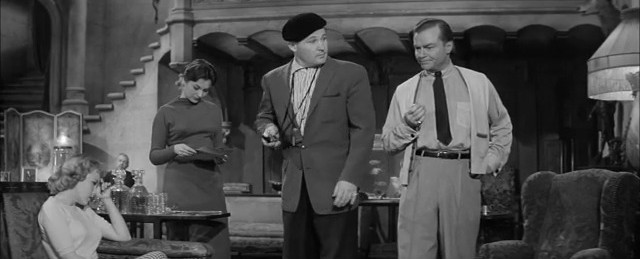
Producer Aubrey Schenck was the nephew of Joseph and Nicholas Schenck, who were both instrumental in the early years of United Artists, and then went on to run 20th Century-Fox and MGM, respectively. Aubrey started his career as a lawyer for Fox in the 30s, but moved on to producing in the mid-40s, first at Fox, but later at his own Eagle-Lion Films, which was eventually merged with United Artists. He then partnered with producer Edwin Zabel and producer-director Howard Koch, with whom he founded Bel-Air Productions. Schenck specialized in action and adventure films: crime thrillers, westerns and war movies, and in the late 50s turned his eye toward horror and science fiction – he directed the star-studded but flawed The Black Sleep (1956, review), featuring Basil Rathbone, Lon Chaney, Jr, John Carradine, Bela Lugosi and Tor Johnson. In 1957 Bel-Air struck a three-picture deal with Boris Karloff, with whom Schenck and Koch made Voodoo Island (1957) and Frankenstein 1970 (1958). The latter is known as the only film in which Karloff played Dr. Frankenstein. It was also his last Frankenstein movie. For reasons unknown, a third film never materialized. Schenck and Koch went their separate ways in 1959, but Schenck continued to produce films until the early 70s, including the SF films Robinson Crusoe on Mars (1964) and Superbeast (1972), as well as the horror movie Daughters of Satan (1972), starring Tom Selleck. He presumably retired after 1973.

Howard Koch worked his way up the Hollywood ladder from the contract department to the film library department and eventually started working as an assistant director in the mid-40s. It was through his companinship with Aubrey Schenck and Edwin Zabel in 1953, that Koch made the transition to director. Koch co-produced most of the pictures made for their production company, and directed a fair number of them, including the SF/horror feature Frankenstein 1970 (1958). In 1961 he became he started working for Frank Sinatra Productions, at which he produced The Manchurian Candidate (1962), the famous SF-themed spy-fi thriller directed by John Frankenheimer. In 1964 he moved on to Paramount, where he became the head of production, a post which he held until 1966, when he set up his own production company, which produced films for Paramount, including The Odd Couple (1968). He was very active withing the Motion Picture Academy, and produced eight Academy Awards. Later in his career, he served as executive producer on such classics as Airplane (1980), Dragonslayer (1981), Airplane II: The Sequel (1982) and Ghost, where Demi Moore and Patrick Swayze show off their pottery talents. Koch was very much liked by his co-workers as a kind and gentlemanly man.
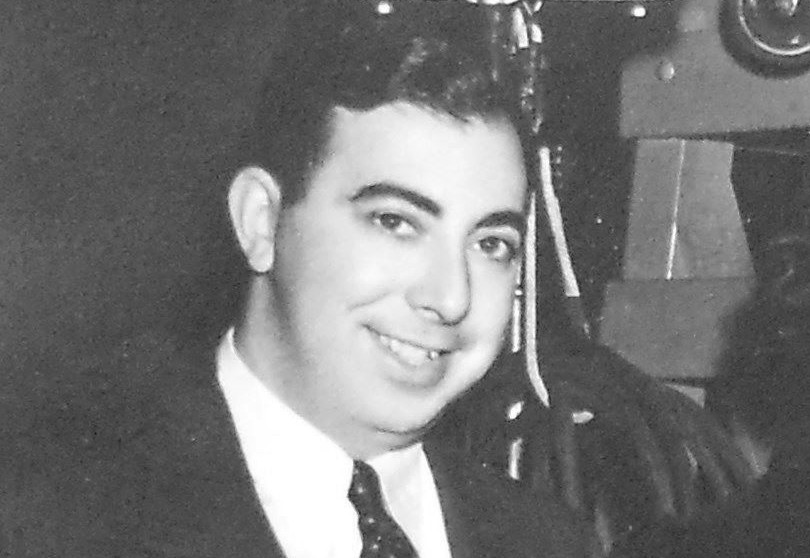
Born in 1901, screenwriter George Worthing Yates seems to have been writing short stories and treatments as early as the twenties, when his one of his westerns were adapted into film. From 1938 to 1954 he contributed to about a dozen screenplays, mostly B westerns, but also crime dramas and adventure films. In the thirties and forties he released a handful of mystery novels, sometimes working under pseudonym with another author. He found his stride with the first draft of the giant ant film Them! (1954, review), and after that worked almost exclusively in science fiction. He did a draft for George Pal’s and Byron Haskin’s semi-flop Conquest of Space (1955, review), but not much more than a few basic ideas of his were used for the finished film. He then contributed to such films as It Came from Beneath the Sea (1955, review) and Earth vs. the Flying Saucers (1956), The Amazing Colossal Man (1957, review), Attack of the Puppet People (1958), The Flame Barrier (1958), War of the Colossal Beast (1958), Space Master X-7 (1958), Frankenstein 1970 (1958) and Earth vs. the Spider (1958, review), making him perhaps the most prolific sci-fi screenwriter of the late fifties.
Of course, Boris Karloff needs no introduction to readers of this blog. By 1958, Karloff was already 71 years of age, and could probably had retired in reasonable comfort. He was crippled by arthritis and a back injury sustained in 1931 while repeatedly carrying fellow actor Colin Clive on his back while filming Frankenstein (1931, review). Despite this, Karloff kept extremely busy all the way up to his death in 1968, starring in films and TV shows, and both appearing and hosting in numerous talk shows and game shows. He narrated numerous audio books, many of them for children, and helped compile several anthologies of horror stories.
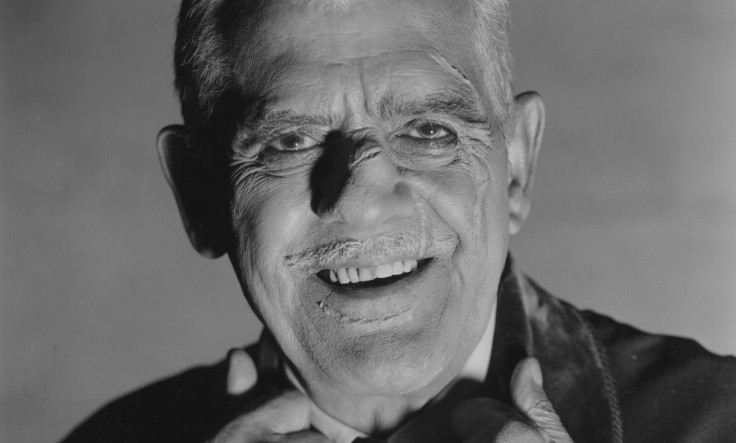
Of his post-1958 career, Karloff’s best remembered productions are probably his Roger Corman films The Raven (1963) and The Terror (1963), Jaques Tourneur’s The Comedy of Terrors (1963), AIP’s adaptation of H.P. Lovecraft’s The Colour Out of Space, Die, Monster, Die! (1965) and of course the TV movie How the Grinch Stole Christmas (1966), in which he voiced the title character. In his later years his health was severely damaged by bronchitis brought on by a lifetime of smoking. His last films were four low-budget Mexican horror films. However, due to his bad health, he had to record all of his scenes in Los Angeles, while the rest of the movies were being made in Mexico. All films were released posthumously.
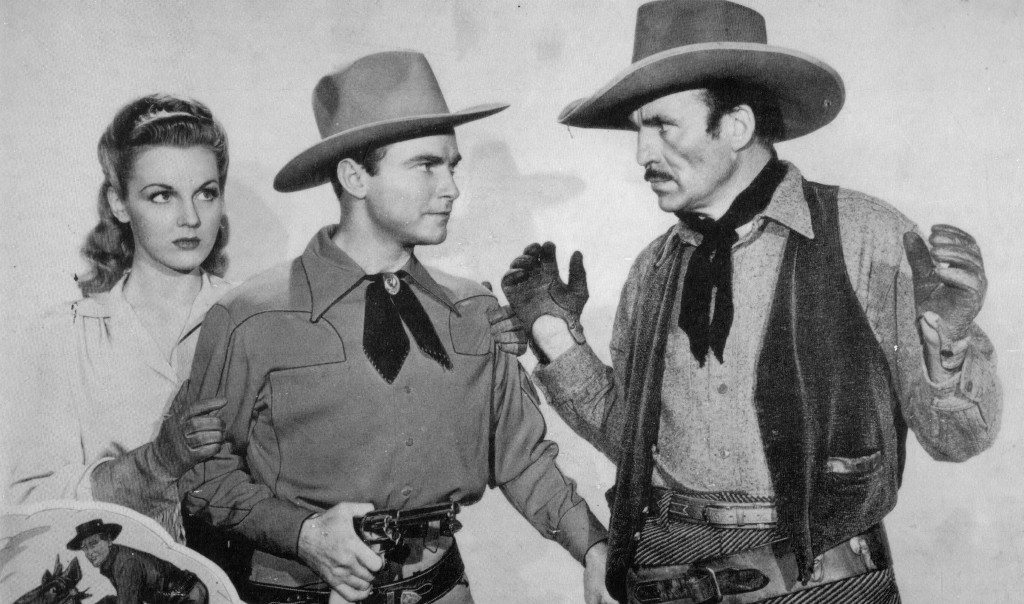
Outside of Karloff, the actor with the biggest name recognition in Frankenstein 1970 is probably Don “Red” Barry, born Donald Barry sometime between 1909 and 1912. After appearing for some years on stage, he made his screen debut in 1933, and played bit-parts until he was cast as the western hero Red Ryder, based on a comic book, in Republic’s film serial Adventures of Red Ryder in 1940. Studio head Herbert Yates cast Barry because of his likeness in appearance and acting style to James Cagney. The Adventures of Red Ryder was an enormous success, and earned Barry the nickname “Red”. Barry continued playing western heroes for Republic, although he would rather have been cast in gangster films, throughout the 40s, but none reached the success of Adventures of Red Ryder. Furthermore, and inflated ego and a bad temper also made him impopular with producers, directors, cast and crew, and he burned many bridges. By the 50s, his career was on the skids, and he was confined to smaller supporting parts and bit-parts in low-budget films, as well as guest spots in TV shows. He kept on acting until 1980, when he committed suicide by shotgun.
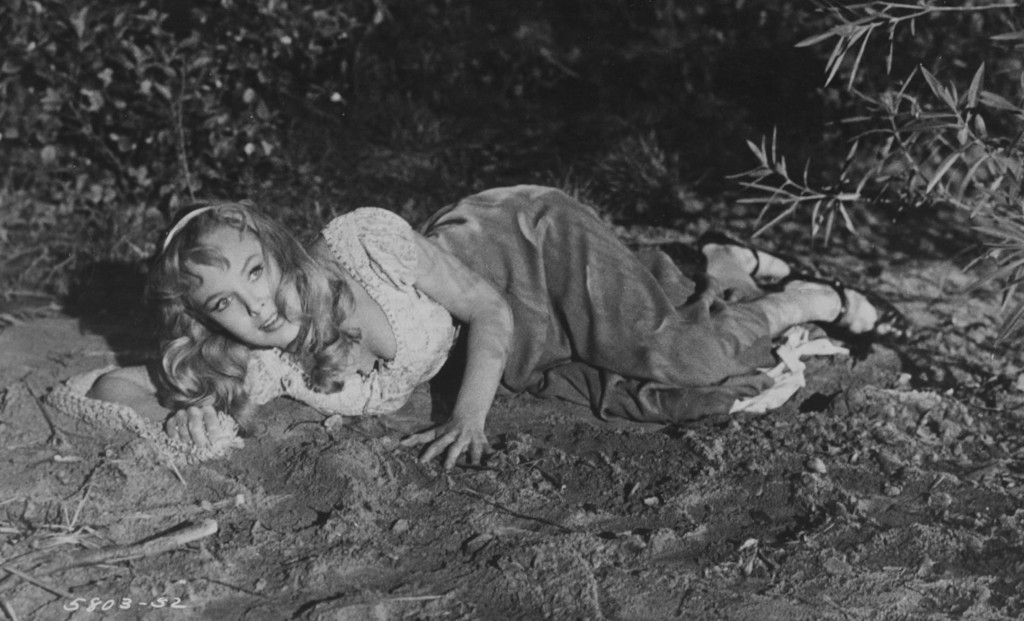
Jana Lund, born Johanna Cozette Ekelund, was an American actress and singer from a family of actors of Swedish descent. As a child she appeared on radio and in a short film, but made her proper screen debut in in 1956 at the age of 23 in the Bill Haley movie Don’t Knock the Rock. Next, she moved onto another you rock star, Elvis Presley, in Loving You (1957). She is perhaps best remembered today for giving Elvis his first screen kiss. According to some sources, she also dated Elvis for a time. Lund starred in three films in 1958; High School Hellcats, Frankenstein 1970 and Hot Car Girl, but her acting career never quite took off, and she worked primarily in TV until she dropped out of acting in 1962, after marrying lawyer Arthur Crowley. She also sang for some time at night clubs and recorded a few songs without any greater success.
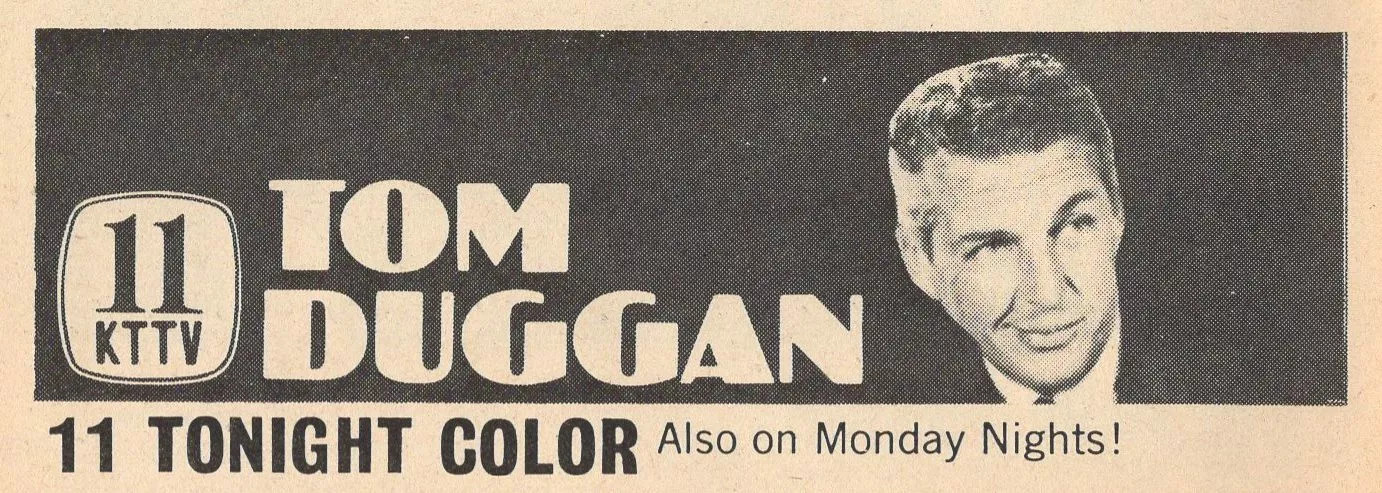
Playing the romantic lead in Frankenstein 1970, Tom Duggan was a former Chicago radio man and TV talk show host who had recently moved to Los Angeles. Duggan started his career as a radio announcer at NBC Chicago, and soon became a hugely popular sports announcer on a local TV station. He became famous for crusading against mob influence in boxing, a crusade that eventually got him fired, and instead hired by ABC, where he continued his TV work as a talk show host. Duggan moved to Los Angeles in 1956, where he continued his successful career as a TV host. In Hollwood, he also appeared in a handful of movies.
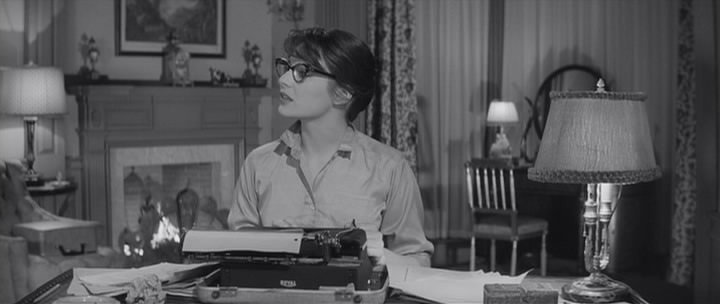
Charlotte Austin, as the director’s ex-wife in Frankenstein 1970, says she spent most of he acting career trying to get out of acting. In an interview with film historian Tom Weaver, Austin says she was pushed into acting as a child by her mother, and that while still in college, she was pushed by an agent into a 4-year contract with Twentieth Century-Fox. While not a household genre name, Austin has a bit of an SF and horror pedigree. One of her first jobs at Fox was an uncredited bit part in the SF screwball comedy Monkey Business (1952, review), starring Cary Grant, Ginger Rogers and Marilyn Monroe. She played the female lead in the musical Rainbow Round My Shoulder (1953), ironically playing the opposite of her real-life self, an actress who is prevented by her family in entering showbusiness. Also ironically, her singing was dubbed, despite the fact that Austin was a good singer (she was daughter to the famous western crooner Gene Austin), and sing was something she actually wanted to do. A few supporting roles, big and small, followed at Fox, before her contract ran out.
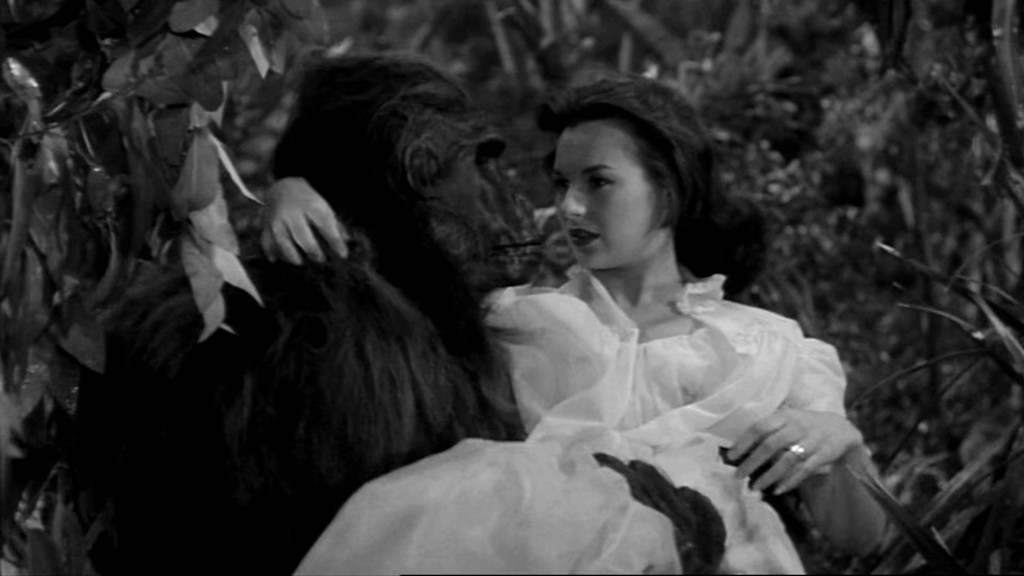
Austin tells Weaver she kept on acting because she wanted to save up money for a house, and acting was the only thing she was trained to do at this point. Her first film as a freelancer was the low-budget SF/horror movie The Man Who Turned to Stone (1957, review), followed by a supporting role in the western Pawnee (1957). Her next role was the one she is perhaps best known for, the lead in Allied Artists’ gorilla melodrama The Bride and the Beast (1958), penned by Ed Wood. The story concerns a woman who feels more attracted to her husband’s gorilla than to her husband, because she was a gorilla herself in a past life. The role came complete with Wood’s trademark angora fetish – Austin waxes poetically about the horrendous angora sweater she was forced to wear in her interview. Her third and last SF role was a supporting part in the infamous Aubrey Schenck production Frankenstein 1970 (1958), in which Boris Karloff finally took on the role of Victor Frankenstein, with questionable results. A few TV guest spots followed, before Austin was finally able to drop out acting. In latter years she opened an antique shop in Pasadena.
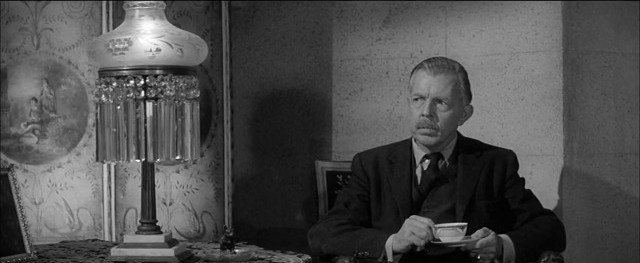
Rudolph Anders, who plays Frankenstein’s accountant in Frankenstein 1970, was born Rudolph Amendt in Germany in 1895 and appeared primarily on stage before emigrating to the US with the rise to power of Hitler in Germany in 1933. During all of his career he was confined to “accent roles”, particularly playing Nazi villains, especially during WWII. His kind appearance, however, prevented him from playing main villains, so he mostly got by in bit-parts. He did remain busy during the late 40s and 50s, trying to steer away from Nazi roles, which he succeeded relatively well in, often playing foreign diplomats, scientists and other roles in which his accent wasn’t a hindrance. Anders appeared in two of W. Lee Wilder’s low-budget SF movies, Phantom from Space (1953, review) and The Snow Creature (1954, review). Richard Cunha’s She Demons (1958, review) provided him with his only featured role as the mad Nazi scientist creating female monsters in a remote island bunker, and he also appeared in the infamous Frankenstein 1970 (1958).
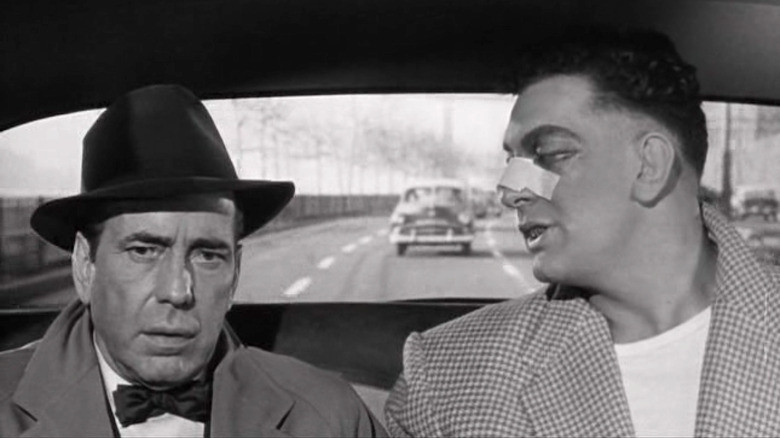
Of some interest is Mike Lane who plays both the creature and the actor playing the monster in the TV series. A former circus tent boxer and show wrestler, Lane was active on screen between 1956 and 1994, and was often seen on TV as henchmen, police officers, guards, brawlers and monsters because of his height and build. But Lane was also a very minor star or of no-budget movies for sereval decades. His best remembered role is actually from an A-movie, that of boxer Toro Moreno in the noir The Harder They Fall (1956), Humphrey Bogart’s last movie. This was the film that opened the doors to Hollywood for Lane.
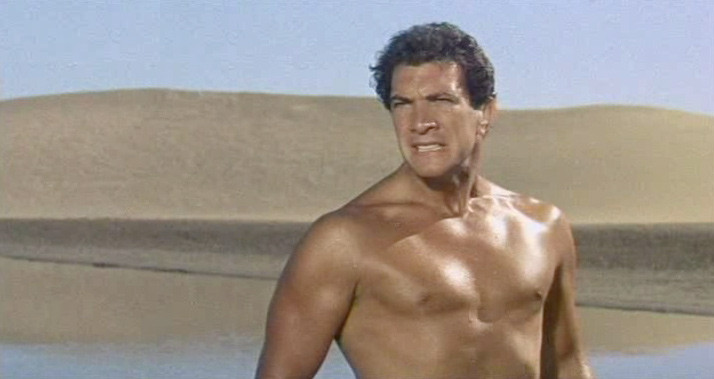
Between 40-something TV appearances, Lane acted in around 20 movies, with large or even lead roles in a surprising number of them. He is remembered for playing the Creature in Frankenstein 1970 (1958), walking around with a bucket on his head for most of the movie, and in 1961 he played a supporting role as a caveman in the cut-and-paste lost world movie Valley of the Dragons. He got his first lead in 1962 as Hercules himself in the US/Italian peplum film Ulysses Against Hercules. In 1973 Lane embarked on a three-movie journey with so-called vetsploitation films, with The No Mercy Man, and had leading roles in The Zebra Force (1976) and its sequel Code Name Zebra (1987). In between he had time to appear as the main villain in Roger Corman’s New World Pictures’ Filipino/US Mad Max ripoff Stryker (1983). In 1991 he appeared in the reportedly abysmal Indiana Jones ripoff Curse of the Crystal Eye and in 1993 he played another monster – the demon Asmodeus in the low-budget possession film Demon Keeper (1994).

John Dennis, who plays the cinematographer, was a prolific bit-part actor, who appeared in such films as Conquest of Space (1955, review), Frankenstein 1970 (1958), Conquest of the Planet of the Apes (1972) and Soylent Green (1973). Otto Reichow and Franz Roehn, here in bit-parts, were both German immigrants who eked out a living playing Nazi soldiers and German professors.
Janne Wass
Frankenstein 1970. 1958, USA. Directed by Howard Koch. Written by: Aubrey Schenck, Charles Moses, George Worthing Yates, Richard Landau. Inspired by the novel “Frankenstein” by Mary Shelley. Starring: Boris Karloff, Tom Duggan, Jana Lund, Don “Red” Barry, Charlotte Austin, Rudolph Anders, Mike Lane, Norbert Schiller, John Dennis, Irwin Berke. Music: Paul Dunlap. Cinematography: Carl Guthrie. Editing: John Bushelman. Production design: Jack Collis. Makeup: Gordon Bau. Sound: Francis Stahl. Produced by Aubrey Schenck for Aubrey Schenck Productions & Allied Artists.

 Scifist.
Leave a reply to Bill Ectric Cancel reply