
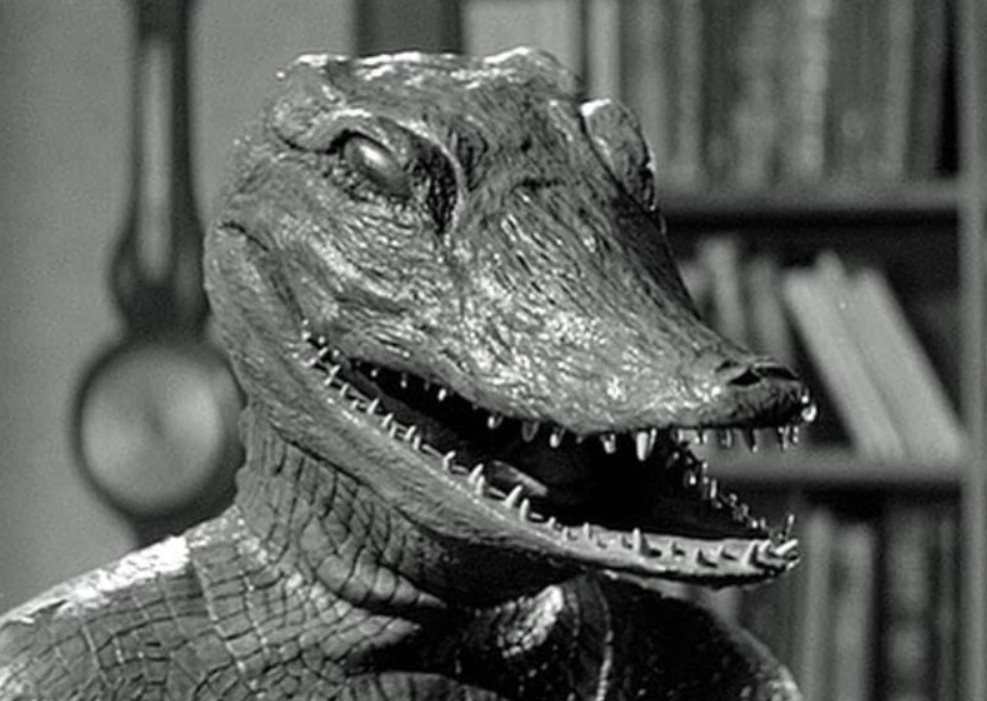
In an old dark mansion, Joyce Webster unravels the mystery of her husband being turned into an alligator through an experimental radiation treatment. Sci-fi goes Southern Gothic in Robert Lippert’s stylish but half-baked Fox production. Beverly Garland shines and Lon Chaney chews scenery. 5/10
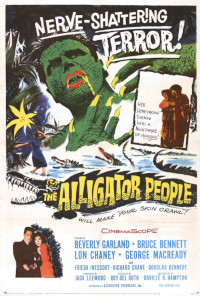
The Alligator People. 1959, USA. Directed by Roy del Ruth. Written by Orville Hampton, Charles O’Neal, Robert Fresco. Starring: Beverly Garland, Richard Crane, Lon Chaney, Jr., Frieda Inescort, George Macready. Produced by Jack Leewood.
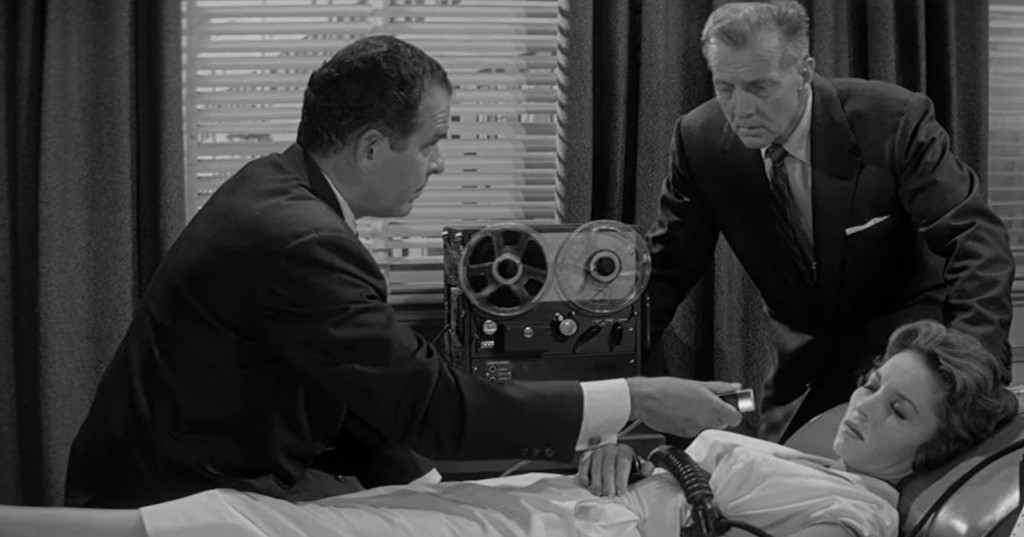
Dr. Lorimer (Bruce Bennett/Herman Brix) is invited by Dr. MacGregor (Douglas Kennedy) to observe the strange tale of his nurse Jane Marvin (Beverly Garland). Under hypnotic regression, Marvin claims that her name is Joyce Webster, and that once upon a time, she was married to an alligator man.
The Alligator People from 1959 came on the tail end of the sci-fi monster movie fad, when major studios had finally caught up to the fact that they could make serious money out of low-budget schlock pictures. While the story doesn’t differ from what had been churned out by Poverty Row studios for years, the 20th Century Fox treatment makes it feel classier than many of its predecessors.
Doctors Lorimer and MacGregor only serve as the framing device of The Alligator People, and the plot proper is Jane Marvin/Joyce Webster’s hypnotic flashback. In it, she tells the story of how her husband Paul Webster (Richard Crane) disappeared from their honeymoon train after receiving a telegram, and disappeared. After searching for many a month, Joyce’s investigation leads her to an old mansion, The Cypresses, in the alligator-infested swamps of Louisiana – more specifically a secret clinic run by a Dr. Mark Sinclair (George Macready) and the matriarch of the old, dark house, Mrs Lavinia Hawthorne (Frieda Inescort).
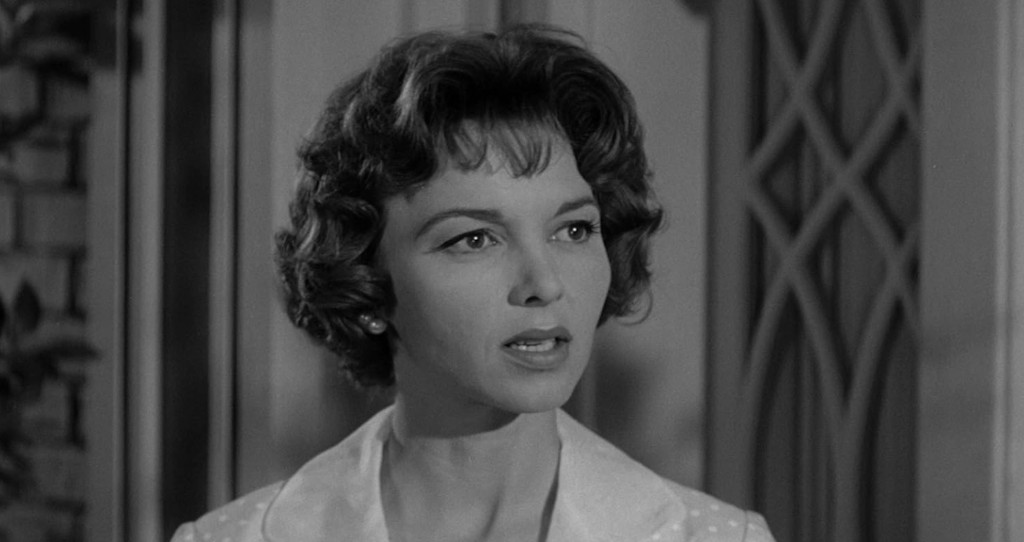
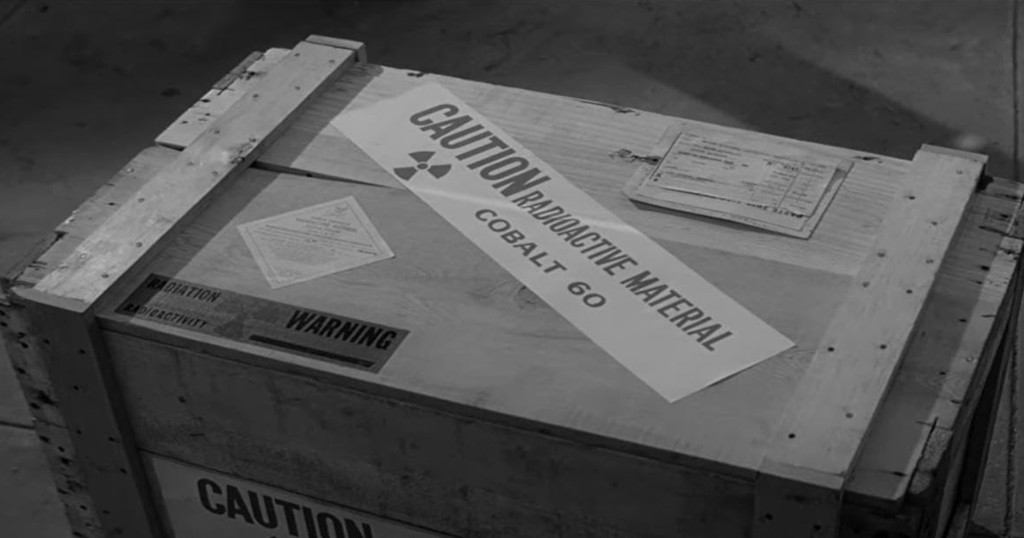
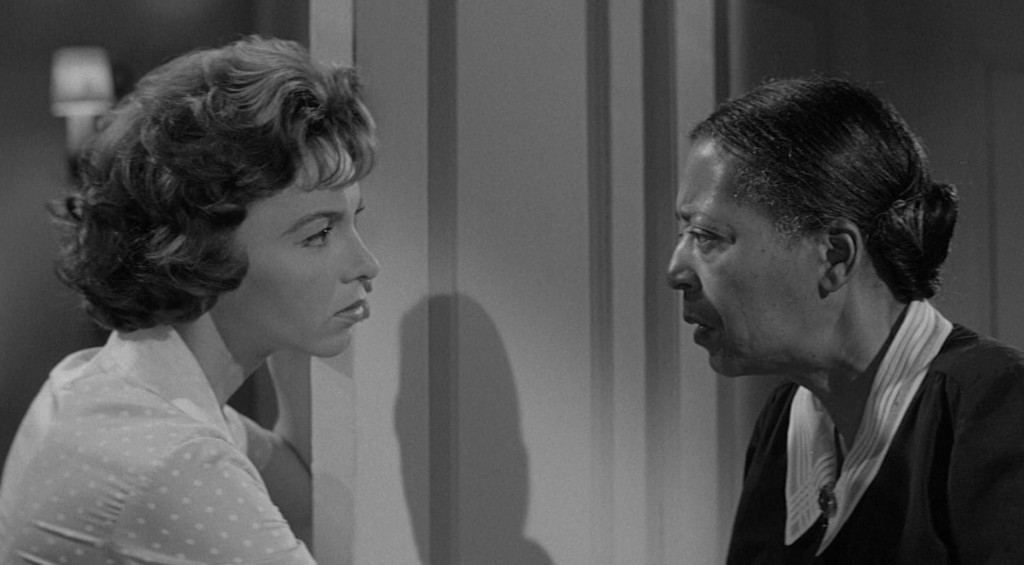
At the train station, Joyce hooks up with with The Cypresses’ loud and drunken handyman, if you call a hook for a hand “handy”, Manon (Lon Chaney, Jr). Manon is just picking up a box containing a cobolt bomb, dumped without supervision on the train platform, and casually used by Joyce as a bench. After being greeted by the mansions’ two black servants, Louanne (Ruby Goodwin) and Toby (Vince Townsend Jr), she is introduced to Lavinia, or Vinnie, as she us more commonly called. Putting on her coldest demeanor, Vinnie swears that she knows nothing of any Paul Webster, and tells Joyce to immediately go back to where she came from. Unfortunately, there’s no more trains, so Joyce must stay overnight. Locked in her room of course, because there is nothing to see here…
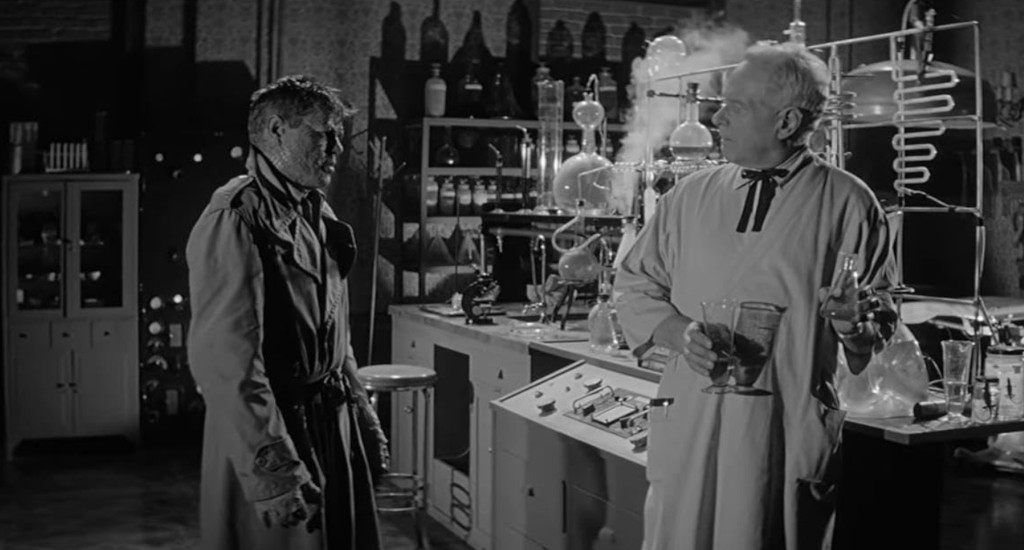
Here it is important to note that in a not very subtle foreshadowing, an earlier discussion between Joyce and Paul on the train has made the audience aware that Paul was a US air force pilot who had recently crashed his plane. Joyce was told that Paul was mangled beyond recognition and on the cusp of death, but just a few days later he returned from his treatment with no ill effects or even a scar.
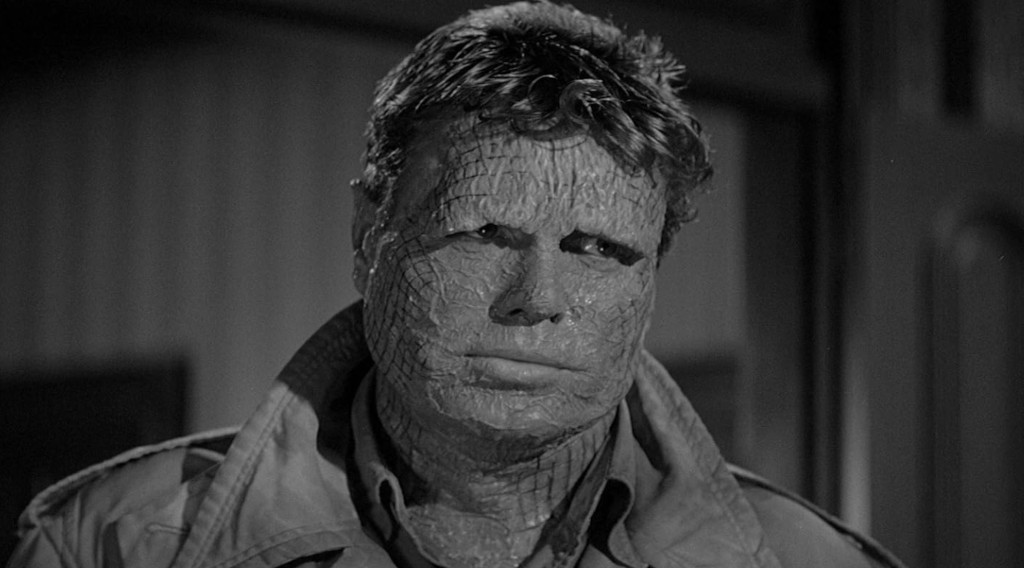
Of course, Joyce sees right through Vinnie’s bad attempts at keeping secrets, refuses to leave the mansion and starts snooping around. Soon she gets a glimpse of Paul – whose face is covered in alligator hide, and who flees out into the swamp as soon as he sees her. When she follows him out into the snake- and alligator-infested swamp, she is saved by Manon, who then knocks her out and attempts to rape her – but she is saved by Paul, who carries his unconscious wife back to the clinic. Finally, Vinnie and Dr. Sinclair tell Joyce the truth. Vinnie is in fact Paul’s mother, and Dr. Sinclair is a brilliant scientist working on a miracle serum: hydrocortisone extracted from alligators. Paul was one of several men who had agreed to the experimental treatment with hydrocortisone on the brink of death. And it worked! Just like a lizard is able to grow a new tail, the alligator hydrocortisone helped Paul and the other patients to heal themselves. That is, until the side effects announced themselves: they were all turning into alligator people.
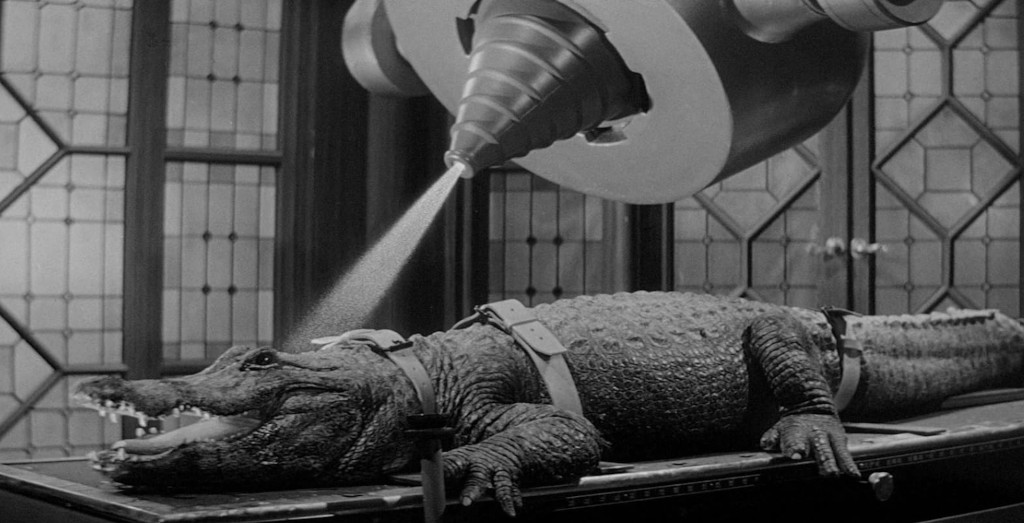
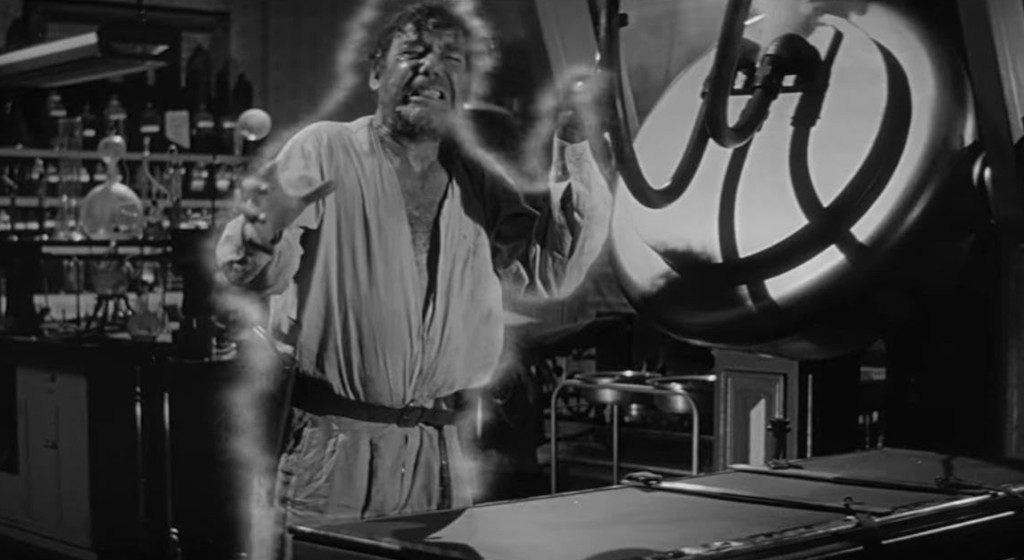
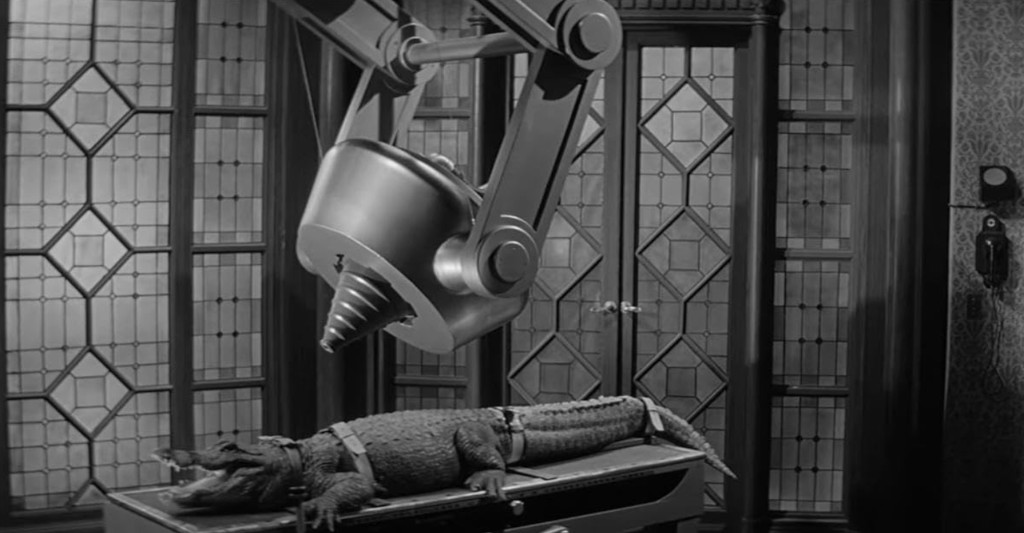
Now Paul has returned to the mansion, where he hopes that Dr. Sinclair’s new, untested and radical procedure, radiation, will cure him of his mutation. Hence the “cobolt bomb”. Said and done, and Paul goes on the slab. But the treatment is interrupted by Manon, who is out to kill Paul, because an alligator took his hand, and now he wants to kill all alligators, and Paul is an alligator. Manon knocks down Dr. Sinclair and thrashes the ray machine, which turns Paul into a full-on alligator monster. Paul flees into the swamp and commits suicide by quicksand.
We return to the office of our two doctors from the beginning of the movie, who have been monitoring Joyce with a lie detector while she has been retelling her story – of which she has no memory. The doctors agree that what she says is either true, and she has repressed her entire previous experience with Paul, or she is cuckoo. Either way, they decide, she seems to be sane and happy, so best not to tell her anything. The end.
Background & Analysis
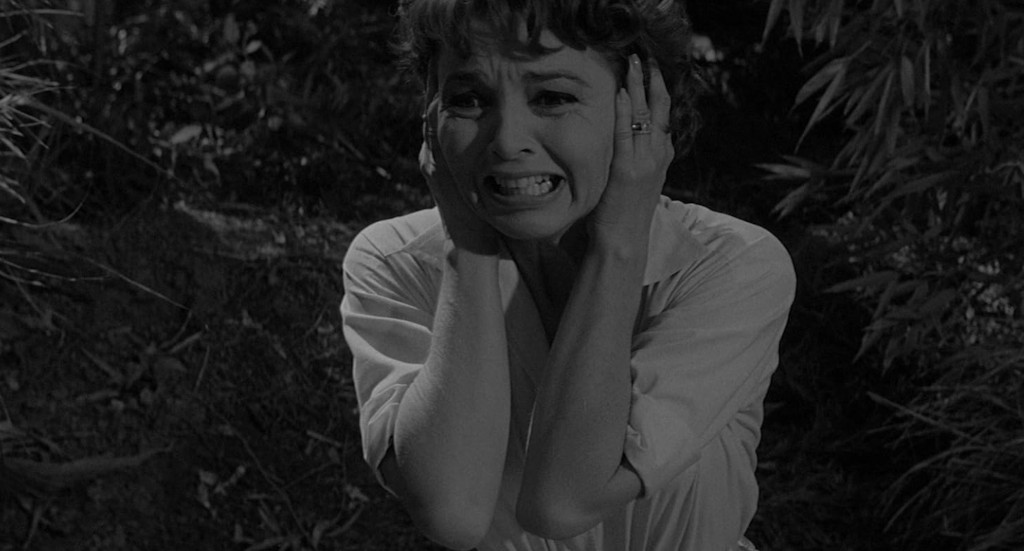
I must admit that I expected this film to be a lot shoddier than it was – before I watched it I just knew it by name, and thought it belonged to the bottom of the barrel of late 50s science fiction monster movies. However, it turned out to be a comparatively classy production produced for 20th Century-Fox, with the brilliant Beverly Garland in a dominating lead, and with ace cinematographer Karl Struss behind the camera. Up until the final 15 minutes the film holds up fairly well as a gothic mystery drama cum atom-age monster movie.
The story of this film starts with Robert Lippert, an independent producer in the Hollywood system from the 40s onward until 1965, who gave us low-budget classics like I Shot Jesse James (1949), Rocketship X-M (1950, review), The Steel Helmet (1951), Kronos (1957, review), The Fly (1958, review), The Last Man on Earth (1964) and The Earth Died Screaming (1964).
In 1956, 20th Century Fox caught on to the fact that low-budget genre films had become increasingly popular with the teenage crowd, and that there was a substantial profit to me made off them, while keeping them in the drive-ins, rather than at home in front of the TV. Fox also needed a reliable string of B-movies coming out of their facilities in their new format CinemaScope, in order to convince movie theatres to upgrade their facilities with the technology to show the format. The studio turned to Lippert, who founded Regal Pictures – it was financed by Fox and made use of Fox facilities, cast and crew, but operated as its own entity. The idea was to make B+ movies to compete with the low-budget drive-in fare by studios like AIP, that were at the same time well-produced enough to satisfy a mainstream audience. In 1958 Regal Films and Fox had a smash hit with the science fiction/horror movie The Fly, about a scientist who accidentally merges himself with a house fly in a teleportation device. Its success warranted a sequel, Return of the Fly, which hit theatres in the fall of 1959. And of course that film needed a double bill companion – and that was The Alligator People. By this time Regal’s contract with Fox had run its course, and was closed down in 1959. However, Fox signed a new contract with Lippert – which was basically the same deal as before, only with slightly smaller budgets and a new company name: Associated Producers, Inc., or API. The company’s acronymical likeness to teen and monster movie producer AIP can hardly have been a coincidence.
You will not see Lippert’s name anywhere in the credits, even though he was the de facto executive producer for all of the films made by Regal/API. The reason for this, in short, was that Lippert was both a movie theatre owner and had a business selling his films to TV. An official producer credit would have violated anti-trust regulations, as you couldn’t be both producer, distributor and exhibitor. On The Alligator People, the man in charge of the production was officially Jack Leewood, a seasoned B-movie producer.
As director, Lippert and Fox chose Roy del Ruth, a somewhat surprising name to see helming a B-movie of this kind. A veteran of late silent and early sound pictures, del Ruth was the second-highest paid director in Hollywood between 1932 and 1941, according to contemporary magazine sources. del Ruth was a pioneer of Hollywood’s early Technicolor musicals, but was also well versed in war and crime movies. In 1948 he produced and directed the hastily cobbled together The Babe Ruth Story, which is often cited as the worst biopic ever made. Between 1954 and 1959 he worked in television. However, Lippert and Fox counted on the fact that his talent hadn’t disappeared, and The Alligator People became his return to feature films at the age of 65.
For the screenplay Lippert brough in his frequent collaborator Orville Hampton, who provided the film’s story alongside Charles O’Neal, who had a solid background in mystery and horror movies, including Val Lewton’s The 7th Victim (1943). Hampton was credited for the screenplay for The Alligator People. According to some sources, Universal’s sci-fi/horror expert Robert Fresco was brought in as a script doctor. Hampton’s track record as a screenwriter was checkered – he worked on the surprisingly good Rocketship X-M (1950), but also on terrible clunkers like Red Snow (1952, review) and Mesa of Lost Women (1953, review). He got an Oscar nomination for the drama One Potato, Two Potato (1964), but it’s unclear how much he actually contributed to the finished screenplay – according to his writing “partner”, Hampton’s draft was completely thrown out.
Following the famous “Bridey Murphy” case, in which a Colorado amateur hypnotist claimed that one of his clients had revealed in a number of sessions that she could remember her past life as an Irishwoman called Bridey Murphy, and a subsequent book and film in 1956, movies featuring regressive hypnosis started popping up like mushrooms after rain. The Alligator People’s frame story with the two doctors using the technique on Beverly Garland’s character is as clearly inspired by the Bridey Murphy craze as it is unnecessary for the film. It doesn’t exactly detract from the movie, but it also doesn’t add anything.
Otherwise, the script for The Alligator People is a kind of equal mix of good and bad. For the most part, it is a fairly engaging mystery thriller built on the same premise as The Fly: a woman trying to unravel the mystery surrounding her husband who is turning into a monster due to a science experiment gone wrong. There’s also a decidedly Hitchcockian influence, in particular grafted from Rebecca (1940), what with a young woman arriving at a Gothic mansion ruled by a domineering matriarch. However, instead of the British countryside, The Alligator People is set in the Louisiana bayou area, making this part monster movie, part Southern Gothic. There’s also what feels like a page taken from Bert I. Gordon’s The Amazing Colossal Man (1957, review), which likewise follows a wife searching for her lost husband, only to find him hidden away at a secret army laboratory after a nuclear accident.
The first half works quite nicely, partly thanks to Karl Struss’ atmospheric and partly thanks to a well-built sense of mystery. While we the audience is given enough clues to know that Paul is going to be an alligator person (we have seen these kind of films before, haven’t we?), the particulars remain obfuscated enough to keep us intrested. But in the second half, where we expect things to start escalating, the movie doesn’t quite get going. The script kills time by having the characters run in and out of the swamp, by having Lon Chaney’s Manon attack Joyce, by having several discussions on whether or not to try the new treatment on Paul (that we all know is going to be done), and then postponing it … there’s not enough meat on the plot to fill the film’s 75-minute runtime.
The conclusion is a major letdown, and the biggest problem with the picture. A major flaw is that Chaney’s villain is a plot contrivance, he exists only because the movie needs an antagonist and is not incorporated in the film’s main plot in the slightest. It’s sort of as if Danny DeVito suddenly became the main villain and killed Michael Douglas in the end of Romancing the Stone (1984). Chaney’s character is never believable and his hatred for Paul is built on the flimsiest of motivations: that an alligator bit off his hand in the past. Plus: why on Earth would Dr. Sinclair and Lavinia keep him on the payroll? He’s an unreliable drunk, brute and rapist with only one good hand who spends his days and nights killing their test animals. The ending of the film is not earned or built up to, Chaney just suddenly appears and starts trashing the lab like a diabolus-ex-machina. It’s lazy writing.
Another problem is that the audience is robbed of a satisfying conclusion. We have been waiting for Paul to turn into an alligator man, but when he finally does, the script doesn’t do anything with it. There’s a short scene where he fights Chaney and then he simply sinks into the quicksand. The End.
That said, the film is rather good looking and well filmed on a budget of $300,000 – triple the budget of the competition. Just fifteen minutes into the pictures it’s clear that this is not a Roger Corman film – at that we have already seen more locations and scenery than in any AIP movie – and it isn’t even Bronson Canyon. In reality, almost all of it was shot at the Fox studio, with its backlot standing in for the Louisiana Swamps. A multitude of live alligators prowl about in the swamp scenes in close proximity to the actors, and there are multiple scenes in which we see gator wranglers handling animals, which adds to the realism and tension of the movie. One of the best scenes in the film in terms of atmosphere and tension is one in which Joyce is running through the swamp in search of Paul, and actually trips on a live alligator. While this was probably completely safe, it is unusual to see the star of a major studio movie come in actual physical contact with an animal as dangerous as an alligator, adding to the film’s sense of danger. Unfortunately, the picture never rises above this moment.
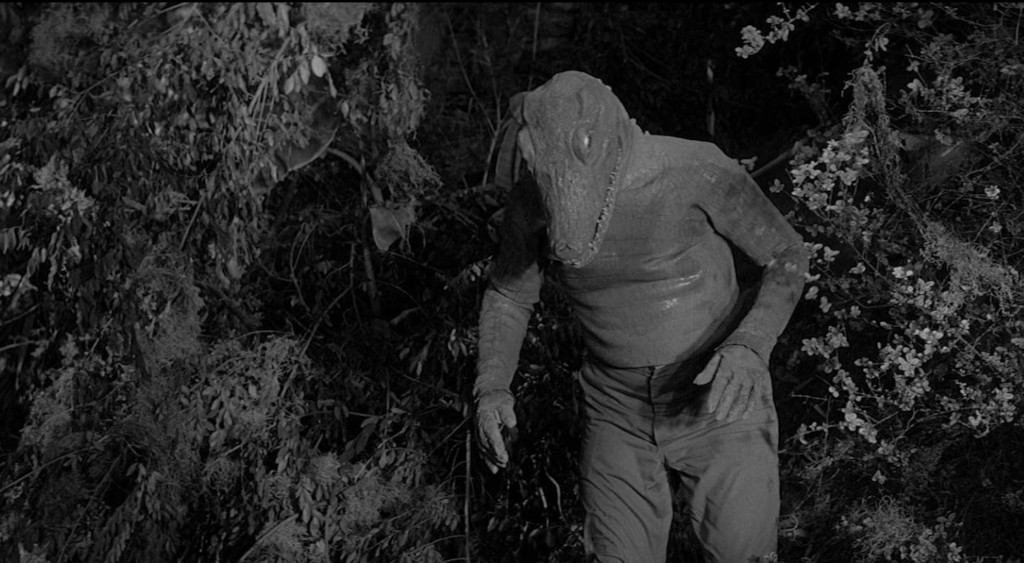
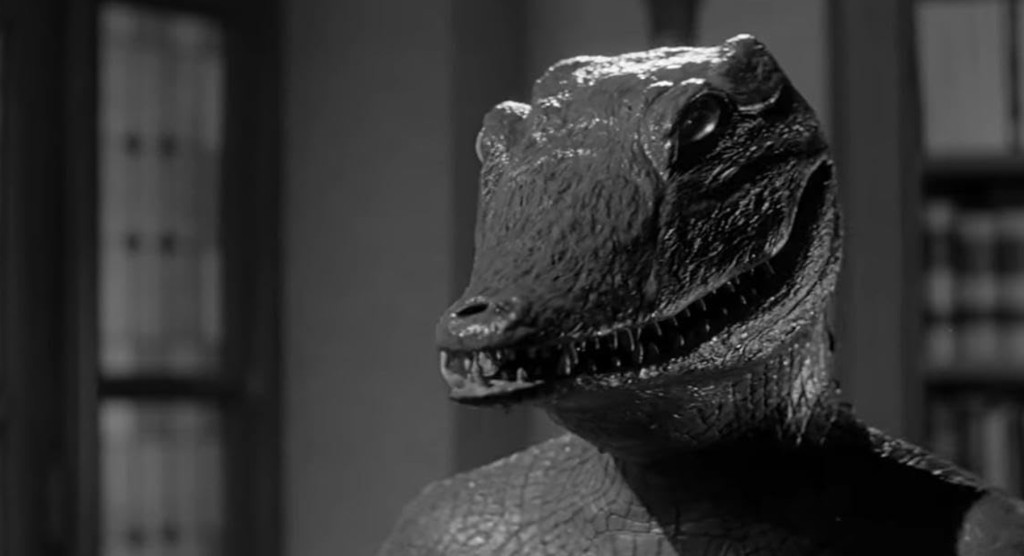
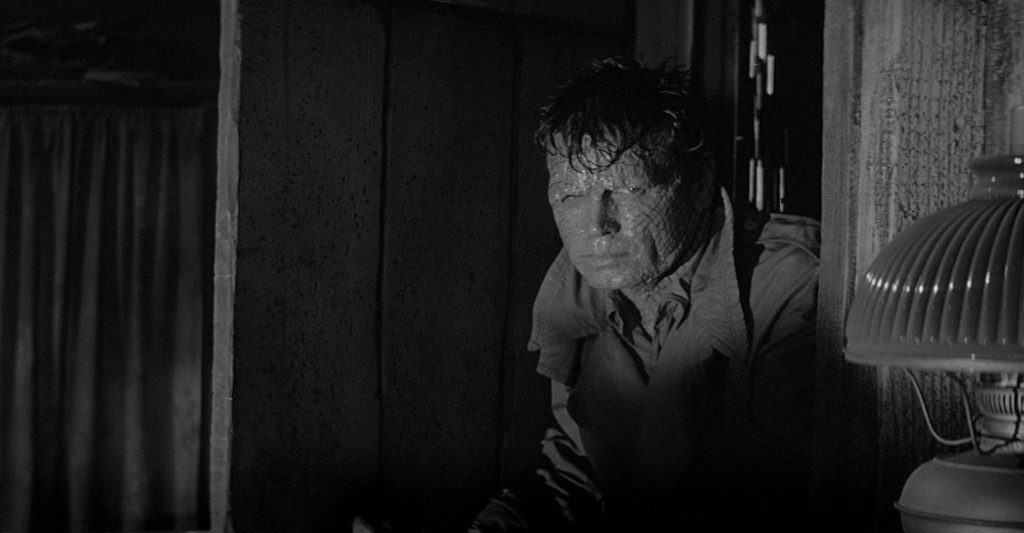
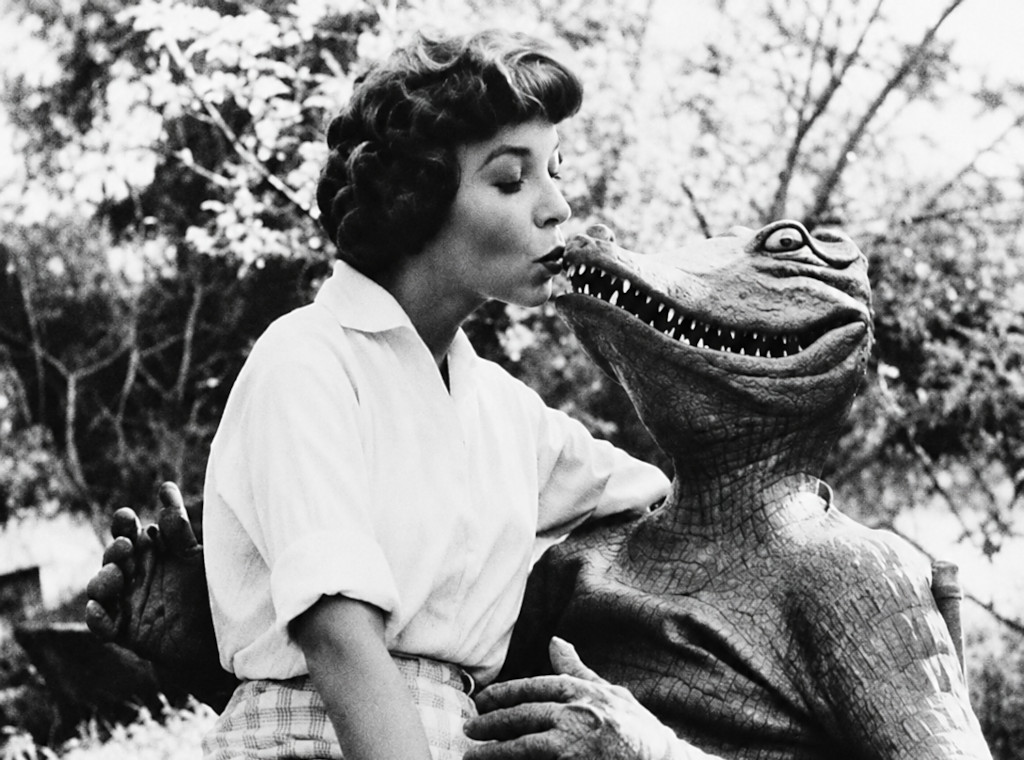
The final stage of Paul’s transformation into an alligator (played by Boyd Stockman, not Richard Crane) man has been the object of much derition. In truth, it’s better than a lot of low-budget monsters. The alligator costume and earlier makeup was supervised by Fox master Ben Nye. A Dick Smith is also credited for makeup, but this is not the same Dick Smith that later went on to win Oscars for his work in the 80s – in 1959 that Dick Smith was still working as ABC’s makeup supervisor in New York. The head is quite well designed, if immobile. However, the torso of the alligator man looks very much like the pullover suit that it is, and the silliness of the monster is compounded by the fact that it is wearing trousers. Logical, as Paul was wearing trousers when he turned, but silly nonetheless. However, the earlier stages of transformation, with Richard Crane and other actors covered in scales, is actually very good. While one can deride the final monster stage, I’d say its pretty much what you could expect from this kind of a film: if you’re going to have a man with the head of an alligator you’re going to get a cartoon character no matter what you do.
Otherwise, the film is well designed for the parts that actually require design. Fox veterans John Mansbridge and Lyle Wheeler are credited for Art direction – apparently the film wasn’t deemed important enough for an actual production designer credit. The mansion set was possibly and hand-me-down from another production, but the Gothic lab scenes with its stained-glass walls and windows, and the huge cobalt radiation cannon were original designs – and rather unusual-looking as far as mad scientist labs goes. Here Karl Struss makes good use of forced perspective to make the radiation machine look gigantic. One fun detail is the outfits worn by the patients at the clinic. With their flat face masks and hoods, they are somewhat reminicent of the mirror-faced creatures in Maya Deren’s surrealist short film Meshes of the Afternoon (1943). Beverly Garland thought they looked like urinals, and said they lost an hour of filming because she couldn’t stop laughing at them. I didn’t make the urinal connection and thought them quite an original and rather creepy concept, heightening the mystery of the movie.
Of course, the science in the film is preposterous, as it is wont to be in these movies – but even the premise is ridiculous. Dr. Sinclair credits alligator hydrocortisone as a miracle drug that helps it regenerate lost limbs. While smaller lizards can replace parts of their tails, alligators cannot. And in fact, hydrocortisone is anti-inflammatory and actually slow down the cells’ regenarative process. Also, hydrocortisone was no experimental super-serum in 1959, it was a readily available prescription medication. As for the radiation therapy, the screenwriters took a cue from the fact that cancer treatment with Cobalt-60 radiation had become commonplace in the early 50s. While it may seem odd for modern viewers that Dr. Sinclair refers to it as a “cobalt bomb”, that was actually a commonly used term for radioactive material used in medicine – even long before the atom bomb, hospitals referred to radium used for treatments as “radium bombs”. Less realistic, of course, is the idea that crate of cobolt would just be left unattended on a train platform waiting for someone to pick it up, and be used by Joyce as a convenient chair.
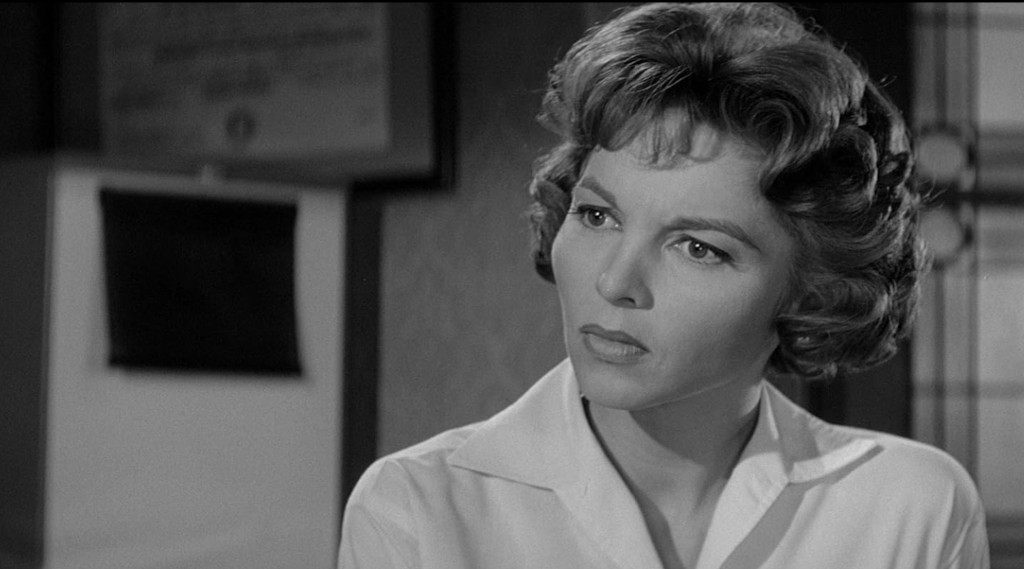
As for the acting, this is Beverly Garland’s movie. Like many talented actresses in the 50s, when substantial roles for women were scarce, Garland was stuck playing low-budget ingenues. However, luckily for Garland, she was stuck with Roger Corman, who often provided his actresses with better-than-average parts. Garland seldom played quivering waifs, but was known for her portrayal of strong, independent woman who took on monsters with the same fiercesness as her male counterparts. Fittingly, in The Alligator People, she plays a woman who is determined to go to the ends of the Earth to find her husband and won’t take no for an answer. Alas, this is not a Corman movie, and in the second part of the film she is reduced to a passive bystander, which feels out of character for Garland.
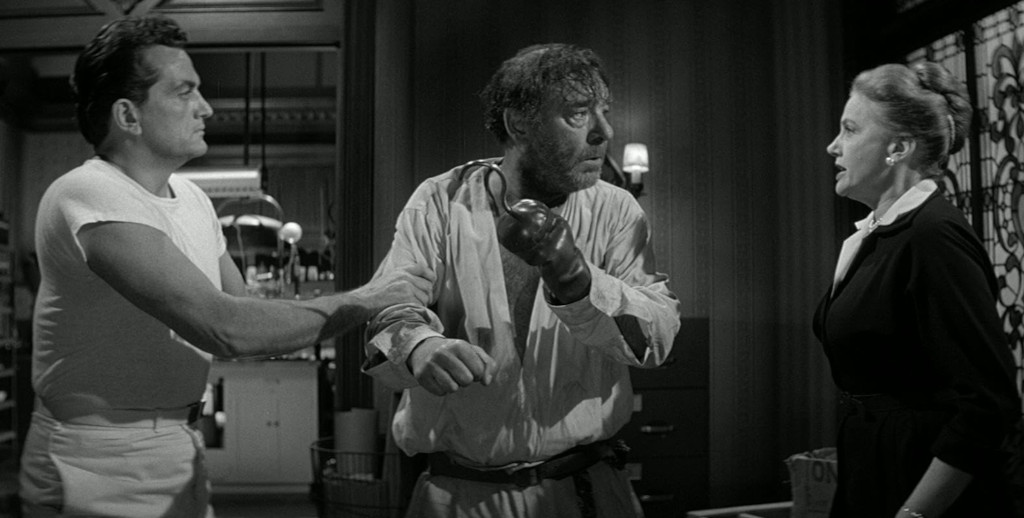
Lon Chaney’s performance divides viewers. Some feel his burlesque, over-the-top acting is just what the film needs, while others find it too caricatured. At the best of times, Lon Chaney Jr. was a limited actor, but he always brought a chaotic energy to loud, burly roles such as these. I don’t think the problem is his performance, but rather the fact that his character is so badly written. Playing an obnoxious drunk came naturally to Chaney, and given his reputation at the time, one wonders how much of his drunkenness is acted and how much is real. Despite looking a bit worse for wear, Chaney is still in reasobably good form in The Alligator People, and despite being over 50, still manages to do some good stunts in the fight scenes. In the 60s, Chaney would develop throat cancer and a heart disease, that gradually forced him into non-speaking roles.
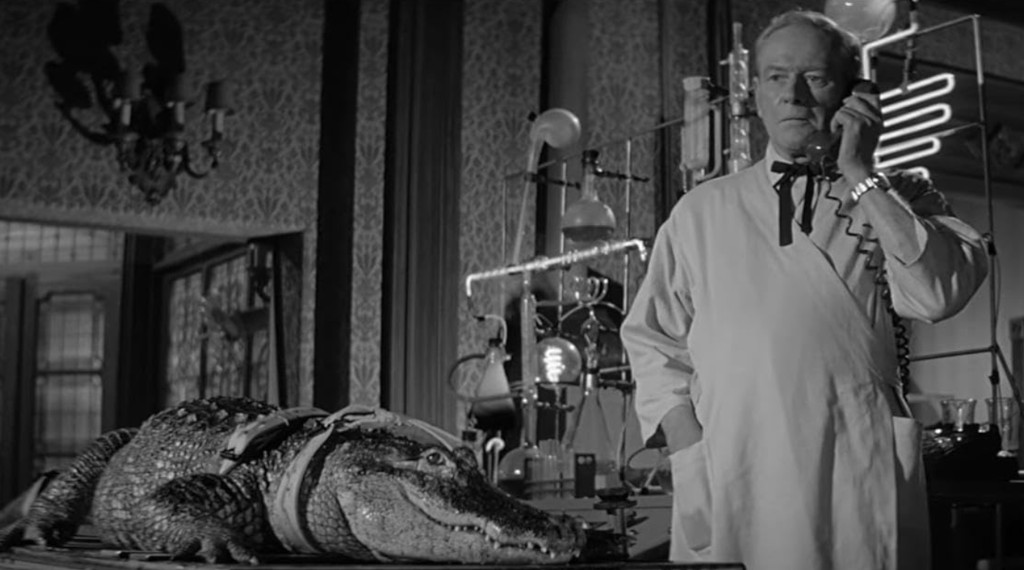
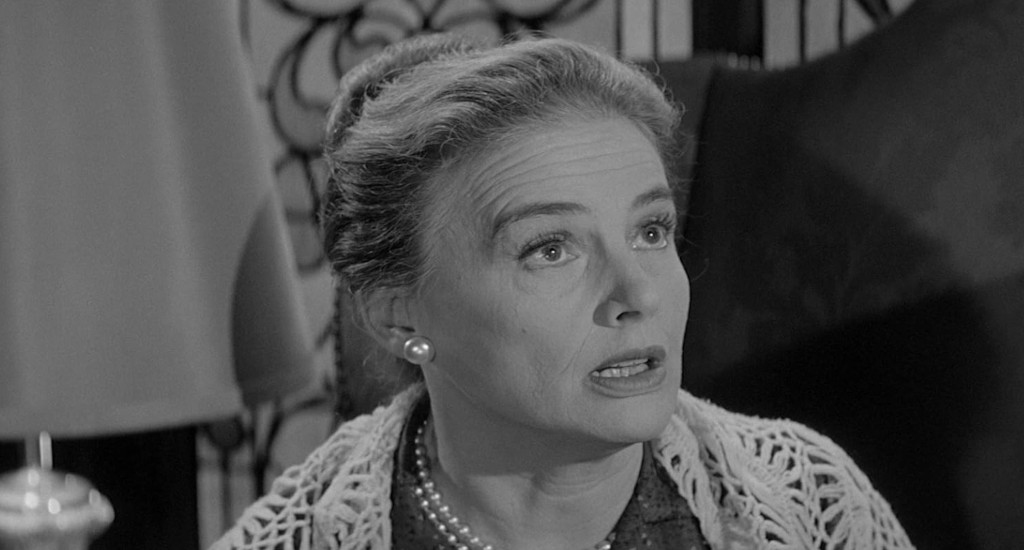
Richard Crane, who plays Paul the alligator man, was a seasoned character actor, wartime B-movie leading man and kiddie TV star of Rocky Jones, Space Ranger. Crane was a serviceable leading man and does a good job in The Alligator People as the tormented husband, even if I’m not sure that lowering his voice to a pained growl was the best decision. The rest of the cast is serviceable. George MacReady is somewhat cast against type here, as his “mad doctor” is ultimately a benign character. It’s possible his casting was meant as a red herring, as his aristocratic bearing and transatlantic diction, combined with his prominent facial scar, typecast him as a villain for most of his career. Like MacReady, Scottish-born Frieda Inescort, here playing Paul’s matriarchal mother, had a background in theatre and A-movies, often playing aristochratic characters. In The Alligator People, she has a tendency towards charicature in the first half of the movie, playing up the icy, unfriendly mistress of the mansion. The movie features African-American Ruby Goodwin in a sizeable supporting role as the mansion’s maid, and Vince Townsend, Jr. as the butler – continuing their streaks of stereotypical black roles of the era.
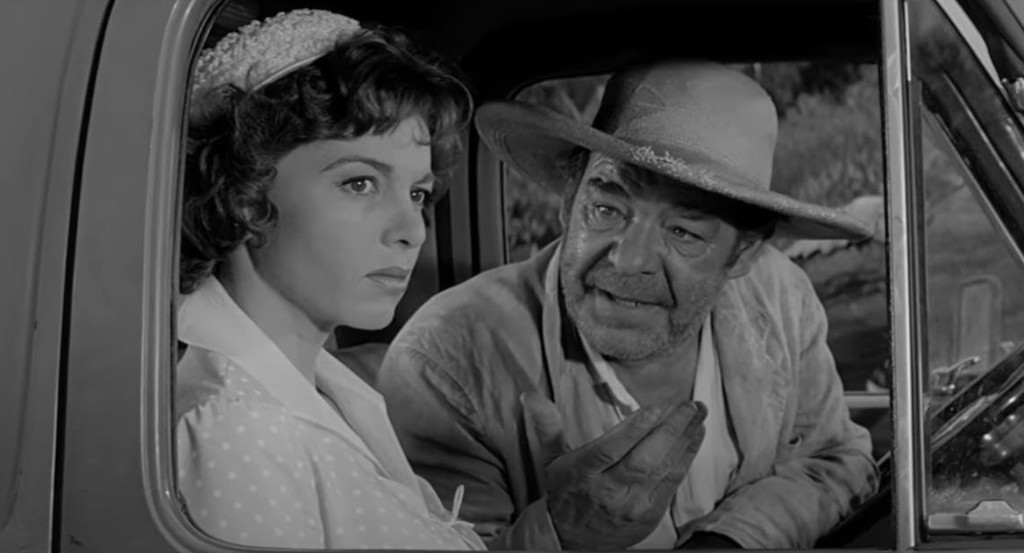
Some reviewers have credited Bruce Bennett for playing Dr. Sinclair, because Bennett is second-billed below Beverly Garland and above Lon Chaney. However, Bennett only has a small supprting role as one of the doctors in the frame story. While modern viewers can be forgiven for not recognising him, Bennett was perhaps the film’s biggest marquee name, with a string of high-profile supporting roles opposite Humphrey Bogart behind him in the 40s. In the 30s, Bennett was something of a serial and B-movie star, at one time playing Tarzan, under his real name Herman Brix. His part in The Alligator People was probably filmed in a day, and Bennett phones in his performance.
On the whole, Roy del Ruth’s direction here is workmanlike. The visual storytelling follows genre conventions and Karl Struss’ moody, evocative cinematography and lighting does most of the heavy lifting. The movie’s sweaty, paranoid atmosphere deserves credit, as does the numerous settings, which makes the film feel bigger than most of its counterparts. There’s nothing particularly outstanding about del Ruth’s direction: most scenes and setups are standard wide-medium-close combination, with little to distinguish them from the average mystery movie, but they work fine with the story.
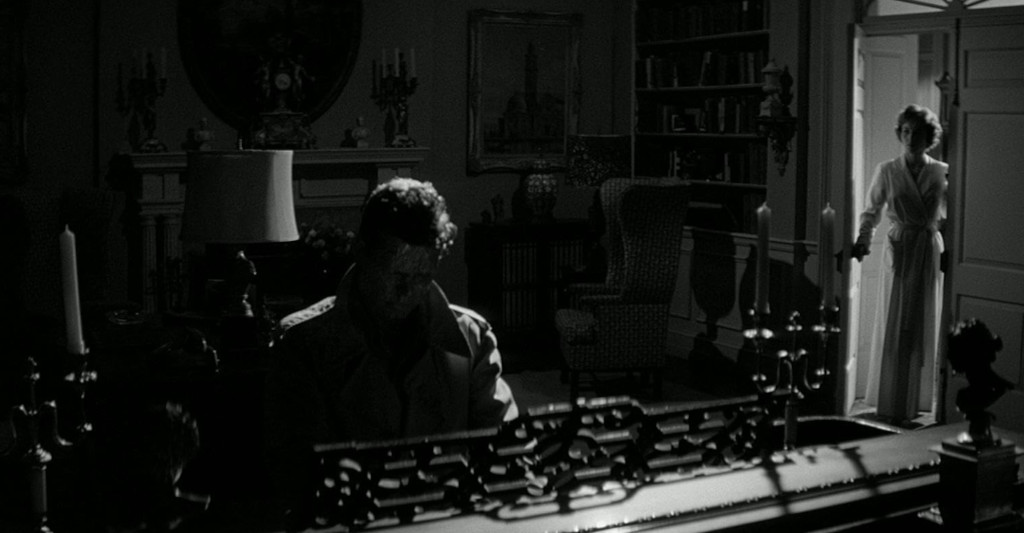
The score by Irving Gertz is a classic orchestral score, highlighted by a use of electric violin. It serves the picture well without being outstanding in any way. Gertz had previously scored many of Universal’s classic science fiction and monster movies of the 50s, so he worked in familiar territory.
As in so many films of its kind, The Alligator People’s theme of a man turning into a monster touches on issues of bodily transformation and body horror, as well as questions of losing oneself and/or losing a loved one, for example to a disease or mental degradation. The film also utilises the age-old trope of science gone haywire – the road hell is paved with good intentions and there are some things that Man should not meddle in. Some critics have linked the decaying plantation and the Southern Gothic setting as a parallel to Paul’s physical and mental regression. However, there is not a sense that this film is trying to tackle these questions in any serious way. As so often in late 50s sci-fi and monster movies, plot elements and settings that once held symbolic meaning are reduced window dressing and familiar tropes.
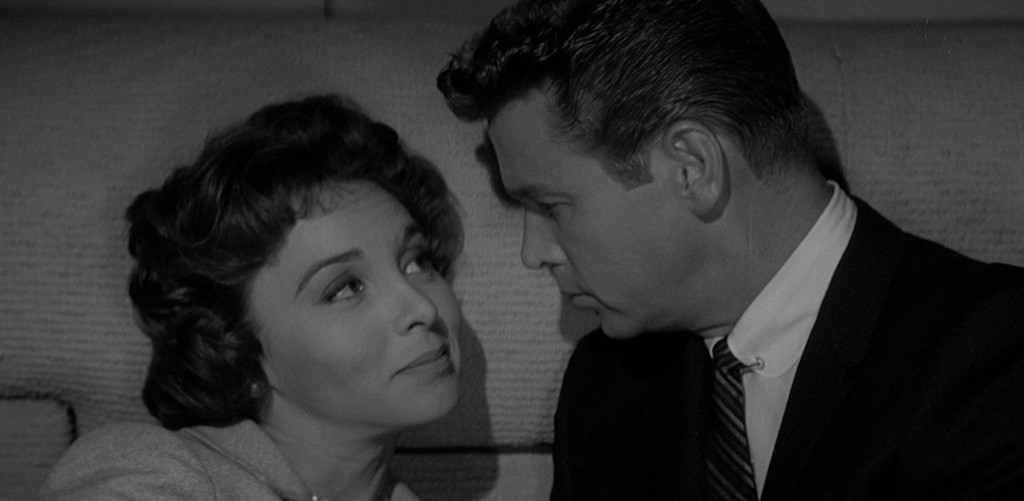
As said, The Alligator People is a much better film that I assumed it to be before watching it. Within its subgenre constraints and the circumstance that it was produced as a quick cash-grab B-movie, the script has a smidgeon of originality in the way that it builds up its story, the bayou setting is refreshingly different from most films of its kind, it has a good cast and it is competently filmed with a few flashes of class. Unfortunately, the picture isn’t able to overcome its B-movie constraints, mainly because the script starts stalling mid-way through, Lon Chaney’s villain is never properly set up, and it rushes the proceedings to a disappointing conclusion.
Reception & Legacy
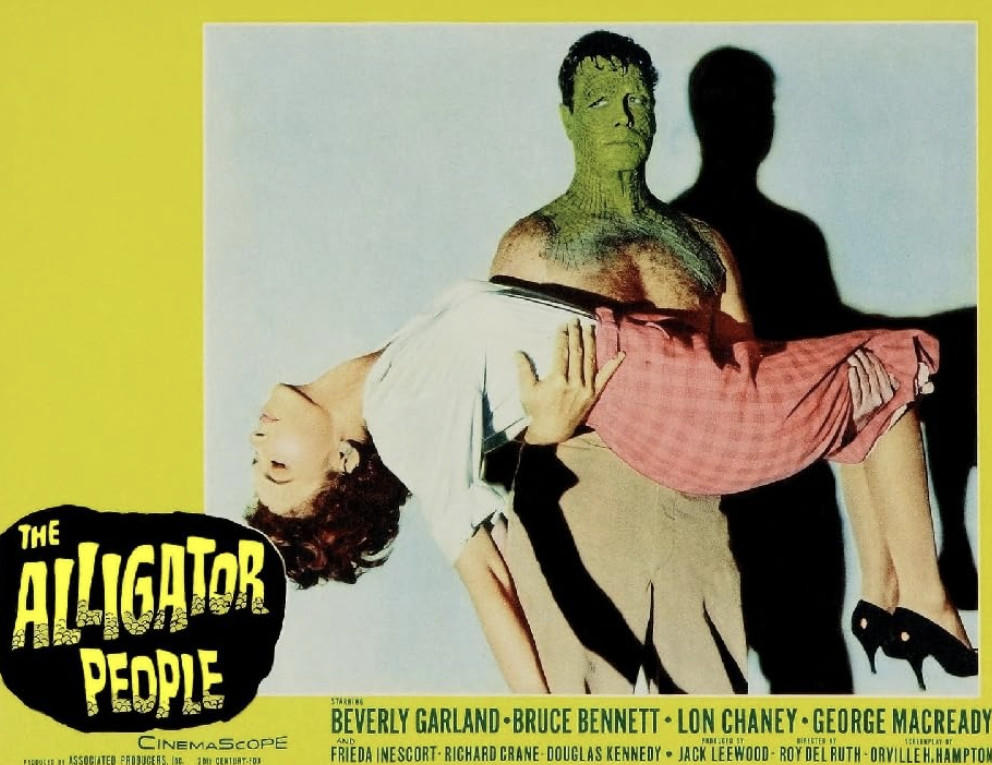
The Alligator People premiered in July, 1959, as the bottom bill to Fox’s Return of the Fly, and got a limited international distrubution. One assumes that the double bill made Fox a decent profit, seeing as a lot of audiences probably lined up to see the sequel to The Fly.
The Alligator People was largely ignored by the mainstream press, but got moderate reviews in the trade press. Jack Moffitt at the Hollywood Reporter called it “a better than average horror film” and “Glen” in Variety opined that it was a “good program horror film”, and especially singled out Beverly Garland’s performance and good dialogue. Many reviews pointed out that the script provided “plausible” and “logical” explanations to the mad science. However, Variety also felt that the picture “lags in the middle stretch […] which prevents the film from being exceptional, bit it’s more than good enough for the market at which it is being aimed”.
Other outlets were not quite as positive. The Motion Picture Exhibitor wrote: “While there is nothing very different to put this horror entry above similar films, it should satisfy fans of the chillers”, while Harrison’s Reports stated: “It is an ordinary picture offering little that is original in theme or content”. However, the publication noted that it “should satisfy those who prefer bloodthirsty entertainment”. Likewise, the Film Bulletin said that “it achieves some fine moments of terror that will delight devotees of such fare”.
Phil Hardy in The Encyclopedia of Science Fiction Movies (1984), as he is wont, undermines his credibility by getting plot details wrong – in this case by erronously stating that Paul becomes “hungry for human and animal flesh” as he turns into the alligator man. He claims that Roy del Ruth “shows himself decidedly ill-at-ease” with low-budget movies, without specifying what, exactly he means by this. Hardy concludes by calling the movie an “ineptly mounted creature-feature”.
In his 2009 revised edition of Keep Watching the Skies!, Bill Warren singles out the performances by Garland and Chaney, along with Karl Struss’ photography, as the highlights of the movie. He notes that while the direction is smooth and atmospheric, the script is “talky and static” and that director del Ruth “can’t seem to generate much energy”. Like the Variety review, he points out the dip in the middle of the film, but partly excuses it with the notion that this was almost built into the formula of these kind of movies. Warren writes:
While not a film we can be grateful for being as good as it is, The Alligator People is nonetheless acceptable for being no worse than it is. It could have been wretched, but it’s somewhat above average for a minor SF–horror effort of the period. The artificial premise is approached cautiously, an effort has been made, mostly through the use of the flashback, to create something a shade different, and everyone attempted to turn in intelligent work.
However, it’s handicapped. Instead of being exciting, the story is mostly depressing. […]
Everything goes smash in the last reel; all these honest, dedicated scientists, loving mothers, loyal servants, hopeful experimental subjects, all are blown to smithereens because a lout got drunk. Even if the film were a lot better, it would still be morbid and unhappy.
The Alligator People is a decently crafted and intelligently made program SF–horror film, sadly let down by misconceived makeup and perfunctory ideas.
Modern-day reviewers are slightly split on the merits of the film. Dave Sindelar at Fantastic Movie Musings and Ramblings confesses: “I have a bit of fondness for this flawed little SF movie, perhaps because of some little touches here and there that I like.” However, Richard Scheib at Moria gives it only 2/5 stars, noting that it isn’t able to work up much excitement, and, like Warren, he laments the ending.
DVD Savant Glenn Erickson does not like The Alligator People, citing the a bad alligator suit, Lon Chaney’s poorly developed character and the abrupt ending where the two frame story doctors decide to let Garland’s character live in La-La Land, oblivious of her repressed memories. He also notes: “Dramatically, The Alligator People goes nowhere.”
Because this was a 20th Century Fox production, it has not been as widely circulated as many of the Poverty Row films of the 50s, that eventually wound up the public domain, but it did circulate TV stations in the US, particularly late night horror broadcasts. It was released by Fox on VHS in 1998 and on DVD in good quality in 2004. Scream Factory released it on Blu-ray in 2019.
While not in the public domain, the film is currently freely available on YouTube in fairly good transfers. Otherwise, streaming availability seems to be patchy at best. According to some sources, Disney+ carries it in Canada and Australia, but I can’t vouch for that.
Cast & Crew
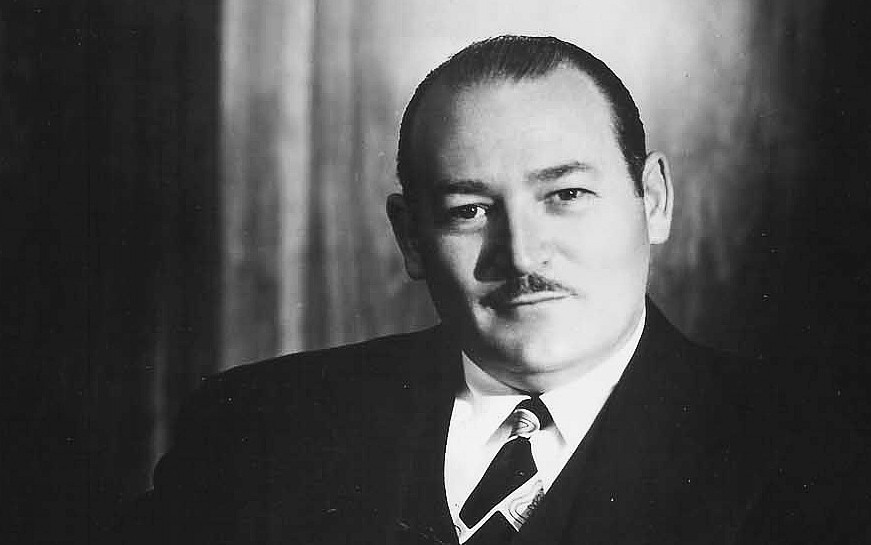
I have a long write-up on producer Robert Lippert in my review of The Fly, so do head over there for more on him. In short, Lippert was a shrewd theatre chain owner who started producing films in 1945, mainly as an answer to rising film rental fees. He had a nose for trends, and in 1950 was able to ride the publicity surrounding George Pal’s much talked-about moon flight film Destination Moon (review). Producing quickly on a small budget, he managed to beat Pal’s big-budget colour extravaganza to the cinemas by mere weeks with his own Rocketship X-M (review). After this, Lippert’s career was closely associated with science fiction and horror, although he produced a plethora of films in all conceivable genres.
In the 50s and early 60s Lippert specialised in B+ movies, first as an independent producer, and between 1956 and 1962 for Fox. Citing high production costs in Hollywood, he made half a dozen movies in the UK in the early 60s, and returned to the US to make a few more, but retired from film production in 1967 to focus on his theatre chain.
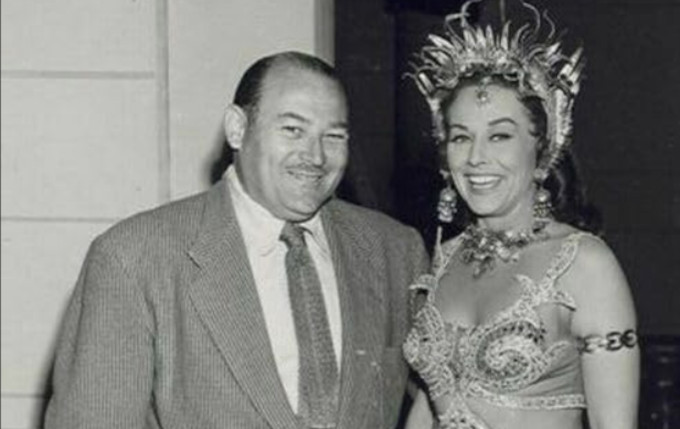
Exactly how many science fiction movies Lippert had his hands in is impossible to tell without going through all the productions of his different companies, which I am not prepared to do right now. However, they amount to at least 20. Highlights include Rockethip X-M (1950, review), the hollow Earth movie Unknown World (1951, review), Hammer’s Spaceways (1953, review) and The Quatermass Xperiment (1955, review), Bert I. Gordon’s King Dinosaur (1955, review), Roger Corman’s Monster from the Ocean Floor, (1954, review), Regal’s Kronos (1957, review), Space Master X-7 (1958, review), The Fly (1958, review), Return of the Fly (1959), The Alligator People (1959), The Last Man on Earth (1964), Curse of the Fly (1965) and The Earth Dies Screaming (1965).
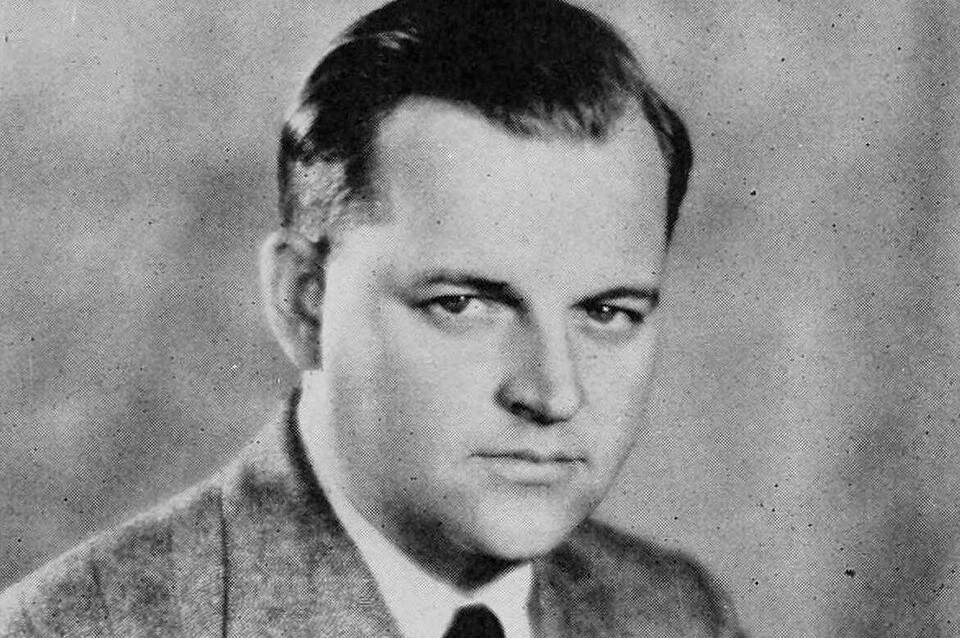
Roy del Ruth was a true Hollywood veteran, who began his career as a journalist and comedy writer, and in 1915 started writing comedy skits for the movies – for stars like Mack Sennett and Ben Turpin. He progressed to comedy direction, and in 1925 he was directing feature films for Warner Bros. He became known as a fast and reliable director, and was unfazed by the coming of sound in 1928. In fact, he embraced it, and quickly specialised in lavish musicals. At Warner, he also directed a number of successful comedies and crime movies, many of them starring James Cagney. del Ruth’s heyday came in the mid-to-late 30s and early 40s, when he left Warner and went freelance. del Ruth was in big demand with several studios, for which he directed films in a number of genres, but is best remembered for his star-studded musicals.
By 1946 baseball legend Babe Ruth was diagnosed with cancer, and by 1948 he was visibly on his last leg. A biography and biopic had long been in the works, but were caught in production hell. In 1947 Ruth sold the rights to his life story to Monogram/Allied Artists, and the company hired sports writer Bob Considine to both ghost write his autobiography and the movie script. Roy del Ruth (no relation) was attached as both producer and director. Because of fear Ruth might die before the premiere, the production was rushed, and the film premiered in July, 1948, with a drugged-up Ruth making his final public appearance at the opening night. The Babe Ruth Story presented an extremely sugar-coated and exaggerated version of Ruth’s life, which included him healing the sick and crippled with his mere presence. The movie was a box-office success, and at the time it received mixed reviews, with many critics forgiving its flaws, perhaps out of kindness to the dying sportsman. However, later assessments have labelled it one of the worst sports movies, biopics, and one of the worst movies ever made in any genre.
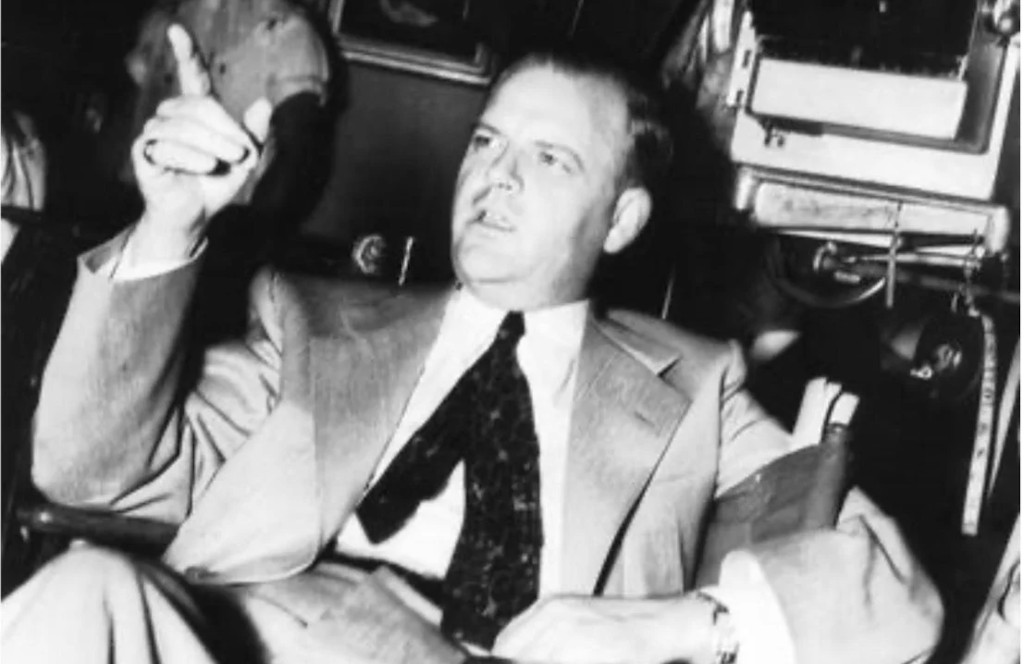
Some writers have linked The Babe Ruth Story to the decline of Roy del Ruth’s career, but this doesn’t hold water. The film was not as universally panned as it has later been, and it was a commercial success. Furthermore, del Ruth continued to direct A-movies into the 50s, with stars like Virginia Mayo, James Cagney and Doris Day. However, for some reason – perhaps of his own will – he transitioned into TV in 1954. The Alligator People (1959) was his return to the big screen, and the only science fiction production out of his over 130 movies. He only directed one more picture before his death in 1961.
Co-writer Orville Hampton worked as both screenwriter, dialogue director, additional dialogue writer and screenplay doctor for both film and TV between 1950 and 1983, and was known as a reliable workhorse, although not necessarily for top-of-the-line screenplays. For most of his career, he worked on Poverty Row B-movies, but did work on more prestigious drama later in his career. He is perhaps best remembered for his work which commented on race relations in the US. With Raphael Hayes he co-wrote the screenplay for One Potato, Two Potato (1964), which was an early Hollywood film exploring an interracial relationship, and was nominated for an Oscar – although Hayes has claimed that Hampton’s draft was thrown out. In the 70s he wrote two blaxploitation films, Detroit 9000 (1973) and Friday Foster (1975), which have been singled out for their progressive exploration of race politics.
Hampton was no stranger to science fiction, either. He lent his talents to films like Rocketship X-M (1950, review), Lost Continent (1951, review), Mesa of Lost Women (1953, review), The Alligator People (1961), The Atomic Submarine (1961), The Flight that Disappeared (1961), The Underwater City (1962), as well as the TV series The Six Million Dollar Man (1977) and The All-New Super Friends Hour (1977-1978).
In between films, Hampton also wrote for TV. He contributed to several dozen episodes of Perry Mason, and wrote several episodes for hit shows like Flipper and Lassie. In the late 70s and early 80s he wrote animated shows for Hanna-Barbera.
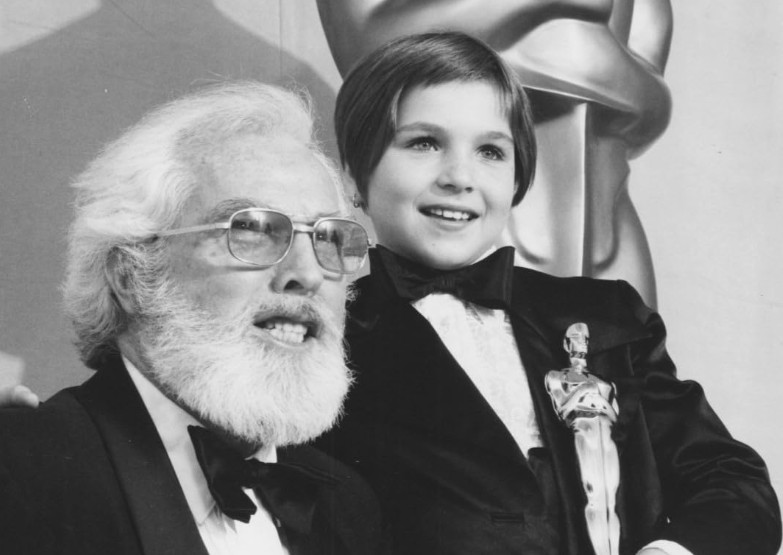
Co-writer Charles O’Neal was a former stage actor who transitioned into screenwriting in the 40s, and wrote close to 20 movies, almost exclusively B-movies, particularly mysteries and crime noirs. In the late 50s he transitioned into TV, where he wrote, among other things, several episodes of Lassie. O’Neal also published novels and worked as a journalist and prose writer. Charles O’Neal was the father of Oscar (and Razzie) nominated actor Ryan O’Neal (Love Story, Paper Moon, Barry Lyndon) and grandfather of Oscar winner Tatum O’Neal (Paper Moon, The Bad News Bears, The Runaways).
Robert Fresco‘s first movie script was Universal’s SF hit Tarantula (1955, review), directed by Jack Arnold. Fresco had previously written a few TV scripts, but would continue to write horror/sci-fi films for Universal. In Tom Weaver’s book Eye on Science Fiction, Fresco says that he got into the business through cult producer Ivan Tors’ science fiction series Science Fiction Theatre (1955-1957), for which he wrote four scripts. One of them was called “No Food for Tought”, which was directed by Jack Arnold. Arnold liked the script so much that he asked Fresco to flesh it out into a full movie, and the result was the first draft for Tarantula.

Fresco also wrote The Monolith Monsters (1957, review), which was one of the most original science fiction movies of the late fifties, and had a hand in The 27th Day (1957, review), The Alligator People (1959) and the Swedish-American co-production Space Invasion in Lapland (1959), also known as Invasion of the Animal People. In the sixties Fresco started producing and directing documentary films, and earned an Oscar for the movie Czechoslovakia 1968 (1969), a film documenting the history of Czechoslovakia between WWII and the Soviet invasion during the Prague Spring. Much of the film consisted of never before seen Czech stock footage, which had been smuggled out of the Communist country. Another praised production of his was the biographical film To Be Young, Gifted and Black (1972), retelling the life-story of Lorraine Hansberry, author of the play A Raisin in the Sun.
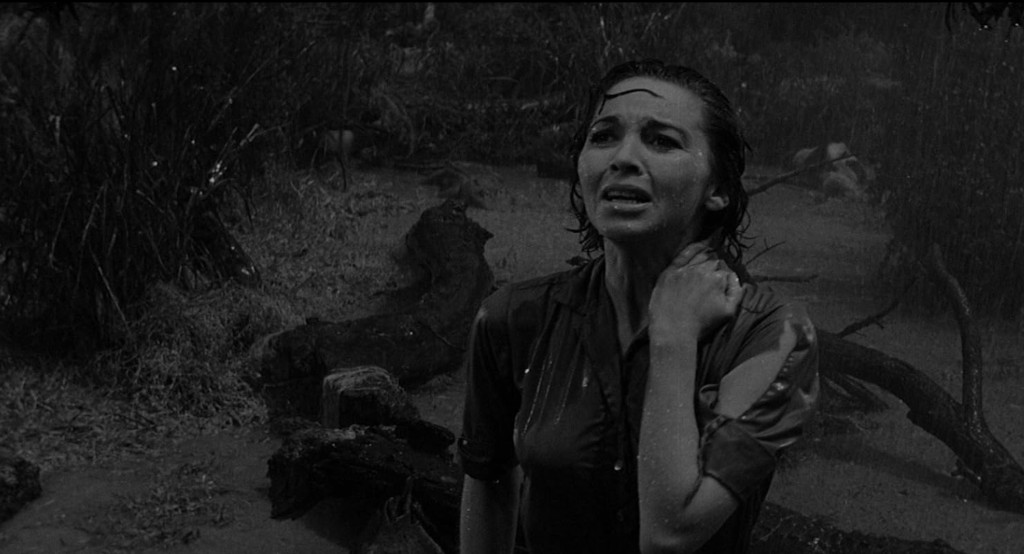
Beverly Garland was one of the best actresses working in Poverty Row genre movies in the 50s and 60s, often portraying independent, intelligent women with agency and resolution. Especially her roles in Roger Corman’s movies gave her a chance to go above and beyond the usual bland ingenue roles that so often inhabited the B-movies of the era.
Garland made her screen debut in a substantial supporting role in Rudolph Maté’s D.O.A. (1949), as Beverly Campbell. She married actor Richard Garland in 1951, and although the marriage only lasted two years, she kept the name. She worked mainly in B-movies of every conceivable genre, but also quickly established herself as a very popular guest actress on TV shows. Her first leading role came in a 1954 B-western and she did her first of a number of films for Roger Corman with 1956’s Swamp Women, followed by Gunslinger (1956), It Conquered the World (1956), Naked Paradise (1957) and Not of This Earth (1957). Other early genre outings were Curt Siodmak’s Curucu, Beast of the Amazon (1956) and Roy del Ruth’s The Alligator People (1959).
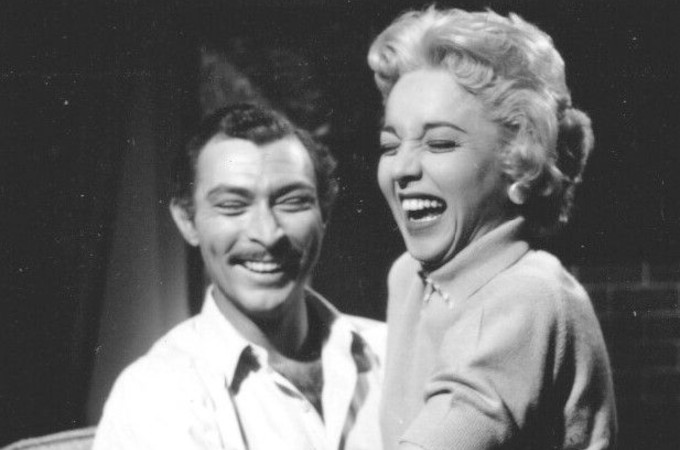
Garland made her first TV splash in 1955, when she was nominated for an Emmy for a guest spot in the TV series Medic. She also turned heads in Decoy (1957-1958), playing the lead as a female police officer. Not only was her character the first female police officer in a starring role in an American TV series — the show was also, according to some sources, the first American dramatic TV show with a female protagonist. Garland’s mainstream breakthrough came with her recurring role as Barbara Harper Douglas on the CBS sitcom My Three Sons (1969-1972), and she is also remembered for playing Dotty West on the adventure comedy show Scarecrow and Mrs. King (1983-1987). Of her later film roles, worthy of mention are at least the Vincent Price SF/horror mystery Twice-Told Tales (1963), the crime comedy Pretty Poison (1968) and the family drama Where the Red Ferns Grow (1974), in which she all played the female lead. She also had a small role in the disaster film Airport 1975 (1974). Apart from the above mentioned, the she also appeared in the SF movies The Neanderthal Man (1953, review), The Rocket Man (1954) and If (2004). She also guest starred in a around 160(!) TV shows, a number of them SF, like: Science Fiction Theatre (1955-1956), The Twilight Zone (1960), The Planet of the Apes (1974), The Six Million Dollar Man (1977), and in several episodes of Lois & Clarke: The New Adventures of Superman (1995–1997) as Lois Lane’s (Teri Hatcher) mother. She was married to businessman Fillmore Crank for 39 years, who built named a hotel outside the Universal Studios the Beverly Garland Holiday Inn, today The Garland. After he passed away in 1999 she focused on managing the hotel along with her four children. She passed away in 2008.
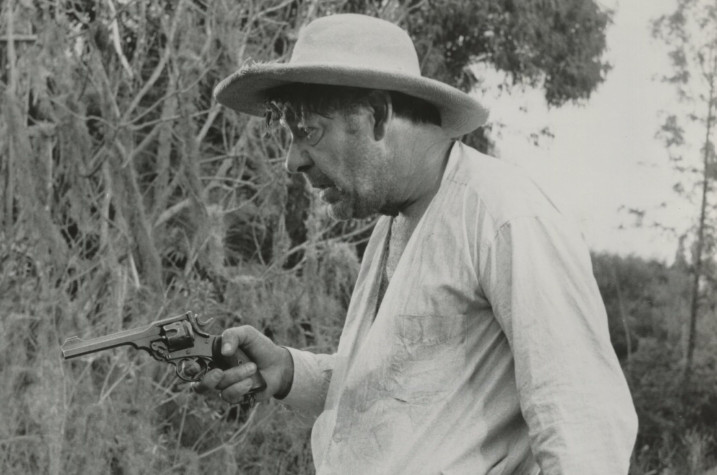
Lon Chaney, Jr. is, of course, a legend among old horror movie fans, as the originator of the Wolfman character, and for his involvement in pretty much all of Universal’s classic horror movie franchises in the 40s. Although he is best remembered for his work during this period, he was an extremely busy actor in the 50’s, often playing heavies and, for some reason, Native Americans, in film and on TV in almost all conceivable genres. His star had diminished considerably since his heyday as Universal’s top monster in the early forties, but he was still turning out memorable supporting roles in A-grade films, primarily westerns like Springfield Rifle (1952), The Indian Fighter (1955), and not least in the classic High Noon (1952), as well as the occasional drama like Not a Stranger (1955), opposite stars like Olivia de Havilland, Robert Mitchum and Frank Sinatra or comedies like the Martin–Lewis vehicle Pardners (1956) and alongside Bob Hope in Casanova’s Big Night Out (1954). One of the highlights of his 50s career was his co-lead in 39 episodes of the TV show Hawkeye and the Last of the Mohicans, in which he played Hawkeye’s titular Mohican sidekick Chingachook. So while not the major star he once was, Lon Chaney, Jr. still had som marquee draw left in him, even in the late 50s.
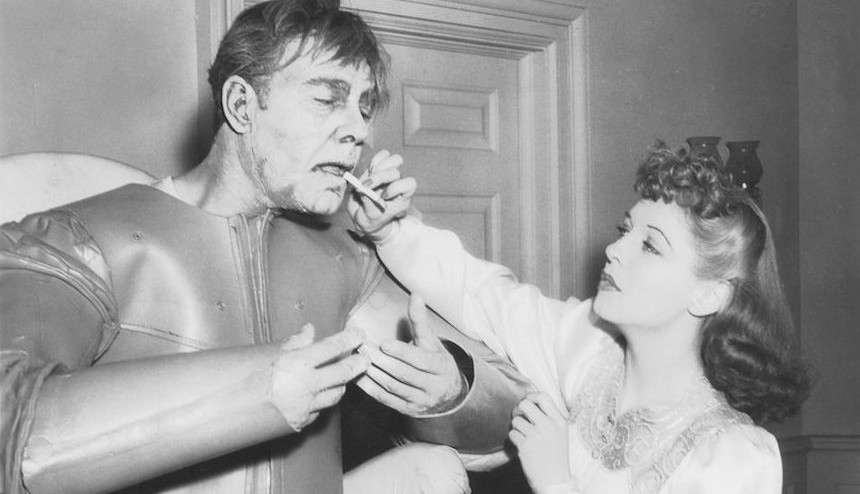
However, his involvement in The Alligator People and other less-than-prestige pictures proves he didn’t quite have the luxury to choose his projects. Chaney came a long way on his 6’2 stature and beefy build, combined with an intense stare and a mean scowl, often seeming as to hide a sense of vulnerability – a combination which made his turns as tragic monster in the Universal pictures so successful, and one that had first drawn attention in his breakthrough role as Lennie in Of Mice and Men (1939). But by the 50’s he also had a reputation as a heavy drinker and an actor that was difficult to work with. However, while he himself made no secret of his drinking – he once warned director/producer Jack Pollexfen never to change the script after lunch, as he would take it in liquid form – this reputation is probably somewhat overblown, considering the sheer number of films and TV productions that Chaney racked up in the 50s. And while there are stories circulating that he was offered mute roles in the late 50s and early 60s because he was too drunk to remember his lines, The Alligator People proves he had no problem handling dialogue. Later, his throat cancer set limits for him, but that wasn’t a problem in the 50s, but rather in his very final years in the late 60s and early 70s.

Chaney still had over 10 years of acting career ahead of him in 1959. However, the quality of his productions diminished over the years, and he was exclusively seen in B-movies, primarily westerns, horror films and comedies, and also appeared in a number of TV shows. Many film historians and critics cite his lead in the well-regarded horror comedy Spider Baby (1967) as his last great performance, one in which he was allowed to take a step back from his gallery of brutes, heavies and scowling menaces, and showcase his soft-spoken vulnerability, which was actually where he was at his best. Lon Chaney, Jr. is described by many his co-stars and colleagues as a sweet and intelligent man, who nonetheless ruined his career with his alcoholism. His illness forced him into retirement in 1971 and he passed away in 1973.
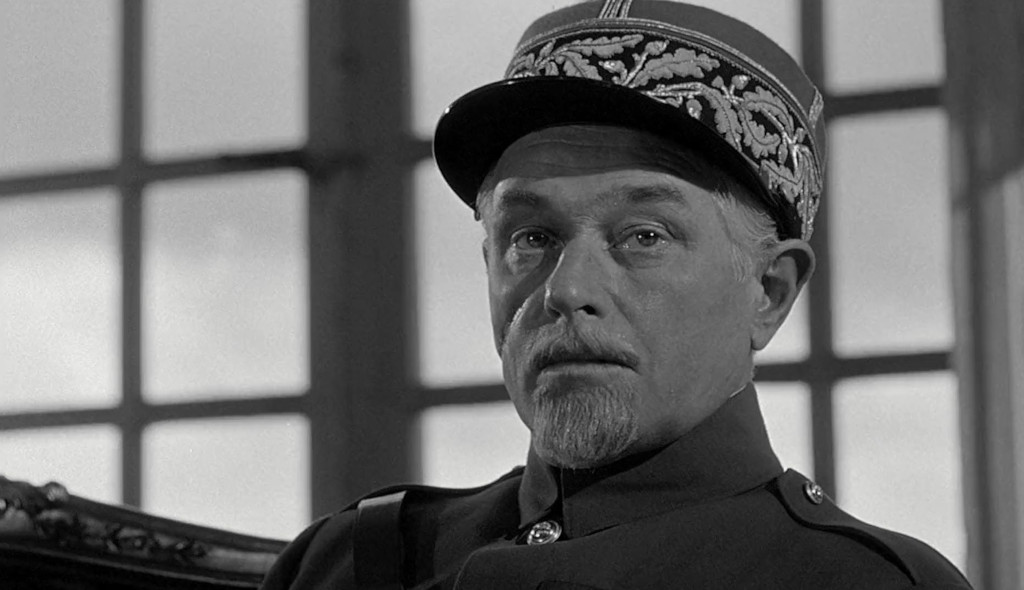
George Macready was both typecast and something of a red herring in The Alligator People. A classicaly trained actor, he began his career on stage in the 20s, and didn’t make his film debut until 1942, now in his forties. Macready’s formal manners and cultivated diction, combined with a prominent facial scar sustained in a car accident, quickly typecast him in villainous roles across genres. Among his best remembered roles are those of the unstable Ralph Hughes opposite Rita Hayworth and Glenn Ford in Gilda (1946) and the cowardly General Mireau in Stanley Kubrick’s Paths of Glory (1957). Of his around 70 film appearances, only around half a dozen were horror and/or sci-fi. Most prominently, he played the villainous professor in the Columbia serial The Monster and the Ape (1945), the ultimately benign but misguided scientist in The Alligator People (1959) and in The Human Duplicators (1964) he played both the good scientist and his evil duplicate. Macready appeared in small parts (including narrator) in Bob Kelljan’s Count Yorga (1971) and The Return of Count Yorga (1971), produced by his son Michael.
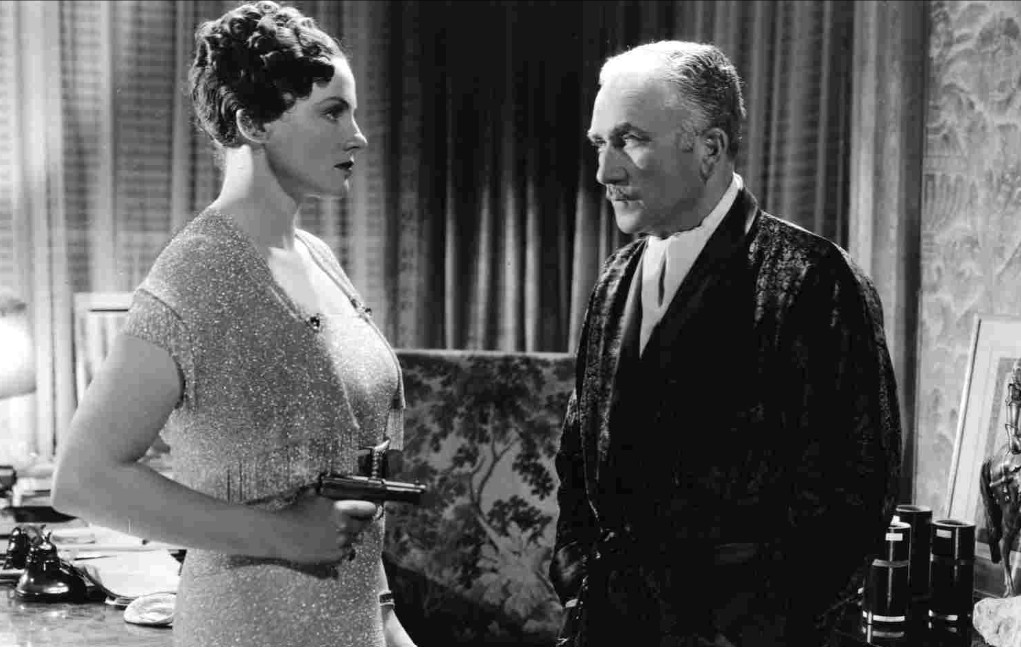
Further theatrical class was brought to The Alligator People by Frieda Inescort, playing The Cypresses’ matriarch. Scottish-born Inescort also came to the movies from Broadway, where she began appearing in leads in the 20s. She made the movie to California in the mid-30s and established herself as a character actor specialising in elegant, socially assured women, both sympathetic and less so. The high point in her career came in the early 40s, when she appeared in prominent roles in MGM’s Pride and Prejudice (1940), with a screenplay co-written – surprisingly – by Aldous Huxley and starring Laurence Olivier as Mr. Darcy, in William Wyler’s The Letter (1940) and in the Fred Astaire/Rita Hayworth vehicle You’ll Never Get Rich (1941). While the film wasn’t as prestigious, she had an unusually large role in Columbia’s fairly well-regarded The Return of the Vampire, as a scientist battling Bela Lugosi’s undead blooodsucker. In the late 40s and 50s, offers for tempting movie roles diminshed, and Inescort divided her time between the stage and both the large and small screen, appearing in both B-movies and more prestigious films. Apart from The Return of the Vampire and The Alligator People, genre fans remember her from The She-Creature (1956).
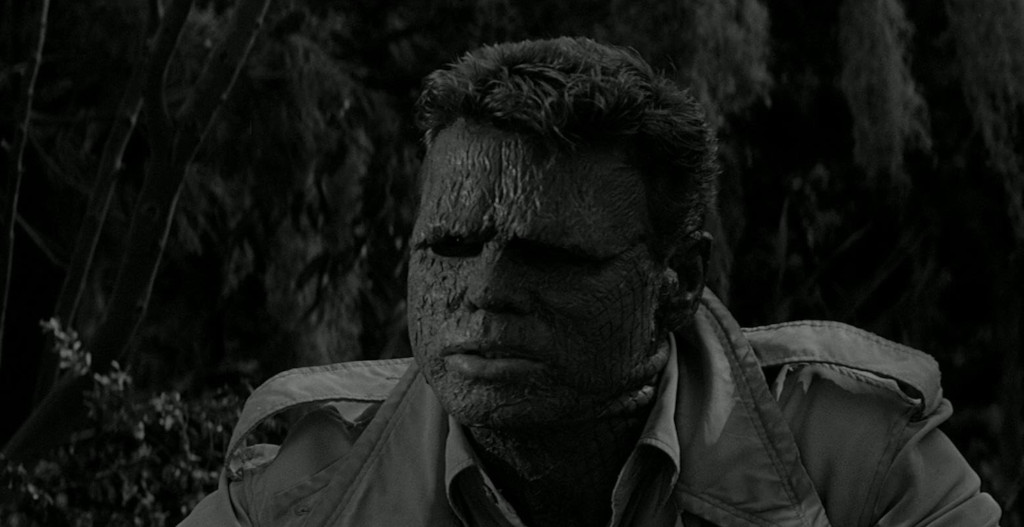
Richard Crane gets to play the only monster of his career in The Alligator People. Crane, a handsome, square-jawed supporting actor, made his screen debut in 1940, and benefited from so-called wartime casting in the late 40s, when many of Hollywood’s top names were drafted into the war effort, supporting the troops. By the final year of the war, he was attached to leads and prominent supporting roles in modestly budgeted films by major studios, but as the top stars returned to the business, Crane’s standing in the industry was lowered by a peg. In the early 50s, he slipped ever lower on the credit sheet, and only received prominent billing in low-budget films. During this period he played the main character Cyrus Harding in Culumbia’s Jules Verne-derived serial The Mysterious Island (1951), and had a prominent supporting role in the Republic serial Commando Cody: Sky Marshal of the Universe (1954) Crane played the romantic but sidestepped lead in the United Artists-distributed The Neanderthal Man (1953, review), where he teamed up with Alligator People co-star Beverly Garland.
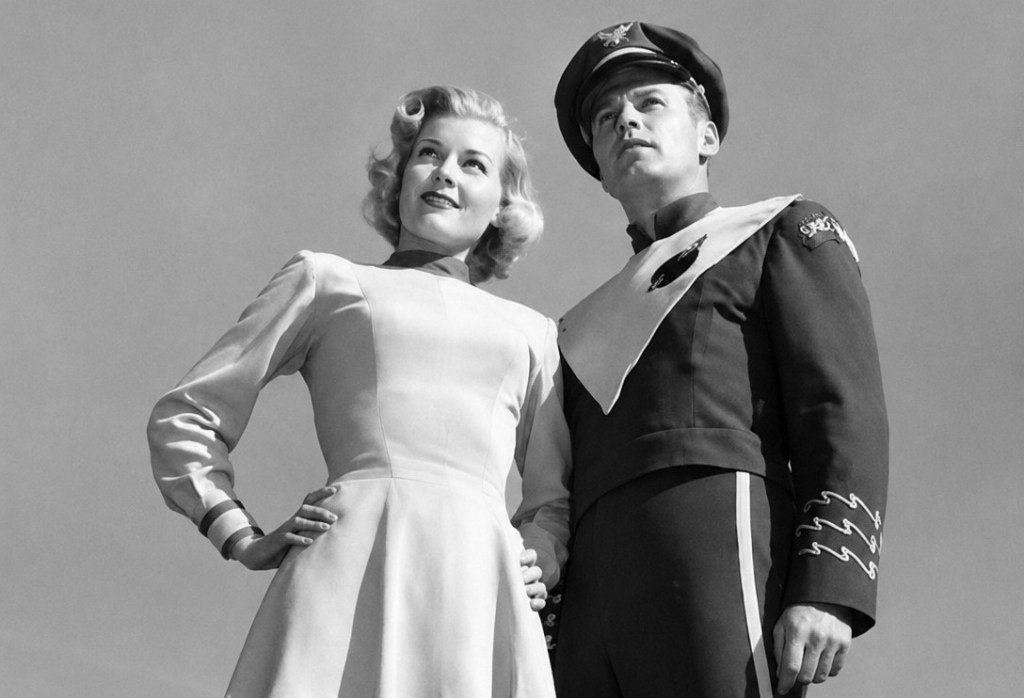
During this period he also started appearing regularly on TV, and in 1953 was cast as the titular lead in the kiddie sci-fi show Rocky Jones, Space Ranger, which ran for one season and 40 episodes. This remains the role he is best remembered for today. He remained a jobbing actor until his untimely death from a heart attack in 1969, but increasingly found work primarily in TV guest spots uncredited movie roles or in bigger roles in bottom-of-the-rung productions. Exceptions to these were the opportunities he got in four films made for 20th Century Fox by Robert Lippert’s Associated Producers, Inc. While these were B-movies, they had a touch of class, major studio backing and gave him prominent roles and billing. These included The Alligator People (1958), 13 Fighting Men (1960), House of the Damned (1963) and Surf Party (1964). The last one would be his final movie appearance.
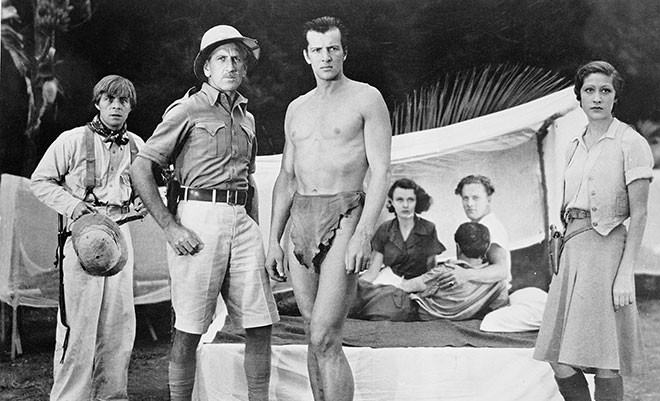
As the two doctors in the frame story we see Bruce Bennett and Douglas Kennedy. Bennett is third-billed, despite his limited screentime, due to his marquee value. He was born Harold Herman Brix, was an all-round athlete in his younger years and won a silver medal in the shot-put at the 1928 Olympics. He entered the movie business in the 30s, and wrote himself into the history books in 1935 by appearing in the serial The New Adventures of Tarzan, written and produced by Edgar Rice Burroughs himself. Under his real name Herman Brix he was a mainstay in action films and serials in the 30s, but in 1939 decided to rebrand himself as a dramatic actor, took acting lessons and changed his screen name to Bruce Bennett. He gradually worked himself up the Hollywood ladder and eventually became a respected character actor with substantial roles in bona fide classics like Mildred Pierce (1945), Dark Passage (1947) and The Treasure of Sierra Madre (1948). By the late 50s, however, he mainly appeared in major studio B-movies.
Herman Brix/Bruce Bennett appeared in a number of science fiction films during his career, most of them as a leading man, few of them particularly good: Shadow of Chinatown (1936), Sky Racket (1936, review), The Man With Nine Lives (1940, review), Before I Hang (1940, review), The Cosmic Man (1959, review), The Alligator People (1959) and The Clones (1973). He also appeared in five episodes of the TV show Science Fiction Theatre.
Douglas Kennedy had a rare leading role in The Amazing Transparent Man (1960), and also appeared in The War of the Worlds (1953, review) and The Alligator People (1959), as well as The Destructors (1968).
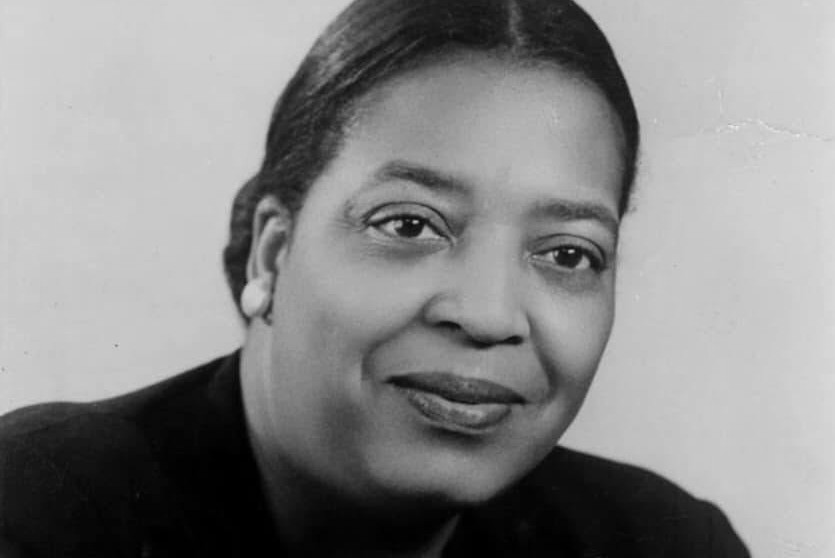
The Alligator People features two black actors in – if not prominent, the at least noteable parts, Ruby Goodwin, who gets more lines and screentime as The Cypresses’ maid, and Vince Townsend, Jr. as the butler – a rather small role, but a speaking one. Whether an accident or not, both were prominent figures in the black community.
Ruby Goodwin has half a dozen feature film credits and a dozen TV credits between 1955 and 1961. However, she was primarily a writer, and worked as Oscar winner Hattie McDaniel between 1935 and 1951, and co-wrote McDaniel’s famous Oscar speech for her win in Gone With the Wind (1939). She was by all accounts the first accredited black journalist in Hollywood with a syndicated column – “Hollywood in Bronze”. Goodwin was also an award-winner poet, and before her death from breast cancer in 1961, she wrote the autobiography It’s Good to be Black.
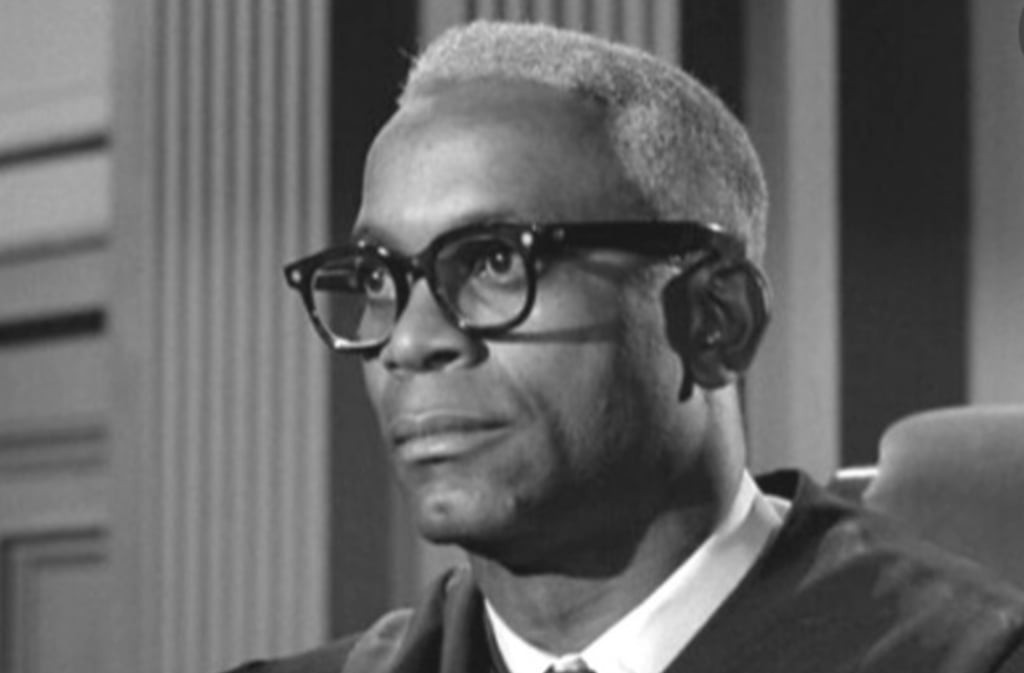
Vince Townsend, Jr. has around 30 IMDb credits stretching from 1952 to 1986, all of them minor. In the 50s there’s the usual assortment of the kind of bit-parts that were usually available for black actors – porters and tribe members. But his credit sheet shows a tendency towards authority figures: guards, doormen, police officers, even a general. When you google Townsend, some of the first hits are articles that discuss that fact that in 1963 he appeared as a judge on Perry Mason. In fact, Townsend had already played a recurring role as a judge on the popular but controversial CBS comedy series The Amos ‘n Andy Show (1951–1953) – historical for featuring black comedians in a nationwide hit show, but likewise harshly criticised for reinforcing black stereotypes. That Vince Townsend was chosen for the role of a judge in two different TV shows was no coincidence – it was his day job. In fact, in 1943 he was the first African American to be appointed as a judge in Los Angeles County. Townsend quit acting in 1964, but in the mid-80s, presumably after retiring from his day job, he appeared in small parts in three films: the sci-fi comedu Weird Science (1985), the low-budget action movie The Messenger (1986), directed by and starring B-movie icon Fred Williamson, and the comedy Maid to Order (1987).
Tall, imposing character actor John Frederick, who plays a nurse in The Alligator People, also turned up as the alien leader with ping-pong ball eyes in Killers from Space (1954, review).

Karl Struss was one of many once highly lauded veteran cinematographers who found themselves sidelined after WWII – Roger Corman’s ace photographer Floyd Crosby was another – and relegated to B-movies. Struss was a favourite of Neumann’s and they worked together on many films in the 40s and 50s, including Rocketship X-M (1950, review), She-Devil (1957, review) and Kronos (1957, review). But in his earlier career, the New Yorker was one of the hottest cinematographers in Hollywood, with credits for F.W. Murnau’s Sunrise: A Song of Two Humans (1927), Dr. Jekyll and Mr. Hyde (1931, review), Cecil B. DeMille’s The Sign of the Cross (1932) and Charlie Chaplin’s The Great Dictator (1940). He also shot one of the best sci-fi films of the 30s, Island of Lost Souls (1932, review). He also filmed the additional footage for the turkey Mesa of Lost Women (1953, review), The Fly (1958, review) and The Alligator People (1959).
Composer Irving Gertz was a prolific composer of music for major studio B-movies and TV shows from the mid-40s to the late 60s. Starting at Columbia, scoring mainly westerns, he moved to Universal in the 50s, where he became part of a team consisting of Herman Stein, William Lava, Hans Salter and Henry Mancini, that together or separately composed the music for many of the studio’s classic science fiction movies. Because of the collaborative nature of the work, Gertz was never officially credited for his contributions to movies like It Came from Outer Space (1953, review), Cult of the Cobra (1955), The Incredible Shrinking Man (1957, review) or The Monolith Monsters (1957, review). From the late 50s he seems to have been working as a freelancer, as he scored (now with credits) both Universal’s Curse of the Undead (1959) and The Leech Woman (1960), as well as Fox’s The Alligator People (1959). In the 60s, he divided his time between film and TV, and retired from the business at the age of 55 in 1970 – in his own words, to spend more time with his family. Gertz continued to compose orchestral music until his death in 2008.
Janne Wass
The Alligator People. Directed by Roy del Ruth. Written by Orville Hampton, Charles O’Neal, Robert Fresco. Starring: Beverly Garland, Richard Crane, Lon Chaney, Jr., Frieda Inescort, George Macready, Bruce Bennett, Douglas Kennedy, Ruby Goodwin, Vince Townsend, Jr. Music: Irving Gertz. Cinematography: Karl Struss. Editing: Harry Gerstad. Art direction: Lyle Wheeler, John Mansbridge. Makeup and creature effects: Ben Nye, Dick Smith. Sound. W.D. Flick. Special effects: Fred Etcheverry. Produced by Jack Leewood for API & 20th Century Fox.


Leave a Reply